... and it would be nice to be part of the planning process which was looking at the staging of the roll-out! (- Or at least to be getting briefings on which bit of the network was being prioritised and how it fitted in with rolling stock procurement, strategy and cascading! )A rolling programme of electrification would almost certainly be referring to both straight OHLE and BEMU'S given where technology and costs are now.

-
Our new ticketing site is now live! Using either this or the original site (both powered by TrainSplit) helps support the running of the forum with every ticket purchase! Find out more and ask any questions/give us feedback in this thread!
You are using an out of date browser. It may not display this or other websites correctly.
You should upgrade or use an alternative browser.
You should upgrade or use an alternative browser.
What I think is wrong with current OHLE electrification practice
- Thread starter Nottingham59
- Start date
Sponsor Post - registered members do not see these adverts; click here to register, or click here to log in
R
RailUK Forums

Nottingham59
Established Member
Unlikely, even in a future world where all EMUs had at least minimal traction battery back up. The capital has already been spent, and any "redundant" OHLE could still be useful for shifting battery recharge loads to times and to locations with spare grid capacity. I wouldn't expect the extra ongoing maintenance and unreliability costs of OHLE to be significant enough to warrant removing any existing electrification.Okay, I think this is pretty fair overall - but I do have a couple of further questions?
1. would you de-electrify routes?
Not in general (though Didcot Oxford is a special case in that much of the capital needed has already been spent). Certainly not for short routes like Windermere or Tweedbank. They are perfect for BEMU operation.2. would you electrify short sections like Didcot - Oxford which would enable better use of existing stock?
At Oxford, I would start with wiring the platforms (plus any reversing sidings used by terminating services), with relatively cheap contact bar or tram-wire OHLE and fed from an SFC with BESS battery boost. This is what I understand TPE is proposing for Saltburn and Scarborough. That would make Oxford a useful recharge point for BEMU services to Paddington, Marylebone and Bedford, without needing a massive connection to the National Grid.
Same for Tweedbank and Skegness and Grimsby/Cleethorpes etc. But that approach needs a proper National Batterification strategy that has been updated to take account of the major developments in battery technology that have occurred over the past ten years.
That would be great wouldn't it? The railway industry set itself a cost-reduction challenge some years ago and as far as I can see has completely failed to deliver.3. why not try and find a way of cutting OHLE costs - as you say the GWML kit in particular is completely over specced but other European countries manage it!
Last edited:

Class15
Established Member
Im inclined, unfortunately, to agree with most of what you’ve said. In particular, using a single trolley wire - I cannot understand why this wasn’t done at places like Wembley and Basford Hall yards!
zwk500
Veteran Member
Wembley Yard certainly uses very simple OLE for the actual sidings. And IIRC The OLE from Wolves to Oxley Depot is not mainline spec, as the trains don't get up to the speeds to require it.Im inclined, unfortunately, to agree with most of what you’ve said. In particular, using a single trolley wire - I cannot understand why this wasn’t done at places like Wembley and Basford Hall yards!
Never seen Basford Hall Yard properly so can't comment on it.
Nottingham59
Established Member
This image suggests that through lines (two tracks, left centre) are wired with catenary, and the electrified sidings (five tracks right centre, with empty flats) have tram-wire overheads.Never seen Basford Hall Yard properly so can't comment on it.

Crewe Basford Hall
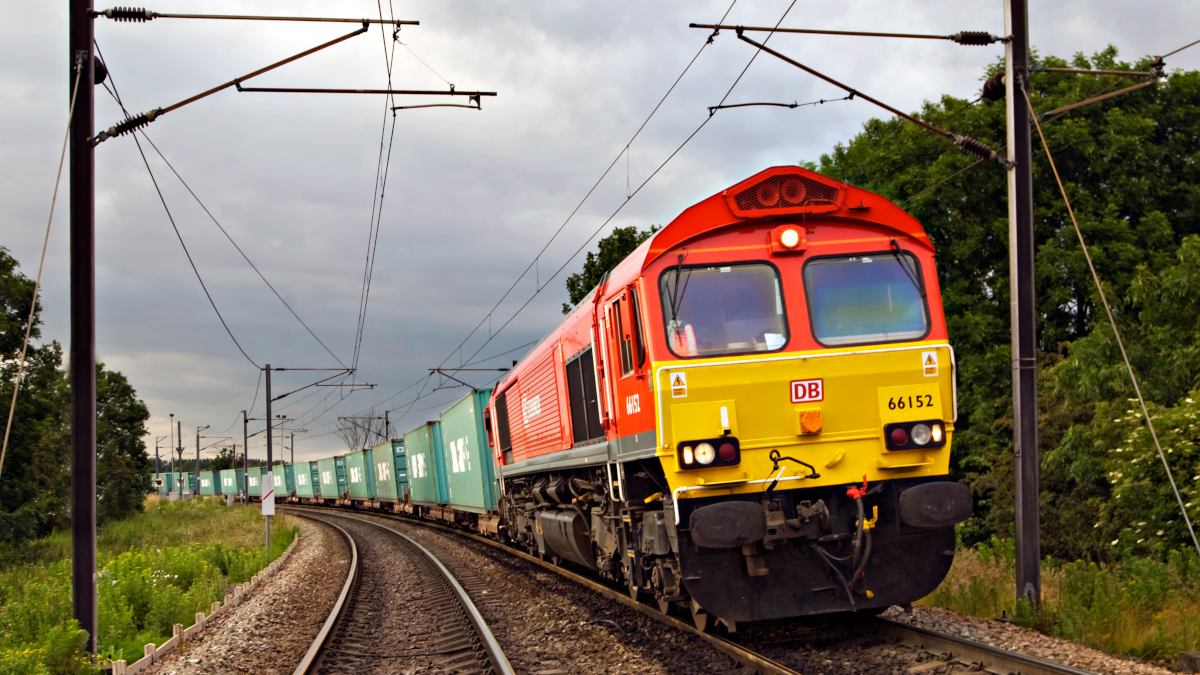
Another view of Basford Hall. The new shed has locos in at least roads 2-5, a couple of these are 86s. The lighting tower I had noticed, a must to keep well clear of when drone flying! One of the 66s is the orange one, in the distance is the overflow from Gresty Bridge, 3 x 37 and 2 x 68.
 www.flickr.com
Peter Wilde
Member
I suggest a lot of the argument on this thread has not paid enough attention to freight. Very different requirements to occasional, light passenger trains on branch lines.
Can we really believe that the rest of Europe has got this issue entirely wrong?
Spent some time in Germany recently and more than 50% of the trains passing (on a busy line that also carries many ICEs and local EMUs) seemed to be freight, often long container trains, travelling fast, at maybe 10 minute intervals. Surely the present state of battery tech is some long way away from being able to power that sort of traffic?
There is also the point that with road traffic (HGVs) still diesel the railway ought to be taking the opportunity to grab more freight traffic and grow its market.
Of course it's insane (in green terms) for electrification to cost so much - and even worse, for Government to allow freight traffic to be put off from using electric traction when under the wires by high prices for electricity. Correct sums about costs and benefits - including environmental ones) have not been done. Oh yes, of course, this is the UK ....!!
Can we really believe that the rest of Europe has got this issue entirely wrong?
Spent some time in Germany recently and more than 50% of the trains passing (on a busy line that also carries many ICEs and local EMUs) seemed to be freight, often long container trains, travelling fast, at maybe 10 minute intervals. Surely the present state of battery tech is some long way away from being able to power that sort of traffic?
There is also the point that with road traffic (HGVs) still diesel the railway ought to be taking the opportunity to grab more freight traffic and grow its market.
Of course it's insane (in green terms) for electrification to cost so much - and even worse, for Government to allow freight traffic to be put off from using electric traction when under the wires by high prices for electricity. Correct sums about costs and benefits - including environmental ones) have not been done. Oh yes, of course, this is the UK ....!!
Use of BEMU'S for passenger service doesn't rule out electrification for freight. Indeed if the programme is well thought out a lot of the necessary lines for freight could form the basis of a core network for both electric and battery services.I suggest a lot of the argument on this thread has not paid enough attention to freight. Very different requirements to occasional, light passenger trains on branch lines.
Can we really believe that the rest of Europe has got this issue entirely wrong?
Spent some time in Germany recently and more than 50% of the trains passing (on a busy line that also carries many ICEs and local EMUs) seemed to be freight, often long container trains, travelling fast, at maybe 10 minute intervals. Surely the present state of battery tech is some long way away from being able to power that sort of traffic?
There is also the point that with road traffic (HGVs) still diesel the railway ought to be taking the opportunity to grab more freight traffic and grow its market.
Of course it's insane (in green terms) for electrification to cost so much - and even worse, for Government to allow freight traffic to be put off from using electric traction when under the wires by high prices for electricity. Correct sums about costs and benefits - including environmental ones) have not been done. Oh yes, of course, this is the UK ....!!
You can't really compare the situation in Germany as most lines would have been electrified before battery technology was even remotely similar to now.
Looking ahead battery technology will play an increasing part in converting services to electric operations but quite a bit of route mileage will still be electrified.
A core network of main lines electrified might see Bristol to Birmingham, Birmingham to Doncaster, Basingstoke to Reading, Didcot to WCML etc which would facilitate a lot of freight moving to electric operations particularly with last mile battery capability whilst also facilitating conversion of many additional services to BEMU operation.
Use of BEMU'S will increase the BCR of future schemes massively by extending the area covered at low additional costs.
Nottingham59
Established Member
Sounds a bit like the WCML. Any line carrying 6tph freight throughout the day would pass the test for continuous electrification. But there are precious few of those in GB that meet that level of use.on a busy line that also carries many ICEs and local EMUs) seemed to be freight, often long container trains, travelling fast, at maybe 10 minute intervals.
Even the Felixstowe branch only carries around 1tph freight, with an operational constraint of 2tph each way.

HSTEd
Veteran Member
- Joined
- 14 Jul 2011
- Messages
- 20,383
A lot of European countries have more electrification than Britain, but that is not the same as saying that the optimum level of electrification starting now would be that high.Can we really believe that the rest of Europe has got this issue entirely wrong?
It probably could do so if the locomotive was designed and built from scratch.Spent some time in Germany recently and more than 50% of the trains passing (on a busy line that also carries many ICEs and local EMUs) seemed to be freight, often long container trains, travelling fast, at maybe 10 minute intervals. Surely the present state of battery tech is some long way away from being able to power that sort of traffic?
And even at ten million pounds each, developing and building such locomotives would probably be cheaper than any meaningful electrification.
Electric HGVs probably aren't that far away. The charger connection bottlenecks will be overcome eventually.There is also the point that with road traffic (HGVs) still diesel the railway ought to be taking the opportunity to grab more freight traffic and grow its market.
Most HGV hauls are very short after all.
An interesting statistic from Rail Engineer (link below)
 www.railengineer.co.uk
Rail electrification possible for 95% of UK freight trains, CILT(UK) research reveals - CILT
And from the Chartered Institute of Transport & Logistics (second link) -Despite a large proportion of the core freight network being electrified, in Britain a mere 2.8% of rail freight traction energy consumption is from electricity.
The research reveals that only 800 miles of additional electrification is needed in the UK to enable 95% of rail freight to be electrically hauled.
Re-imagining and electrifying rail freight - Rail Engineer
Listen to this article Over the past 20 years the railway has adopted many new technologies on modern passenger trains and infrastructure equipment which have provided significant benefits. However, rail freight has seen little new technology. Most freight trains are hauled by a diesel...
www.railengineer.co.uk
Rail electrification possible for 95% of UK freight trains, CILT(UK) research reveals - CILT
Nottingham59
Established Member
Electric HGVs probably aren't that far away.
Maybe they're already here. The IEA says Electric truck sales doubled in 2025 to reach 9% of truck sales worldwide.
"One in four trucks sold in China in 2025 was electric, as momentum continued to build thanks to operational cost advantages as well as declining battery costs. As highlighted in the Global EV Outlook 2025, battery electric HFTs in China have already reached total cost of ownership (TCO) parity with diesel trucks in certain cases after 5 years of ownership."

Trends in other EV modes - Global EV Outlook 2026 - IEA
Global EV Outlook 2026 - Analysis and key findings. A report by the International Energy Agency.
 www.iea.org

AlastairFraser
Established Member
- Joined
- 12 Aug 2018
- Messages
- 4,194
I agree that it will cost a significant amount, but you don't have to put it through GRIP or any other environmental approval process presumably.Well everything on the railway seems to be expensive these days!
My understanding is that all the steelwork and associated parts are gone. There are some pilings in the ground but as far as I know not much other work was done. Even without having to pay for bridge lifts or anything like that, its going to cost a lot of money.
Additionally, the work was postponed a long time ago now, back in 2016, so we must ask if the bridge clearances were done to the old BR specification or the EU backed one that the ORR imposed? Adjusting work done to the former requirements to the latter ones caused no end of problems on the Edinburgh-Glasgow projects at the time.
If some minor modifications need to be done to the design to align with updated standards, that's one thing, but we aren't starting afresh here.
Wasn't the design fully completed before postponement? I thought it was part of the GWML electrification program.Even if we had a pile of money to start today, it is probably unlikely that we can deliver much before the 2030s regardless!
These things take time, and I doubt much design work was done for much of the current unelectrified track beyond the Oxford segment where work actually started.
We now have under 40 months until the 2030s commence.
No through services until the BEMUs are delivered is absurd, and I don't think local politicians would be very happy to see it pushed back further.The through services could restart once the BEMUs are delivered.
My understanding is that the Cowley Branch is to be operated as part of a through service at Marylebone, so charging infrastructure installed there could possibly support it.
If the East West Rail service ever starts, that can probably be provided with charging services in the vicinity of Aylesbury in the interim.
I highly doubt Chiltern will receive any BEMUs before the mid 2030s, so that basically means Chiltern will have to operate the service with their existing DMUs. Do they have any slack in the fleet, in terms of utilisation?
By Aylesbury I assume you mean somewhere like Steeple Claydon.
I agree re Aylesbury to Amersham - transfer it to LU and it also frees up capacity at Marylebone for more lucrative medium to long distance services better suited to the station.I would wholeheartedly support running a very intensive London-Birmingham service from the earliest opportunity, however this seems unlikely to happen at this time.
They've also recently reduced the requirement for power on HS2 by eliminating ATO, which drops us from 18 paths to 17.
In any case, if they did want to do that, it would likely still be cheaper to modify the HS2 substation designs for a slightly higher rating (after all, they are still far from complete!) and still use them to support the Chiltern route than to electrify it from scratch.
On the Aylesbury via Amersham line - I would prefer to simply make a case for transferring the line wholesale to London Underground (contracting for operation), removing the pedestrian level crossings and electrifying it with fourth rail in accordance with London Underground's well established risk management practices. ORR has apparently accepted the risk management case that LU made, as they have no live working and no level crossings.
If this is impossible, I think battery with charging on the shared Metropolitan Line section, backed up by charging at Aylesbury, would be my preferred choice.
Unfortunately, we have now returned to the interest rates of the pre 2008 era, so capital has become expensive.
The era of <1% Central Bank rates and cheap borrowing appears to be over.
17tph instead of 18tph on HS2 is a shame, but an intensive OOC to Birmingham still has the potential to take a lot of passengers off the frequent Flixbus/National Express services if Advance tickets are sold at appropriate prices. You could also perhaps run a through ticketed shuttle Birmingham Airport - HS2 services to OOC - Heathrow in cooperation with BA to fill seats, but that's for another thread.
There isn't, but there's also the investment cost of fitting several new safety systems on a brand new BEMU for a service that has an uncertain future. It's not a convincing prospect for investment.Is there any reason that HeX has to use Electrostars rather than any generic BEMU or EMU that fits in the tunnels?
I completely understand that the cost of materials has rapidly increased over the last 10 years due to a range of factors, but, even with this in mind, the sparks effect on passenger number, especially with the massive increase in housebuilding along the line that shows no sign of slowing, makes this a very good candidate to invest in.It continues to amaze me that, almost 5 years after Russia invaded Ukraine, this still doesn't sink in with so many contributors here.
There are two main factors:
- cost of construction has gone up much more rapidly than general inflation: part of that is cost of raw materials, things like concrete and steel are very energy intensive to produce, part of it is employment costs, especially the impact of the big minimum wage and National Insurance increases
- cost of finance has gone up hugely, it now costs the government more than 6% interest per annum to borrow 30 year money: any capital investment project that needs a lot of expenditure up front and takes a long time to deliver benefits has got very very expensive.
Local DMU operated services just won't be able to keep pace with the passenger levels, let alone the benefits to intercity/freight services etc.
I also take your point about finance, but this is relevant to the provision of new BEMU stock if electrification is permanently cancelled anyway.
HSTEd
Veteran Member
- Joined
- 14 Jul 2011
- Messages
- 20,383
My understanding was that electrification work on Oxford itself didn't start, pending the eventual completion of the station reconstruction.I agree that it will cost a significant amount, but you don't have to put it through GRIP or any other environmental approval process presumably.
If some minor modifications need to be done to the design to align with updated standards, that's one thing, but we aren't starting afresh here.
Wasn't the design fully completed before postponement? I thought it was part of the GWML electrification program.
Although I may be wrong and design work may have been completed.
However, given the cost overruns seen in the GWML project, I'm not sure any design developed by it is going to do well on economics. Or at least whether the people holding the money can be persuaded that it is.
Even if the electrification designs are complete and usable, its still going to be 2-3 years before such a project can be completed. If any of the work proves to be unusable due to standards changes or environmental approval delays (saying it was approved a decade ago so it should be approved now may not go down well with regulators!) it will be longer.No through services until the BEMUs are delivered is absurd, and I don't think local politicians would be very happy to see it pushed back further.
If they just placed an order for battery trains now they'd probably not arrive that much later.
Well HS2 is adjacent to Chiltern lines in several places in the vicinity of Aylesbury, but I'd suggest feeding from Stoke Mandeville (onto the Princess Risborough branch) or Quainton.I highly doubt Chiltern will receive any BEMUs before the mid 2030s, so that basically means Chiltern will have to operate the service with their existing DMUs. Do they have any slack in the fleet, in terms of utilisation?
By Aylesbury I assume you mean somewhere like Steeple Claydon.
There is a bit of slack on Chiltern at the moment, because East West Rail is unlikely to start soon.
As for BEMU deliveries, they could be delivered sooner if someone actually placed an order for them, I think that's more of a political failing from a government unwilling to commit than anything.
The future of HEx will probably be decided before a decision on fitting said systems to the trains has to be made in any case, and those costs only represent a small portion of the total cost.There isn't, but there's also the investment cost of fitting several new safety systems on a brand new BEMU for a service that has an uncertain future. It's not a convincing prospect for investment.
Well at ~£1.8m per carriage and ~£2.5-4m per single track kilometre for electrification, the capital costs of replacing ALL of the ~2,870 diesel passenger vehicles on the railway would pay for about 1,290 to 2,060km of electrified track. This doesn't account for every BEMU carriage avoiding the need to buy a EMU carriage until it is eventually life expired. We have a relative surplus of EMU carriages but the supply is not infinite.I also take your point about finance, but this is relevant to the provision of new BEMU stock if electrification is permanently cancelled anyway.
That's ~650-1,030km of twin track railway, the Chiltern Main Line alone would be 180km or so.
zwk500
Veteran Member
That's not that surprising when you consider the operational issues with electrified terminals. Especailly ones loading overhead or handling fuel cargoes. The problems could all be overcome, of course (there do exist electrified terminals in the UK) but it's all additional costs in a fairly low-margin industry.An interesting statistic from Rail Engineer (link below)
Again, this is kind of dependent on which miles are being wired.And from the Chartered Institute of Transport & Logistics (second link) -

Dr Hoo
Established Member
Precisely. The freight ‘shopping list’ might include the Felixstowe branch, Haughley Junction-Ely-Peterborough-Leicester-Nuneaton-Birmingham and the ‘Joint’ line via Lincoln for example. None of these are really prime passenger/InterCity routes.Again, this is kind of dependent on which miles are being wired.
If battery bimodes have lower up front cost than electrification, and deliver benefits more quickly, them they are the way forward. That matters hugely when interest rates are high. The high up front cost of electrification, and the time it takes to deliver benefits, means borrowing more money for longer, with far higher interest costs.I also take your point about finance, but this is relevant to the provision of new BEMU stock if electrification is permanently cancelled anyway.
AlastairFraser
Established Member
- Joined
- 12 Aug 2018
- Messages
- 4,194
Although the issues that led to overrun on the GWEP have been identified and we can learn from our mistakes.My understanding was that electrification work on Oxford itself didn't start, pending the eventual completion of the station reconstruction.
Although I may be wrong and design work may have been completed.
However, given the cost overruns seen in the GWML project, I'm not sure any design developed by it is going to do well on economics. Or at least whether the people holding the money can be persuaded that it is.
When are the first of the Churchward BEMUs due to be ordered and delivered?Even if the electrification designs are complete and usable, its still going to be 2-3 years before such a project can be completed. If any of the work proves to be unusable due to standards changes or environmental approval delays (saying it was approved a decade ago so it should be approved now may not go down well with regulators!) it will be longer.
If they just placed an order for battery trains now they'd probably not arrive that much later.
I don't think we can bank on EWR problems not being resolved any time soon; if there is any political will to sort out the railway, EWR will probably be a top priority.Well HS2 is adjacent to Chiltern lines in several places in the vicinity of Aylesbury, but I'd suggest feeding from Stoke Mandeville (onto the Princess Risborough branch) or Quainton.
There is a bit of slack on Chiltern at the moment, because East West Rail is unlikely to start soon.
As for BEMU deliveries, they could be delivered sooner if someone actually placed an order for them, I think that's more of a political failing from a government unwilling to commit than anything.
I also don't think the government is unwilling to commit, I just think they want to see how BEMUs perform on UK mainline railways with one fleet before they order en masse.
I doubt a permanent decision on HeX is forthcoming anytime soon, if I'm honest.The future of HEx will probably be decided before a decision on fitting said systems to the trains has to be made in any case, and those costs only represent a small portion of the total cost.
For 1030km max (given this has the advantages of the rolling programme), you could electrify quite a lot of very important lines though.Well at ~£1.8m per carriage and ~£2.5-4m per single track kilometre for electrification, the capital costs of replacing ALL of the ~2,870 diesel passenger vehicles on the railway would pay for about 1,290 to 2,060km of electrified track. This doesn't account for every BEMU carriage avoiding the need to buy a EMU carriage until it is eventually life expired. We have a relative surplus of EMU carriages but the supply is not infinite.
That's ~650-1,030km of twin track railway, the Chiltern Main Line alone would be 180km or so.
I appreciate you will need to factor in procurement costs of new pure EMUs for some of the newly electrified lines too, but for 1030km, you can get:
1.) the Chiltern Main Line - 180km.
2.) Newbury to Exeter including Frome station loop - approx. 200km
3.) South Wigston to South Kirkby Jcn via Erewash Valley line/Derby and Trent Jcns to Nottingham - approximately 190km - 210km if you factor in extra tracks to electrify on some sections
4.) Southcote Junction to Basingstoke - approx 22.1 km
5.) Didcot East Junction to Nuneaton - approximately 115.9km
6.) Allerton Jcn to Castlefield Jcn - 46km max
7.) Hazel Grove to Dore Station Jcn/Dore South Jcn - 49km
8.) Ashburys to New Mills South Jcn - 20km
9.) Cogload Jcn to Chippenham/Bristol Parkway - 125km, including allowance for sections with more than 2 tracks
10.) Maryhill Line - 6km
11.) Windermere branch - 17km, but mostly single track, so let's deduct 10km
12.) Crewe to Chester - approx 35km including station wiring in Chester.
13.) Holbeck Jcn to Bradford Interchange - 14km, +/1km for extra wiring around platforms at Bradford Interchange.
That enables you to immediately convert so many services to pure EMU operation (and reduce the need for BEMUs) as soon as these schemes are commissioned, either by using existing stock for new services or extensions in the case of Crewe to Chester, and it also supports the introduction of BEMUs when they are ordered for more operators such as Chiltern regional services, a new EMR regional fleet to replace the 158s initially, a replacement for Voyagers on XC, GWR regionals etc.
I know we don't have the funding in place, but it's certainly an interesting exercise to see what you could electrify for that kind of money, with the perks of enabling decarbonisation of some of the most maligned intercity operators etc.
Do battery bimodes have lower up front cost than electrification of certain stretches? Can we procure battery bimodes in significant enough numbers with available financing to eliminate DMU usage in e.g. a single TOC (or GBR successor) without compromising growth and/or service frequency in the peaks?If battery bimodes have lower up front cost than electrification, and deliver benefits more quickly, them they are the way forward. That matters hugely when interest rates are high. The high up front cost of electrification, and the time it takes to deliver benefits, means borrowing more money for longer, with far higher interest costs.
I'm sceptical
Do battery bimodes have lower up front cost than electrification of certain stretches?
at ~£1.8m per carriage and ~£2.5-4m per single track kilometre for electrification
Yes. You don't get many miles of overhead line for the cost of each battery bimode train. Long lines with not very intensive services are not going to get overhead line.
Windermere is a good example, even though it is quite short. Not much change from £50m to install overhead line, which would be enough to buy more than 20 cars of battery bimode train. That's for a line with 1tph of 3 car trains and no peak extras. Windermere is a good candidate for battery bimodes, probably part of a fleet that also goes to Barrow.Windermere branch - 17km
Capacity to build battery bimode trains isn't an issue. There are more options for financing new trains than new electrification. In particular leasing works for new trains but it is difficult to see how overhead lines could be leased.Can we procure battery bimodes in significant enough numbers with available financing
There are not many lines where this applies that are not electrified already. The exceptions should be the priority for full electrification.without compromising growth and/or service frequency in the peaks?
I joined this forum almost 5 years ago. Back then I was sceptical too. Since then, battery technology has advanced, financing has get a lot more expensive, and I've read some very informative contributions from other forum members. The facts have changed and I have changed my mind. The way forward is not much new electrification and lots of battery bimode trains.I'm sceptical

HighlandStorm
Member
On the contrary, more battery electric trains can/should enable more electrification - because difficult obstacles can be left till later (or potentially avoided altogether).The facts have changed and I have changed my mind. The way forward is not much new electrification and lots of battery bimode trains.
That makes credible electrification affordable on routes that would otherwise be written off for OHLE.
We shouldn’t be fitting batteries big enough to last all day with little to no charging, that would be inefficient due to carrying significant extra weight.
However, I’d hope that ultimately none of the units that come from the current ScotRail tender are truly straight EMUs and that all will have at least some traction battery capacity - limp to station if not home and keep onboard services running.
I fully agreeOn the contrary, more battery electric trains can/should enable more electrification - because difficult obstacles can be left till later (or potentially avoided altogether).
True, and as experience is gained - and battery and OLE costs change with time - the strategy or trade-off on how much you put where can be adapted...That makes credible electrification affordable on routes that would otherwise be written off for OHLE.
AgreedWe shouldn’t be fitting batteries big enough to last all day with little to no charging, that would be inefficient due to carrying significant extra weight.
I don't know about this, it is an added complication and cost which should not be needed 99% of the time. Is it worth building into every EMU from now on? Maybe...However, I’d hope that ultimately none of the units that come from the current ScotRail tender are truly straight EMUs and that all will have at least some traction battery capacity - limp to station if not home and keep onboard services running.
zwk500
Veteran Member
Batteries should 100% be built into every new EMU. It is an entirely foreseeable situation for the power to need to be turned off for a wide variety of reasons (failure, incident, or maintenance), and once the OLE is off the backup batteries can only last so long. Getting trains to the nearest platform should be the do-minimum case for all new EMUs (and any existing EMUs that can be feasibly upgraded).I don't know about this, it is an added complication and cost which should not be needed 99% of the time. Is it worth building into every EMU from now on? Maybe...
The primary reason for getting to the nearest platform is to avoid needing to evacuate people on to the ballast once the batteries go out, but it also:
- facilitates quicker access to the train for services if required (emergency, maintenance, or replacement transport)
- Allows passengers to arrange for their own transport from a clear place if they decide to abandon their journey by rail
- keeps passengers calmer than just being stuck in the middle of fields.
- Allows passengers access to station facilities if available (e.g. toilets)
Among quite a lot more.
3rd rail would be a higher priority than OLE, but the target should be a 100% BEMU fleet, IMO. The debate should be about whether to have a split in the BEMU fleet between 'emergency only' and 'full service' or to just have all BEMUs 'full service'.
Last edited:
fishwomp
Established Member
Some mast bases were piled in - near Radley, the actual masts finish just before Appleford Crossing.My understanding was that electrification work on Oxford itself didn't start, pending the eventual completion of the station reconstruction.
Although I may be wrong and design work may have been completed.
Once GWEP had gone off-track financially, Oxford was deferred, and IIRC it was then that remodeling and resignalling became prerequisites to adding wires.
Well.. the resignalling happened, and north and south have been remodeled.. so now it's just about finding money
The ordering of TPE units (MR October) gives an insight to the balance between batteries and OLE. The new units are (IIRC) 5 car, with about 1250kWhr of batteries. These are to service off-wire places such as Scarborough, Hull, Tessside, about 25 - 35 miles from the wires. However, it is stated that the terminals will be wired for recharging! This indicates the limited range of these units on batteries. The chargers, if 25kV OLE, would not be small (e.g. a single feed c10MVA feeder station!) as they would have to provide many times the full load traction current to be worthwhile if overlays were not to be long. This would not fit easily in a terminal and so we would be into extension leads to supply points, even if the DNO substations were used.
It would be usually more economical to extend the OLE using the existing feeds, where sufficient, to allow the BEMU's to make a return off-wire trip without recharging. Again, deep discharge and inefficient fast re-charge should be avoided.
It would for example, perhaps make more sense to wire instead to Selby or even Howden for Hull trains, also allowing Selby stoppers be worked by EMU's.
These are the sort of considerations that need to be addressed for the new BEMU/OLE economy to be optimised. While inflation has added to OLE costs, other improvements to design, interpretation of standards etc have also improved its attractiveness. It should also be noted that most of "electrification" costs are often infrastructure improvements to allow for improved services. - it is not costing 11Bn just to wire TP!
WAO
It would be usually more economical to extend the OLE using the existing feeds, where sufficient, to allow the BEMU's to make a return off-wire trip without recharging. Again, deep discharge and inefficient fast re-charge should be avoided.
It would for example, perhaps make more sense to wire instead to Selby or even Howden for Hull trains, also allowing Selby stoppers be worked by EMU's.
These are the sort of considerations that need to be addressed for the new BEMU/OLE economy to be optimised. While inflation has added to OLE costs, other improvements to design, interpretation of standards etc have also improved its attractiveness. It should also be noted that most of "electrification" costs are often infrastructure improvements to allow for improved services. - it is not costing 11Bn just to wire TP!
WAO
HSTEd
Veteran Member
- Joined
- 14 Jul 2011
- Messages
- 20,383
Well, even a 9-car Pendolino manages 14kWh per km, according to a report in Modern Railways, on London to Manchester. That implies a rather longer range than just 35 miles for a five-car unit.The ordering of TPE units (MR October) gives an insight to the balance between batteries and OLE. The new units are (IIRC) 5 car, with about 1250kWhr of batteries. These are to service off-wire places such as Scarborough, Hull, Tessside, about 25 - 35 miles from the wires. However, it is stated that the terminals will be wired for recharging! This indicates the limited range of these units on batteries.
See the quote below with the relevant paragraphs:
This column’s status as the official publication of the militant wing of the Railway Electrification Front meant I received details of the ninecar Pendolino’s energy consumption. Net energy used for the journey was 7,863kWh after regenerative braking returned 13% to the supply.
This gave an average consumption of 12.2kWh/km, which compares with the 14kWh based on measured readings between London and Manchester quoted in Roger Kemp’s traction metrics study for the RSSB. Informed sources confirm that in normal (pre-Covid) service a nine-car Pendolino was averaging around 14kWh/km, with regenerative braking savings of around 15%.
Clearly, a non-stop run will use less energy, since the only times maximum tractive power was required was when leaving Euston and after the speed restrictions at Stafford (60mph), Crewe (80mph), Preston (35mph) and Carlisle (20mph).
I suspect the chargers are being installed more about a desire for redundancy and to gain experience in what is involved with installing and operating chargers, than because they are definitely required for the service pattern envisaged. The political cost of the battery trains being unable to do the job would be enormous, so there will be a strong political imperative to guarantee that that will not happen.
I'm not sure how true the adage that the expensive parts of 25kV are the supply points is any more.The chargers, if 25kV OLE, would not be small (e.g. a single feed c10MVA feeder station!) as they would have to provide many times the full load traction current to be worthwhile if overlays were not to be long. This would not fit easily in a terminal and so we would be into extension leads to supply points, even if the DNO substations were used.
It would be usually more economical to extend the OLE using the existing feeds, where sufficient, to allow the BEMU's to make a return off-wire trip without recharging. Again, deep discharge and inefficient fast re-charge should be avoided.
Costs for any single piece of a wider scheme are notoriously hard to obtain, but as an example, various reports for the Potteric Carr SFC suggest a continuous rated output of 30.5MW (Article in rail engineer, quoted below) was achieved for only ~$20m for the converter (ABB report, see below). Now that was 2017, but even if its doubled since, it won't buy you many track kilometres of electrification project!
From the Network Rail position, the SFC rating is required to deliver peak power of 46.5MW for two seconds, continuous power of 30.5MW, a unity power factor over the voltage range of 25kV to 27.5kV. It has to withstand a temperature range of -25ºC to +40ºC during normal operation, be capable of operating with any harmonics generated by the traction units, and must
ABB has won a $20 million contract from Network Rail to provide a trackside power electronics solution for new high-speed electric trains
Of the various endpoints, Teeside has one of the highest concentration of high voltage infrastructure anywhere in Britain, there are several 275/400kV supergrid substations within a few miles. I suspect it would not be difficult to obtain a 33kV or similar connection in the vicinity of the stations if required. Hull and Scarborough would possibly be somewhat more challenging but I think supplies could be located relatively easily.
I suspect that the way the costs for fixed infrastructure are going, it would be faster to tolerate shorter life from the batteries than to install extra electrification.