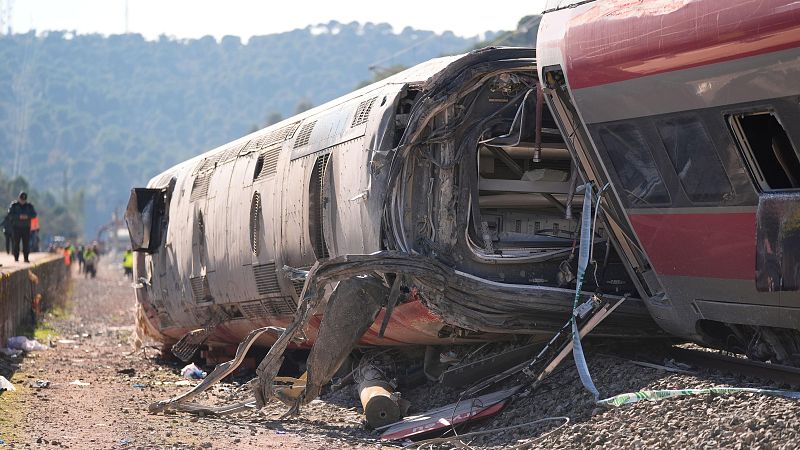
Spanish rail operator ADIF was warned about “severe wear and tear” on high-speed rail tracks last year, before a
horrific collision killed at least 40 people on Sunday.
The SEMAF train drivers’ union wrote to the state-owned infrastructure manager in August to caution the operator about potholes, bumps and imbalances in overhead power lines that it said were causing frequent breakdowns and damaging trains.
The letter warned about damage on one of the tracks
where two trains collided yesterday evening near Cordoba. It added that drivers had told the operator of their concerns “daily” but that no action had been taken.
Drivers had urged the operator to implement a maximum speed of 250kph (155mph) on damaged lines until the state of the network rail was improved.
A source briefed on the initial investigations into the disaster said today that experts had found a broken joint on the rails. Technicians on site identified wear on the joint between sections of the rail, known as a fishplate, which they said showed the fault had been there for some time, the source said.
They found that the faulty joint created a gap between the rail sections that widened as trains continued to travel on the track. The source, who declined to be identified due to the sensitivity of the issue, said the technicians believe the faulty joint is key to identifying the precise cause of the accident.
The fatal collision, near Adamuz in the province of Cordoba, killed dozens of people and left more than 120 injured, with 48 still in hospital and 12 in intensive care. It
could be a month before an investigation determines the cause, transport minister Óscar Puente said.
Jose Trigueros, president of the Association of Road Engineers, said his preliminary analysis of images and information released by the authorities suggested “failure of the undercarriage of the back units” of the high-speed Freccia 1000 train, operated by Iryo, which was travelling north from Malaga to Madrid when it derailed.
Most of the casualties are believed to have been on board a second train, operated by Alvia, which is run by Spain’s public railway company Renfe. That train was heading south from Madrid to Huelva when it collided with the derailed Iryo train and was pushed off the tracks into an embankment.
ADIF had reported problems with infrastructure at Adamuz on social media – ranging from signalling failures to issues with overhead power lines – that caused delays to high-speed trains between Madrid and Andalusia 10 times since 2022.
The Spanish government was criticised last year for a series of delays on the network, caused by power outages and the theft of copper cables from the lines. The network is vulnerable to cable thefts, as it crosses large swathes of empty countryside.