• Our new ticketing site is now live! Using either this or the original site (both powered by TrainSplit) helps support the running of the forum with every ticket purchase! Find out more and ask any questions/give us feedback in this thread!

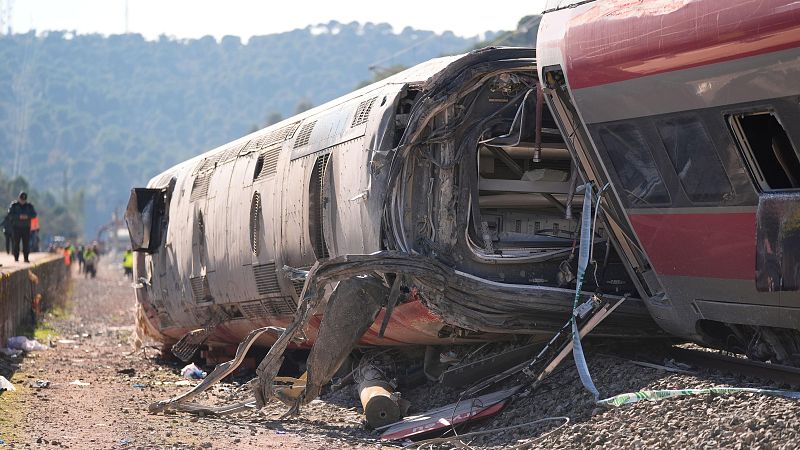
Train derailment near Córdoba, Spain

Status
Not open for further replies.

35B

Established Member
Joined
19 Dec 2011
Messages
5,562
How the hell are they going to blame an operator for this?
If a train derails because of the interaction between the rail and the wheel, it may be the fault of the wheel (i.e. operator) or track (i.e. infrastructure authority, ADIF). If you can then spread the blame so it seems that the wheel caused the derailment, you can blame the operator and distract from the track authority.

That does take us back to Potters Bar, and the long and vexed problems getting to the bottom of what the maintenance company did or didn't do.
 
Sponsor Post - registered members do not see these adverts; click here to register, or click here to log in
R

RailUK Forums

rmHawk765

Member
Joined
8 Apr 2025
Messages
777
Location
ECML South
If a train derails because of the interaction between the rail and the wheel, it may be the fault of the wheel (i.e. operator) or track (i.e. infrastructure authority, ADIF). If you can then spread the blame so it seems that the wheel caused the derailment, you can blame the operator and distract from the track authority.
I suppose it is possible for poor maintenance/design of the train itself to have caused this (not dissimilar from Eschede), but we will just have to wait and see.
 

35B

Established Member
Joined
19 Dec 2011
Messages
5,562
I suppose it is possible for poor maintenance/design of the train itself to have caused this (not dissimilar from Eschede), but we will just have to wait and see.
Precisely - we have effect, but not yet cause.
 

66701GBRF

Member
Joined
3 Jun 2017
Messages
913
The ABC website link above has one paragraph which translates as follows:
Initial on-site investigations and passenger testimonies suggest that the derailment may have been caused by a weight being pulled by carriage 6 of the Iryo train. Witnesses traveling in that carriage (the one that derailed, pulling carriages 7 and 8 along with it) reported feeling strange disturbances in the carriage shortly before the accident. For this reason, it is believed that the train was pulling an extra weight (attached to the underside of the carriage) which, upon contact with the track, caused it to break and derail.

What does it mean by "a weight being pulled by carriage 6"?
 

chrisjo

Member
Joined
18 May 2024
Messages
604
Location
Llanishen
There was suggestion quoted somewhere upthread that a weight being dragged along by the Iryo caused the rail break.
Yes, that came from an un-named source in the abc.es report quoted in post #78. You are welcome to try and make sense of it...

Las primeras averiguaciones sobre el terreno y los testimonios de los pasajeros apuntan que se pudo deber a un peso arrastrado por uno de los vagones del tren Iryo. Los testigos que viajaban en este tren (el que descarriló fue el 6 arrastrando a los 7 y 8) han señalado que poco antes del accidente sintieron unas extrañas perturbaciones en el coche. Por este motivo, se plantea que el tren llevara arrastrando un sobrepeso (adosado a los bajos del vagón) que al contactar con la vía produjo la rotura y su salida del carril.

Initial on-site investigations and passenger testimonies suggest the derailment may have been caused by a weight being pulled by one of the Iryo train cars. Witnesses traveling on this train (car 6, which derailed, pulling cars 7 and 8 along with it) reported feeling strange disturbances in the car shortly before the accident. Therefore, it is believed that the train was pulling an extra weight (attached to the underside of the car) which, upon contact with the track, caused it to break and derail.

And in the first hours after the crash, an official (can't remember who or in which report without checking) was saying that the investigation clearly needed to focus on car-6 of the Iryo
 
Last edited by a moderator:

signed

Established Member
Joined
13 May 2024
Messages
2,388
Location
ROI
Surely this was reported one way or another to RENFE...
A similar case of very high vibration was encountered for a few months on the Barcelona to Madrid LAV last summer, reports are that it had been reported, but seemingly nothing happened and that is supposed to have caused some of the Avlo (Renfe low-cost) S107 AVRIL to get large bogey cracks over the weeks the issue with the track and the service being stopped for the month of August.
 

GRALISTAIR

Established Member
Joined
11 Apr 2012
Messages
10,562
Location
Preston Lancs
The Independent is reporting that the operator was warned about severe wear and tear last year.


Spanish rail operator ADIF was warned about “severe wear and tear” on high-speed rail tracks last year, before a horrific collision killed at least 40 people on Sunday.

The SEMAF train drivers’ union wrote to the state-owned infrastructure manager in August to caution the operator about potholes, bumps and imbalances in overhead power lines that it said were causing frequent breakdowns and damaging trains.

The letter warned about damage on one of the tracks where two trains collided yesterday evening near Cordoba. It added that drivers had told the operator of their concerns “daily” but that no action had been taken.

Drivers had urged the operator to implement a maximum speed of 250kph (155mph) on damaged lines until the state of the network rail was improved.

A source briefed on the initial investigations into the disaster said today that experts had found a broken joint on the rails. Technicians on site identified wear on the joint between sections of the rail, known as a fishplate, which they said showed the fault had been there for some time, the source said.

They found that the faulty joint created a gap between the rail sections that widened as trains continued to travel on the track. The source, who declined to be identified due to the sensitivity of the issue, said the technicians believe the faulty joint is key to identifying the precise cause of the accident.

The fatal collision, near Adamuz in the province of Cordoba, killed dozens of people and left more than 120 injured, with 48 still in hospital and 12 in intensive care. It could be a month before an investigation determines the cause, transport minister Óscar Puente said.

Jose Trigueros, president of the Association of Road Engineers, said his preliminary analysis of images and information released by the authorities suggested “failure of the undercarriage of the back units” of the high-speed Freccia 1000 train, operated by Iryo, which was travelling north from Malaga to Madrid when it derailed.

Most of the casualties are believed to have been on board a second train, operated by Alvia, which is run by Spain’s public railway company Renfe. That train was heading south from Madrid to Huelva when it collided with the derailed Iryo train and was pushed off the tracks into an embankment.

ADIF had reported problems with infrastructure at Adamuz on social media – ranging from signalling failures to issues with overhead power lines – that caused delays to high-speed trains between Madrid and Andalusia 10 times since 2022.

The Spanish government was criticised last year for a series of delays on the network, caused by power outages and the theft of copper cables from the lines. The network is vulnerable to cable thefts, as it crosses large swathes of empty countryside.

 

AndrewE

Established Member
Joined
9 Nov 2015
Messages
7,364
If a train derails because of the interaction between the rail and the wheel, it may be the fault of the wheel (i.e. operator) or track (i.e. infrastructure authority, ADIF). If you can then spread the blame so it seems that the wheel caused the derailment, you can blame the operator and distract from the track authority.
It has occurred to me that a) there seemed to be a big chunk of rail missing and what looked like brittle fractures similar the the rails we saw chopped up by the on-track machine in https://www.railforums.co.uk/threads/steel-rail-is-it-not-worth-recycling.296411/page-3#post-7603784
b) upthread there was a comment that one wheelset was not yet accounted for...
so something that could explain it is a hammer-blow from a big bit of disintegrating wheel which knocked a chunk out of the rail, leading to derailment of the train, then a glancing blow to the more modern train passing in the other direction which impacted the rear 3 coaches most.

Mind you the condition of the track seems to be looking more and more of a problem.
 

Harpo

Established Member
Joined
21 Aug 2024
Messages
3,937
Location
Newport
something that could explain it is a hammer-blow from a big bit of disintegrating wheel which knocked a chunk out of the rail
The photograph in post 91 shows a railhead protrusion. If that was sufficient to lift a wheelset, I assume a hammer blow would follow?
 
Last edited:

Annetts key

Established Member
Joined
13 Feb 2021
Messages
3,832
Location
West is best
b) upthread there was a comment that one wheelset was not yet accounted for...
so something that could explain it is a hammer-blow from a big bit of disintegrating wheel which knocked a chunk out of the rail, leading to derailment of the train, then a glancing blow to the more modern train passing in the other direction which impacted the rear 3 coaches most.
Well, this is the problem. We currently don't know if a rail defect caused damage to the first train, which then derailed. Or if part of the first train damaged the rail, then the damaged rail caused the remaining coaches to derail.

Trains can damage rails under some circumstances.

I've seen what a bogie that has come out of it's pivot and rotated 90 degrees and become trapped by under carriage equipment can do when it hits rails that are part of point work. And that was on a 25MPH line...

== Doublepost prevention - post automatically merged: ==

The photograph in post 91 shows a railhead protusion. If that was sufficient to lift a wheelset, I assume a hammer blow would follow?
Maybe, but if wheels are flying and then landing, where they land and make contact with the rail, there will be a clear indentation in the top of the rail. That's often visable on the U.K. network where the ballast under sleepers is insufficiently packed at fishplated rail joints.

If nothing is done, eventually it will cause a worse defect to develop.

Visual inspection, ultrasonic testing (non destructive testing - NDT) or special track monitoring trains should pick up this kind of problem.
 
Last edited:

35B

Established Member
Joined
19 Dec 2011
Messages
5,562
It has occurred to me that a) there seemed to be a big chunk of rail missing and what looked like brittle fractures similar the the rails we saw chopped up by the on-track machine in https://www.railforums.co.uk/threads/steel-rail-is-it-not-worth-recycling.296411/page-3#post-7603784
b) upthread there was a comment that one wheelset was not yet accounted for...
so something that could explain it is a hammer-blow from a big bit of disintegrating wheel which knocked a chunk out of the rail, leading to derailment of the train, then a glancing blow to the more modern train passing in the other direction which impacted the rear 3 coaches most.

Mind you the condition of the track seems to be looking more and more of a problem.
You have given voice to a lurking thought in my mind, but the blunt truth is that we and quite possibly the investigators don't yet know.

That's where I take issue with the remote crash investigators, G Dennis Esq amongst them, who seem to have forgotten that English has was of expressing opinions that are short of absolute certainty. When others cite a particular external participant, who is not part of the investigation, the question that runs through my mind is "what makes that person authoritative about this incident". We're still in the fog of war stage of this, with lots of images and snippets; they've not yet combined into a clear picture - and when the BBC report cites "technicians" as telling a newspaper that "that a "bad" or "deteriorated" weld was "more than likely" the cause for the derailment", we're still in rumour.
 

hwl

Established Member
Joined
5 Feb 2012
Messages
8,292
The photograph in post 91 shows a railhead protrusion. If that was sufficient to lift a wheelset, I assume a hammer blow would follow?
It will have lifted the wheelset slightly and there would have been a series of hammer blows in reducing magnitude as the wheelset and primary suspension settle back down - giving the appearance of vibration.
 

petergb

Member
Joined
17 Aug 2010
Messages
19
Location
was PBO - now KNA
The photograph in post 91 shows a railhead protrusion. If that was sufficient to lift a wheelset, I assume a hammer blow would follow?
I'm more concerned about the amount of horizontal protrusion on the inside of the rail (seen here from the angle of post #106)protrusion.jpg
 

hwl

Established Member
Joined
5 Feb 2012
Messages
8,292
b) upthread there was a comment that one wheelset was not yet accounted for...
In the photo (all from the left hand side) available at that time you could not see the trailing bogie on the rear of the 6 carriage of the Iroyo train because of people or objects (including lots of ballast) in the way. From more recent photos and videos it is possible to see the bogie is attached and wheels are visible (and where they should be) on the both sides of the train.
RTVE (who were invited on site) have a close up video (from ~4m) of the right hand side of trailing bogie of vehicle 6 which shows the bogie and wheel sets looking in remarkable good condition for what they have been through.


They have been very careful to make sure the vehicle number is visible in the video and start with an introductory panorama so it is obvious it is the trailing bogie of coach 6.

Screen grab of right hand side of the trailing bogie of coach 6:

Screenshot 2026-01-20 165139.png

The bogies and wheelsets of the Renfe Alvia train didn't all stay attached.

so something that could explain it is a hammer-blow from a big bit of disintegrating wheel which knocked a chunk out of the rail, leading to derailment of the train, then a glancing blow to the more modern train passing in the other direction which impacted the rear 3 coaches most.

Mind you the condition of the track seems to be looking more and more of a problem.
 

Angmering1974

On Moderation
Joined
26 Jun 2023
Messages
162
Location
UK
Adif have implemented a 160 km/h limit on part of the Madrid to Barcelona line (a 150km stretch)
 

AlexNL

Established Member
Joined
19 Dec 2014
Messages
1,721
Cadena SER are reporting that Adif have placed a 160 km/h temporary speed restriction on the Barcelona - Madrid high speed line, over a total length of 150 km. :o

This because of "track conditions".

Adif limita la velocidad en 150 kilómetros del tramo Madrid-Barcelona a 160 km/h por el estado de la vía

El trayecto Madrid-Barcelona ha sido objeto de una medida de seguridad por parte de Adif, que ha limitado la velocidad a la que los maquinistas pueden pasar por ahí a 160 km/h en unos 150 km de vía y en varios tramos.
(...)
Adif ha decretado limitaciones temporales de velocidad en los mismos de unos 160 km/h y es llamativa la limitación de un tramo de unos 150 km de vía entre Mejorada del Campo y Alhama de Aragón, que comprende desde el punto kilométrico 34,8 hasta el 182,9. Son 10 puntos de la vía en total que se distribuyen en vías pares e impares.
 
Last edited:

hwl

Established Member
Joined
5 Feb 2012
Messages
8,292
A few updates from Spanish news:
1. Sabotage has been discounted by the Transport Ministry.
2. The couplings between cars 6/7/8 of the Iryo unit will be cut and the and cars 7&8 are ready to be craned out (little further investigation expected to be needed).
3. Car 1-6 have been inspected and cars 1-5 will be towed away at some point with no further investigation needed.
4. Car 6 will be left in situ for the time being - ballast is covering the lower part of the wheels on the left side and they haven't been able to inspect yet without digging out

Two more Spanish video observations:
a) the aluminium inspection hatch on the gearbox casing on the right hand side of the trailing axle of the trailing bogie of car 8 took a direct hit from something pretty solid - probably the end of a rail or something similar etc. Otherwise all the visible key bits underneath are in remarkably well given what they have been through [good news for HS2]
b) the S120 impacted car 6 of the Iryo train about 6m from the trailing end of car 6 (impact damage with many traces of white paint and fibreglass with white paint are visible)
 
Last edited:

hwl

Established Member
Joined
5 Feb 2012
Messages
8,292
I am really glad that sabotage has been discounted.
A few other observations from Spanish news coverage:
1. The Parliamentary transport committee has invited the minister and the head of the infrastructure operator in for some questioning (who is not invited is also informative!)
2. The trust in CIAF (accident investigators) is low after the Santiago fiasco - the police are photographing everything before CIAF touches it (and inviting TV camera crews in)
3. The union representing drivers have been unhappy for a while that traffic levels have increased with opening up to private operators there has been no matching no increases in the inspection and maintenance regime
 

ainsworth74

Forum Staff
Staff Member
Global Moderator
Joined
16 Nov 2009
Messages
31,128
Location
Redcar
Okay, for whatever reason some people really dislike Gareth Dennis and whenever he is quoted/linked cannot help themselves but go on about it at some length. However, this thread is not about Gareth so I'd suggest we move on at this point. If anyone would like to spend time talking about him and his thoughts and their merit or demerit please do so elsewhere.
 

superalbs

Verified Rep - Superalbs Travels
Joined
3 Jul 2014
Messages
2,863
Location
Kraków
At 300km/h+ a train will never 'glide' along. Probably the best ride quality you can get is on a TGV because the coaches are unpowered, and while the ride quality on those at 300-320km/h is good, you can't beat physics, and it still shakes to some extent.
False. The high-speed trains in Japan and China and Indonesia do glide along. They are much smoother than a TGV, which can actually be pretty poor.
 

Paul AC

Member
Joined
3 Aug 2025
Messages
243
Location
Timperley
I've travelled extensively in Spain in the past six years, covering 99.5% of the available passenger track in the process. Over multiple journeys my summary of ride quality on the Spanish high speed lines by train type is as follows:
1. best by far: the original S100 TGV-alike; though the reliability is suffering on such old trains (twice had to stop and reboot the train)
2. next best: the double-deck TGVs operated by Ouigo
3. middling: iryo Frecciarossa sets, and CAF units such as S104 (though they tend to run at lower speeds)
4. poor: anything with Talgo on the works plate, except:
5. awful: the new S106 Talgo "Avril" sets, on either broad or standard gauge

My main comment on the Talgo sets, and particularly the 106s, is the near-continuous juddering and "fidgetiness"; and this appears to me to be due to their "clever" gauge-adjustable independent wheel designs.

Generally speaking the variable gauge types are not as good as the fixed gauge types.
 

QueensCurve

Established Member
Joined
22 Dec 2014
Messages
2,203
Cadena SER are reporting that Adif have placed a 160 km/h temporary speed restriction on the Barcelona - Madrid high speed line, over a total length of 150 km. :o

This because of "track conditions".
That reminds me of Railtrack imposing a blanket 50mph speed restriction after Hatfield. It seemed to imply that they had no idea which parts of the network were safe and which were not.
 

notverydeep

Member
Joined
9 Feb 2014
Messages
1,187
False. The high-speed trains in Japan and China and Indonesia do glide along. They are much smoother than a TGV, which can actually be pretty poor.
My experience of the Tōhoku Shinkansen from Tokyo to Aomori (albeit over a decade ago) on an E2 type train at the 275 km/h line speed was of a much harsher (and noiser) ride than I had expected, with quite a lot of ‘fussy’ movements, much less smooth than my experience of TGV type trains at speed. The license built CRH2A variant I ride in China was smoother than in Japan, but not as good as a TGV family train (though the Shinkansen has a more pleasant interior than any TGV). My one Spanish high speed experience was a Trax class 252 loco hauled Talgo in the very early days before the line through to Malaga was completed. From memory, at 250 km/h that was OK, but no better…

On the same trip, I ended up in the same Couchette carriage on the sleeper from Irun to Madrid and then back 10 days later. This hunted alarmingly at speed all night giving me a bad first impression of track and rolling stock maintenance and by contrast the Talgo was better…
 
Last edited:

Sir Felix Pole

Established Member
Joined
21 Oct 2012
Messages
2,210
Location
Wilmslow
I've travelled extensively in Spain in the past six years, covering 99.5% of the available passenger track in the process. Over multiple journeys my summary of ride quality on the Spanish high speed lines by train type is as follows:
1. best by far: the original S100 TGV-alike; though the reliability is suffering on such old trains (twice had to stop and reboot the train)
2. next best: the double-deck TGVs operated by Ouigo
3. middling: iryo Frecciarossa sets, and CAF units such as S104 (though they tend to run at lower speeds)
4. poor: anything with Talgo on the works plate, except:
5. awful: the new S106 Talgo "Avril" sets, on either broad or standard gauge

My main comment on the Talgo sets, and particularly the 106s, is the near-continuous juddering and "fidgetiness"; and this appears to me to be due to their "clever" gauge-adjustable independent wheel designs.

Generally speaking the variable gauge types are not as good as the fixed gauge types.
The S103 Siemens 'Velaro' are also generally good, although they can be a bit 'twitchy' at times. The Madrid to Zaragoza section of the LAV has always been problematic - geological 'fissures' under the line delayed its opening for several years and they seem to be reappearing. The appalling S106 'Avril' sets were withdrawn from this route last summer because of the shocking rough-riding.
 
Status
Not open for further replies.

Top