RTVE.es 21.01.2026 - 13:26 | Updated: 14:05
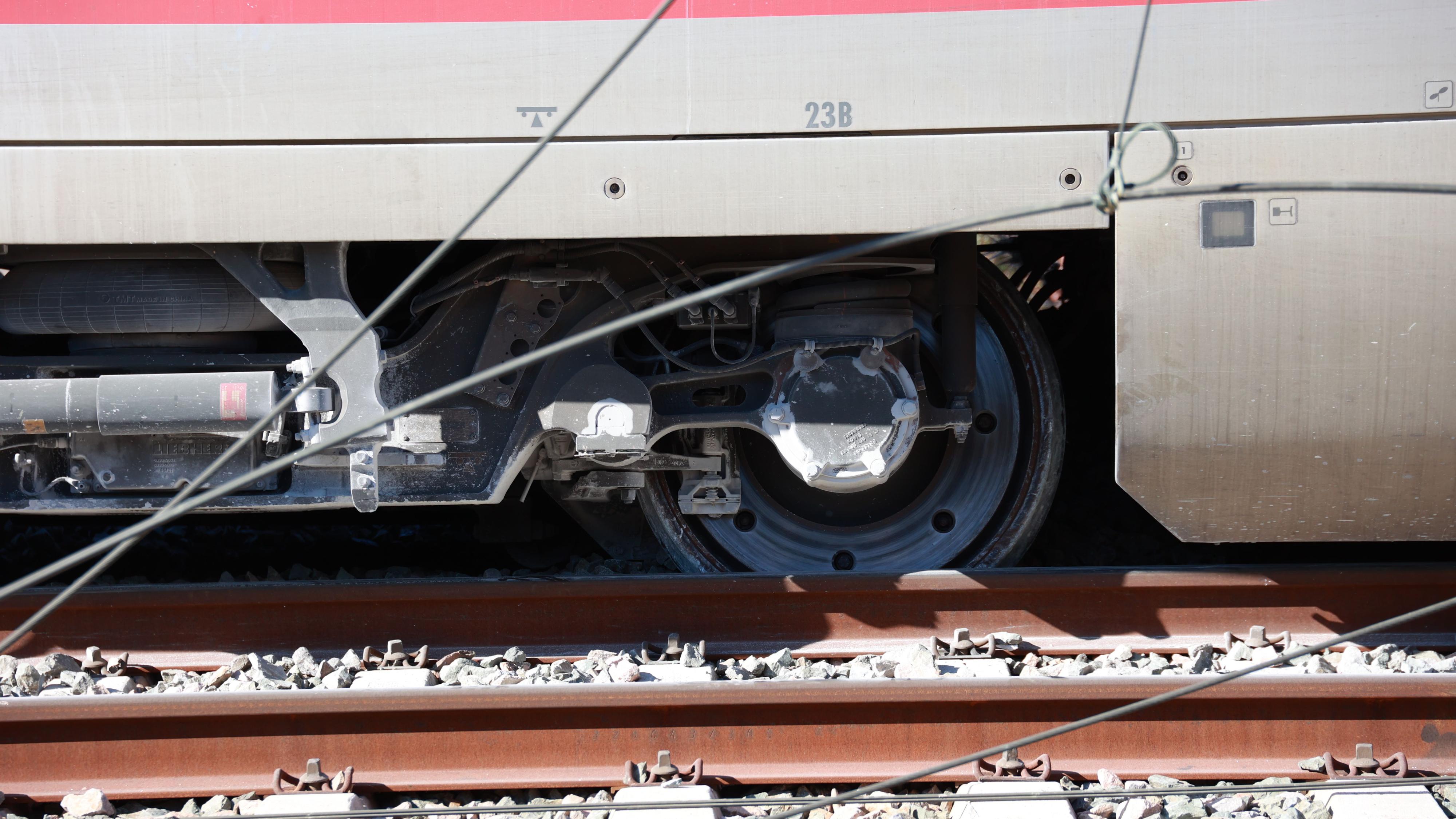
Transport Minister Óscar Puente confirmed on Wednesday that there are "marks" on the bogies —the train's steering components—of the first five cars of the Iryo train . Puente also explained that other trains that had previously passed through that section of track had been examined , and "some similar marks were observed; specifically, on the two or three trains that passed before it." The minister made these remarks in an interview on the program "Mañaneros . "
These "marks" on the Iryo carriages—Puente also called them "notches"—are " one millimeter thick" and "several centimeters wide," and they are repeated on the first five carriages. All of this, the minister commented, suggests that "something we cannot yet determine has caused this on the front bogies and may have been the cause of the derailment."
On the other hand, Puente also indicated that Renfe has examined other trains that have passed through the same section of track at longer intervals, exceeding one hour , and that none of these markings have been found on them so far . "It also confuses us that, on one of the trains that does have markings, there are two, but on the left side of the train and not on the right, which is where the markings are visible on the Iryo line," he commented.
Therefore, the Minister of Transport has indicated that asserting that these marks "necessarily" correspond to a track break is "completely premature ," although he acknowledged that it remains one of the possible hypotheses. Nevertheless, Puente pointed out that new data and evidence are emerging and that the investigation continues to progress.
He claims that the Iryo piece found in a stream appeared on Monday and that he was a witness.
On the other hand, the Minister of Transport referred to the bogie of the Iryo train that was found partially submerged in a stream , about 300 meters from the crash site. According to a report published by The New York Times , this piece was neither cordoned off nor guarded by the authorities, although Adif (Spain's railway infrastructure manager) maintains that they had located it and that the railway accident investigation commission was aware of its existence.
Regarding this, Puente confirmed that he himself was present when the part was discovered. "I was there when it was located, and it was located on Monday morning," the minister stated. At that time, he continued, they knew that the front bogies of car number 8 of the Iryo train had disappeared, and therefore, Adif asked the Civil Guard to use a drone to try to locate them.
Ultimately, this wasn't necessary, according to Puente, because an officer alerted them that he had spotted "something" in a stream, which he described as wheels. Adif personnel then arrived at the scene and confirmed that they were bogies . "It is believed that these bogies may have been ejected by the impact, but the investigation will have to determine that," he stated. When asked why the piece wasn't cordoned off, Puente emphasized that it weighs 20 tons, is located in a stream, and that "it's not so easy for someone to pick it up and carry it away."
However, the minister has again called for caution because, in his opinion, an investigation of this nature "is not a football match that is filmed and broadcast minute by minute from the commentator's booth," as it can lead to "grotesque extremes."
He regrets the "confusion" following the publication of the Iryo train driver's calls
On the other hand, the minister also referred to the two conversations between the Iryo train driver and the control center at Madrid's Atocha Station, extracted from the train's black box. He lamented the "confusion" generated by these kinds of leaks, which "lead to interpretations that have nothing to do with reality."
The Iryo train driver reported a "junction" in Adamuz and asked for traffic to be stopped "urgently".
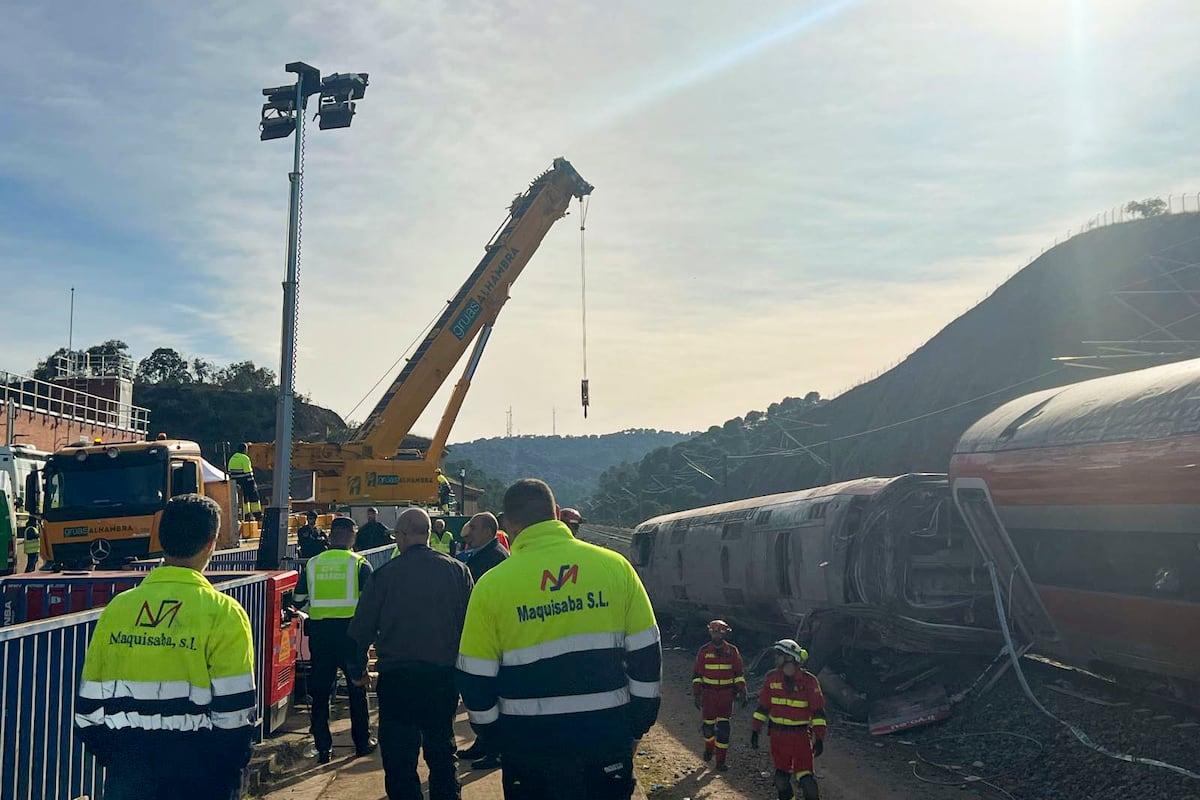
As he explained, when the Iryo train driver called Atocha station, "everything had already happened: the derailment and the collision with the Alvia train," but "he didn't notice." How is this possible? According to the minister, the first five cars of the Iryo train were not impacted and did not perceive "the movements" that caused the train to derail. Therefore, Puente indicated, when the driver got off the train, he saw that there had been a derailment , but he was unaware that there had been a collision with the other Alvia train , which was 800 meters away, and he didn't see it because it was nighttime.
The director of the 061 emergency service in Andalusia: "It took us almost 15 or 20 minutes to realize there was a second train."
On the other hand, Puente recounts that, in the initial call, the control center at Atocha was also unaware of the collision, and therefore the operator commented that "no train is arriving." However, as the minister explains, at that moment the Alvia had already collided with the Iryo and was derailed, and shortly afterward they discovered at Atocha that the Alvia was stopped and attempted to contact the train. Nevertheless, Puente pointed out that simply listening to the audio recordings of the Iryo driver is not enough to fully understand the sequence of events.

 elpais.com