• Our new ticketing site is now live! Using either this or the original site (both powered by TrainSplit) helps support the running of the forum with every ticket purchase! Find out more and ask any questions/give us feedback in this thread!

Is Hydrogen dead as a power source for trains?

Status
Not open for further replies.

reddragon

Established Member
Joined
24 Mar 2016
Messages
3,272
Location
Churn (closed)
Moderator note: Split from
Hydrogen is dead in railways, a fad of the oil & gas industry.

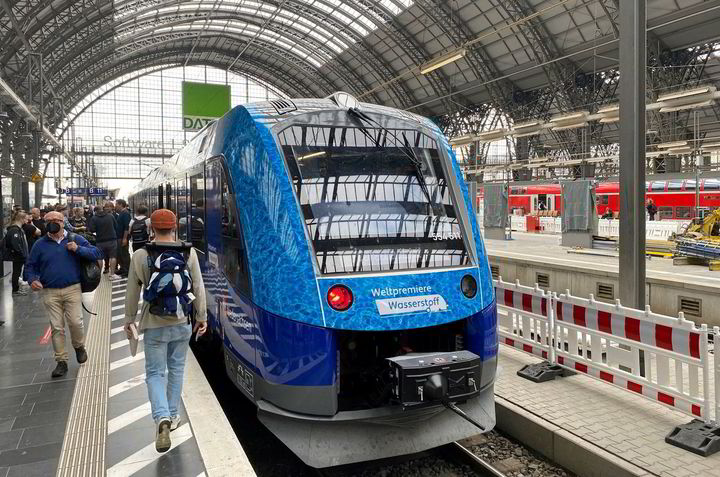
The far moved advanced in service trains in Germany have been withdrawn due to the painful operating costs & prohibitive costs of the refuelling stations.

The realistic range is also lower than that of a battery train & cannot benefit from OLE / 3rd rail top ups to a sufficient degree
 
Last edited by a moderator:
Sponsor Post - registered members do not see these adverts; click here to register, or click here to log in
R

RailUK Forums

Nicholas Lewis

Established Member
Joined
9 Aug 2019
Messages
8,007
Location
Surrey
Hydrogen is dead in railways, a fad of the oil & gas industry.

The far moved advanced in service trains in Germany have been withdrawn due to the painful operating costs & prohibitive costs of the refuelling stations.

The realistic range is also lower than that of a battery train & cannot benefit from OLE / 3rd rail top ups to a sufficient degree
Certainly if a route involves part running over exiting electrification then BEMUs definitely the way forward. BEMUs could be used on longer distance non electrified routes if the schedule would cope with extended durations for in route recharging otherwise hydrogen remains the only non polluting option. Mind you for the miniscule amount of emissions a few diesel trains would have I wouldn't be going to all the effort and expense.
 

ShadowKnight

Member
Joined
22 Oct 2019
Messages
240
Location
Liverpool
There is a point where a hydrogen train trumps a battery train as the volume/weight ratio of carrying the batteries required for a Certain distance is trumped by hydrogen. I'm not sure it may be feasible in the UK other than the Scottish Highland / far north lines and the heart of Wales routes. In other larger countries it may be feasible imo.
 

anthony263

Established Member
Joined
19 Aug 2008
Messages
6,892
Location
South Wales
There is a point where a hydrogen train trumps a battery train as the volume/weight ratio of carrying the batteries required for a Certain distance is trumped by hydrogen. I'm not sure it may be feasible in the UK other than the Scottish Highland / far north lines and the heart of Wales routes. In other larger countries it may be feasible imo.
What about a bimode hydrogen/electric unit for the London Waterloo to Exeter st davids service
 

reddragon

Established Member
Joined
24 Mar 2016
Messages
3,272
Location
Churn (closed)
There is a point where a hydrogen train trumps a battery train as the volume/weight ratio of carrying the batteries required for a Certain distance is trumped by hydrogen. I'm not sure it may be feasible in the UK other than the Scottish Highland / far north lines and the heart of Wales routes. In other larger countries it may be feasible imo.
The thing is, batteries have already won on volume as H2 is not energy dense by volume and cannot be topped up en-route.

Scotland is energy rich, so a remote wind powered supply and charging station is easy & cheap to do, topping up a battery. You cannot do that with H2 and as H2 stations cost millions each & the fuel costs twice that of diesel, cheap wind energy will always win.
 

ShadowKnight

Member
Joined
22 Oct 2019
Messages
240
Location
Liverpool
The thing is, batteries have already won on volume as H2 is not energy dense by volume and cannot be topped up en-route.

Scotland is energy rich, so a remote wind powered supply and charging station is easy & cheap to do, topping up a battery. You cannot do that with H2 and as H2 stations cost millions each & the fuel costs twice that of diesel, cheap wind energy will always win.
I would dispute it is an easy and cheap thing to add a remote charging point and that everywhere in Scotland is amenable to renewable energy.

Risk adds further consideration to having battery charging points.

Can the equipment last in the remote weather?
How much will it cost installing it?
How much will the maintenance cost?
How many charge points are needed?
How will charging every so often affect the timetable?
What happens if the train reaches a broken charge station and can't reach the next one?

I think that it looks quite ideal to have a battery charging system along the line. However it seems to me that it adds much more capital and operational risk and cost that may not make the route viable much anymore.

Think of all this above needed to enable battery operation where a hydrogen fuel cell vehicle is comparatively much more drop and play (of course there would be infrastructure changes but much less so like hydrogen refuellers at the depot) and there is not much difference (added cost) to the current system.

Also hydrogen volumetrically may not be as energy dense as batteries but this is a sliding scale to the pressure the gas may be stored at.

There is a reason it is more feasible to have hydrogen JCB diggers and HGVs than battery, which is less viable at that scale
 

315801

Member
Joined
12 Jul 2022
Messages
201
Can I ask please if charging the batteries while in service would be helped if alternators powerful enough to keep the charge topped up would be a workable possibility if they were driven off the axles
 

Invincible

Member
Joined
23 Apr 2022
Messages
854
Location
Surrey
There is a reason it is more feasible to have hydrogen JCB diggers and HGVs than battery, which is less viable at that scale
Similar hydrogen technology kit from the 614 is now being used by Arcola Energy/ Ballard for Glasgow refuse trucks.
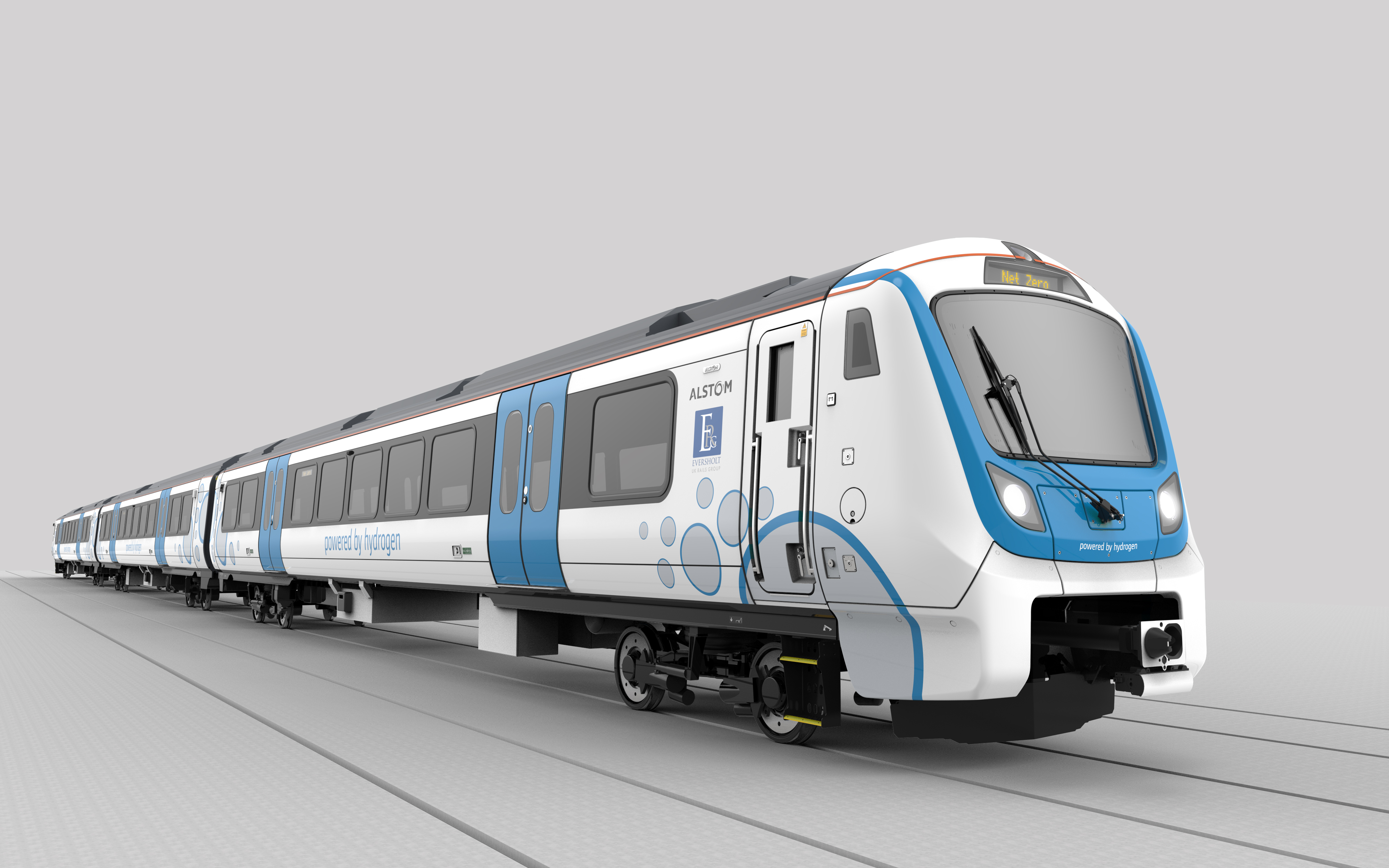
Guess the grants for hydrogen train tests have now stopped?. But despite the set back in Baden-Württemberg Alstom is still pushing the technology. They announced an Aventra version in 2021, but has not seem to have progressed?

== Doublepost prevention - post automatically merged: ==

Can I ask please if charging the batteries while in service would be helped if alternators powerful enough to keep the charge topped up would be a workable possibility if they were driven off the axles
In a hydrogen train batteries can be charged by the fuel cell, but think the drive motors can also act as alternators topping up batteries when the train brakes.
The batteries can then help boost the output of the fuel cells to the drive motors when accelerating to aid efficiency.
 
Last edited:

reddragon

Established Member
Joined
24 Mar 2016
Messages
3,272
Location
Churn (closed)
I would dispute it is an easy and cheap thing to add a remote charging point and that everywhere in Scotland is amenable to renewable energy.

Risk adds further consideration to having battery charging points.

Can the equipment last in the remote weather?
How much will it cost installing it?
How much will the maintenance cost?
How many charge points are needed?
How will charging every so often affect the timetable?
What happens if the train reaches a broken charge station and can't reach the next one?

I think that it looks quite ideal to have a battery charging system along the line. However it seems to me that it adds much more capital and operational risk and cost that may not make the route viable much anymore.

Think of all this above needed to enable battery operation where a hydrogen fuel cell vehicle is comparatively much more drop and play (of course there would be infrastructure changes but much less so like hydrogen refuellers at the depot) and there is not much difference (added cost) to the current system.

Also hydrogen volumetrically may not be as energy dense as batteries but this is a sliding scale to the pressure the gas may be stored at.

There is a reason it is more feasible to have hydrogen JCB diggers and HGVs than battery, which is less viable at that scale
Funny how China is able to run 10s of thousands of buses on this system with short range capacitors / batteries & bus stop charging.

Whatever it costs, Hydrogen costs multiple times more

== Doublepost prevention - post automatically merged: ==

Similar hydrogen technology kit from the 614 is now being used by Arcola Energy/ Ballard for Glasgow refuse trucks.
Guess the grants for hydrogen train tests have now stopped?. But despite the set back in Baden-Württemberg Alstom is still pushing the technology. They announced an Aventra version in 2021, but has not seem to have progressed?

== Doublepost prevention - post automatically merged: ==


In a hydrogen train batteries can be charged by the fuel cell, but think the drive motors can also act as alternators topping up batteries when the train brakes.
The batteries can then help boost the output of the fuel cells to the drive motors when accelerating to aid efficiency.

My local council is retrofitting its refuse trucks with batteries. Much cheaper.

Hydrogen is heavily subsidised with over £100 million a year 'grants' for nothing in the UK alone. It's not happening, like the fake carbon zero fuel peddled in Germany
 

ShadowKnight

Member
Joined
22 Oct 2019
Messages
240
Location
Liverpool
Funny how China is able to run 10s of thousands of buses on this system with short range capacitors / batteries & bus stop charging.

You are talking about an suburban/urban bus network where the charge points are used quite frequently.
There the finances work out.

That is less so in the Highlands where there are a handful of trains a day. I don't think the utilisation factor stacks up cost wise for such charging infrastructure
 

WideRanger

Member
Joined
15 Jun 2016
Messages
396
Can I ask please if charging the batteries while in service would be helped if alternators powerful enough to keep the charge topped up would be a workable possibility if they were driven off the axles
What would be driving the motion in the axles?
 

315801

Member
Joined
12 Jul 2022
Messages
201
The unit would still have its traction motors but what my thought was having alternators driven off the axles once the unit is on the move, the alternators would then as far as I understand it, help to keep the batteries charged up, much like the alternator on a car, it keeps the battery charged so that it will start the engine next time the key is turned.

In short my idea was based on what was done with a class 379 unit a few years ago where a raft of batteries was fitted under onto the 2 driving coaches I think which enabled the unit ( 379013 I think was the chosen unit for the experiment ) to run with its pantograph down but I'm not sure on what the process was for charging the batteries was, whether it was done off the 25Kv or whether alternators were fitted to it in order to charge the batteries while it was running.

I thought that something similar could be done to the unit for which this thread is about so that it could run again in preserved passenger service or do something similar to the TFL 230s or Northern 769s which feature in other threads and have diesel generators supply power to the motors.

In either fomat, the unit could run again in service and would probably be classed as 314/1 or 314/0 for example as it would not be running off 25Kv
 
Last edited:

GLC

Member
Joined
21 Nov 2018
Messages
397
The unit would stoll have its traction motors but what my thought was having alternators driven off the axles once the unit is on the move, the alternators would then as far as I understand it, help to keep the batteries charged up, much like the alternator on a car, it keeps the battery charged so that it will start the engine next time the key is turned.
The wheels would only be turning because of the energy supplied by the battery. Unless the alternator was 100% efficient (which it can't be), it would be a net drain on the battery, and so you would be reducing the overall range of the train, rather than increasing it.

If it were possible to do this, it would be called a perpetual motion machine, and many physicists would be rewriting their textbooks
 

37201xoIM

Member
Joined
29 Apr 2016
Messages
371
BEMU would be able to recharge the batteries charged when on 3rd rail. H2MU couldn't do that.
But surely with at least an hourly train on the Mule, the sensible solution is just to get the wires up, or the third rail down, anyway?
 

norbitonflyer

Established Member
Joined
24 Mar 2020
Messages
5,742
Location
SW London
Mule?

Anyway, we are talking about politically acceptable solutions, not sensible ones. The chances of electrification beyond Salisbury in my lifetime are minimal - and I wouldn't bet on getting as far as Salisbury.
 

Wyrleybart

Established Member
Joined
29 Mar 2020
Messages
2,619
Location
South Staffordshire
The unit would stoll have its traction motors but what my thought was having alternators driven off the axles once the unit is on the move, the alternators would then as far as I understand it, help to keep the batteries charged up, much like the alternator on a car, it keeps the battery charged so that it will start the engine next time the key is turned.

In short my idea was based on what was done with a class 379 unit a few years ago where a raft of batteries was fitted under onto the 2 driving coaches I think which enabled the unit ( 379013 I think was the chosen unit for the experiment ) to run with its pantograph down but I'm not sure on what the process was for charging the batteries was, whether it was done off the 25Kv or whether alternators were fitted to it in order to charge the batteries while it was running.

I thought that something similar could be done to the unit for which this thread is about so that it could run again in preserved passenger service or do something similar to the TFL 230s or Northern 769s which feature in other threads and have diesel generators supply power to the motors.

In either fomat, the unit could run again in service and would probably be classed as 314/1 or 314/0 for example as it would not be running off 25Kv
AIUI a train on steel wheels has low friction but not zero friction. You therefore need a firm of energy to move and sustain the movement particularly up gradients, but you can convert kinetic energy on downward stretches of track. I got some great experience if this when i drove a 7.25 inch battery "hymek" nearly 40 years ago. The controller was very rudimentary OFF POWER and BRAKE. Rubbing the lever in the latter position on downhill gradients topped the battery up nicely.
 

xotGD

Established Member
Joined
4 Feb 2017
Messages
7,861
We may well see one or more "blue" hydrogen plants getting the go-ahead tomorrow. Somebody has to use the stuff, so why not the railway?
 

hwl

Established Member
Joined
5 Feb 2012
Messages
8,254
We may well see one or more "blue" hydrogen plants getting the go-ahead tomorrow. Somebody has to use the stuff, so why not the railway?
H2 is best used in direct reduction ("green") steel making, concrete and other high temperature chemical processes.
 

HSTEd

Veteran Member
Joined
14 Jul 2011
Messages
20,318
The common view in the energy policy side of academia is that hydrogen is a desperate attempt by the likes of Cadent to remain relevant in the decarbonised future and avoid their hugely expensive gas network becoming a stranded asset.
 
Last edited:

AngusH

Member
Joined
27 Oct 2012
Messages
598
It appears that Germany is making some progress on this even if there are teething troubles:


The main trouble seems to be the location of the fuelling facility and the delays in actually delivering the new trains to the operating company.

I can't see this is worse than the difficulties experienced introducing diesel and electric trains into service back in the 1930s-1950s, where breakdowns were routine and steam often substituted.
 

Andrew*Debbie

Member
Joined
1 Feb 2017
Messages
323
Location
Llanfairpwllgwyngyll ...
Can I ask please if charging the batteries while in service would be helped if alternators powerful enough to keep the charge topped up would be a workable possibility if they were driven off the axles

Alternators and electric motors are both what Electrical Engineers call "electric machines." With clever switching a single electric machine can serve as both a motor and an alternator. This technolgy is as old as electric motors.

Most battery electric vechicles, except perhaps golf carts, do this. Most electric trains and even some DEMUs do this. Diesel-Electrics often just throw the recovered energy overboard as waste heat. This is called dynamic brakes, at least in American trains. Not sure what they call it in the UK.

Still it saves wear on the friction brakes. Some EMUs have dynamic brakes and throw it overboard. Some put it back into the wires. Pendolinos have regenertive brakes. I'm not sure about other EMUs used in the UK. Older tube trains do not have regen. it was tried and found to cause problems.

In an electric car, regenerative braking recovers about 60-70% of the kintec energy. Not sure about trains.
 

HSTEd

Veteran Member
Joined
14 Jul 2011
Messages
20,318
Somewhat related but the Cheshire Hydrogen heating trial is no longer going to force participation of everyone in the village.

Secondary gas pipes will be laid to ensure natural gas supply to unwilling residents can continue.

That's probably going to drive the price so high as to kill the trial entirely, which does not bode well for hydrogen as a replacement in other fuel sectors.
Energy firms will no longer force people in a village in Cheshire to stop heating and cooking with natural gas and swap to lower-carbon hydrogen after a local backlash to a planned government-backed pilot.
British Gas and Cadent had been prepared to cut off gas supplies to nearly 2,000 homes in the village of Whitby, just outside Ellesmere Port on the south bank of the Mersey, as part of proposals to create the UK’s first hydrogen-fuelled village.
However, the companies have since rowed back, telling people they will have the option of adopting hydrogen or keeping gas for their home energy needs, after vocal opposition over a 10-month consultation process.
 

Bald Rick

Veteran Member
Joined
28 Sep 2010
Messages
35,817
Not forgetting that hydrogen trains are actually hydrogen + battery trains.…
 

Energy

Established Member
Joined
29 Dec 2018
Messages
5,135
Somewhat related but the Cheshire Hydrogen heating trial is no longer going to force participation of everyone in the village.

Secondary gas pipes will be laid to ensure natural gas supply to unwilling residents can continue.

That's probably going to drive the price so high as to kill the trial entirely, which does not bode well for hydrogen as a replacement in other fuel sectors.
Not a bad thing, using green hydrogen for heating makes no sense.
 

reddragon

Established Member
Joined
24 Mar 2016
Messages
3,272
Location
Churn (closed)
Proper scientific research shows that it takes 4 times as my electric to make Hydrogen to power a vehicle than if just charged up via the original electric or 8 times as much for space heating.

Hydrogen has it's place, it's just not for heating or powering transportation. Ignoring the fact it's very dangerous & explosive, plus cannot be transported due to its inherent properties.
 

HSTEd

Veteran Member
Joined
14 Jul 2011
Messages
20,318
Not a bad thing, using green hydrogen for heating makes no sense.
Indeed, they've created a heating technology strictly worse than storage heaters in pretty much every way!
 

Energy

Established Member
Joined
29 Dec 2018
Messages
5,135
Indeed, they've created a heating technology strictly worse than storage heaters in pretty much every way!
It's almost impressive that they have created a technology that even if every stage is near 100% efficient it would have the same efficiency as a immersion heater :D
 

TPO

Member
Joined
7 Jun 2018
Messages
402
But surely with at least an hourly train on the Mule, the sensible solution is just to get the wires up, or the third rail down, anyway?

This. Thing is with railways, we already have a really good way of powering trains by electricity. I'd like to see proper consideration of how to put in place a lower-cost electrification approach (i.e. putting in a proven technology in a more cost-efficient manner) rather than pouring cash into a dubious technology.

(I'd also like HS2 turned into an electrified freight line, cut the costs and remove diesel-powered trucks from the motorways, but that's another topic).

Proper scientific research shows that it takes 4 times as my electric to make Hydrogen to power a vehicle than if just charged up via the original electric or 8 times as much for space heating.

Hydrogen has it's place, it's just not for heating or powering transportation. Ignoring the fact it's very dangerous & explosive, plus cannot be transported due to its inherent properties.

Agreed. The checmial and physical properties of hydrogen make it challenging to use, plus escaped hydrogen gas is apparently quite a potent greenhouse gas.

If there was not a sensible, proven alternative then I might think differently; but the real push behind hydrogen is that folks don't want to give up their cars or change their lifestyle at all.

From an article I saw on the BBC news site recently (I cannot find it now), there's several Pumped Storage sites with plans but still awaiting planning permission and/or grid connections. That's where the initial push should go, actually implementing proven options rather than increasing the shopping list of possible options.

TPO
 
Status
Not open for further replies.

Top