Overnight? Maybe. In the day time there is a 110mph classic rail ine which will be much emptier post HS2...(I'd also like HS2 turned into an electrified freight line, cut the costs and remove diesel-powered trucks from the motorways, but that's another topic).

-
Our new ticketing site is now live! Using either this or the original site (both powered by TrainSplit) helps support the running of the forum with every ticket purchase! Find out more and ask any questions/give us feedback in this thread!
You are using an out of date browser. It may not display this or other websites correctly.
You should upgrade or use an alternative browser.
You should upgrade or use an alternative browser.
Is Hydrogen dead as a power source for trains?
- Thread starter reddragon
- Start date
- Status
- Not open for further replies.
Sponsor Post - registered members do not see these adverts; click here to register, or click here to log in
R
RailUK Forums
There are some very serious issues with hydrogen as a fuel source.
Firstly energy density. Hydrogen has a much higher heat of combustion when compared with, say, diesel (141 MJ/kg vs 45 MJ/Kg) which means that kg for kg hydrogen contains much more energy that diesel or petrol ( about 3 times ) there is a major catch. Liquid hydrogen is the least dense liquid known with a density 0.07 that of water - or in effect about 1/10th that of diesel (0.85 that of water). So you will need a volume about 3~4 times that of diesel to contain the same amount of energy, which isn't very good.
Ignoring the cryogenics side, there is another, more insidious problem. H2 is the smallest molecule out there (He is smaller but that is an atom) and like helium it has a tendency to leach into the container (it can permeate into solid metal) that holds it, making the latter brittle. This is known as "hydrogen embrittlement" and can be catastrophic. Now, some materials are more susceptible that others but some steels ( except stainless) and copper are notorious for this.
Firstly energy density. Hydrogen has a much higher heat of combustion when compared with, say, diesel (141 MJ/kg vs 45 MJ/Kg) which means that kg for kg hydrogen contains much more energy that diesel or petrol ( about 3 times ) there is a major catch. Liquid hydrogen is the least dense liquid known with a density 0.07 that of water - or in effect about 1/10th that of diesel (0.85 that of water). So you will need a volume about 3~4 times that of diesel to contain the same amount of energy, which isn't very good.
Ignoring the cryogenics side, there is another, more insidious problem. H2 is the smallest molecule out there (He is smaller but that is an atom) and like helium it has a tendency to leach into the container (it can permeate into solid metal) that holds it, making the latter brittle. This is known as "hydrogen embrittlement" and can be catastrophic. Now, some materials are more susceptible that others but some steels ( except stainless) and copper are notorious for this.
Fleetmaster
Member
FWIW, there is a field of chemical engineering that aims to find ways to capture hydrogen as part of a denser molecule that is a solid, so that it can be transported and used like a literal lump of fuel. You drop it into the vehicle and it converts into hydrogen right at the place it is needed.
The catch seems to be that the process of extracting the hydrogen turns the fuel lump into a gunky residue which it was believed would put middle class people off running their hydrogen cars this way. The railway however has plenty of people well used to cleaning out goop from the innards at the end of a shift.
The catch seems to be that the process of extracting the hydrogen turns the fuel lump into a gunky residue which it was believed would put middle class people off running their hydrogen cars this way. The railway however has plenty of people well used to cleaning out goop from the innards at the end of a shift.
I know - metal hydrides are good examples. The problem with energy density remains - in fact gets worse since the amount of hydrogen that is stored per kg of hydride is much lower than for liquid hydrogen. So you need a much greater weight of hydride is needed when compared with petrol ( about 4 times ).FWIW, there is a field of chemical engineering that aims to find ways to capture hydrogen as part of a denser molecule that is a solid, so that it can be transported and used like a literal lump of fuel. You drop it into the vehicle and it converts into hydrogen right at the place it is needed.
The catch seems to be that the process of extracting the hydrogen turns the fuel lump into a gunky residue which it was believed would put middle class people off running their hydrogen cars this way. The railway however has plenty of people well used to cleaning out goop from the innards at the end of a shift.
At least it's on demand. My previous flat had storage heaters, for them to retain warmth for the evening they had to be so hot in the morning that I had to open the windows to cool the place down. Which is nuts.Indeed, they've created a heating technology strictly worse than storage heaters in pretty much every way!
Trainbike46
Established Member
Hydrogen heating is also strictly worse that electric panel heaters - which do provide heat on demand.At least it's on demand. My previous flat had storage heaters, for them to retain warmth for the evening they had to be so hot in the morning that I had to open the windows to cool the place down. Which is nuts.
Back to railway purposes, I think it's pretty clear that except for very niche cases, either electrification or battery EMUs (probably with partial electrification to recharge the batteries), will be vastly superior to hydrogen
Hydrogen has a place, but I suspect it'll mostly be in industry
Failed Unit
Established Member
Just as a slightly different question, but how are the sales of Hydrogen Buses versus Electric ones. My unscientific observation is a am seeing more electric buses in major cities. I assume that is down to costs and / or grants. Either operating costs or buying the thing outright.
It is interesting seeing the view points of the battery Hybrid. Really how long does it take to charge and will this justify short sections of electrification. Take Peterborough - Doncaster. I doubt the time spent in the stations with the pan up will be enough to charge the train for the journey. But if you look at Scarborough and over the Pennies, may wiring Scarborough and the time on the wires elsewhere in the journey could be long enough?
There are not many routes that are 100% away from the wires, but some have being mentioned above. But really agreeing I can’t see it taking off. It may justify some in-fills for charging purposes. We could also get to a debate about should we fill the gaps or just run on power between them. Derby - Matlock, should they just finish the branch or have batteries for the last few miles. (Windermere will also have the same question). A lot of energy wasted carrying batteries around on these branches.
It is interesting seeing the view points of the battery Hybrid. Really how long does it take to charge and will this justify short sections of electrification. Take Peterborough - Doncaster. I doubt the time spent in the stations with the pan up will be enough to charge the train for the journey. But if you look at Scarborough and over the Pennies, may wiring Scarborough and the time on the wires elsewhere in the journey could be long enough?
There are not many routes that are 100% away from the wires, but some have being mentioned above. But really agreeing I can’t see it taking off. It may justify some in-fills for charging purposes. We could also get to a debate about should we fill the gaps or just run on power between them. Derby - Matlock, should they just finish the branch or have batteries for the last few miles. (Windermere will also have the same question). A lot of energy wasted carrying batteries around on these branches.
fishwomp
Established Member
Hydrogen is dead in railways, a fad of the oil & gas industry.
The far moved advanced in service trains in Germany have been withdrawn due to the painful operating costs & prohibitive costs of the refuelling stations.
[..]
Modern Railways 2-3 months back mentioned a parliamentary committee meeting on this topic. The decision was that Hydrogen wouldn't be viable until 2050 - and therefore they should _continue_ research into it with prototypes etc. You couldn't make this up.. there is plenty of time to look at it in the next 20 years, not now..
Trainbike46
Established Member
Just as a slightly different question, but how are the sales of Hydrogen Buses versus Electric ones. My unscientific observation is a am seeing more electric buses in major cities. I assume that is down to costs and / or grants. Either operating costs or buying the thing outright.
It is interesting seeing the view points of the battery Hybrid. Really how long does it take to charge and will this justify short sections of electrification. Take Peterborough - Doncaster. I doubt the time spent in the stations with the pan up will be enough to charge the train for the journey. But if you look at Scarborough and over the Pennies, may wiring Scarborough and the time on the wires elsewhere in the journey could be long enough?
There are not many routes that are 100% away from the wires, but some have being mentioned above. But really agreeing I can’t see it taking off. It may justify some in-fills for charging purposes. We could also get to a debate about should we fill the gaps or just run on power between them. Derby - Matlock, should they just finish the branch or have batteries for the last few miles. (Windermere will also have the same question). A lot of energy wasted carrying batteries around on these branches.
re buses:
Translink (my local public transport company) has both battery electric and Hydrogen buses.
During a presentation on Translink zero emissions targets, the director said that the hydrogen buses:
- were more expensive to buy
- were more expensive to refuel/charge
- required more expensive changes to the depots
And that the main reasons they got some hydrogen buses was that:
- They didn't want to entirely commit to a single technology
- The route served by the hydrogen buses couldn't be served by the battery buses available
So, with some improvement in battery technology (or the introduction of opportunity charging), hydrogen would be inferior in all, rather than just the vast majority of cases.
re battery EMUs:
The amount of charging wires needed will obviously depend on a large range of factors, including how much energy is needed to refill the battery (what is the full route being run?), what battery chemistry was chosen, how much energy can be pulled from the wires, etc.
The valleys lines in Wales (with the 756 trimodes) are apparently designed so that it won't need it's single diesel engine in the valleys at all
And of course, Scotland is also rolling out discontinous electrification,
Last edited:

reddragon
Established Member
The simple issues are that: -Just as a slightly different question, but how are the sales of Hydrogen Buses versus Electric ones. My unscientific observation is a am seeing more electric buses in major cities. I assume that is down to costs and / or grants. Either operating costs or buying the thing outright.
It is interesting seeing the view points of the battery Hybrid. Really how long does it take to charge and will this justify short sections of electrification. Take Peterborough - Doncaster. I doubt the time spent in the stations with the pan up will be enough to charge the train for the journey. But if you look at Scarborough and over the Pennies, may wiring Scarborough and the time on the wires elsewhere in the journey could be long enough?
There are not many routes that are 100% away from the wires, but some have being mentioned above. But really agreeing I can’t see it taking off. It may justify some in-fills for charging purposes. We could also get to a debate about should we fill the gaps or just run on power between them. Derby - Matlock, should they just finish the branch or have batteries for the last few miles. (Windermere will also have the same question). A lot of energy wasted carrying batteries around on these branches.
1 - Hydrogen fuelling stations costs £millions each
2 - Powering anything by Hydrogen costs multiple times more than battery electric with no benefit
3 - Hydrogen buses require very costly specialist maintenance. BEV buses do not.
4 - You can charge a BEV bus anywhere via multiple means. H2 buses are tied to one filling station that can break.
Exactly the same rules apply to trains, HGVs, planes etc.
You would not get me in any H2 powered vehicle, they go bang to a degree that makes engine fires or battery fires look like a candle next to a mushroom cloud.
== Doublepost prevention - post automatically merged: ==
It will never be viable, you cannot change the chemical properties of Hydrogen.Modern Railways 2-3 months back mentioned a parliamentary committee meeting on this topic. The decision was that Hydrogen wouldn't be viable until 2050 - and therefore they should _continue_ research into it with prototypes etc. You couldn't make this up.. there is plenty of time to look at it in the next 20 years, not now..
Failed Unit
Established Member
You also think that the price of this research you can keep eating into the bits of the network that are not electrified.
I must admit if you stick to something a lot of us have the motor Vehicle. Hydrogen? I wouldn’t have clue in my local area where to fill it. (Looking on the internet probably about 20 stations UK mainly for buses) - Not many cars either. EV charging is OK - but nowhere near where it needs to be if 50% of car in the UK were EV.
I guess rail is probably going to be easier, as you have less depots. But again looking at the rural routes. The Barton Branch would be a possible candidate, but where would the nearest place to refill be? (Nottingham probably). Yes the unit has to go there for maintenance but I assume that they refill the unit currently overnight at Cleethorpes. (Same story on other branches)
Maybe things will get better, but again I am cynical. That said according to back to the future we should be in garbage powered flying cars by now.
I must admit if you stick to something a lot of us have the motor Vehicle. Hydrogen? I wouldn’t have clue in my local area where to fill it. (Looking on the internet probably about 20 stations UK mainly for buses) - Not many cars either. EV charging is OK - but nowhere near where it needs to be if 50% of car in the UK were EV.
I guess rail is probably going to be easier, as you have less depots. But again looking at the rural routes. The Barton Branch would be a possible candidate, but where would the nearest place to refill be? (Nottingham probably). Yes the unit has to go there for maintenance but I assume that they refill the unit currently overnight at Cleethorpes. (Same story on other branches)
Maybe things will get better, but again I am cynical. That said according to back to the future we should be in garbage powered flying cars by now.
Invincible
Member
But the costs for overhead wires on the Great West route went sky high, so electrification went out of favour into Hybrid diesel electric trains.This. Thing is with railways, we already have a really good way of powering trains by electricity. I'd like to see proper consideration of how to put in place a lower-cost electrification approach (i.e. putting in a proven technology in a more cost-efficient manner) rather than pouring cash into a dubious technology.
An interesting article about hydrogen trains
Why aren’t UK hydrogen trains carrying passengers yet?
The race to bring a hydrogen train to the UK market has slowed to a crawl for the same reason blocking conventional electrification: a lack…
 garethdennis.medium.com

HSTEd
Veteran Member
- Joined
- 14 Jul 2011
- Messages
- 20,344
A lot of this is politicians desperately casting around for a magical hypertech that will make the capital requirements for decarbonisation vanish.
We see it across the economy and its one of the reasons we are in such a dire position - because whilst they wait the decarbonisation challenge gets harder to achieve because of the wasted time and effort.
We see it across the economy and its one of the reasons we are in such a dire position - because whilst they wait the decarbonisation challenge gets harder to achieve because of the wasted time and effort.
reddragon
Established Member
The simple fact is that the Oil & Gas industry is pouring hundreds of £millions into lobbying for Hydrogen to save their bacon, absolutely no other reason than the financial gain of the super rich shareholders & beneficiaries, that's it!
Invincible
Member
found it, but the summary is different to what you saw and it is electrification for some lines will be not viable before 2050.Modern Railways 2-3 months back mentioned a parliamentary committee meeting on this topic. The decision was that Hydrogen wouldn't be viable until 2050 - and therefore they should _continue_ research into it with prototypes etc. You couldn't make this up.. there is plenty of time to look at it in the next 20 years, not now..
Presumably will be a task for the new GBR to identify lines and funding so the order for the 10 new Hydrogen/Battery Alstom Aventras can be confirmed and trialled on these lines?13. Hydrogen has a modest but potentially critical role to play in decarbonising the rail network, where electrification is not suitable or cannot be delivered in time to contribute towards meeting Net Zero. Whilst trials and demonstration projects are underway in hydrogen trains, there is no clear plan to develop the role of hydrogen in this sector. Some countries, such as Austria and Germany, are already using hydrogen trains. In response to this Report, the Government should set out the lessons it has learned from the use of hydrogen trains overseas and how it will use this information in trials of hydrogen trains in the UK. In response to this Report, the Government should set out the lessons it has learned from the use of hydrogen trains overseas and how it will use this information in trials of hydrogen trains in the UK. (Paragraph 109)
14. The Government must identify, with industry, the train lines where it is unlikely that electrification will be viable before 2050 and start trials of hydrogen trains on these lines in the next five years. (Paragraph 110)
fishwomp
Established Member
Thank you for the correction. I must have speed-read Modern Railways incorrectly..found it, but the summary is different to what you saw and it is electrification for some lines will be not viable before 2050.
Presumably will be a task for the new GBR to identify lines and funding so the order for the 10 new Hydrogen/Battery Alstom Aventras can be confirmed and trialled on these lines?
ShadowKnight
Member
A hydrogen vehicle is about as dangerous as a diesel/petrol vehicle. Infact I've seen some stuff about how a fire from a hydrogen car tank fire is safer than a petrol car tank fire as seen in the video below. I'd say that safety wise hydrogen is no better or worse than current fuels.
As mentioned earlier with buses there are some bus (and rail) use cases that batteries just aren't suitable with current technology.
Where the point about charging batteries anywhere and hydrogen have one filling station (which is the same with existing diesel trains) reduces the points of faliure had and increases the spread of assets across a network increasing the risk of the whole network collapsing if one of the battery charge points fails.
This may be better or worse than hydrogen but I don't think hydrogen can be synically dismissed out of hand as some posters seem to be.
As mentioned earlier with buses there are some bus (and rail) use cases that batteries just aren't suitable with current technology.
Where the point about charging batteries anywhere and hydrogen have one filling station (which is the same with existing diesel trains) reduces the points of faliure had and increases the spread of assets across a network increasing the risk of the whole network collapsing if one of the battery charge points fails.
This may be better or worse than hydrogen but I don't think hydrogen can be synically dismissed out of hand as some posters seem to be.
Andrew*Debbie
Member
This may be better or worse than hydrogen but I don't think hydrogen can be synically dismissed out of hand as some posters seem to be.
I agree that hydrogen fuel cells power can be done safely. It is an engineering problem that can be solved with time and money. Fuel cells are a mature technology. They were invented in 1839. The first hydrogen fuel cell was built in the 1930s.
Fuel cells powered Gemini, Apollo and the space shuttle.
There is no getting around the physics. Fuel cells have poor end-to-end effiency. Fuel cell power systems are expensive. For most applications you have the cost of the battery power thing PLUS the costs of the fuel cell system.
The number of rail routes with a buisness case for H2 are small and shrinking.
Batteries are getting cheaper. ~$917/kWh in 2010 and $137 in 2020. Raw cell prices did blip up in 2022, but the cost of just about everything went up last year.
Analysists guess the new Telsa tabless cells cost somewhere between $100/kWh and $50/kWh but those are unlikely to go into trains anytime soon.
One way get zero CO2 emissions on the handful of routes that can't be done with BEMUs is with biodiesel or renewable diesel powered bi-modes. *but only if the crops are farmed without generating large amounts of CO2*
The other alternative is to continue to run a small number of diesel bi-modes. Transportation world wide is about 15% of global CO2 emssions. CO2 from a few modern diesel bi-modes is small enough to not matter.
Sources:

Space Applications of Hydrogen and Fuel Cells
NASA.gov brings you the latest images, videos and news from America's space agency. Get the latest updates on NASA missions, watch NASA TV live, and learn about our quest to reveal the unknown and benefit all humankind.

Battery price per kwh 2025 | Statista
The cost of lithium-ion batteries per kWh decreased by 20 percent between 2023 and 2024. Lithium-ion battery price was about 115 U.S. dollars per kWh in 202.
 www.statista.com
Invincible
Member
Guess rather than progress the battery/Hydrogen Aventra trials, DFT/GBR could just have batteries on the new build Aventras?, But I expect as Alstom are still running Hydrogen trains in Germany, some Hydrogen trials will still continue in the UK?.There is no getting around the physics. Fuel cells have poor end-to-end effiency. Fuel cell power systems are expensive. For most applications you have the cost of the battery power thing PLUS the costs of the fuel cell system.
The number of rail routes with a buisness case for H2 are small and shrinking.
Batteries are getting cheaper. ~$917/kWh in 2010 and $137 in 2020. Raw cell prices did blip up in 2022, but the cost of just about everything went up last year.
Some experience will be gained from the GWR battery trial at Greenford, if it gets underway?
There was also 2 other projects to fit batteries and do more battery only train trials in the UK, the 321 and 350 conversions, but seems to have stalled?.
Class 350 BatteryFlex
All the batteries I have seen proposed for rail use so far are Lithium Titanate (or LTO) which offer very high charge/discharge currents, many thousands of charge cycles and very high safety, at the expense of outright energy density (they have about 60-70% of the state of the art for a pack...
www.railforums.co.uk
HSTEd
Veteran Member
- Joined
- 14 Jul 2011
- Messages
- 20,344
What happened to the Class 379 fitted with batteries?
Was it returned to standard configuration?
Was it returned to standard configuration?
I would hope that this year Scotrail will place an order for EMUs and BEMUs for its suburban services, in accordance with notices published last year (see first post of this thread).

JohnMcL7
Member
- Joined
- 18 Apr 2018
- Messages
- 1,055
There's a good video here explaining why this wouldn't work:The unit would still have its traction motors but what my thought was having alternators driven off the axles once the unit is on the move, the alternators would then as far as I understand it, help to keep the batteries charged up, much like the alternator on a car, it keeps the battery charged so that it will start the engine next time the key is turned.
In short my idea was based on what was done with a class 379 unit a few years ago where a raft of batteries was fitted under onto the 2 driving coaches I think which enabled the unit ( 379013 I think was the chosen unit for the experiment ) to run with its pantograph down but I'm not sure on what the process was for charging the batteries was, whether it was done off the 25Kv or whether alternators were fitted to it in order to charge the batteries while it was running.
I thought that something similar could be done to the unit for which this thread is about so that it could run again in preserved passenger service or do something similar to the TFL 230s or Northern 769s which feature in other threads and have diesel generators supply power to the motors.
In either fomat, the unit could run again in service and would probably be classed as 314/1 or 314/0 for example as it would not be running off 25Kv
If you skip to around 15 minutes you can see him testing how much power draw there is on the motor when attaching it to an alternator.
Invincible
Member
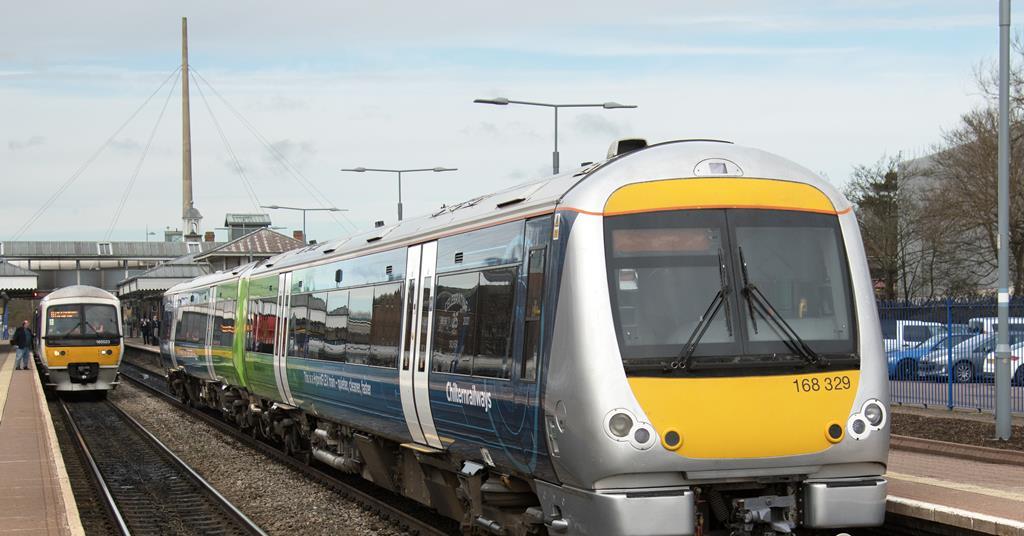
Was this the Chiltern diesel battery hybrid, seems to have gone into service, so presumably more will be converted?.What happened to the Class 379 fitted with batteries?
Was it returned to standard configuration?
Does not seem to be battery only?

Andrew*Debbie
Member
DFT/GBR could just have batteries on the new build Aventras?
Aventra and Civity can be ordered with batteries. I don't have the costs or range. I assume the traction pack size and cost depend on customer requirements. 40 - 50 miles on battery power alone should be easy to accomplish.
TfW's 197s are all diesel only, which may turn out to be short sighted.
Batteries are what the oil and gas industries prefer, not hydrogen. Where do you think most of our electricity comes from? Batteries allow the world to look cleaner, while still buying oil and gas.
Hydrogen is what they are trying to kill because it might destroy their plans.
Hydrogen is what they are trying to kill because it might destroy their plans.
reddragon
Established Member
You know the UK grid mix then? Or most European grid mixes?Batteries are what the oil and gas industries prefer, not hydrogen. Where do you think most of our electricity comes from? Batteries allow the world to look cleaner, while still buying oil and gas.
Hydrogen is what they are trying to kill because it might destroy their plans.
Carbon Intensity
National Energy System Operator have developed a Regional Carbon Intensity forecast for the GB electricity system.
 carbonintensity.org.uk
Liverpool right now, even without all that free daytime solar.

Very little oil exists in Europe bar a few island in the Mediterranean and Putin helped them to discover solar.
Coal has gone from all bar the old Eastern Europe.
Gas suddenly became a big issue and is being phased out very quickly due to the unexpected best friend or renewable energy, dear old Vladimir!
Batteries are what the oil and gas industries prefer, not hydrogen. Where do you think most of our electricity comes from? Batteries allow the world to look cleaner, while still buying oil and gas.
Hydrogen is what they are trying to kill because it might destroy their plans.
Not sure where you get your info from. But it’s wrong.
Firstly, most of our electricity comes from wind, nuclear, and imports (largely French nuclear and Norwegian Hydro), not gas, and certainly not oil. For the first quarter of this year, when electricity demand is the highest, Gas was used to generate 31%. Coal was 1%.
Secondly, the most common method* of producing hydrogen is steam reforming of natural gas. And it’s not a very efficient process.
Third, using hydrogen in automotive or rail applications requires the use of batteries. Quite a lot of them.
*95%, if you believe wikipedia.

GRALISTAIR
Established Member
And there was this thread --
 www.railforums.co.uk
Hydrogen is not the panacea
Love this from a German Scientist. Plenty of detail. https:// youtu . be / Zklo4Z1SqkE Hydrogen is not the panacea - from a German commentator. Many politicians are touting as so though. Hydrogen is 1st element on periodic table but it Takes a lot of volume so needs to be pressurized...
www.railforums.co.uk
HSTEd
Veteran Member
- Joined
- 14 Jul 2011
- Messages
- 20,344
People have built conventional internal combustion engine cars that burn hydrogen with no more batteries than a conventional car.Third, using hydrogen in automotive or rail applications requires the use of batteries. Quite a lot of them.
They weren't very good, but it has been done.
People have built conventional internal combustion engine cars that burn hydrogen with no more batteries than a conventional car.
They weren't very good, but it has been done.
well I know, but as you say - not very good, and not being pursued.
- Status
- Not open for further replies.