Our new ticketing site is now live! Using either this or the original site (both powered by TrainSplit) helps support the running of the forum with every ticket purchase! Find out more and ask any questions/give us feedback in this thread!
The HS2 cost over runs are somewhat exaggerated and involve a known and trusted technology - Maglev is basically an unknown technology at the intercity scale and would almost certainly have cost far more. God knows what the Chiltern NIMBYS would make of an entire railway built on stilts for its entire length.
Hmm, what makes you think it would have gone through the Chilterns? Okay so it might not look great, but don't forget that it's a whole lot quieter running on air, than steel on steel is.
Did this maglev proposal include proposed, detailed, accepted, credibly costed, high speed routes for each of the following sections of route?
out from central London
into Birmingham and out the other side
into Manchester and out the other side
into central Liverpool
into Leeds and out the other side
into Teesside and out the other side
into Newcastle and out the other side
into Edinburgh and out the other side
and into central Glasgow?
Did this maglev proposal include proposed, detailed, accepted, credibly costed, high speed routes for each of the following sections of route?
out from central London
into Birmingham and out the other side
into Manchester and out the other side
into central Liverpool
into Leeds and out the other side
into Teesside and out the other side
into Newcastle and out the other side
into Edinburgh and out the other side
and into central Glasgow?
I said I was interested, not an expert! I think the website has been changed quite a bit since Maglev was proposed around 20 years ago, but you could try this link which should give some info. But as for your list of sections, the present HS2 proposal misses out on every single one of those so I'm just wondering what your point is?
Hmm, what makes you think it would have gone through the Chilterns? Okay so it might not look great, but don't forget that it's a whole lot quieter running on air, than steel on steel is.
There is very little detail available, but the maps that come up with a bit of googling showing essentially a straight line between London and Birmingham. You’d have to be taking quite a diversion to avoid going through the Chilterns (hint, the M1 crosses them), so this would be.
== Doublepost prevention - post automatically merged: ==
I said I was interested, not an expert! I think the website has been changed quite a bit since Maglev was proposed around 20 years ago, but you could try this link which should give some info. But as for your list of sections, the present HS2 proposal misses out on every single one of those so I'm just wondering what your point is?
Generally the expectation on a forum is that the onus is on someone making a proposal to provide the evidence for that proposal.
You appear to be suggesting that almost anything would have been better than HS2, hence the expectation that you can back this up with evidence.
HS2 went through a lengthy parliamentary process where most aspects of it were examined and even then turned out to be hopelessly over optimistic. Hence the deep scepticism that other plans which are little more than someone getting the crayons out are going to be any better,
Did this maglev proposal include proposed, detailed, accepted, credibly costed, high speed routes for each of the following sections of route?
out from central London
into Birmingham and out the other side
into Manchester and out the other side
into central Liverpool
into Leeds and out the other side
into Teesside and out the other side
into Newcastle and out the other side
into Edinburgh and out the other side
and into central Glasgow?
No, the cost estimates credibility was called into question by experts and anyone who knew the costs of Shanghai and the cancelled Munich systems. All the information about the route is very broad with the rough location of many of the stations and a basic route map being the only thing that gives us an idea of the route they intended to take.
Many of the proposed stations were located at airports or out of town park and rides, Stratford was the only close to city-centre station that the proposal referred to.
Generally the expectation on a forum is that the onus is on someone making a proposal to provide the evidence for that proposal.
You appear to be suggesting that almost anything would have been better than HS2, hence the expectation that you can back this up with evidence.
HS2 went through a lengthy parliamentary process where most aspects of it were examined and even then turned out to be hopelessly over optimistic. Hence the deep scepticism that other plans which are little more than someone getting the crayons out are going to be any better,
I reiterate that I don’t claim expertise on this, it’s purely interest. So I’m not the best person to provide evidence, although I had hoped that the link I provided in my earlier comment (which I just found after a quick internet search) would be useful.
I realise that I’m really up against it on this forum, trying to question HS2 when so many are supportive of it, but I don’t actually have anything against it at all, once again it’s just interest. I do think though, that it was a fait accompli too early on. The parliamentary process you refer to, when was that?
My comments are always with the hope of discussing this further, but this is quite an uphill task and this forum might not be the best place to challenge HS2.
I said I was interested, not an expert! I think the website has been changed quite a bit since Maglev was proposed around 20 years ago, but you could try this link which should give some info. But as for your list of sections, the present HS2 proposal misses out on every single one of those so I'm just wondering what your point is?
My point is that any claims for the affordability the maglev proposal must be treated as dubious. As others have pointed out, it has to be self-contained as it doesn't allow through running onto existing lines, so the only way it can benefit several cities is by going into or through them. The S-shaped proposal requires 15 lines into or out of cities (counting in and out again as 2), which would be enormously expensive; whereas HS2, having only to pay for 4 (London, Birmingham, Manchester, Leeds, one each) benefits those 4 cities and several others.
I reiterate that I don’t claim expertise on this, it’s purely interest. So I’m not the best person to provide evidence, although I had hoped that the link I provided in my earlier comment (which I just found after a quick internet search) would be useful.
I realise that I’m really up against it on this forum, trying to question HS2 when so many are supportive of it, but I don’t actually have anything against it at all, once again it’s just interest. I do think though, that it was a fait accompli too early on. The parliamentary process you refer to, when was that?
My comments are always with the hope of discussing this further, but this is quite an uphill task and this forum might not be the best place to challenge HS2.
The problem with the things you have linked to is you’re arguing that HS2 was insufficiently thought through with proposals that have had even less thinking.
Justine Greening announced HS2 with the Y-shaped route in January 2012. The High Speed Rail (Preparation) Act 2013 passed in November 2013, the High Speed Rail (London - West Midlands) Act 2017 in February of that year, then the High Speed Rail (West Midlands to Crewe) Act 2021 four years later.
There is no shortage of forum members who are critical of HS2, if you look back through the many threads about the project you’ll see.
I met the Maglev people in 2006. They had made some rather ‘courageous’ assumptions about, well, just about everything. Their estimates were a complete fantasy.
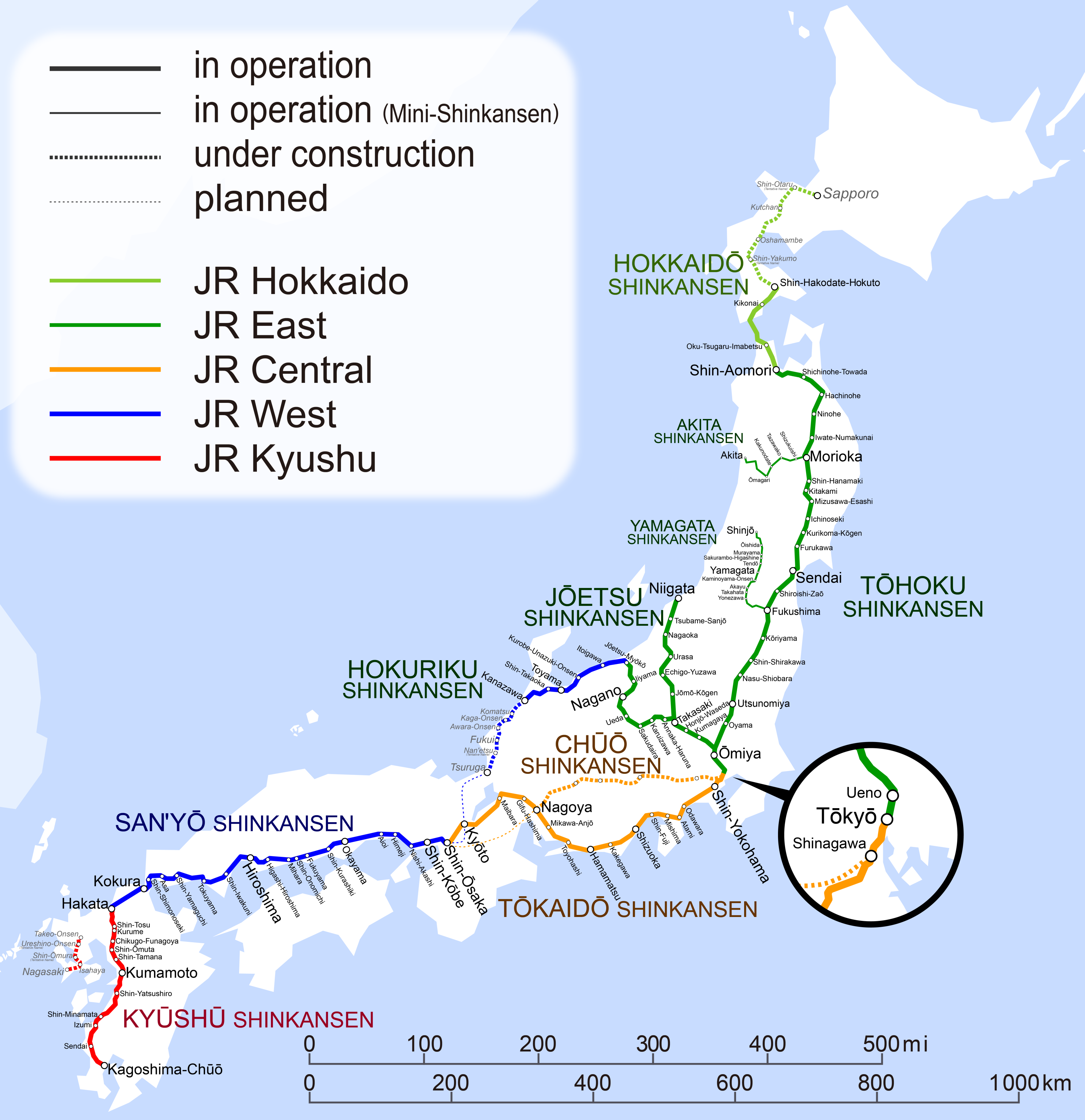
Instructive to see what is happening with the Maglev in Japan.
== Doublepost prevention - post automatically merged: ==
I met the Maglev people in 2006. They had made some rather ‘courageous’ assumptions about, well, just about everything. Their estimates were a complete fantasy.
I wouldn't disagree, but then this 'courageous' approach is hardly unusual when trying to sell a product. What it needed was genuine interest rather than scorn, even if that then led to dismissing it. It could be argued that the assumptions made by HS2 were courageous, given the massive cost escalations and the presumptions that Government would be supportive, which they demonstrably weren't.
== Doublepost prevention - post automatically merged: ==
Justine Greening announced HS2 with the Y-shaped route in January 2012. The High Speed Rail (Preparation) Act 2013 passed in November 2013, the High Speed Rail (London - West Midlands) Act 2017 in February of that year, then the High Speed Rail (West Midlands to Crewe) Act 2021 four years later.
Yes, but as I said earlier, the route had already been decided several years before 2012. All of the studies, feasibility reports etc were to justify the already chosen route, they were never about investigating alternative projects to serve the UK, nor even about alternative heavy rail routes. It was only ever about justifying the Heathrow route.
You're looking at this the wrong way. The split and transfer would be no different or catching the Eurostar from Paris or Brussels into St.Pancras and then having to change trains there. And don't forget that all those who wanted HS1 linked into HS2 were shouted down on the basis that not enough people would want to make the through trip to other parts of the UK, so how can you suggest that a transfer is a problem?
There is strong evidence that introducing extra changes of trains reduces attractiveness of the service, all else being equal. Of course, we can't connect everywhere with everywhere, especially not at attractive frequencies. It is therefore important to offer attractive transfers. However, very big passenger flows like London-Manchester or London-Edinburgh should have direct services, and enforcing changing trains for 20 years really isn't acceptable
On top of that, the border situation makes eurostar a special case, and an undesirable situation at that, which is unfortunately unavoidable as long as the UK isn't in Schengen and insists on the tunnel security checks.
But as I said above, London to Birmingham could have just been Phase 1 and so the transfer would have only been temporary. If people had wanted to go further, then one might like to think there would have been pressure to build the next section and thus create less need to transfer.
Yes, but as I said earlier, the route had already been decided several years before 2012. All of the studies, feasibility reports etc were to justify the already chosen route, they were never about investigating alternative projects to serve the UK, nor even about alternative heavy rail routes. It was only ever about justifying the Heathrow route.
this is untrue - many alternative routes into London where considered, and the one HS2 was selected. It wasn't just about justifying the heathrow route
I wouldn't disagree, but then this 'courageous' approach is hardly unusual when trying to sell a product. What it needed was genuine interest rather than scorn, even if that then led to dismissing it. It could be argued that the assumptions made by HS2 were courageous, given the massive cost escalations and the presumptions that Government would be supportive, which they demonstrably weren't.
When has parliament ever voted to reduce the score of HS2? Both times it was cut out was by the say so of the PM, and whilst they are part off government they technically are only a small part.
The second cut (to Manchester) was to try and gain political support from the population by trying to redistribute spending from HS2 to other "transport" projects across the country.
Only the schemes weren't any more safe from cuts as HS2 and some of the schemes already existed (trams to Manchester Airport) or were for potholes (which given the cuts local councils were having to make didn't actually result in more spending on highways at some councils).
It also made the UK look like a bad place to invest as business couldn't be sure that government was going to deliver what they've been saying that they would for years.
Overall it was very politically harmful.
The cutting of HS2 was pushed because of costs potentially reaching £66bn (including inflation), however the upper budget was £59bn (2019 prices) and if you assume 2.5% inflation for 6 years an apply that to £59bn you get £68.5bn, and so a lot of the extra costs are probably not as bad as many fear.
It's also worth noting that if the majority of those costs are due to inflation then future ticket prices will also be higher and so money spent before the jumps in inflation we've recently seen could actually be some of the best investments ever seen!
Before the recent cuts the budget was still within the funding envelope, it's harder to find data on the costs since then. A lot was also made of cost increasing at Euston, however that's only pay off the project and so if costs there had invested by 50% but it only accounts for 20% of the costs, if everything else was more or less on budget then the overall cost would have only increased by 10% (not sure if the actual numbers, but to illustrate how a big increase in one part doesn't mean that the whole scheme is over budget by as much).
Thirty years ago, I was in Blackpool where the secretary of state for transport Malcolm Rifkind made his dramatic announcement at the Conservative Party
Is there any better versions of the map in the article? It's hard to see how ARUP's Heathrow Hub/M40 corridor route accessed Birmingham and connected to the WCML compared to the HS2 route eventually selected.
Is there any better versions of the map in the article? It's hard to see how ARUP's Heathrow Hub/M40 corridor route accessed Birmingham and connected to the WCML compared to the HS2 route eventually selected.
https://committees.parliament.uk/writtenevidence/46765/pdf/ is their presentation to Parliament which does include the same map, however you can zoom in.
It looks like their line "HS2 Alternative" stops around Solihull, which I interpret as re-joining the WCML near the Airport.
https://committees.parliament.uk/writtenevidence/46765/pdf/ is their presentation to Parliament which does include the same map, however you can zoom in.
It looks like their line "HS2 Alternative" stops around Solihull, which I interpret as re-joining the WCML near the Airport.
There are so many documents underlining that Heathrow was fundamental to the HS2 route choice, and this link is yet another historical plea for the importance of Heathrow (not surprising in this instance, given that it’s by Heathrow Hub Ltd.).
I’ve previously asked if anyone knows of investigations into the M1 corridor route, and yes there were, but even those (as in the above link) appear to have been based on going to the M1 via Heathrow. Does anyone know of any detailed studies of routes that didn’t run via Heathrow?
It matters because we are paying more than we need for infrastructure projects and getting much less for it.
Costs were high even when cost estimates did not include land costs. Germany and several other EU nations have overall higher labour costs yet in the UK construction often has higher labour costs due to many factors related to how many construction workers are temporarily employed which is partly due to the brunching and spreading out of construction projects caused by UK governments and private investors not being willing spend steady stream of money on construction projects be it housing, infrastructure or anything else that is useful. Another factor as to why the UK infrastructure projects are so costly is because they are so limited in number there is a shortage of specialist equipment, engineers and tradesmen (On top of the overall shortage of tradesmen.).
It matters because we are paying more than we need for infrastructure projects and getting much less for it.
Costs were high even when cost estimates did not include land costs. Germany and several other EU nations have overall higher labour costs yet in the UK construction often has higher labour costs due to many factors related to how many construction workers are temporarily employed which is partly due to the brunching and spreading out of construction projects caused by UK governments and private investors not being willing spend steady stream of money on construction projects be it housing, infrastructure or anything else that is useful. Another factor as to why the UK infrastructure projects are so costly is because they are so limited in number there is a shortage of specialist equipment, engineers and tradesmen (On top of the overall shortage of tradesmen.).
Which could down to all our infrastructure costs are higher than they should be and not just limited to HS2 and so would be a problem whatever scheme we had.
Arguably cancelling HS2 phase 2 (all parts) will only make this issue worse as we won't have an ongoing program of schemes to ensure that it's worth training staff to do a given job and so are reliant on imported staff or in staff who can earn enough in the good years to be unproductive in the lean years.
Which could down to all our infrastructure costs are higher than they should be and not just limited to HS2 and so would be a problem whatever scheme we had.
Arguably cancelling HS2 phase 2 (all parts) will only make this issue worse as we won't have an ongoing program of schemes to ensure that it's worth training staff to do a given job and so are reliant on imported staff or in staff who can earn enough in the good years to be unproductive in the lean years.
This is why talks about the high cost of infrastructure projects should not just be limited to the projects themselves, but short term thinking of the public, government and private investors works against that.
Yeah cancelling HS2 phase 2 make this issue worse.
A train of thought for HS2 (and HSUK) enthusiasts to consider …. (I’m not sure where to post this and it’s probably not worth starting yet another HS2 thread)
The UK population was always divided about EU membership long before the Brexit vote in 2016
This was nothing to do with HS2, and yet HS2 appears to have been developed on an assumption that the UK would never get closer to Europe
Assume for a moment that we might have moved more towards Europe, in which case we might one day have embraced Schengen
If this had happened, this would have led to removing border controls, making rail travel from the UK to Europe much easier.
The HS2-HS1 link was part of the HS2 proposals anyway, but if Schengen had been embraced then this link would have been enhanced rather than abandoned, which would have facilitated a lot of UK to Europe rail journeys that are presently awkward and time consuming (and therefore not taken or even considered)
This would have attracted a lot of UK to Northern Europe passengers away from flights and on to trains
HS2 was developed 10 years prior to the Brexit vote, but it included an obsession with benefitting Heathrow
If rail travel to Europe had been easier, and HS2 had focussed on serving a bit more of the UK (Newcastle/Edinburgh/Glasgow as well as Leeds/Manchester), then the demand for Heathrow would have been significantly reduced for internal UK flights as well as reduced to Northern Europe
There have been many calls for more sustainable travel in recent decades, this could (and should) have been taken a lot more seriously than recent UK Governments have done, which would also have reduced air travel demand
All of the above questions why so much emphasis was put on to Heathrow
It’s easy now to say this is all in the past, but were the above possibilities even considered in the development of HS2?
The aim of Old Oak Common is partly to serve Heathrow and partly for regeneration, similar to Stratford on HS1. Multiple London stations is also good for spreading the load.
Ideally, HS1 would have gotten a central thru station, as Arup wanted. All trains running Old Oak Common (HS1 trains terminate), Central London, and Stratford (HS2 trains terminate) would have been excellent for spreading people around London.
The HS2-HS1 link was part of the HS2 proposals anyway, but if Schengen had been embraced then this link would have been enhanced rather than abandoned, which would have facilitated a lot of UK to Europe rail journeys that are presently awkward and time consuming (and therefore not taken or even considered)
The problem with the HS1 - HS2 link was that trains would be unable to serve central London and Manchester/Birmingham without a reversal. The non-London to Europe market isn't that big (as was found by Regional Eurostar, which was only planned to persuade MPs to vote for the Channel Tunnel) but you could probably get it viable with a pickup/setdown in London.
Manchester - Paris has ~5-7 flights per day, this market would need to be decimated just to fill a single Eurostar per day.
Had the HS1 Central London station been a thru station, international Eurostars from Manchester wouldn't be implausible.
The non-London to Europe market isn't that big (as was found by Regional Eurostar, which was only planned to persuade MPs to vote for the Channel Tunnel) but you could probably get it viable with a pickup/setdown in London.
Manchester - Paris has ~5-7 flights per day, this market would need to be decimated just to fill a single Eurostar per day.
Wasn't the non-London to Europe service running before HS1 through Kent was open? In which case the exceptionally slow service wouldn't have been attractive at all. This would be like comparing Paris to Marseille before and after TGV was introduced, and saying that the old service wouldn't have been able to compete with flying.
A train of thought for HS2 (and HSUK) enthusiasts to consider …. (I’m not sure where to post this and it’s probably not worth starting yet another HS2 thread)
The UK population was always divided about EU membership long before the Brexit vote in 2016
This was nothing to do with HS2, and yet HS2 appears to have been developed on an assumption that the UK would never get closer to Europe
Assume for a moment that we might have moved more towards Europe, in which case we might one day have embraced Schengen
If this had happened, this would have led to removing border controls, making rail travel from the UK to Europe much easier.
The HS2-HS1 link was part of the HS2 proposals anyway, but if Schengen had been embraced then this link would have been enhanced rather than abandoned, which would have facilitated a lot of UK to Europe rail journeys that are presently awkward and time consuming (and therefore not taken or even considered)
This would have attracted a lot of UK to Northern Europe passengers away from flights and on to trains
HS2 was developed 10 years prior to the Brexit vote, but it included an obsession with benefitting Heathrow
If rail travel to Europe had been easier, and HS2 had focussed on serving a bit more of the UK (Newcastle/Edinburgh/Glasgow as well as Leeds/Manchester), then the demand for Heathrow would have been significantly reduced for internal UK flights as well as reduced to Northern Europe
There have been many calls for more sustainable travel in recent decades, this could (and should) have been taken a lot more seriously than recent UK Governments have done, which would also have reduced air travel demand
All of the above questions why so much emphasis was put on to Heathrow
It’s easy now to say this is all in the past, but were the above possibilities even considered in the development of HS2?
1) assuming that the UK would join Schengen. Whilst I personally wish it would, I am very much in the minority. It’s a big assumption to spend upwards of a billion to enable somethign that was very unlikely to happen. (See the CTRL - WCML and ECML links)
2) HS2 services (prior to Ph 2b cancellation) were always going to serve Edinburgh, Glasgow, Leeds etc. Even with Phase 1, HS2 services will serve the first two.
3) as has been said, the market for non-London to northern europe is relatively small, certainly for locations that can be served by rail within a reasonable time (5-6 hrs). That which is within that time frame now is essentially south of Manchester / Leeds to Paris / Brussels, and some of that traffic is already on the rails by changing in London. Clearly that would increase with through direct services, but some people would still fly, especially to Amsterdam, Paris and Frankfurt for Transfers. Even if all Manchester / Liverpool / Birmingham to Paris air pasengers swapped to a through service, it wouldn’t fill 2 eurostars a day each way.
4) The market from London to northern europe is obviously larger. However its not that easy to serve all of it by train. Also, that would not need HS2 to happen, it ’just’ needs Schengen.
4) HS2 was not ‘obsessing’ with benefitting Heathrow. Clearly the route between London and the two largest regional conurbations (W Mids, Gt Manchester) has to leave London to the west / north West, and Heathrow is an obvious objective on the way. However the traffic it generates from the regions is pretty small overall. Serving Heathrow was a by product of the route, and not an obsession. When the numbers were run in detail, thats why a direct link was dropped.
5) The number of flights that would be removed from Heathrow had there been direct services from the north and Midlands to northern europe is essentially nil. The number of flights removed from Heathrow due to HS2 (had it been built in full) would be almost exclusively those to/from Glasgow and Edinburgh (as there aren’t many others that don’t cater almost exclusively for transfer passengers). My estimate is that it would have removed around half of those, say a dozen each way. That is in the context of around 1250 flights a day, so perhaps 2%.
to pick up on this, it didn’t - and still doesn’t - need a through station. Don’t forget these were planned for, hence the construction of the CTRL - WCML link.
“All” it needs is Schengen (or even on train border control), Eurostar stock that can fit on our network, and a path through Camden. Oh and a market to justify the cost of running it.
1) assuming that the UK would join Schengen. Whilst I personally wish it would, I am very much in the minority. It’s a big assumption to spend upwards of a billion to enable somethign that was very unlikely to happen. (See the CTRL - WCML and ECML links)
Yes, it was a deliberate leap in logic but justified on the basis that back in 2006 when Eddington promoted the development of HS2, joining Schengen was not really any less likely than was leaving the EU.
2) HS2 services (prior to Ph 2b cancellation) were always going to serve Edinburgh, Glasgow, Leeds etc. Even with Phase 1, HS2 services will serve the first two.
It would have much better if the high speed line ran all the way to Edinburgh (even if only eventually), rather than running HS2 trains on the existing and much slower lines. Running at HS2 speeds to Leeds should have been a fall-back after that, but alas even that failed.
3) as has been said, the market for non-London to northern europe is relatively small, certainly for locations that can be served by rail within a reasonable time (5-6 hrs). That which is within that time frame now is essentially south of Manchester / Leeds to Paris / Brussels, and some of that traffic is already on the rails by changing in London. Clearly that would increase with through direct services, but some people would still fly, especially to Amsterdam, Paris and Frankfurt for Transfers. Even if all Manchester / Liverpool / Birmingham to Paris air pasengers swapped to a through service, it wouldn’t fill 2 eurostars a day each way.
Sadly we'll never know, but the way TGVs filled between Paris and Lyon/Marseille suggests that UK(non-London) to Northern Europe might have filled better than we might think.
4) The market from London to northern europe is obviously larger. However its not that easy to serve all of it by train. Also, that would not need HS2 to happen, it ’just’ needs Schengen.
4) HS2 was not ‘obsessing’ with benefitting Heathrow. Clearly the route between London and the two largest regional conurbations (W Mids, Gt Manchester) has to leave London to the west / north West, and Heathrow is an obvious objective on the way. However the traffic it generates from the regions is pretty small overall. Serving Heathrow was a by product of the route, and not an obsession. When the numbers were run in detail, thats why a direct link was dropped.
I've never understood why HS2 couldn't have been routed somewhere nearer to the MML route and then close to the M1 (where practical). If provision was made for the mileage of tunnels that the Chiltern route has, then that would have added quite a bit of flexibility to this M1 route. Following my hypothesis about reducing the need for flights, then Heathrow wouldn't have needed to be considered, Except perhaps as an HSUK-type addition.
5) The number of flights that would be removed from Heathrow had there been direct services from the north and Midlands to northern europe is essentially nil. The number of flights removed from Heathrow due to HS2 (had it been built in full) would be almost exclusively those to/from Glasgow and Edinburgh (as there aren’t many others that don’t cater almost exclusively for transfer passengers). My estimate is that it would have removed around half of those, say a dozen each way. That is in the context of around 1250 flights a day, so perhaps 2%.
Sadly we'll never know, but the way TGVs filled between Paris and Lyon/Marseille suggests that UK(non-London) to Northern Europe might have filled better than we might think.
Thats not a fair comparison. Paris - Lyon - Marseille via the classique PLM was already a full railway. It served the three largest cities in France. Thats why LGV SE was built, for capacity not speed. Even now, there is typically only one train per hour Paris - Marseille, and yet that market was (before LGV SE) and is still, much much larger than any non-London to north Europe flow could be.
(I’ve done quite a bit of study on the subject of european travel patterns between major city pairs before / after high speed lines)
thats rather a rosy picture - they were barely used at all! Principally because it was far quicker to get the train to Euston and use the tube. Which is instructuve for a post HS2 world and then using St Pancras an 8 minute walk away…
Why the West Midlands? HS2 would always have been better focussing principally on Sheffield/Leeds etc. with a link Manchester/Liverpool, and another link to Birmingham, not unlike HSUK (but please don't assume I'm pro-HSUK, I just have some respect for their route choices).
You seem to have ignored my point that if as much tunnelling had been considered for an M1 corridor route as has been done for the Chiltern route, then the "towns in the way" would have been a lot less so. There's also the point that Milton Keynes, Northampton and Leicester could have been able to benefit from the HS2 line, rather like the Javelin services benefitted from using HS1. Luton too, on that basis. These possibilities were dismissed far too readily at the early stages of HS2 development, and as I've said previously, studies which discounted the M1 corridor, seemed to have only been done after the Heathrow route had already been decided.
I’ve written five pieces about national and transnational traditions of building urban rail: US, Soviet bloc, UK, France, Germany. I’m about to continue this series with a post about Ja…
pedestrianobservations.com
As detailed in New Departures by Anthony Perl, the history of the TGV differs from that of the Shinkansen in a key aspect: the TGV was built after the postwar decline of rail travel (as was the ICE), whereas the Shinkansen was built before it (as was to some extent CRH). The Shinkansen was built in 1959-64: there was no decline in rail evident yet, with only 12 cars/1,000 people in Tokyo in 1960, and the system was designed to deal with growing ridership. In contrast, the TGV was planned after the 1973 oil crisis, in a then-wealthier and more motorized country than Japan, aiming to woo passengers back to the train from the car and the plane.
Previously, SNCF had been engaging in experiments with high speed and high-voltage electrification, inventing 25 kV 50 Hz electrification in the process, which would be adopted by the Shinkansen and become the global standard for new electrification. It also experimented with running quickly on ballasted track – without modifications, the trains of that era kicked ballast up at high speed, there was so much air resistance. But investment had gone to legacy intercity rail, driving up the average speed of the electrified Mistral to 130 km/h and the Aquitaine to 145 km/h. Nonetheless, competition with air was fierce and air shuttles in that era before security theater attracted many people in competition with four-hour trains from Paris to Lyon and Bordeaux.
The TGV’s real origin is then 1973. The crisis shocked the entire non-oil-exporting world, leading to permanently reduced growth not just in rich countries (by then including Japan) but also non-oil-exporting developing countries, setting up the sequence of slow growth under import substitution and then the transition to neoliberalism. France reacted to the crisis with the slogan “in France, we have ideas,” setting up the nuclearization of French electricity in the 1980s, reduced taxes on diesel to encourage what was then viewed as surplus fuel rather than as a deadly pollutant, and the construction of the electric TGV.
Who in turn is citing Anthony Perl's New Departures, which while discussing capacity places heavier emphasis on speed:
In the 1970s, SNCF's management sought to introduce a break from past railroad practices, as the Japanese had done a decade earlier. But SNCF would have to do even better in terms of revamping service characteristics, since the train was now competing to lure travelers back from the skies and the roads.
As in Japan, the point of departure was the most promising market niche. In France this meant the travel corridor between the two largest urban agglom-erations, the "Ile de France" surrounding Paris, which had a population of just over 10 million in 1982 and the Rhone-Alpes region surrounding Lyon, with a population of slightly more than 5 million in 1982. This was France's equivalent to the Tokyo—Osaka transport corridor, and like its Japanese coun-terpart, the existing rail infrastructure was reaching the point of overload. Building additional rail capacity was seen as inevitable, but the choice to cre-ate a new high-speed passenger railroad and concentrate the growing freight traffic on the existing, traditional, infrastructure was France's new departure.
In planning this new departure, speed was SNCF's goal, but cost was the challenge. French rail planners understood what Pavaux would confirm twenty years later, that travel time was related to transport ridership in a logarithmic fashion. This is due to the fact that the business segment of air and high-speed rail travel was attracted by the ability to make a round-trip in a single day. Allowing for typical human rest and work behavior patterns, with eight hours of sleep and eight hours work, a total travel time of four to six hours proves attractive. More than six hours of total daily travel begins to discour-age use of a mode, especially when a faster alternative is available.
Thus, the opportunity to make a journey by rail in three hours would begin to trigger modal shift from air in that market. Between two and three hours travel time, air and rail would be competitive, with modal choice becoming based on price and other service characteristics such as ease of access to the traveler's origin and destination. The question facing SNCF was what kind of technology could yield a two- to three-hour travel time at an affordable cost?
Why the West Midlands? HS2 would always have been better focussing principally on Sheffield/Leeds etc. with a link Manchester/Liverpool, and another link to Birmingham, not unlike HSUK (but please don't assume I'm pro-HSUK, I just have some respect for their route choices).
It’s the second most populous area in the country after London? Why wouldn’t you prioritise going directly to it rather than an indirect one?
You seem to have ignored my point that if as much tunnelling had been considered for an M1 corridor route as has been done for the Chiltern route, then the "towns in the way" would have been a lot less so. There's also the point that Milton Keynes, Northampton and Leicester could have been able to benefit from the HS2 line, rather like the Javelin services benefitted from using HS1. Luton too, on that basis. These possibilities were dismissed far too readily at the early stages of HS2 development, and as I've said previously, studies which discounted the M1 corridor, seemed to have only been done after the Heathrow route had already been decided.
If you’re stopping at all these intermediate locations, isn’t it better to do that on the existing railway that goes through them? And take off all the expresses that current whip past onto their own dedicated line?
If you’re stopping at all these intermediate locations, isn’t it better to do that on the existing railway that goes through them? And take off all the expresses that current whip past onto their own dedicated line?
We are aware of an issue with emails from the Forum to Microsoft-based email accounts (hotmail/outlook/live.com email addresses). This is being looked into currently, thanks for your patience meanwhile.