Blindtraveler
Established Member
- Joined
- 28 Feb 2011
- Messages
- 10,543
Thank you for that, really very interesting.

This system allows instant control of the ship from the bridge, and reduces wear on the engines.
(very) old ships used to be direct drive, with engines needing to be stopped, valve timing changed and restarted backwards to go astern. Other ships have a gear box to allow for reversing. These ships may only have engine room control, the telegraph on the bridge is literally that, a communication to the engineers to request an engine movement.Thanks for that, it was very interesting!
About the instant control of the ship: is this not normal on all ships? I'm confused by this statement that it reduces wear on engines in particular - is it the case that some ships have their speed controlled by the engine control rooms and not by the bridge?
The really big deep sea stuff with two-stroke slow-speed diesels still does work this way.(very) old ships used to be direct drive, with engines needing to be stopped, valve timing changed and restarted backwards to go astern.
The mechanism sounds similar to the one that caused problems on Hebridean Isles.To add some semi-technical detail. Caley Isles, like most ferries is driven by controllable pitch propellers. These spin constantly in the same direction and generally at the same speed, and the angle of the individual blades is adjusted to vary the thrust from full ahead, through neutral to full astern.
These blades are attached to the hub, together making the propeller. They twist in their mounts on the hub, to adjust their pitch, with a rather complicated mechanism of push rods that runs all the way up the hollow propeller shaft back into the engine room, where there is a hydraulic unit then the connection to the telegraphs on the bridge.
This system allows instant control of the ship from the bridge, and reduces wear on the engines. The disadvantage is its complexity, and that many of the critical components are located in the hub, which is both underwater and spinning at several hundred rpm!
It sounds like there is some kind of jam in the mechanism, which is limiting the pitch to only around 15%.
Disclaimer: I'm just a simple navigating officer who hasn't worked on Caley Isles, so I may have some details wrong!
Diesel electric is increasingly common, similar to in a locomotive, it allows very easy transfer of power to the propellers (or often pods on technically complex ships)
MV Isle of Mull is now returning from Greenock having had her evacuation system upgraded, and is due to resume service on the Oban-Craignure route on Monday. That'll be a huge relief to everyone on Mull as the two small vessels have been really struggling to cope with demand.

It shows that CalMac probably doesn’t need such big ships on around hour long sailings. Smaller, more frequent ships would cater better for Islanders.I always found it incredible that the sister ship on the route Oban-Craignure was the Coriusk and more recently Loch Frisa. They are both tiny in comparison!
It shows that CalMac probably doesn’t need such big ships on around hour long sailings. Smaller, more frequent ships would cater better for Islanders.
I always found it incredible that the sister ship on the route Oban-Craignure was the Coriusk and more recently Loch Frisa. They are both tiny in comparison!
It shows that CalMac probably doesn’t need such big ships on around hour long sailings. Smaller, more frequent ships would cater better for Islanders.
They’re out in the North Atlantic in the Canary Islands. Lanzarote to Fuerteventura is a similar crossing to Ardrossan to Brodick but done in twenty minutes.The one thing I read all the time is that catamarans are the answer. Apparently even new builds have staff accommodation.
If a catamaran can run on Pentland Firth (and years ago, the North Channel) I am sure they can cope with the West Coast of Scotland.

The one thing I read all the time is that catamarans are the answer. Apparently even new builds have staff accommodation.

Caledonian MacBrayne Major Units are all Live On Board. Although Employed Locally, CalMac Crews are required to Live On Board for Two Weeks.Yes, Alfred has 12 crew cabins, one for each member of the crew. While it's not really needed for CalMac who employ locally for many reasons, it shows that it's perfectly possible to operate a catamaran operation in Scotland with crews working on rotation. The days of the fast catamarans are mostly over, but Andrew Banks did his homework and figured out that a slow moving catamaran would provide sufficient vehicle capacity while still being very economic to run. I think the key difference is that CalMac are trying to be something to everyone, whereas both Pentland and Western Ferries are much more focused on simply getting people from A to B without any frills.
It's not to say that the CalMac experience on the large vessels isn't nice, but I think the islanders would far prefer four basic catamarans doing Brodick-Ardrossan than two large ships with all the bells and whistles. Yes, sometimes it happens that conditions are wild and catamarans would be cancelled, but Alfred seems to be handling the weather there without too many problems.
Ardrossan-Brodick, up to 0945, 24 July – the service between Ardrossan and Brodick will operate up to the 0945 departure from Ardrossan on 24 July, when MV Isle of Arran will depart from Brodick to Kennacraig.
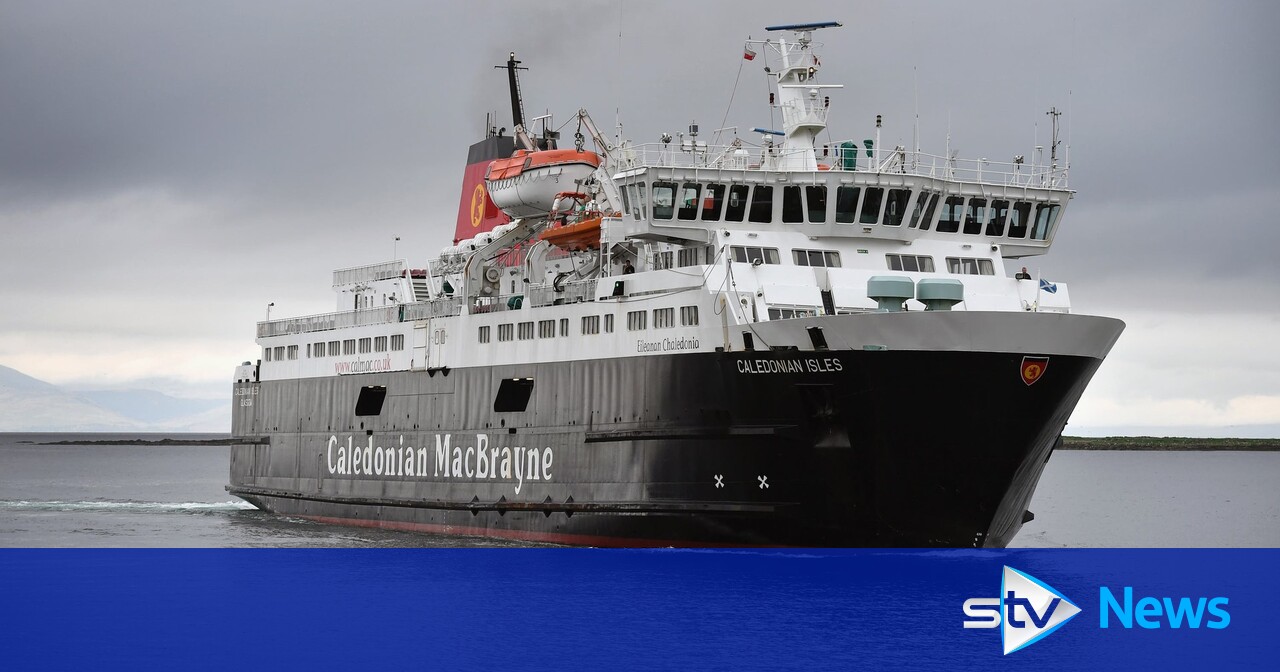
No service between Ardrossan-Brodick, 25 July – 7 September inclusive – there will be no service between Ardrossan-Brodick while a return to service date for MV Caledonian Isles remains unconfirmed. We are preparing plans on the basis that she may be unavailable to us until at least 7 September.
A further complication though is that Troon linkspan requires maintenance between 8-14th September, so Arran will need to be served from Ardrossan - but neither of the current vessels (Glen Sannox and Alfred) can fit there: CalMac will be desperately hoping Caley Isles really is back by then...
Alfred has done Tarbert to Lochmaddy before so if she fits at Uig then that could be a possibility with a swap with the Hebrides?I think Alfred is capable of sailing on some other routes, so it should be possible to switch her with some other vessel for that period. Either way, it's another nail in the coffin for Ardrossan, and I suspect that all the stakeholders here will be looking very closely to see if it's possible to simply switch full time to Troon.
For the time being, I know Alfred won't fit in Gourock, but Glen Sannox will. In the worst case scenario, Glen Sannox can do Brodick-Gourock in roughly 2:20, although possibly faster if weather isn't a problem.
Alfred has done Tarbert to Lochmaddy before so if she fits at Uig then that could be a possibility with a swap with the Hebrides?
And swap Glen Sannox with Clansman and you can run two ships from Ardrossan.Alfred has done Tarbert to Lochmaddy before so if she fits at Uig then that could be a possibility with a swap with the Hebrides?
 news.stv.tv
Perhaps Calmac should take Waverley on extended hire…?How about an antidote to the current news then?
See https://news.stv.tv/clip/dolphins-surround-the-waverley-paddle-steamer-as-it-departs
It might cheer you/us up a bit.
Lovely, but it doesn’t help anyone living on Arran.How about an antidote to the current news then?
See https://news.stv.tv/clip/dolphins-surround-the-waverley-paddle-steamer-as-it-departs
It might cheer you/us up a bit.
Apparently not. The manufacturers of the propulsion system have proposed yet another repair of the existing system or a new one to the latest design, both are being pursued. Lack of dry dock space means she’ll have to sail to Leith.This must surely be the end for her now
Ah well, it's only taxpayers money. The GS/GR farce has already cost Scottish taxpayers £750mn or so once maintenance costs for elderly vessels that should have been retired are taken into account, what's a few million more...?Apparently not. The manufacturers of the propulsion system have proposed yet another repair of the existing system or a new one to the latest design, both are being pursued. Lack of dry dock space means she’ll have to sail to Leith.
Apparently not. The manufacturers of the propulsion system have proposed yet another repair of the existing system or a new one to the latest design, both are being pursued. Lack of dry dock space means she’ll have to sail to Leith.
This must surely be the end for her now
