Having looked at the numbers, the actual real world case necessarily as bad as it could be.
The core of the issue isn't just about the number of seats per train, but about how faster journey times can unlock additional capacity during critical peak periods.
To illustrate this, let's look at a recent example of morning services from Manchester to London:
Current Services (a recent week day Schedule):
05:54 - 11 coaches (607 seats)
06:02 - 9 coaches (489 seats)
06:14 - 11 coaches (607 seats)
06:23 - 11 coaches (607 seats)
06:29 - 11 coaches (607 seats) - Arrives 08:40
06:54 - 11 coaches (607 seats) - Arrives 09:15
07:00 - 11 coaches (607 seats) - Arrives 09:02
07:14 - 9 coaches (519 seats) - Arrives 09:31
Total Capacity:
Before 09:05: 3,624 seats
Before 09:35: 4,820 seats
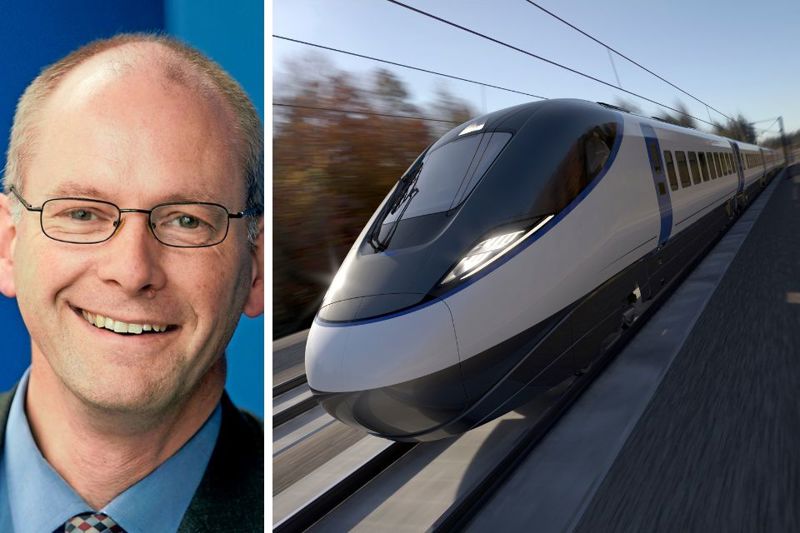
Now, let's factor in the benefit of HS2's faster journey times. Assuming a 30-minute reduction in travel time on a post-Phase 1 timetable, the arrival times for these services would shift significantly. For instance, the 07:14 service would arrive at 09:01 instead of 09:31, and the 07:34 service would arrive at 09:16.
This shift means more services fall within the morning peak arrival windows. Using the same 09:05 and 09:35 cut-off points with 200m stock (504 seats per train), the capacity picture remains robust:
Capacity before 09:05: 4,032 seats (+11% increase)
Capacity before 09:35: 5,040 seats (+4.5% increase)
It's also worth noting that pre-2022, the 11-coach trains had 589 seats. The recent upgrade to 607 seats already represents a 3% capacity uplift on those services.
While individual services may still be busy, the data shows that the faster journey times provided by HS2 compensate for the shorter train length during the most critical morning peak hours, still providing a net gain over the current baseline.
This analysis demonstrates that the current 200m train specification is more than adequate for the immediate future. Rather than reopening contracts and risking delays, our focus should be on successfully delivering HS2. The capacity will support initial growth, and if demand continues to rise as projected, it will make a compelling case for the subsequent phases of the project, which will bring their own significant capacity increases.
I've looked at Friday evenings, as I believe this could also be a rather busy period.
For Friday 10th April there were the following services between 17:00 and 19:00:
17:13 - 11 coaches (607 seats)
17:33 - 11 coaches (607 seats)
17:53 - 9 coaches (489 seats)
18:13 - 11 coaches (607 seats)
18:33 - 9 coaches (489 seats)
18:53 - 11 coaches (607 seats)
That's a total of 3,406 whilst the new HS2 trains would have a capacity of 3,024 seats and so there's would be a reduction of 11.2% which isn't ideal, but it's noticeably less than the per train capacity of up to 17.0% as not all services are 11 coach units.
Whist after 19:00 through to the end of service there were these services:
19:13 - 9 coaches (489 seats)
19:33 - 11 coaches (607 seats)
19:53 - 11 coaches (607 seats)
20:13 - 11 coaches (607 seats)
20:33 - 11 coaches (607 seats)
20:53 - 11 coaches (607 seats)
21:39 - 11 coaches (607 seats)
22:03 - 11 coaches (607 seats)
That's a total of 4,738 whist by adding one extra service at the end at 22:33 which would arrive into Manchester at the same time as the current 22:03 the total seats post HS2 would be 4,536 and so a 4.3% capacity reduction. Again not ideal but not as significant as the per train capacity indicates.
Although, pre Covid there was a later service which if reinstated (or the running of 4 services between 20:53 and 22:13 rather than the current 3 in this 80 minute period) that would result in there being a small increase to 5,040 (+6.4%) after 19:00.
How've when comparing the whole evening period this is a quite small reduction (-1%) as the current number of seats is 8,144 whilst after HS2 this would be 8,064 seats.
Although, if the 20 minute frequency was continued to the end of services from 20:53 and the pre Covid service was reinstated (8,568 seats) then this would mean over the whole Friday evening there was a 5.6% capacity uplift.
Obviously, such a situation isn't ideal, however if there's a need for extra capacity beyond this, then clearly HS2 into Manchester should be back in the table and is probably justified.