• Our new ticketing site is now live! Using either this or the original site (both powered by TrainSplit) helps support the running of the forum with every ticket purchase! Find out more and ask any questions/give us feedback in this thread!

Chris Gibb - fallout from HS2 proposal on stock and what are/were the options

NCT

Established Member
Joined
18 Apr 2025
Messages
2,095
Location
London
So your primary concern is whether or not rail-air failure is more likely than air-air failure?

This is the original point you were responding to.

Are you not concerned that advertising connections for travellers, and then failing to fulfil them might be an issue?

This is an adjacent topic you'd like to talk about.
 
Sponsor Post - registered members do not see these adverts; click here to register, or click here to log in
R

RailUK Forums

HSTEd

Veteran Member
Joined
14 Jul 2011
Messages
20,262
I recently took five rail journeys in Germany whilst travelling from the UK to Sweden and back.

None of them were on time, the most on time journey I had was 20 minutes late.
 

MatthewHutton

Member
Joined
17 Aug 2024
Messages
1,084
Location
Oxford
Yes, and all trains were punctual.
Definitely a lot of delays in Germany when I was there. Much worse than Britain.

Also British trains have ~10% padding vs a lot more in some other countries.

== Doublepost prevention - post automatically merged: ==

I recently took five rail journeys in Germany whilst travelling from the UK to Sweden and back.

None of them were on time, the most on time journey I had was 20 minutes late.
I had one on time and I wasn’t ready for it. Had to throw my stuff onto the platform.

== Doublepost prevention - post automatically merged: ==

Because of the alignment of HS2 there isn't much need to have the trains tilting on the high-speed sections of line. Just the classic WCML route. Alstom might be able to pull it off with some kind of New Pendolino unit where tilt disables above speeds of 250km/h which won't be reached on the classic routes anyway, so we don't really need to look to a Japanese manufacturer for a high-speed tilting train if we needed one at all.
Yeah fair point.
Possibly, but you'd probably need a subfleet for routes like Liverpool where the platforms at Lime Street wouldn't be able to accommodate a 275m fleet. Either that or we'd need to extend the long-distance platforms by about 5m at the bare minimum, which isn't too unreasonable compared to 300m. Since proposing 250m trains though I realised it might not be very well future-proofed, so some modifications or subfleets will definitely be needed.
Do you need to do that or just not open the last door?
 

Sorcerer

Established Member
Joined
20 May 2022
Messages
2,043
Location
Liverpool
Do you need to do that or just not open the last door?
Ideally you'd have all doors available at terminus stations. In any case of SDO you'd be channeling passengers through one coach to reach the other and it's not optimal operations. Even so with a longer train at Lime Street the driver's cab would be right up on the signal and might even occupy the track circuit, so then you'd need specific movement instructions every time unless you moved the signal which would then need more track modifications.
 

Bald Rick

Veteran Member
Joined
28 Sep 2010
Messages
35,571
Punctuality? Have you been to Germany recently?

Or France!


So your primary concern is whether or not rail-air failure is more likely than air-air failure? Are you not concerned that advertising connections for travellers, and then failing to fulfil them might be an issue?

Yes that is an issue, but it is exactly the same issue for Rail to Rail as Air to Air or Rail to Air (or vice versa).

For that matter it is the same for rail to bus or ferry to rail, examples of which are available in this country.
 

GRALISTAIR

Established Member
Joined
11 Apr 2012
Messages
10,452
Location
Preston Lancs
I support the project but it is flabbergasting how utterly mismanaged it has been. Though no doubt once it's opened all that will be forgotten, just as it was for the Lizzie and Edinburgh tram, both of which were spectacularly badly managed and over budget but have in the end delivered a successful and popular service once opened.
Exactly how I feel too. I also do understand how politicians get nervous about projects of this nature. Eye watering!
 

Technologist

Member
Joined
29 May 2018
Messages
467
The capacity-restraining factor will rather be the capacity of OOC and, in the far future, of the smallish Euston HS2 station.
Can someone explain this, looking at the plans OOC has 6 HS2 platforms, Tokyo Central has 6 Tokaido Shinkansen platforms, the Tokaido Shinkansen manages to run 13 trains per hour to Shin Osaka.

I've heard answers like the Japanese get off trains faster and they clean the trains really quickly, these sound like cheaper solutions than infrastructure!
 

stuu

Established Member
Joined
2 Sep 2011
Messages
3,762
Can someone explain this, looking at the plans OOC has 6 HS2 platforms, Tokyo Central has 6 Tokaido Shinkansen platforms, the Tokaido Shinkansen manages to run 13 trains per hour to Shin Osaka.

I've heard answers like the Japanese get off trains faster and they clean the trains really quickly, these sound like cheaper solutions than infrastructure!
I suspect training millions of people how to be ready to leave before the train, to take all their rubbish with them, and get out of the way asap is orders of magnitude harder and more expensive than a few extra platforms.
 

MatthewHutton

Member
Joined
17 Aug 2024
Messages
1,084
Location
Oxford
"citation needed"
Look at the Belgian trains and the top speeds of the various lines (e.g Brussels-Nord to Antwerp) and compare to the British equivalents like the Chiltern Mainline.

Or look at Cologne-Frankfurt Airport.
I don't know how accurate it is, but railweb.ch cites 7% for Switzerland, which doesn't support that point.
Yes Switzerland and perhaps Japan have less padding than us. Other countries typically have more.

== Doublepost prevention - post automatically merged: ==

Ideally you'd have all doors available at terminus stations. In any case of SDO you'd be channeling passengers through one coach to reach the other and it's not optimal operations. Even so with a longer train at Lime Street the driver's cab would be right up on the signal and might even occupy the track circuit, so then you'd need specific movement instructions every time unless you moved the signal which would then need more track modifications.
I don’t think it’s the end of the world if the last door in the last carriage doesn’t open but you get an extra carriage in the platform to use. Agree it isn’t ideal for sure.

== Doublepost prevention - post automatically merged: ==

I suspect training millions of people how to be ready to leave before the train, to take all their rubbish with them, and get out of the way asap is orders of magnitude harder and more expensive than a few extra platforms.
The British could announce before the train arrives in a station that you need to be queuing up to leave the train as they do in Japan (in English).

Certainly if you only have one kind of rolling stock you could mark the point each carriage will arrive on the platform and have marked queuing points. Given it is electronic an 11 car train could be coach C-M rather than A-K or whatever.

You could also have one cleaner per carriage like Japan.
 
Last edited:

fishwomp

Established Member
Joined
5 Jan 2020
Messages
1,271
Location
milton keynes
The British could announce before the train arrives in a station that you need to be queuing up to leave the train as they do in Japan (in English).
In practice, that's actually what is happening today - you're told you're arriving at X and people start to move.
Certainly if you only have one kind of rolling stock you could mark the point each carriage will arrive on the platform and have marked queuing points.
Observations I have made that help:
* Often(always?) the Shinkansen has platform doors.
* The despatcher has a dedicated boxed-off place to stand and perform a Japanese "ceremony of the doors" (it's more sensible than ours)
* Shinkansen trains are more spacious - it is faster to get off a more spacious train, particularly if travelling with luggage.

In contrast, we do things like put cycle places in two separate locations (2x5 car Hitachi, or 1x9) that are hard to see as the train arrives and don't tell you which one is reserved, so you don't know where to stand and might have a 6-carriage walk to the right one.

It's almost like someone should do a study of this, and the journey time savings would be equivalent to billions spent on improving train speed everywhere..
 

The Planner

Veteran Member
Joined
15 Apr 2008
Messages
19,624
Look at the Belgian trains and the top speeds of the various lines (e.g Brussels-Nord to Antwerp) and compare to the British equivalents like the Chiltern Mainline.

Or look at Cologne-Frankfurt Airport.

Yes Switzerland and perhaps Japan have less padding than us. Other countries typically have more.

== Doublepost prevention - post automatically merged: ==


I don’t think it’s the end of the world if the last door in the last carriage doesn’t open but you get an extra carriage in the platform to use. Agree it isn’t ideal for sure.

== Doublepost prevention - post automatically merged: ==


The British could announce before the train arrives in a station that you need to be queuing up to leave the train as they do in Japan (in English).

Certainly if you only have one kind of rolling stock you could mark the point each carriage will arrive on the platform and have marked queuing points. Given it is electronic an 11 car train could be coach C-M rather than A-K or whatever.

You could also have one cleaner per carriage like Japan.
That hasn't answered where the 10% padding in UK schedules is.
 

Bald Rick

Veteran Member
Joined
28 Sep 2010
Messages
35,571
In contrast, we do things like put cycle places in two separate locations (2x5 car Hitachi, or 1x9) that are hard to see as the train arrives and don't tell you which one is reserved, so you don't know where to stand and might have a 6-carriage walk to the right one.

Are unbagged bikes allowed on Shinkansen?
 

fishwomp

Established Member
Joined
5 Jan 2020
Messages
1,271
Location
milton keynes
Are unbagged bikes allowed on Shinkansen?
Don't know - but my point was more about how we do the little things wrong..
Years of commuting XC meant I knew that first class was indicated by the presence of a yellow-painted coupler bar - from there I knew where the bike would go, good though that was, the headlight made it hard to pick out until it was already entering the platform. The West Coast 220/1s didn't even do that.
If we want decent dwell times, we need decent analysis of the little things.
 

Peter Sarf

Established Member
Joined
12 Oct 2010
Messages
9,559
Location
Croydon
To keep this away from existing HS2 thread(s)

I am interested in the actual proposal for some dedicated HS2 stock of a more useful length for service to Manchester and Scotland via HS2 Phase1. But also intrigued with how the proposal has been reacted to in government circles.
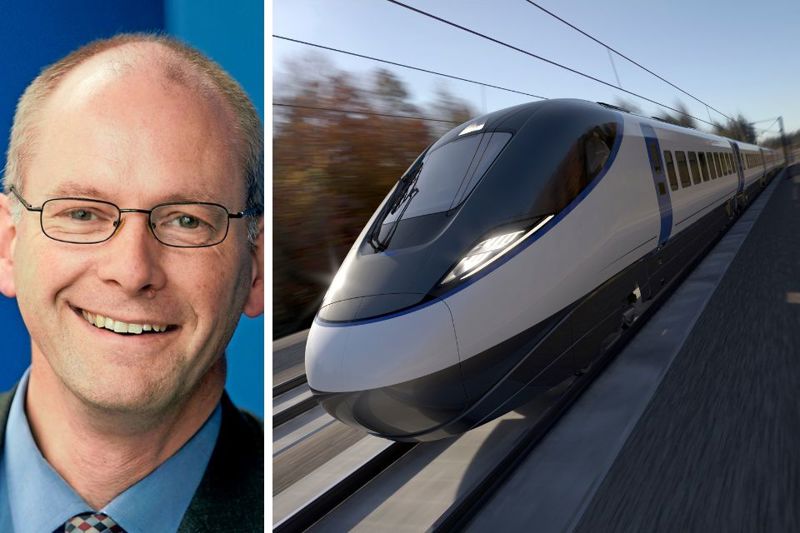
Chris Gibb, who has held senior roles on the passenger railway and is currently a non-exec to DfT's DFTO operation, has proposed that HS2 keeps the current contract for 54x8-car 200m trains, and orders a separate replacement fleet for Pendolinos to maintain capacity and journey times on the WCML post-HS2 starting.
This is his personal contribution and is not any kind of policy, but is a suggestion for a solution to the matching of supply and demand on HS2/WCML, without incurring the high costs of renegotiating the HS2 contract.

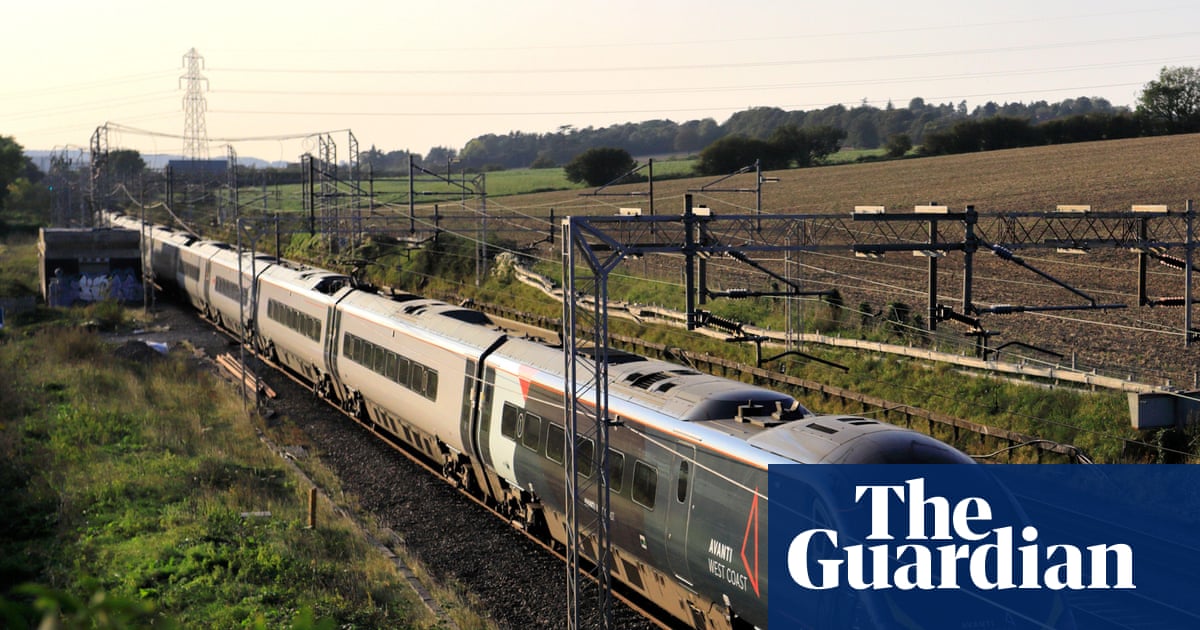
He has presented this to DfT/parliamentary bodies, and is reported in today's Guardian:


I presume he is talking about a fleet that could tilt on classic lines and also operate on HS2, but that presumes a GB-gauge tilting design can be acquired relatively quickly (eg based on Alstom's Avelia Liberty).
That's an alternative to his previous suggestion of adapting the current Pendolinos to operate on HS2, bearing in mind how old the 390s will be in the mid-2030s.
+
Chris Gibb has been sacked for this.

Most is behind a paywall but from comments on LinkedIn, he broke the clause about selflessness and he should always be using his position to act in the public interest.

https://www.thetimes.com/business/c...ho-spoke-out-over-hs2-train-debacle-5fxp3npnr
+
Difficult to see how highlighting that if "HS2 opened by replacing 11-coach Pendolinos with eight-coach trains, that these would be full and leave people behind on day one" is anything but in the public interest.
+
This smacks of some senior official saying however bonkers our policy is, it is official Government policy, and if you are paid by Government you have to toe the official line. Anyone who doesn't gets fired for causing embarrassment.

The way I see it, is Chris Gibb is so professional he doesn't want to quietly sit there when something is not in public interest, when there is a practical or cheaper alternative.

But I don't want to derail (pun intended) the thread with debate over selflessness clauses vs whistleblowing something wrong
Compare this to Kier Starmer NOT getting told that his choice of Mandelson for diplomat for the USA was not a good idea, and then complaining about not being told.

I feel Chris Gibb might well have been professional enough to know what risk he was taking. Perhaps he could see no way forward in the job so nothing to lose. He must have been presiding over some real challenges.

Is this a loss for the UK rail industry ?.

What effect will his absence have on decision makers ?.
Or is it perhaps likely that he can have more effect by being outwith the office dealing with what government wants done and can instead make proposals.

Note to Mods.
If this thread ends up being more about the fallout from the proposal than actually on any options/ideas for the relevant stock then perhaps move thread.
 
Last edited:

fishwomp

Established Member
Joined
5 Jan 2020
Messages
1,271
Location
milton keynes

.. a non paywalled (just register and read). Plenty to read in it.
“What he had to say needed to be said,” (a source) told RAIL. “The role of a Non-Executive director in any organisation is to really make sure the right questions are being asked and consideration is being given to the right subjects.”
So, a sensible person says something sensible.. so something was done to make sure it doesn't happen again.

If we ever want to ask how we end up in such messes ..

Hopefully he will continue to speak up from outside the tent. Inertia may still win, but at least we'll know that they were told..
 

jh64

Member
Joined
3 Sep 2015
Messages
164
So, a sensible person says something sensible.. so something was done to make sure it doesn't happen again.

If we ever want to ask how we end up in such messes ..

Hopefully he will continue to speak up from outside the tent. Inertia may still win, but at least we'll know that they were told..
Been the case for a very long time across many arms of government - just ask David Nutt!
 

Taunton

Veteran Member
Joined
1 Aug 2013
Messages
12,218
Complete shades of Gerry Fiennes being fired for his book 60 years ago, after years of writing for Modern Railways unhindered, just because it had a couple of lines about the Ministry head indecision on the ER/NER merger.
 

LNW-GW Joint

Veteran Member
Joined
22 Feb 2011
Messages
21,897
Location
Mold, Clwyd
In Modern Railways (May, p30), Roger Ford mentions Chris Gibb as one of the operational strengths of DFTO in its transition to GBR.
Chris would be very well known in DfT circles from the consultancy work he has done, not least that on WCML performance improvement.
A non-exec position is not exactly a normal staff appointment, and some people have multiple non-exec part-time posts.
But it looks as though he can forget getting a senior post in the GBR world.
 

Peter Sarf

Established Member
Joined
12 Oct 2010
Messages
9,559
Location
Croydon
It does seem as thought there is going to be a disconnect between the equipment available (stock) and the platform for its use (HS2 + WCML).

I realise there are ex military types piping up recently about the state pf the Navy and Army. So perhaps there are parallels right down to equipment vs uses.

.. a non paywalled (just register and read). Plenty to read in it.

So, a sensible person says something sensible.. so something was done to make sure it doesn't happen again.

If we ever want to ask how we end up in such messes ..

Hopefully he will continue to speak up from outside the tent. Inertia may still win, but at least we'll know that they were told..
A "the king is wearing no clothes" saga ensues.
Complete shades of Gerry Fiennes being fired for his book 60 years ago, after years of writing for Modern Railways unhindered, just because it had a couple of lines about the Ministry head indecision on the ER/NER merger.
I had forgotten about that book "I tried to run a railway" I read that when I was a teenager - perhaps that is why I did not follow a railway career !. Roughly ten years later I had learnt to hide my interest in railways. I did not realise he got fired for that but I suppose not surprising.

== Doublepost prevention - post automatically merged: ==

In Modern Railways (May, p30), Roger Ford mentions Chris Gibb as one of the operational strengths of DFTO in its transition to GBR.
Chris would be very well known in DfT circles from the consultancy work he has done, not least that on WCML performance improvement.
A non-exec position is not exactly a normal staff appointment, and some people have multiple non-exec part-time posts.
But it looks as though he can forget getting a senior post in the GBR world.
That will be a loss to GBR then. But not from the point of view of those outside railway circles perhaps - those who run the country.
 
Last edited:

The Ham

Veteran Member
Joined
6 Jul 2012
Messages
12,021
Having looked at the numbers, the actual real world case necessarily as bad as it could be.

The core of the issue isn't just about the number of seats per train, but about how faster journey times can unlock additional capacity during critical peak periods.

To illustrate this, let's look at a recent example of morning services from Manchester to London:
Current Services (a recent week day Schedule):

05:54 - 11 coaches (607 seats)
06:02 - 9 coaches (489 seats)
06:14 - 11 coaches (607 seats)
06:23 - 11 coaches (607 seats)
06:29 - 11 coaches (607 seats) - Arrives 08:40
06:54 - 11 coaches (607 seats) - Arrives 09:15
07:00 - 11 coaches (607 seats) - Arrives 09:02
07:14 - 9 coaches (519 seats) - Arrives 09:31

Total Capacity:

Before 09:05: 3,624 seats
Before 09:35: 4,820 seats

Now, let's factor in the benefit of HS2's faster journey times. Assuming a 30-minute reduction in travel time on a post-Phase 1 timetable, the arrival times for these services would shift significantly. For instance, the 07:14 service would arrive at 09:01 instead of 09:31, and the 07:34 service would arrive at 09:16.

This shift means more services fall within the morning peak arrival windows. Using the same 09:05 and 09:35 cut-off points with 200m stock (504 seats per train), the capacity picture remains robust:

Capacity before 09:05: 4,032 seats (+11% increase)
Capacity before 09:35: 5,040 seats (+4.5% increase)

It's also worth noting that pre-2022, the 11-coach trains had 589 seats. The recent upgrade to 607 seats already represents a 3% capacity uplift on those services.

While individual services may still be busy, the data shows that the faster journey times provided by HS2 compensate for the shorter train length during the most critical morning peak hours, still providing a net gain over the current baseline.

This analysis demonstrates that the current 200m train specification is more than adequate for the immediate future. Rather than reopening contracts and risking delays, our focus should be on successfully delivering HS2. The capacity will support initial growth, and if demand continues to rise as projected, it will make a compelling case for the subsequent phases of the project, which will bring their own significant capacity increases.

I've looked at Friday evenings, as I believe this could also be a rather busy period.

For Friday 10th April there were the following services between 17:00 and 19:00:

17:13 - 11 coaches (607 seats)
17:33 - 11 coaches (607 seats)
17:53 - 9 coaches (489 seats)
18:13 - 11 coaches (607 seats)
18:33 - 9 coaches (489 seats)
18:53 - 11 coaches (607 seats)

That's a total of 3,406 whilst the new HS2 trains would have a capacity of 3,024 seats and so there's would be a reduction of 11.2% which isn't ideal, but it's noticeably less than the per train capacity of up to 17.0% as not all services are 11 coach units.

Whist after 19:00 through to the end of service there were these services:

19:13 - 9 coaches (489 seats)
19:33 - 11 coaches (607 seats)
19:53 - 11 coaches (607 seats)
20:13 - 11 coaches (607 seats)
20:33 - 11 coaches (607 seats)
20:53 - 11 coaches (607 seats)
21:39 - 11 coaches (607 seats)
22:03 - 11 coaches (607 seats)

That's a total of 4,738 whist by adding one extra service at the end at 22:33 which would arrive into Manchester at the same time as the current 22:03 the total seats post HS2 would be 4,536 and so a 4.3% capacity reduction. Again not ideal but not as significant as the per train capacity indicates.

Although, pre Covid there was a later service which if reinstated (or the running of 4 services between 20:53 and 22:13 rather than the current 3 in this 80 minute period) that would result in there being a small increase to 5,040 (+6.4%) after 19:00.

How've when comparing the whole evening period this is a quite small reduction (-1%) as the current number of seats is 8,144 whilst after HS2 this would be 8,064 seats.

Although, if the 20 minute frequency was continued to the end of services from 20:53 and the pre Covid service was reinstated (8,568 seats) then this would mean over the whole Friday evening there was a 5.6% capacity uplift.

Obviously, such a situation isn't ideal, however if there's a need for extra capacity beyond this, then clearly HS2 into Manchester should be back in the table and is probably justified.

 

fishwomp

Established Member
Joined
5 Jan 2020
Messages
1,271
Location
milton keynes
Now, let's factor in the benefit of HS2's faster journey times. Assuming a 30-minute reduction in travel time on a post-Phase 1 timetable, the arrival times for these services would shift significantly. For instance, the 07:14 service would arrive at 09:01 instead of 09:31, and the 07:34 service would arrive at 09:16.

This shift means more services fall within the morning peak arrival windows. ...

The trains that arrived in that window now, would move to arrive earlier and possibly outside the window you are measuring. You are trying to prove there are more trains without there actually being more trains in your sessions.. they just arrive at a different time ..
 

Bletchleyite

Veteran Member
Joined
20 Oct 2014
Messages
112,941
Location
"Marston Vale mafia"
I wonder how the cost would differ between providing 400m platforms at Manchester Piccadilly and changing the rolling stock order? It should still be possible to build the HS2 platforms even if they are not connected to HS2 - when I looked at it in the past it looked possible to get a couple of the middle platforms to 400m if we were willing to lose a couple either side which could be replaced on the car park on the north side. At most intemediates ASDO would presumably be possible, and in cases where it wouldn't (i.e. fouled junctions etc where pathing would be an issue) stopping patterns can be tweaked.

Liverpool would be fine as 2x200m (capacity wise it's about that now and it's an uplift on what it was before) and Birmingham will be able to be 400m anyway, just leaving Scotland which could be done with a flighted frequency increase of some kind (e.g. having a faster Glasgow and a Carlisle semifast instead, though I do think that should be Carlisle and not Preston/Lancaster as I don't think leaving the Lakes without a London service is acceptable, it's a recipe for more tourist car journeys when we should be trying to encourage those journeys to be by train instead).

The other thing you could potentially do with 200m units is deploy some to TPE post electrification and increase the order with some longer ones, the length would be ideal. The top speed would be excessive, but to be fair the 80x are sometimes used on services that get nowhere near 125, aren't they (and they are 140mph units). This I think is what Gibb is proposing, and I'm struggling with why he's been sacked for simply expressing an opinion on potential options.
 
Last edited:

Zomboid

Established Member
Joined
2 Apr 2025
Messages
2,204
Location
Oxford
I'd suggest that reconfiguring the order so that there are a mix of 10 car (250m) and 6 car (150m) units would do a lot of good. Run them together when 400m is necessary, and use the 250m units for Scotland etc.

Could even build the 400m platforms at somewhere like Crewe and divide the trains for Manchester/ Liverpool or whatever pair of destinations makes sense. They seem to manage that kind of approach on the mini-Shinkansen routes to Yamagata and Akita.
 

Bletchleyite

Veteran Member
Joined
20 Oct 2014
Messages
112,941
Location
"Marston Vale mafia"
Could even build the 400m platforms at somewhere like Crewe and divide the trains for Manchester/ Liverpool or whatever pair of destinations makes sense. They seem to manage that kind of approach on the mini-Shinkansen routes to Yamagata and Akita.

2 out of the 3 Manchesters don't run via Crewe is the problem with that. You could do it with the one that does though and thus go to 4tph, 2 Stoke and 2 Crewe? Or even go to 5tph which gives you only 200m less capacity than 3 x 400m, i.e. portion work with *both* Liverpools? Though that may be hard to path between Crewe and Manchester? That sort of frequency would be a massive upgrade.
 

Peter Sarf

Established Member
Joined
12 Oct 2010
Messages
9,559
Location
Croydon
I cannot help feeling the best idea is to do the minimum to cope right now. Then when the longer 400m trains to Manchester to cope with (hopeful) growth becomes a need use this to justify an extension of HS2 to Manchester.
 

Top