• Our new ticketing site is now live! Using either this or the original site (both powered by TrainSplit) helps support the running of the forum with every ticket purchase! Find out more and ask any questions/give us feedback in this thread!

Wind Power and UK Energy Use

InTheEastMids

Established Member
Joined
31 Jan 2016
Messages
1,397
Another aspect that might skew demand is home solar battery installations.
I think the total installs are still in the tens of thousands, so it probably is becoming measurable, but not a big contributor.
Some customers also have a diverter that allows solar to be directed to the immersion heater in the hot water tank. Obviously not all solar customers have this because it adds cost and many homes don't have a hot water tank, so I have no clue how many of these are out there, but at a total guess I would say it's perhaps a similar impact to home batteries at the moment.
Customer behaviour also shifts - it's sunny here now, so the dishwasher is on and the washing machine is doing a hot water drum-cleaning cycle.

Solar will almost certainly break the record, last year was a dull year sunshine wise and yet still achieved a new record.
DESNZ stats indicate we are adding about 100 MW each month over the last year or so, 17.5 GW at end of January 2025 vs 16.4 GW this time last year.

To suggest that they are being deliberately over-egged as a result of industry funding comes across as a bit of a heard-it-on-Facebook conspiracy theory to be honest
The System Operator needs to know with good accuracy how much solar, renewable and other embedded generation is producing, and from an operational perspective have have a strong interest in getting it right, rather than pandering to any particular point of view.

The grid needs to have inertia to help resist short-term changes in supply and demand.
This inertia can be thought of as the electrical manifestation of the rotational momentum from "spinning metal" generators in power stations at 3000rpm (50 Hz)
No point arguing about the rights/wrongs of it, but the fact is that GB has a lot less spinning metal generators. They've been replaced by solar/wind which don't use spinning metal and don't provide any inertia. Also, small-scale generators of all types will automatically disconnected if the grid frequency falls to far from 50 Hz (and there's now about 6.5 GW of solar capacity in systems <50 kW)

So if you are a senior leader at NESO, and it is your job to keep the lights on when things go wrong, then you really need to know how much inertia you've got in the system, because you are going to need to ensure you've got a backup plan. If not, NESO is in breach of its licence and you might lose your job. So you're not going to fund work that deliberately mis-states the amount of solar on the system because of an industry lobby, or Woke, or whatever.

That being said, there are a lot of industry-funded studies from all directions that selectively use best-case or worst-case data to produce studies that support their own lobbying positions. For instance, some years ago I had to explain to people how two different, equally glossy reports conclusively showed that gas-fired generation was both cheaper and more expensive than wind power.
 
Sponsor Post - registered members do not see these adverts; click here to register, or click here to log in
R

RailUK Forums

quantinghome

Established Member
Joined
1 Jun 2013
Messages
2,897
A quick point on metering - there have always been unmetered connections, mostly street lighting and other street furniture. So the electricity industry has plenty of experience estimating unmetered electricity use, and I would presume it's not too difficult to get a reasonably accurate estimate of (unmetered) domestic solar production.
 

Trainbike46

Established Member
Joined
18 Sep 2021
Messages
4,376
Location
belfast
I think the total installs are still in the tens of thousands, so it probably is becoming measurable, but not a big contributor.
Some customers also have a diverter that allows solar to be directed to the immersion heater in the hot water tank. Obviously not all solar customers have this because it adds cost and many homes don't have a hot water tank, so I have no clue how many of these are out there, but at a total guess I would say it's perhaps a similar impact to home batteries at the moment.
Customer behaviour also shifts - it's sunny here now, so the dishwasher is on and the washing machine is doing a hot water drum-cleaning cycle.


DESNZ stats indicate we are adding about 100 MW each month over the last year or so, 17.5 GW at end of January 2025 vs 16.4 GW this time last year.


The System Operator needs to know with good accuracy how much solar, renewable and other embedded generation is producing, and from an operational perspective have have a strong interest in getting it right, rather than pandering to any particular point of view.

The grid needs to have inertia to help resist short-term changes in supply and demand.
This inertia can be thought of as the electrical manifestation of the rotational momentum from "spinning metal" generators in power stations at 3000rpm (50 Hz)
No point arguing about the rights/wrongs of it, but the fact is that GB has a lot less spinning metal generators. They've been replaced by solar/wind which don't use spinning metal and don't provide any inertia. Also, small-scale generators of all types will automatically disconnected if the grid frequency falls to far from 50 Hz (and there's now about 6.5 GW of solar capacity in systems <50 kW)
This is why NESO has added extra synchronous condensers to the network, to increase the rotational momentum separate from generating facilities, and in that way maintain frequency where it should be.
 

InTheEastMids

Established Member
Joined
31 Jan 2016
Messages
1,397
A quick point on metering - there have always been unmetered connections, mostly street lighting and other street furniture. So the electricity industry has plenty of experience estimating unmetered electricity use, and I would presume it's not too difficult to get a reasonably accurate estimate of (unmetered) domestic solar production.
How I recall (and may be doing so incorrectly) that the Sheffield measurements work is that they have a number of accurately monitored systems across GB, which are aggregated to produce a GB-level picture. There is presumably some reconciliation going on with "system level" observed data (e.g. demand disappearing on sunny days). You could also back-cast the actual performance for a system if you know its parameters and have good data on sunshine levels (renewables.ninja is a website that can do this for specific years).

However unmetered power connections are governed by the aptly named Unmetered Supply Regulations 2001, which as @quantinghome says are used for things like streetlighting and traffic signals, and it would normally be a breach of those regulations to physically install solar on an unmetered supply.

What certainly happened - but not any more - are domestic installations where there is generation metering (ie what the panels produce, installed by the PV provider and probably next to the inverter) but no export metering (what leaves the house for the grid, and will be inside the main electricity meter at your DNO point of connection). In these earliest systems, the FIT payments were simply based on assuming half your generation was exported to the grid, which worked out extraordinarily well for some people.
 

quantinghome

Established Member
Joined
1 Jun 2013
Messages
2,897
However unmetered power connections are governed by the aptly named Unmetered Supply Regulations 2001, which as @quantinghome says are used for things like streetlighting and traffic signals, and it would normally be a breach of those regulations to physically install solar on an unmetered supply.
I wasn't intending to suggest that solar panels should be installed on an unmetered supply; just that the electricity industry has experience of quantifying for unmetered electricity use. I have hazy memories of working on some estimate back in 1993 on a year in industry placement which attempted to quantify unmetered consumption using system level data, but this required us to understand losses as well, which proved difficult to quantify. The estimate was quite sensitive to assumed values.
 

Elecman

Established Member
Joined
31 Dec 2013
Messages
3,581
Location
Lancashire
Unmetered supplies usage are based on load connected in Watts, the time in use ( continuous or type of control/timeclock and or photocell etc) and had multiple variations that must be chosen and proved on application
 

Bald Rick

Veteran Member
Joined
28 Sep 2010
Messages
35,894
I was thinking the Norwegian and Danish interconnectors might make the difference. With Drax's biomass taken off, that probably means the average was around 45% zero carbon renewables last year. So 60 percent isn't inconceivable if the rest of the year is windy.

60% is extremely hopeful, given where we are now. If it was 45% by that measure last year, it will be not more than 50% this, and more likely 47-48.
 

AlastairFraser

Established Member
Joined
12 Aug 2018
Messages
4,162
60% is extremely hopeful, given where we are now. If it was 45% by that measure last year, it will be not more than 50% this, and more likely 47-48.
Well, maybe we will beat 50% on that measure this year and 65-75% including nuclear.
 

Bald Rick

Veteran Member
Joined
28 Sep 2010
Messages
35,894
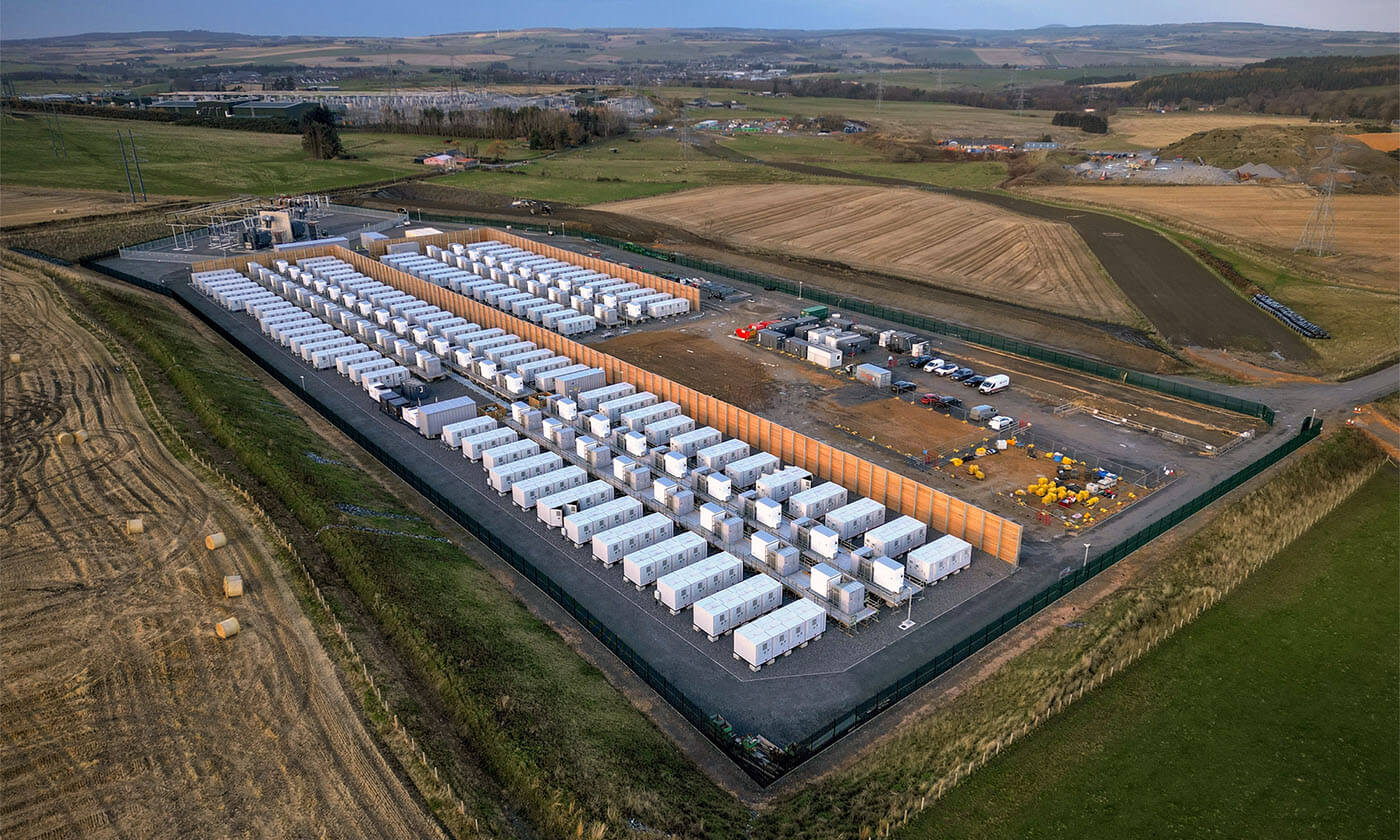
A 400MWh (200MW) Grid side Battery storage facility went live yesterday, up in NE Scotland. It is also the first facility of its type in the world to offer certain grid stability services, including ‘synthetic inertia’.


Class 317

Member
Joined
7 Jul 2020
Messages
569
Location
Cotswolds
Alongside the recent addition at Bramley it's added circa 700MWH additional BESS capacity in the last month or so.
 

Nicholas Lewis

Established Member
Joined
9 Aug 2019
Messages
8,031
Location
Surrey
A 400MWh (200MW) Grid side Battery storage facility went live yesterday, up in NE Scotland. It is also the first facility of its type in the world to offer certain grid stability services, including ‘synthetic inertia’.

Thats well placed to hoover up cheap leccy when its windy and system prices get depressed.
 
Joined
28 Oct 2017
Messages
252
What certainly happened - but not any more - are domestic installations where there is generation metering (ie what the panels produce, installed by the PV provider and probably next to the inverter) but no export metering (what leaves the house for the grid, and will be inside the main electricity meter at your DNO point of connection).
Exactly. Also, in most of these cases, the generation meter was a simple total meter read once per quarter, so no half hour data to feed in to the likes of Gridwatch. It gets sorted out for the final settlement, but this is why the numbers change (slightly) between real time data and later published figures. The whole Settlement system is complicated!
 

poffle

Member
Joined
11 Oct 2023
Messages
239
Location
Dublin, Ireland
A 400MWh (200MW) Grid side Battery storage facility went live yesterday, up in NE Scotland. It is also the first facility of its type in the world to offer certain grid stability services, including ‘synthetic inertia’.

I know the Hornsdale Power Reserve, the Tesla big battery in South Australia originally installed in 2017 provides inertia support services to the grid in the Australian National Electricity Market (SA/VIC/NSW/QLD).

I suspect there is something very technical on which the claim to be first in the world is based rather than just providing synthetic inertia.

 
Joined
28 Oct 2017
Messages
252

InTheEastMids

Established Member
Joined
31 Jan 2016
Messages
1,397
Gridwatch shows a peak of 11.599 GW, though the accuracy is uncertain.
They are probably getting this from PV_Live at Sheffield Uni, which is saying they are 90% confident it was between 11.4 and 11.8 GW. I think this is what NESO use (certainly they have done a lot of work with NESO and its predecessor over the years).
 

brad465

Veteran Member
Joined
11 Aug 2010
Messages
11,519
Location
Taunton or Kent
Earlier today renewables combined to produce nearly 24GW of power soon after midday, almost all of it wind and solar combined. This, combined with gas going under 3GW, caused electricity to briefly have a negative wholesale price, which is unusual in the middle of the day. There is certainly a lot of potential as further capacity for these and storage means ramp up.
 

Nottingham59

Established Member
Joined
10 Dec 2019
Messages
3,341
Location
Nottingham
combined with gas going under 3GW, caused electricity to briefly have a negative wholesale price
Can anyone explain why gas seems to have a minimum rate of consumption, even when wholesale prices fall to zero? In a simple market, gas generators would be losing money under such circumstances so should be expect to switch off completely.

Is it because the CCGT plant can't be switched off quickly? Or is there some other funding mechanism that keeps inertia in the system?
 

HSTEd

Veteran Member
Joined
14 Jul 2011
Messages
20,348
Can anyone explain why gas seems to have a minimum rate of consumption, even when wholesale prices fall to zero? In a simple market, gas generators would be losing money under such circumstances so should be expect to switch off completely.

Is it because the CCGT plant can't be switched off quickly? Or is there some other funding mechanism that keeps inertia in the system?
The gas turbines (and especially the steam plants of CCGTs) will incur wear if they shut down and rapidly restart, if they expect to generate in the near future they may just settle to minimum stable output and wait. The grid operator may also pay them to remain online at minimum stable generation to provide rapid response should renewable production drop off.
 

Bald Rick

Veteran Member
Joined
28 Sep 2010
Messages
35,894
Can anyone explain why gas seems to have a minimum rate of consumption, even when wholesale prices fall to zero? In a simple market, gas generators would be losing money under such circumstances so should be expect to switch off completely.

Is it because the CCGT plant can't be switched off quickly? Or is there some other funding mechanism that keeps inertia in the system?

It’s because the grid needs balance and stability overall: where the power is generated and where it is needed arent in the same parts of the country. The overall price is (sort of) an average of regional prices.

AIUI this year, when more battery storage projects are commissioned, and we have some more wind from Dogger Bank and a couple of wind farms in Scotland, we will go for a carbon free hour.

In other news, 2024 saw Wind generating more electricity than any other form of generation over the year, with 31%. It would have been higher but 10% of all potential wind beneration was curtailed due to lack of grid capacity, which going back to the above question is why we still have gas geenrating on windy sunny days.

Source: the Drax Electric Insights 2024 Q4 report (summarised above so no need to quote)

 
Last edited:

Krokodil

Established Member
Joined
23 Jan 2023
Messages
6,595
Location
Wales
Earlier today renewables combined to produce nearly 24GW of power soon after midday, almost all of it wind and solar combined. This, combined with gas going under 3GW, caused electricity to briefly have a negative wholesale price, which is unusual in the middle of the day. There is certainly a lot of potential as further capacity for these and storage means ramp up.
Those on Agile should look out for dirt cheap power tomorrow lunchtime. Looks like the price may be dropping tomorrow evening too.
 

HSTEd

Veteran Member
Joined
14 Jul 2011
Messages
20,348
Those on Agile should look out for dirt cheap power tomorrow lunchtime. Looks like the price may be dropping tomorrow evening too.
If I'm reading it correctly, tomorrow lunchtime the Agile import rate is reporting as 0.47p/kWh!

And then, 4 hours later, it shoots back up to 31p/kWh

That's crazy.

Really demonstrates price swings in renewable dominated systems.
 

Bald Rick

Veteran Member
Joined
28 Sep 2010
Messages
35,894
If I'm reading it correctly, tomorrow lunchtime the Agile import rate is reporting as 0.47p/kWh!

And then, 4 hours later, it shoots back up to 31p/kWh

That's crazy.

Really demonstrates price swings in renewable dominated systems.

there were bigger swings than that earlier this winter
 
Joined
28 Oct 2017
Messages
252
Can anyone explain why gas seems to have a minimum rate of consumption, even when wholesale prices fall to zero? In a simple market, gas generators would be losing money under such circumstances so should be expect to switch off completely.

Is it because the CCGT plant can't be switched off quickly? Or is there some other funding mechanism that keeps inertia in the system?
All of the above (and others have explained), but it is also true that there is a minimum load for gas turbine plant, below which it can't maintain control. The result is that if the plant needs to be on (in order to respond to a sudden increase in load), it has to not only be spun up, but be generating the minimum amount of electricity into the grid (and hence more renewables have to be pushed off). The same doesn't apply to a battery doing the same job (and actually didn't apply as much to steam turbine plants), because that is quite happy at zero load, or even switching from charging to discharging I believe.
 

jon0844

Veteran Member
Joined
1 Feb 2009
Messages
30,924
Location
UK
If I'm reading it correctly, tomorrow lunchtime the Agile import rate is reporting as 0.47p/kWh!

And then, 4 hours later, it shoots back up to 31p/kWh

That's crazy.

Really demonstrates price swings in renewable dominated systems.

Remember that Agile always puts a premium on electricity between 1600-1900, so the jump may not be as pronounced in reality.
 

brad465

Veteran Member
Joined
11 Aug 2010
Messages
11,519
Location
Taunton or Kent
Check out the solar generation for today - nice little dip at 11:03!
You reminded me of the 2015 eclipse being considered the first European eclipse to test the National Grid, as solar power was on the rise, coupled with a sudden fluctuation in power demand. I imagine in future the rise of battery storage facilities will offset any serious solar production output loss.


Friday's solar eclipse will present a significant challenge for the UK's electricity network and be an unprecedented test for operators of power networks.
Power demand is expected to fall and then surge.
As the moon obscures much of the sun, the electricity generated by solar panels is expected to drop by up to 75%.
But National Grid believes the overall impact will be "manageable".

Unprecedented test​

Much more electricity is generated from solar panels now than than during the last eclipse in 1999.
It is the first time that an eclipse in Europe is expected to have an impact on the operation of electricity grids.
Germany faces the biggest test, with about 39GW (gigawatts) of installed solar capacity.
The UK has 5GW of solar, the equivalent to the power output from about eight to 10 gas fired power stations.
But while the amount of electricity generated from solar will fall during eclipse, National Grid is not expecting any major impact.
"This loss of solar is entirely manageable," said a National Grid spokesperson. "We have a range of tools in place to manage any effects of the eclipse and balance the network."
 

Bald Rick

Veteran Member
Joined
28 Sep 2010
Messages
35,894
With current wind and solar, and with France / Germany being sunny too, the current price of electricity whilesale is -£70/MWh!

Battery systems will be making their return on invetsment in short order.
 

Top