I trust The Bill's bill for wasting police time will be winging its way as we speak to Mr James Daly MP in Bury (if he lives there).Police to take no further action over Angela Rayner housing allegations
Greater Manchester Police is taking no further action over allegations concerning Deputy Labour Leader Angela Rayner's living arrangements before she was an MP.
Questions had been raised over whether she owed tax on a house she sold in 2015, and if she registered to vote at the correct address.
She had promised to step down if she was found to have committed a criminal offence, and insisted she had followed the rules at all times.
Greater Manchester Police launched an investigation earlier this month into whether "any offences have been committed". The force has not said exactly what it has been investigating.
BBC News

-
Our new ticketing site is now live! Using either this or the original site (both powered by TrainSplit) helps support the running of the forum with every ticket purchase! Find out more and ask any questions/give us feedback in this thread!
You are using an out of date browser. It may not display this or other websites correctly.
You should upgrade or use an alternative browser.
You should upgrade or use an alternative browser.
UK General Election 2024
- Thread starter Bayum
- Start date
- Status
- Not open for further replies.
Sponsor Post - registered members do not see these adverts; click here to register, or click here to log in
R
RailUK Forums
railfan99
Established Member
if you lost this £7.5bn, where would you get it back from?
That was a major reason why I asked the question, as I hadn't researched how much annually it raised.
Does the UK lose a percentage of this from lack of investment/spending by 'rich' people who choose instead to live in other countries, such as many ex-film or TV stars?
My country doesn't have an inheritance tax as such although superannuation can be taxed a second time in some circumstances. But this thread is about the UK election, so I take it neither major party is likely to change the setup.

HSTEd
Veteran Member
- Joined
- 14 Jul 2011
- Messages
- 20,297
And yet another policy designed to force the young to provide very cheap labour to benefit the state.
https://www.telegraph.co.uk/politics/2024/05/28/conservatives-vow-to-shut-down-mickey-mouse-degrees/
100,000 new apprentices a year, who will almost certainly be required to do low skilled work for £6.40 per hour for a year. They will then be discarded and replaced with the next crop.
That's a lot of sub minimum wage labour.
https://www.telegraph.co.uk/politics/2024/05/28/conservatives-vow-to-shut-down-mickey-mouse-degrees/
University courses labelled as “Mickey Mouse” degrees that are attended by one in eight undergraduate students will be closed down under a Conservative policy expected to be unveiled today.
The money saved from fewer tuition fees will fund 100,000 extra apprenticeships a year, a rise of nearly a third compared to the 340,000 total places offered last year.
100,000 new apprentices a year, who will almost certainly be required to do low skilled work for £6.40 per hour for a year. They will then be discarded and replaced with the next crop.
That's a lot of sub minimum wage labour.
Diane Abbott is rumoured not being allowed to stand for Labour. I wonder if she'll stand as an independent like Jeremy Corbyn or step down.
I find it interesting how many MPs have decided to stand down within the last week, some of them are for personal and health reasons which is perfectly understandable and others are approaching or at retirement age.
I find it interesting how many MPs have decided to stand down within the last week, some of them are for personal and health reasons which is perfectly understandable and others are approaching or at retirement age.
Last edited:
It's a shame for the non-seniors that they either aren't bothered enough by the settlement that seniors get to use their vote to influence the politicians, or in many cases, can't be bothered to vote at all. They've exacerbated the situation themselves.Well the senior vote's desire to vote itself ever greater supplies of free money is one of the major reasons we are in the mess we are in now!
HSTEd
Veteran Member
- Joined
- 14 Jul 2011
- Messages
- 20,297
It is a common refrain, but I'm not sure how much weight it holds.It's a shame for the non-seniors that they either aren't bothered enough by the settlement that seniors get to use their vote to influence the politicians, or in many cases, can't be bothered to vote at all. They've exacerbated the situation themselves.
The median age of the electorate is 50, and young people end up concentrated in seats rather than spread efficiently across the country.
The inbuilt advantage for the influence of pensioners is enormous and getting worse.
Now that political parties openly embrace gerontocracy to win elections its only going to get worse.
The pensioner age group (and the allied age group that is counting down the days) is now simply too large to be overcome.
18-30 year olds are outnumbered by the over 65s.

GusB
Established Member
It would help if the non-seniors were allowed to use the ID that they do have (eg student ID cards), while senior ID such as bus passes are perfectly acceptable.It's a shame for the non-seniors that they either aren't bothered enough by the settlement that seniors get to use their vote to influence the politicians, or in many cases, can't be bothered to vote at all. They've exacerbated the situation themselves.

railfan99
Established Member
The median age of the electorate is 50, and young people end up concentrated in seats rather than spread efficiently across the country.
One other difference between the UK and some other Western nations is the capital London (even when counted as 'Greater London') has only 17 per cent of residents of England.
Presumably many London constituencies have a younger median age than (say) those in the north of England, so your 'concentration' point is well made.
Without looking at the stats., I'd guess electorates around Grimsby Town would have some of the oldest median ages of any in the House of Commons. Perhaps though they have many single mothers in their 20s and early 30s who sadly can't afford rent in larger cities? The coastal towns in the north may also have large numbers of pension age individuals.
== Doublepost prevention - post automatically merged: ==
18-30 year olds are outnumbered by the over 65s.
Amazing. But must have been caused by a lower than replacement birth rate per woman.
The whole thing isn't being handled well but is it really a good thing that we elect MPs in their 70s just because they happen to represent ultra safe constituencies and have been MPs for a long time? There must be plenty of people with the same views as these two who could represent the Labour Party in those seats. Is it just that their supporters feel that the Party will impose less left wing candidates?Diane Abbott is rumoured not being allowed to stand for Labour. I wonder if she'll stand as an independent like Jeremy Corbyn or step down.

The police wasted their own time by their own admission.I trust The Bill's bill for wasting police time will be winging its way as we speak to Mr James Daly MP in Bury (if he lives there).
The whole thing isn't being handled well but is it really a good thing that we elect MPs in their 70s just because they happen to represent ultra safe constituencies and have been MPs for a long time? There must be plenty of people with the same views as these two who could represent the Labour Party in those seats. Is it just that their supporters feel that the Party will impose less left wing candidates?
In their 70's, they've got plenty of time left, just look across the pond...
The UK has a higher concentration of its population in the capital city than most other countries.One other difference between the UK and some other Western nations is the capital London (even when counted as 'Greater London') has only 17 per cent of residents of England.
For a long time the UK had what was called "non-dom" status for people like this, which gave them very favourable tax treatment. The Labour Party have been promising to end it for a long time. The Conservative Party had consistently opposed ending of "non-dom" status, but did just that in the spring 2024 budget.Does the UK lose a percentage of this from lack of investment/spending by 'rich' people who choose instead to live in other countries, such as many ex-film or TV stars?
Demography is hugely important in understanding UK economics and politics. The UK had a very high birth rate in the years 1955-73 (note this is much later than what happened in the USA). This generation has been able to outvote the rest throughout its life, purely because there are more of them, and they are now at or approaching retirement age.Amazing. But must have been caused by a lower than replacement birth rate per woman.
Latest data for fertility in the UK is 1.49, well below the replacement rate.

YorkRailFan
Established Member
Diane Abbott has been readmitted as a Labour MP, the BBC understands, but it is unclear whether she will stand for the party at the general election.
The former shadow home secretary was suspended in April 2023 after saying Jewish, Irish and Traveller people do not face racism "all their lives".
Her suspension meant she would not be able to stand for Labour on 4 July.
Party officials had tried to broker a deal by which she would get the whip back in return for standing down.
It is not clear if the Hackney North and Stoke Newington MP has accepted that arrangement.
Labour has not said who its candidate will be in the Hackney North and Stoke Newington seat. Ms Abbott has been contacted for a comment.
The party is currently selecting remaining candidates before a meeting to endorse them next week, before nominations legally close on 7 June.
Labour branches are no longer able to put forward their own candidates, after a deadline passed on Monday.
Asked whether Ms Abbott wanted to stand for the party, Jacqueline McKenzie, an immigration lawyer and friend of the MP, told BBC Radio 4's Today programme: "I think she wants to be given the opportunity to make that decision."
She said it was "astonishing" that this week Labour leader Sir Keir Starmer and senior officials were saying an investigation into her comments was still under way, when according to BBC Newsnight it finished in December.
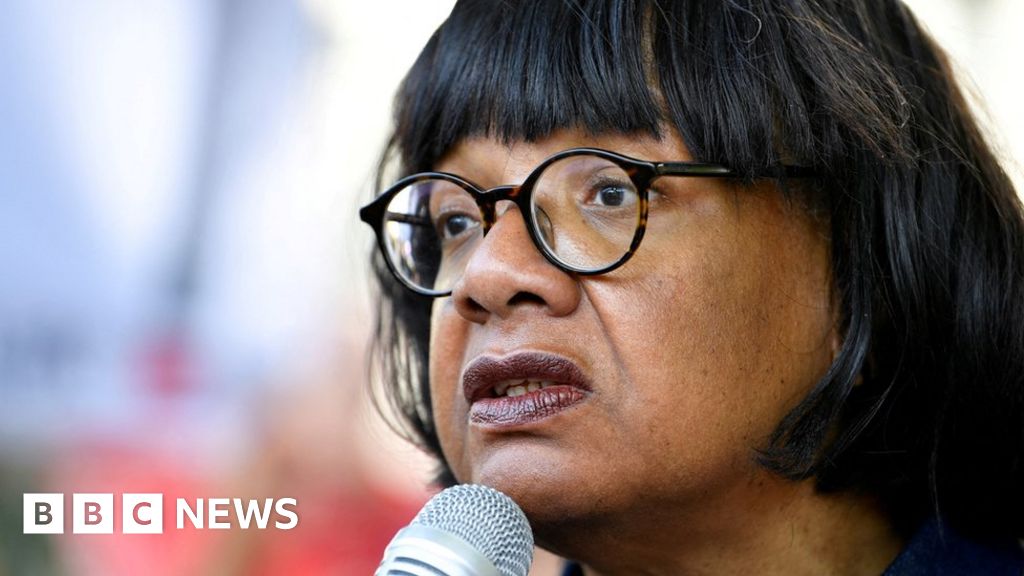
Abbott readmitted as Labour MP after race row probe - BBC News
But it is not clear whether the ex-shadow home secretary will stand for Labour at the election.
 www.bbc.co.uk
Will be very interesting to see if she follows Corbyn's footsteps and stands as an Independent.
Labour’s mayors have warned they are ready to “stand up” to a Starmer government to pursue better deals on issues such as housing, transport and local council funding.
The directly elected “metro mayors”, already major power brokers in their regions, are planning to act collectively to counter Westminster’s domination of British politics in an intervention they say is needed to kick-start the economy.More than half of England’s population is now represented by a directly elected regional mayor following this month’s local elections, of which all but one – Conservative Ben Houchen in Tees Valley – are held by Labour.Their victories were warmly celebrated by Labour HQ and used by Sir Keir Starmer as evidence of the country’s renewed faith in his party to deliver in office.
But i can reveal that while relations between mayors and the Labour front bench are currently cordial, both sides are gearing up for things to get more tricky after the general election.
As as a poll lead of more than 20 points suggests that, barring major upset, Labour is on course to win power for the first time in 14 years, the mayors are determined that the power should be shared.
Writing exclusively for i, Mayor of West Yorkshire, Tracy Brabin, said they would “act as a collective voice to counter the Westminster and Whitehall-dominated discussion on the action needed to kick-start our national economy”.
Stamer said today that he was expecting “robust conversations” with mayors but warned that they could not expect to “get everything they want”.
“I expect them to push me,” he told i. “But I will have to say no on some things and we will work on other things.”
A Labour insider has said there is already “distrust” between the party’s HQ and some of the mayors.
Brabin is chair of the UK Mayors Group (formerly M10) – a body which has represented the country’s metro majors and London Mayor Sadiq Khan, and will be the vehicle they use to challenge and work with Westminster.Its members already have a history of going against their national leaders and government. The previous Conservative West Midlands mayor, Andy Street, was openly critical of the idea of cancelling HS2 beyond Birmingham as speculation grew that Rishi Sunak was about to axe the line.
And there was a public disagreement between Khan and Starmer over London’s ultra-low emission zone (Ulez). Now with the mayors increasing in number to 12, their potential for collective power and dissent has been stepped up.
If Labour were to win on 4 July, it would find itself dealing with a very different political landscape to when it last held office.Former heartlands in the North and the Midlands are filled with prominent Labour figures such as Andy Burnham, the Mayor of Greater Manchester, who operate outside the whip system and will not be afraid to deviate from the party line.
The mayors’ collective demands will include achieving a long-term single funding settlement for each region, better funding for local councils, and investment to improve public transport.
“As mayors, we know our local places, we are passionate to see our regions thrive, and we know best which policies will help in each of our regions,” Brabin added.
“But we’re also able to work together, putting place before party, reaching across geographic lines and the dividing lines of Westminster, to put trust and confidence back into our politics.”Fellow mayors have echoed the calls in interviews with i.
Labour’s mayors, particularly in the North, have become accustomed to publicly criticising Conservative ministers such as Housing Secretary Michael Gove and Transport Secretary Mark Harper.
Asked if he will be prepared to publicly criticise a potential Labour minister such as deputy leader Angela Rayner or shadow Transport Secretary Louise Haigh; Mayor of South Yorkshire, Oliver Coppard, said: “I definitely think there is a kind of strain or a strand, within the mayoral role which says just place over politics.Former heartlands in the North and the Midlands are filled with prominent Labour figures such as Andy Burnham, the Mayor of Greater Manchester, who operate outside the whip system and will not be afraid to deviate from the party line.
The mayors’ collective demands will include achieving a long-term single funding settlement for each region, better funding for local councils, and investment to improve public transport.
“As mayors, we know our local places, we are passionate to see our regions thrive, and we know best which policies will help in each of our regions,” Brabin added.
“But we’re also able to work together, putting place before party, reaching across geographic lines and the dividing lines of Westminster, to put trust and confidence back into our politics.”
Fellow mayors have echoed the calls in interviews with i.Labour’s mayors, particularly in the North, have become accustomed to publicly criticising Conservative ministers such as Housing Secretary Michael Gove and Transport Secretary Mark Harper.
Asked if he will be prepared to publicly criticise a potential Labour minister such as deputy leader Angela Rayner or shadow Transport Secretary Louise Haigh; Mayor of South Yorkshire, Oliver Coppard, said: “I definitely think there is a kind of strain or a strand, within the mayoral role which says just place over politics.“I think the tone may change a bit, clearly, because I probably come at that with much more of a bias towards understanding that the Labour Party is going try and do the right thing in government for South Yorkshire, versus my perspective on this government.
“But some of that is about being able to have the conversations before the decision is made and all too often in these relationships that I have right now with government ministers, I’m not able to shape the decisions before they are made.”
“I think we do it [criticise Labour] respectfully and I think we say we’re here to stand up for our places.”
Kim McGuiness, Mayor of the North East, said: “There’s a strong voice in the North that wants to push Labour to go further and faster.“We’re having those conversations with the Labour front bench about what we want and need, what powers we can make use of to make a difference, to create opportunity, it shows that we really mean business.
“We’re not always going to agree all the time, there will be differences of opinion, but it’s about everybody round the table being grown up to know that.
“My responsibility is to people before party.”oliticsConservativesLabourLiberal DemocratsBrexitScotlandAnalysis
LATEST3h agoLBC's Iain Dale quits in bid to run as candidate in general election
LATEST4h agoStarmer reveals Labour's five-year plan to clear NHS backlog
LATEST5h agoTories will scrap one in eight 'bad' degrees to fund apprenticeships
‘We will stand up to Starmer,’ Labour mayors warn
EXCLUSIVEEngland's big new regional mayoral power brokers plan to work together to challenge Westminster
Mayor of West Yorkshire Tracy Brabin takes a selfie at a meeting with Labour’s newly expanded team of mayors and the party leadership, including Sir Keir Starmer (Photo: Stefan Rousseau/PA Wire)
By Steve Robson, Hugo Gye
May 27, 2024 2:59 pm(Updated May 28, 2024 10:50 am)
Labour’s mayors have warned they are ready to “stand up” to a Starmer government to pursue better deals on issues such as housing, transport and local council funding.
The directly elected “metro mayors”, already major power brokers in their regions, are planning to act collectively to counter Westminster’s domination of British politics in an intervention they say is needed to kick-start the economy.
More than half of England’s population is now represented by a directly elected regional mayor following this month’s local elections, of which all but one – Conservative Ben Houchen in Tees Valley – are held by Labour.
Their victories were warmly celebrated by Labour HQ and used by Sir Keir Starmer as evidence of the country’s renewed faith in his party to deliver in office.
But i can reveal that while relations between mayors and the Labour front bench are currently cordial, both sides are gearing up for things to get more tricky after the general election.
As as a poll lead of more than 20 points suggests that, barring major upset, Labour is on course to win power for the first time in 14 years, the mayors are determined that the power should be shared.
Writing exclusively for i, Mayor of West Yorkshire, Tracy Brabin, said they would “act as a collective voice to counter the Westminster and Whitehall-dominated discussion on the action needed to kick-start our national economy”.
Stamer said today that he was expecting “robust conversations” with mayors but warned that they could not expect to “get everything they want”.
“I expect them to push me,” he told i. “But I will have to say no on some things and we will work on other things.”
A Labour insider has said there is already “distrust” between the party’s HQ and some of the mayors.
Brabin is chair of the UK Mayors Group (formerly M10) – a body which has represented the country’s metro majors and London Mayor Sadiq Khan, and will be the vehicle they use to challenge and work with Westminster.
WOLVERHAMPTON, UNITED KINGDOM - MAY 13: Mayor of West Yorkshire Tracy Brabin attends a meeting with Labour's mayors at the GTG training centre on May 13, 2024 in Wolverhampton, United Kingdom. The first meeting since local elections outlined the mayor's strategies for enhancing regional growth goals in Labour's devolution agenda. (Photo by Christopher Furlong/Getty Images)
Tracy Brabin, second from left, will chair the UK mayors network which aims to speak with a ‘collective voice’ (Photo: Christopher Furlong/Getty Images)
Its members already have a history of going against their national leaders and government. The previous Conservative West Midlands mayor, Andy Street, was openly critical of the idea of cancelling HS2 beyond Birmingham as speculation grew that Rishi Sunak was about to axe the line.
And there was a public disagreement between Khan and Starmer over London’s ultra-low emission zone (Ulez). Now with the mayors increasing in number to 12, their potential for collective power and dissent has been stepped up.
If Labour were to win on 4 July, it would find itself dealing with a very different political landscape to when it last held office.
Former heartlands in the North and the Midlands are filled with prominent Labour figures such as Andy Burnham, the Mayor of Greater Manchester, who operate outside the whip system and will not be afraid to deviate from the party line.
The mayors’ collective demands will include achieving a long-term single funding settlement for each region, better funding for local councils, and investment to improve public transport.
“As mayors, we know our local places, we are passionate to see our regions thrive, and we know best which policies will help in each of our regions,” Brabin added.
“But we’re also able to work together, putting place before party, reaching across geographic lines and the dividing lines of Westminster, to put trust and confidence back into our politics.”
Fellow mayors have echoed the calls in interviews with i.
Labour’s mayors, particularly in the North, have become accustomed to publicly criticising Conservative ministers such as Housing Secretary Michael Gove and Transport Secretary Mark Harper.
Asked if he will be prepared to publicly criticise a potential Labour minister such as deputy leader Angela Rayner or shadow Transport Secretary Louise Haigh; Mayor of South Yorkshire, Oliver Coppard, said: “I definitely think there is a kind of strain or a strand, within the mayoral role which says just place over politics.
WOLVERHAMPTON, UNITED KINGDOM - MAY 13: (L-R) West Midlands mayor Richard Parker, Mayor of Cambridgeshire and Peterborough Nik Johnson, Mayor of London Sadiq Khan, East Midlands Mayor Claire Ward, Mayor of West Yorkshire Tracy Brabin, Mayor of South Yorkshire Oliver Coppard, Deputy Leader Angela Rayner, Metro Mayor of the Liverpool City Region Steve Rotheram, Labour leader Keir Starmer, Mayor of York and North Yorkshire David Skaith, Shadow Chancellor of the Exchequer Rachel Reeves, Mayor of Manchester Andy Burnham, Mayor of the North East Kim McGuinness and Mayor of the West of England Dan Norris pose for a family photo during a meeting at the GTG training centre on May 13, 2024 in Wolverhampton, United Kingdom. The first meeting since local elections outlined the mayor's strategies for enhancing regional growth goals in Labour's devolution agenda. (Photo by Christopher Furlong/Getty Images)
Sir Keir Starmer has been warned his Labour mayors will not be afraid to ‘stand up’ to him (Photo: Christopher Furlong/Getty Images)
“I think the tone may change a bit, clearly, because I probably come at that with much more of a bias towards understanding that the Labour Party is going try and do the right thing in government for South Yorkshire, versus my perspective on this government.
“But some of that is about being able to have the conversations before the decision is made and all too often in these relationships that I have right now with government ministers, I’m not able to shape the decisions before they are made.”
“I think we do it [criticise Labour] respectfully and I think we say we’re here to stand up for our places.”
Kim McGuiness, Mayor of the North East, said: “There’s a strong voice in the North that wants to push Labour to go further and faster.
“We’re having those conversations with the Labour front bench about what we want and need, what powers we can make use of to make a difference, to create opportunity, it shows that we really mean business.
“We’re not always going to agree all the time, there will be differences of opinion, but it’s about everybody round the table being grown up to know that.
“My responsibility is to people before party.”
Starmer told i: “I would expect [the mayors] to challenge me, they are there to represent the people who put them into power as mayors, it is their absolute responsibility to fight for all of the people that voted for them – and the people who didn’t vote for them – in the areas that they represent, and I’ve no doubt we will have robust conversations.
“We’ve already started those conversations, but what we will have is a sort of grown-up approach as to what’s possible and what can be done. And you will have a Westminster government, if we were privileged enough to serve, working with our mayors.“And think of the difference that will make – instead of a central government fighting the mayors, trying to create tension – you saw this very acutely, by the way, during the pandemic, if you remember, particularly in Greater Manchester, the government and the mayor at loggerheads – I want to see a government and our mayors working together.”

We will stand up to you, Labour mayors warn Starmer
England's big new regional mayoral power brokers plan to work together to challenge Westminster
 inews.co.uk
Good to see Mayors challenging the Labour Front bench, who have received little to no opposition from their members for a few months.

DanNCL
Established Member
Sunak was on the Night Riviera from Paddington last night. Amazing how he’s suddenly capable of ditching the private jet when he wants to look relatable in an election campaign!
railfan99
Established Member
Sunak was on the Night Riviera from Paddington last night. Amazing how he’s suddenly capable of ditching the private jet when he wants to look relatable in an election campaign!
If my experience (twice) has been any guide, he'd have enjoyed a comfortable ride.
Far better than the CS, which I've only travelled on once, and only one way: truncated at Edinburgh a/c rail strike in 2023.
== Doublepost prevention - post automatically merged: ==
The UK has a higher concentration of its population in the capital city than most other countries.
In 2024, Greater Toronto had just above 40 per cent of Ontario's population in Canada.
In June 2023, Greater Sydney had about 66 per cent of New South Wales' population. Greater Melbourne has about 73 per cent of Victoria, Australia's population. Australia is one of the most urbanised nations, far more than dissimilar USA.
Your statement may be factual worldwide but I was clumsily referring to nations with British heritage.
The 'rest of England' must have far more MPs than Greater London-based ones. Can we assume the UK election won't just be about London, Glasgow, Cardiff or Belfast, far from it?
It's fascinating that the Tories broke the so-called 'Red Wall' as this must have been an amazing political achievement, given Labour MPs could have regarded themselves as having 'a seat for life'.
Last edited:
renegademaster
Established Member
Not saying its a good idea but we have parliamentary sovereignty, Parliament can make laws to punish people for whatever they want. ECHR won't do anything either considering a number of EU countries have conscription.No chance this passes any kind of legal scrutiny. You can't punish one adult for another adult not doing something.

LNW-GW Joint
Veteran Member
If she stays "loyal" she could end up as an influential Labour peer - stand against Starmer, like Corbyn, and she won't.Will be very interesting to see if she follows Corbyn's footsteps and stands as an Independent.
That's if being in the Lords is compatible with her beliefs.
railfan99
Established Member
The UK had a very high birth rate in the years 1955-73 (note this is much later than what happened in the USA). This generation has been able to outvote the rest throughout its life, purely because there are more of them, and they are now at or approaching retirement age.
Addtionally, the percentage of older folk who turn up to vote must be higher than (say) the 18-35 year old cohort.
Cross City
Member
Parliament can make laws to punish people for whatever they want.
The courts will have a lot of say.
ECHR won't do anything either considering a number of EU countries have conscription.
How many EU countries punish adults for other adults resisting conscription?
YorkRailFan
Established Member
If she wants to remain as a MP, Labour is not an option for her as below:If she stays "loyal" she could end up as an influential Labour peer - stand against Starmer, like Corbyn, and she won't.
That's if being in the Lords is compatible with her beliefs.
A bit on this story for you now - Diane Abbott has told the BBC's Joe Pike: "Although the whip has been restored, I am banned from standing as a Labour candidate."

Of course they are. One group is 12 years wide while the other represents 30 years plus.18-30 year olds are outnumbered by the over 65s.

dangie
On Moderation
There are a two outcomes here:And yet another policy designed to force the young to provide very cheap labour to benefit the state.
https://www.telegraph.co.uk/politics/2024/05/28/conservatives-vow-to-shut-down-mickey-mouse-degrees/
100,000 new apprentices a year, who will almost certainly be required to do low skilled work for £6.40 per hour for a year. They will then be discarded and replaced with the next crop.
That's a lot of sub minimum wage labour.
Expensive University Mickey Mouse course for virtually useless qualification with high student dept probably for both student and parents, no job at the end with little chance of getting one.
Or an apprenticeship learning a trade, earning some money, maybe or maybe not a job at the end, but certainly a better chance of finding one.
If I had teenage children I know which I’d advise them to do.
I have a feeling that she is very toxic within the labour party, her very close links to Corbyn have probably done her no good. This is a way to reinstate her but get rid of her.If she wants to remain as a MP, Labour is not an option for her as below:
YouGov poll reported by Sky (https://news.sky.com/story/labour-extends-lead-over-tories-in-exclusive-poll-for-sky-news-13144620) shows Conservative vote share falling after the election was called:
- Labour 47% - 539 seats
- Conservative 20% - 30 seats
- LibDem 9% - 46 seats
- Reform 12% - 0 seats
- Green 7% - 2 seats
The Conservatives have failed to get a bounce from Rishi Sunak's surprise election announcement and are still struggling to win back their coalition of 2019 voters, data from YouGov suggests.
Of the Tory voters from that year (2019), only 36% say they would vote Tory now, 19% would vote Reform UK, 19% don't know and 14% would switch to Labour.
Last edited:

birchesgreen
Established Member
Ah the old Mickey Mouse courses stuff again, something the right has moaned about for years, and despite being in power for 14 years has not done anything about it... if indeed there is any substance here.
== Doublepost prevention - post automatically merged: ==
== Doublepost prevention - post automatically merged: ==
Not going to lie, watching PMQs between Starmer and the LOO Ed Davey is going to be sweet.YouGov poll reported by Sky shows Conservative vote share falling after the election was called:
- Labour 47% - 539 seats
- Conservative 20% - 30 seats
- LibDem 9% - 46 seats
- Reform 12% - 0 seats
- Green 7% - 2 seats
Would SNP be the second party in that instance or would Labour win seats in Scotland? With 50 odd seats in Scotland it must be a possibility the SNP could be the second party despite their issues.YouGov poll reported by Sky (https://news.sky.com/story/labour-extends-lead-over-tories-in-exclusive-poll-for-sky-news-13144620) shows Conservative vote share falling after the election was called:
- Labour 47% - 539 seats
- Conservative 20% - 30 seats
- LibDem 9% - 46 seats
- Reform 12% - 0 seats
- Green 7% - 2 seats
The danger with polls like that is that it may lead to more people getting concerned about the Labour Party majority being too big, and vote Conservative to moderate that power.
The Russell Brand effect?It's a shame for the non-seniors that they either aren't bothered enough by the settlement that seniors get to use their vote to influence the politicians, or in many cases, can't be bothered to vote at all. They've exacerbated the situation themselves.

Howardh
Established Member
- Joined
- 17 May 2011
- Messages
- 9,774
Ah the old Mickey Mouse courses stuff again, something the right has moaned about for years, and despite being in power for 14 years has not done anything about it... if indeed there is any substance here.
== Doublepost prevention - post automatically merged: ==
Not going to lie, watching PMQs between Starmer and the LOO Ed Davey is going to be sweet.
Davey - "Mr Speaker, I would like to ask the Prime Minister how his roses are doing this year"
Starmer - "Mr Speaker, I do hope the right honourable gentleman has seen the pictures I posted on twitbook...."

Seriously, it's a reasonably likely outcome as the polls stand, although I assume most saying they will vote Reform will return (mostly) to the Tories, giving them 100+ seats and opposition. That aside, I expect the Libdems would be empowered if in opposition, but obviously not as much as being part of a coalition. So it's a bit of a quandry for us; do we want the kudos of being the second largest party by seats, or do we want real power by having fewer seats than the Tories but more power as part of a hung parliament?
It's enough to throw someone off their canoe.

WesternLancer
Veteran Member
- Joined
- 12 Apr 2019
- Messages
- 15,078
Yes, picture of him on Penzance (I assume) platform disembarking on Gaurdian news feed (10.02 BST update)Sunak was on the Night Riviera from Paddington last night. Amazing how he’s suddenly capable of ditching the private jet when he wants to look relatable in an election campaign!
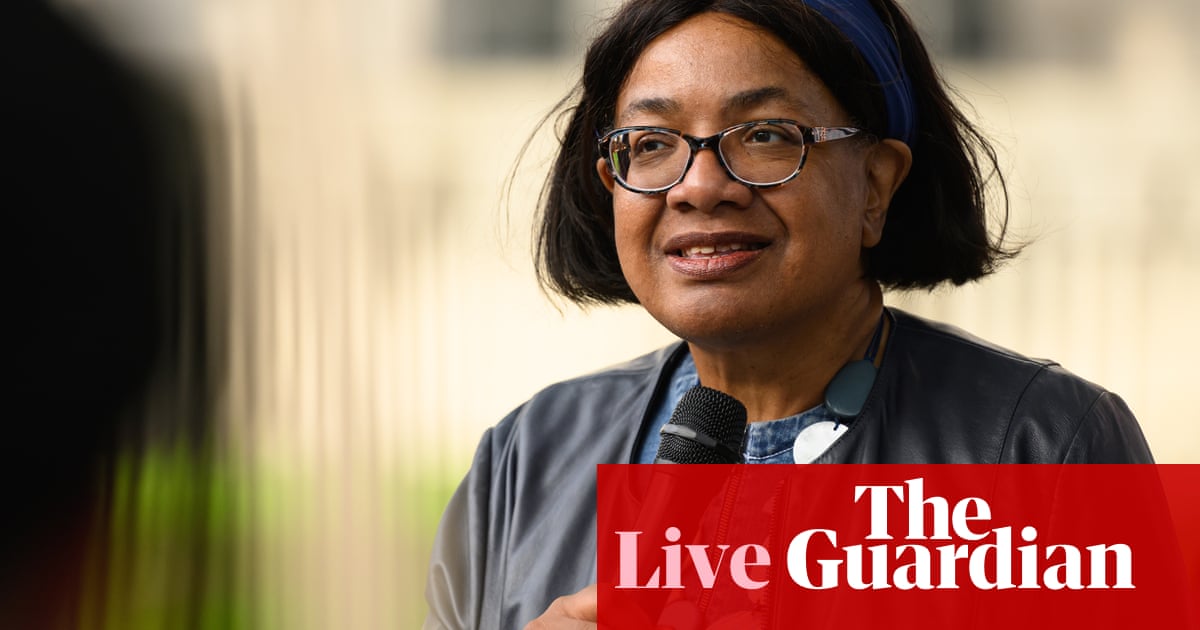
Sunak calls on Starmer to be transparent about Diane Abbott situation – UK politics live
SNP’s Stephen Flynn hails MP as a ‘phenomenal individual’ and contrasts her treatment with the welcome given to Tories’ Natalie Elphicke
 www.theguardian.com
Rishi Sunak has arrived in the south-west of England to campaign, having travelled by sleeper train overnight. He has already made an early morning media appearance, buying breakfast sandwiches for staff and the media at a seaside cafe. He described the train trip as “jolly” according to PA Media.
Seems to have been in the penultimate carriage - wonder if there was an empty berth at short notice or if they put another carriage on for him and accompanying people?
Will he go on to next stop by train or back to the helicopter?
- Status
- Not open for further replies.