• Our new ticketing site is now live! Using either this or the original site (both powered by TrainSplit) helps support the running of the forum with every ticket purchase! Find out more and ask any questions/give us feedback in this thread!

Signal Box Opening Times

Status
Not open for further replies.

edwin_m

Veteran Member
Joined
21 Apr 2013
Messages
28,665
Location
Nottingham
In around 1973, at the age of about 8, on a family walk along the adjacent towpath we were invited into Marple Wharf Junction box. The signalman must have been one of the reliefs because he said he worked as far away as Diggle.

One of the signalling schools was at Webb House in Crewe. In the late 1980s I was involved in installing simulators for training in NX panel and VDU signalling. I assume they would have had something for mechanical boxes too, but I never saw it.
 
Sponsor Post - registered members do not see these adverts; click here to register, or click here to log in
R

RailUK Forums

Gloster

Veteran Member
Joined
4 Sep 2020
Messages
12,992
Location
Up the creek
As far as I can remember at Beckenham in 1979 all they had was two block instruments set up on a high shelf to explain the basics, a number of posters or diagrams and a couple of odd bits of equipment as examples. One of the problems was that every box was different: their equipment had developed and come from different sources over the years. The course really only dealt with the basic theory and the various regulations. The lecturer was sufficiently curious about my box that he made a visit a couple of weeks later. We had TCB one way, AB another and a mixed TC/AB with electro-pneumatic signals the last.
 
Last edited:

thesignalman

Member
Joined
9 Jan 2012
Messages
160
Thanks to Gloster for replying - Yes we have four Detonator levers for placers, one for each of the four lines. They held two detonators. One of our members, who operated the box, could only recall one occasion he'd heard of a detonator placer being used. A colleague used one of the levers when a train just departing the station was spotted with an open door on the non-platform side. The train was stopped and the door secured.
Here's another one, John.

I used the Down Slow placer at that box one morning, I needed to speak with a driver of a DMU on the Down Slow, brought him nearly to a stand at the Home to draw up, and then displayed a red flag to stop him at the box - which was the correct procedure. As he showed no sign of stopping I pulled the detonator lever. He certainly stopped the train then, and apologised that he was "reading his payslip". To be fair, it wasn't the best angle for a view of the box on a curve three lines away.

They were used now and then as required at all the boxes around the area, the biggest nuisance of doing so was re-filling them afterwards.

John
 

Andy873

Established Member
Joined
23 Mar 2017
Messages
1,412
Fascinating replies as always.

I re-watched the St. Albans South video and in it there is mention of forward facing points requiring locking bolts.

I know railway companies whenever possible tried to avoid forward facing points, and this brings me to some more questions:

Some crossovers were worked by just one lever, so why in some cases were two needed? If you look at the box diagram for St. Albans South (1075) here:


You will see a crossover from the Up Fast, across the Down Slow to the Up Slow (levers 29 & 30) - why two levers? and why forward facing points and not a reverse?

At Padiham and Great Harwood there were Up and Down refuge loops for slower goods trains to get out of the way of faster passenger trains, and yet, to get on them a reverse was needed? - why not forward facing points here? was it because at these locations you could also run into the goods yard?
 

Gloster

Veteran Member
Joined
4 Sep 2020
Messages
12,992
Location
Up the creek
A couple of points (pun intendEd). The main reason for using two levers is that the length or geometry of the points makes them an extremely heavy throw, so each end is dealt with one on at a time.

Do you mean why are there points to allow Up Fast to Up Slow and Down Slow go Down Fast, but not Up Slow to Up Down Fast to Down Slow? The reason would usually be operational and that was all that was considered necessary at that location: no point installing and equipment you don’t need. In the old days railways were extremely parsimonious and calculated everything down to the last penny. Sometimes there would be technical reasons, so that they could only install some of the things they wanted.

A loop, in this sense, is a siding which can be entered by a train without reversal at one end and which the train can leave at the other end without further ado. Refuge sidings (there are other terms) only have access at one end and trains have to reverse into them. There are a number of reasons for choosing one or other, but a loop requires facing points, which require a point lock on passenger lines, so more initial cost and maintenance, it may require a second signal box or its length may be limited due to constraints. All those have to be justified by the amount and necessity of the loop’s use. There also factors such as company practices: the Midland Railway is supposed to have disliked facing points so much that there was only one on the Settle & Carlisle.
 

Railsigns

Established Member
Joined
15 Feb 2010
Messages
2,754
You will see a crossover from the Up Fast, across the Down Slow to the Up Slow (levers 29 & 30) - why two levers?
It allowed one end to be set reverse for flank protection while the other end was set normal for a train movement.
 

edwin_m

Veteran Member
Joined
21 Apr 2013
Messages
28,665
Location
Nottingham
Before the days of motorised points, a long loop would need a signal box at each end, so was an extra operating as well as a capital cost. However, setting a train back into a refuge siding took a lot longer than just admitting it to a loop, so the latter would have been much more useful at places where overtaking was needed frequently. It was also contributory to at least one major accident, at Charfield https://www.railwaysarchive.co.uk/docsummary.php?docID=304

A down semi-fitted (G.W.R.) freight train (2) was being slowly propelled off the down main line in a northerly direction into a down lie-by siding. With the exception of all but two of the wagons and the engine and tender, this train had passed clear of the fouling point of the siding with the down main line, the engine at the moment of the collision being under the overbridge. The 10 pm. (Leeds to Bristol) down mail passenger train (1), travelling at high speed in a southerly direction, grazed the two wagons of the Great Western freight train, and struck the right-hand back end of the tender of the engine of that train, with the result that the engine of the mail train was derailed towards the six-foot, and came into contact with the empty wagons of the L.M. & S.R. up train.
 

Rescars

Established Member
Joined
25 May 2021
Messages
2,547
Location
Surrey
Before the days of motorised points, a long loop would need a signal box at each end, so was an extra operating as well as a capital cost. However, setting a train back into a refuge siding took a lot longer than just admitting it to a loop, so the latter would have been much more useful at places where overtaking was needed frequently. It was also contributory to at least one major accident, at Charfield https://www.railwaysarchive.co.uk/docsummary.php?docID=304
Pre motorised points, at stations on some less busy single line routes, there would be a cabin (essentially a deluxe ground frame) to control the points at each end of the passing loop, locked by the token instruments which were located separately in an office in the station building. IIRC the BoT was not enthralled by this and much preferred to see instruments in boxes under the direct control of a signaller, but nevertheless this arrangement lasted into the post-Beeching era in some locations.
 

Gloster

Veteran Member
Joined
4 Sep 2020
Messages
12,992
Location
Up the creek
Pre motorised points, at stations on some less busy single line routes, there would be a cabin (essentially a deluxe ground frame) to control the points at each end of the passing loop, locked by the token instruments which were located separately in an office in the station building. IIRC the BoT was not enthralled by this and much preferred to see instruments in boxes under the direct control of a signaller, but nevertheless this arrangement lasted into the post-Beeching era in some locations.

I interpreted the question in #64 as being about goods loops on multiple-track lines into which goods trains are run to allow faster trains to pass. Although a number of railways, the best known being the Highland, used to have cabins at either end of passing loops on single lines, in many cases the loops on a single line were not so long that they could not be operated by a box that was roughly centrally placed. Some companies, I think the Brighton was one, often had the box at one end and a Ground Frame at the other. I am not sure how long the maximum recommended pull as far as the BoT was concerned was: possibly 330 yards.
 

edwin_m

Veteran Member
Joined
21 Apr 2013
Messages
28,665
Location
Nottingham
Pre motorised points, at stations on some less busy single line routes, there would be a cabin (essentially a deluxe ground frame) to control the points at each end of the passing loop, locked by the token instruments which were located separately in an office in the station building. IIRC the BoT was not enthralled by this and much preferred to see instruments in boxes under the direct control of a signaller, but nevertheless this arrangement lasted into the post-Beeching era in some locations.

I interpreted the question in #64 as being about goods loops on multiple-track lines into which goods trains are run to allow faster trains to pass. Although a number of railways, the best known being the Highland, used to have cabins at either end of passing loops on single lines, in many cases the loops on a single line were not so long that they could not be operated by a box that was roughly centrally placed. Some companies, I think the Brighton was one, often had the box at one end and a Ground Frame at the other. I am not sure how long the maximum recommended pull as far as the BoT was concerned was: possibly 330 yards.
I also interpreted it as goods loops, as facing points are pretty much essential on a single line crossing loop. But I agree a loop on a single line would also need a box each end unless it was fairly short.

I recall sometime in the early 90s a mention of the end of an arrangement at a station, on the Aberdeen-Inverness line I think, where the signaller was provided with a bicycle to get between the box and the levers for the points at the other end of the loop.
 

Gloster

Veteran Member
Joined
4 Sep 2020
Messages
12,992
Location
Up the creek
I recall sometime in the early 90s a mention of the end of an arrangement at a station, on the Aberdeen-Inverness line I think, where the signaller was provided with a bicycle to get between the box and the levers for the points at the other end of the loop.

That would have been Nairn, which was the last box with this arrangent on the Highland and probably on the whole network. I think it was a cabin at each end to work the points and signals, but the token instruments were in the station building, which was the ‘box’.
 

Rescars

Established Member
Joined
25 May 2021
Messages
2,547
Location
Surrey
That would have been Nairn, which was the last box with this arrangent on the Highland and probably on the whole network. I think it was a cabin at each end to work the points and signals, but the token instruments were in the station building, which was the ‘box’.
I recall seeing this set up at Taynuilt, probably early 1970s. No sign of a bicycle though!

Another consideration concerning loops on single lines was whether there was an up and a down line, (requiring movements of points for most trains), or as an alternative an up-down main with an up-down relief loop (which was only used if trains were passing).
 
Last edited:

D7666

Member
Joined
12 Aug 2013
Messages
997
A search of SR SWDivision working timetables rather confirms this - the only one I can find is Verwood on the Salisbury to West Moors line, which had one passenger/news and a freight in the small hours, but came into its own during the day. Oddly Breamore was less used but not so fitted.
The were two manned unsignalled level crossings north of Breamore - South Charford and North Charford, that were supervised by telephone from Breamore. Breamore stayed switched in for that reason; Breamore was staffed anyway as it was a combined ticket office + signalman post, there was no net staff saving by switching it out.

How do I know about Breamore ? That is my home village, I lived within 400 m of the station, and, to closure, 1964, my gran, was the full time crossing keeper at South Charford. She had a block bell - just a repeater, no instruments - in the kitchen***, and a phone under a lid outside the front door, and telephoned Breamore for permission to open the gates to road traffic for every vehicle crossing. Same arrangement applied at North Charford.

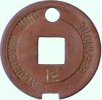
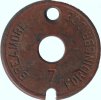
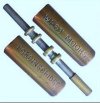
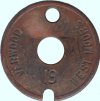
AIUI that sort of working came into place after the line had some signal rationalisation done to it c.1930. That closed Downton as a box, leaving it only as a shunt frame so Alderbury Jn - Breamore became the section; up to then there were block repeater instruments in the crossing houses to see state of the line, these were removed; the orginal Breamore cabin was closed and levers relocated to a ground frame type affair on the platform outside the booking office and the block token instrumens within, and also provison to switch out Fordingbridge; Breamore to Fordingbridge and Fordingbridge to Verwood were Tyers tokens, but a long staff was used for Breamore to Verwood when Fordingbridge was switched out. Breamore was signalled by the same person doing ticket office duties (the regular resident up to closure being one Mr. Trim); so as the ticket office was staffed anyway, so was the signalbox.


*** hence I knew all the bell codes before I even started primary school, and could count to 16 (testing block bells) rapidly and accurately tell the difference between 16, 5-5-5 and and 7-5-5. (Or 5-5-7, I forget which one it was now, it was 60 years ago last month after all).

 
Last edited:

Railsigns

Established Member
Joined
15 Feb 2010
Messages
2,754
I recall seeing this set up at Taynuilt, probably early 1970s. No sign of a bicycle though!
Taynuilt had one signal box to work the whole layout whereas Nairn had two (one at each end), but the token instruments at both places were located in the station booking office (this is still the case at Barrhill). Nairn also had a small lever frame inside the booking office working slots on the starting signals.
 

30907

Veteran Member
Joined
30 Sep 2012
Messages
21,958
Location
Airedale
The were two manned unsignalled level crossings north of Breamore - South Charford and North Charford, that were supervised by telephone from Breamore. Breamore stayed switched in for that reason; Breamore was staffed anyway as it was a combined ticket office + signalman post, there was no net staff saving by switching it out.

How do I know about Breamore ? That is my home village, I lived within 400 m of the station, and, to closure, 1964, my gran, was the full time crossing keeper at South Charford. She had a block bell - just a repeater, no instruments - in the kitchen***, and a phone under a lid outside the front door, and telephoned Breamore for permission to open the gates to road traffic for every vehicle crossing. Same arrangement applied at North Charford.

AIUI that sort of working came into place after the line had some signal rationalisation done to it c.1930. That closed Downton as a box, leaving it only as a shunt frame so Alderbury Jn - Breamore became the section; up to then there were block repeater instruments in the crossing houses to see state of the line, these were removed; the orginal Breamore cabin was closed and levers relocated to a ground frame type affair on the platform outside the booking office and the block token instrumens within, and also provison to switch out Fordingbridge; Breamore to Fordingbridge and Fordingbridge to Verwood were Tyers tokens, but a long staff was used for Breamore to Verwood when Fordingbridge was switched out. Breamore was signalled by the same person doing ticket office duties (the regular resident up to closure being one Mr. Trim); so as the ticket office was staffed anyway, so was the signalbox.


*** hence I knew all the bell codes before I even started primary school, and could count to 16 (testing block bells) rapidly and accurately tell the difference between 16, 5-5-5 and and 7-5-5. (Or 5-5-7, I forget which one it was now, it was 60 years ago last month after all).
Thanks for that fascinating detail, which explains why Breamore was retained. The WTTs, though, have Verwood as the short-section block post but not Fordingbridge.

7-5-5 is correct :)
 

John Webb

Established Member
Joined
5 Jun 2010
Messages
3,769
Location
St Albans
Here's another one, John.

I used the Down Slow placer at that box one morning, I needed to speak with a driver of a DMU on the Down Slow, brought him nearly to a stand at the Home to draw up, and then displayed a red flag to stop him at the box - which was the correct procedure. As he showed no sign of stopping I pulled the detonator lever. He certainly stopped the train then, and apologised that he was "reading his payslip". To be fair, it wasn't the best angle for a view of the box on a curve three lines away.

They were used now and then as required at all the boxes around the area, the biggest nuisance of doing so was re-filling them afterwards.

John
Thanks for that!
Fascinating replies as always.

I re-watched the St. Albans South video and in it there is mention of forward facing points requiring locking bolts.

I know railway companies whenever possible tried to avoid forward facing points, and this brings me to some more questions:

Some crossovers were worked by just one lever, so why in some cases were two needed? If you look at the box diagram for St. Albans South (1075) here:
(I've substituted a photo of the box diagram which may be easier to read - JW)
69 2009, April, Diagram.jpg

You will see a crossover from the Up Fast, across the Down Slow to the Up Slow (levers 29 & 30) - why two levers? and why forward facing points and not a reverse?......
It allowed one end to be set reverse for flank protection while the other end was set normal for a train movement.
Thanks to Railsigns for the explanation. Andy: 'Flank Protection' is designed to ensure that if a train is crossing over from Up fast to Up slow, point 33 has to be set to protect the crossing train from one on the Down Slow overrunning the home signals.
Likewise for a train crossing from Down Slow to Down Fast (points 33 & 31), point 29 has to be set towards the Up Slow for protection from an overrun on the Up Fast past 9/11 signals.
The reason for the two crossovers is partly historic, partly operating convenience, but in short for some while between 1892 and 1906 the slow lines were goods only through the station, not passenger. Local passenger trains running through St Albans to/from the north were switched from/to the slow lines here to keep them out of the way of express trains as much as possible.
The other oddity is that crossovers 4 and 17 between the two slow lines, on the Down line shared a single facing pointlock lever 5. 17 was normally trailing, and 4 had to be locked, the normal situation. But if a train was terminated at the Down slow platform and was to be sent back to London via crossover 17, crossover 4 was of course then trailing and lever 5 was reversed to lock 17 in the reversed position.
 

Gloster

Veteran Member
Joined
4 Sep 2020
Messages
12,992
Location
Up the creek
Thanks for that fascinating detail, which explains why Breamore was retained. The WTTs, though, have Verwood as the short-section block post but not Fordingbridge.

7-5-5 is correct :)

7-5-5 Closing of signal box
5-5-7 Closing of signal box where section signal is locked by the block

The second to be used when the box switches out by the line remains open and the signalman needs a Line Clear to clear the signals
 

infobleep

On Moderation
Joined
27 Feb 2011
Messages
13,451
I have not seen the video, but I presume that the levers were for detonator placers. The levers are connected by the usual rodding to a small metal plate on which are attached two detonators (*) and which is fitted in a small housing on the outside of a running rail. If the signalman needs to stop a train in an emergency he can, in addition to putting back the signals or waving a red, pull the appropriate lever, which slides the small plate on to the top of the rail so that if a train passes over the dets they will explode to warn the driver. Normally the black and white chevrons on the lever point down for the lever applicable to the Down Line and up for the Up. It is just another safety option, very much belt and braces, and much quicker than the signalman having to grab some dets and dash outside to attach them to the rail, particularly as he may have other things to do if it s an emergency.

* - Two dets so as to be sure that at least one goes off: they are outside for weeks on end between changeovers.


Yes, if B switches out, then the block section becomes A to C and all the bells, instruments, telephones, etc. are now linked directly between those two. It is as if B no longer exists. Switching out is done by B getting permission to close from A and C, setting the road for the through route, pulling the appropriate signals and then using the switch (*); after A and C have tested that all is now working correctly between them they tell B and he goes home.

* - The switch was not a simple switch, but a complicated mechanism in B that when operated connected the various A-B wires to the appropriate B-C wires and cut out the equipment in B. Example: there would be a wire running from A’s bell tapper to B’s bell (from A) and another from B’s tapper to the bell at C: operating the switch connected these two so that the current ran directly from A’s tapper to C’s bell. I know of two types of switch: the GW type where a rod with contacts attached was rotated ninety degrees and a Southern type with a slide that was moved back and forth.
Once connected and box B switched out, would any bells still ring in box B?
 

D7666

Member
Joined
12 Aug 2013
Messages
997
Thanks for that fascinating detail, which explains why Breamore was retained. The WTTs, though, have Verwood as the short-section block post but not Fordingbridge.

7-5-5 is correct :)
I lied.

sorry.

60 years ago memory.

The long staff was Fordingbridge to West Moors allowing Verwood to be switched out; I think that aligns now ?

After I posted in pub just now I had a sudden light bulb flash tell me I was wrong.
 

Attachments

  • alderbury.junc to breamore tablet.jpg
    alderbury.junc to breamore tablet.jpg
    82.9 KB · Views: 3
  • breamore to fordingbridge tablet.jpg
    breamore to fordingbridge tablet.jpg
    100.9 KB · Views: 3
  • fordingbridge to verwood tablet.jpg
    fordingbridge to verwood tablet.jpg
    93.4 KB · Views: 3
  • fordingbridge to west.moors staff.jpg
    fordingbridge to west.moors staff.jpg
    43.8 KB · Views: 3
  • verwood to west.moors tablet.jpg
    verwood to west.moors tablet.jpg
    104.1 KB · Views: 3

Rescars

Established Member
Joined
25 May 2021
Messages
2,547
Location
Surrey
Taynuilt had one signal box to work the whole layout whereas Nairn had two (one at each end), but the token instruments at both places were located in the station booking office (this is still the case at Barrhill). Nairn also had a small lever frame inside the booking office working slots on the starting signals.
Oh dear. Rusty recollections. My only excuse is that it was quite a while ago! But I do remember being surprised to to see the token instruments in the booking office. Many thanks for your clarification.
 

infobleep

On Moderation
Joined
27 Feb 2011
Messages
13,451
Back to opening and closing times. My Southern instructions for falling snow and fog, including opening and closing times of signal boxes and also this that didn't close. It also mentions where coloured light signals were in use.

The booklet is from 1947 from memory. I don't have it to hadn't right now. I also have a later BR one for the Southern Region.

Those might also be worth checking if you can get hold of any.
 

Gloster

Veteran Member
Joined
4 Sep 2020
Messages
12,992
Location
Up the creek
Once connected and box B switched out, would any bells still ring in box B?

No, all B’s bells, tappers and block instruments were now dead. In effect, the electric circuits ran direct from A to C. Although they went into box B, they only went as far as into the switch and then out again to the other box. When B was in circuit, they went into the switch and then on to the appropriate item in B, but the switch cut that out. Circuit telephones and the like still rang, but there was nobody there to answer them.
 

GusB

Established Member
Joined
9 Jul 2016
Messages
8,141
Location
Elginshire
That would have been Nairn, which was the last box with this arrangent on the Highland and probably on the whole network. I think it was a cabin at each end to work the points and signals, but the token instruments were in the station building, which was the ‘box’.
The cabins were still there when I last visited, although obviously out of use since the line was upgraded and re-signalled. I started to take an interest in the workings of the line when my dad moved to Nairn in the early 2000s. Unfortunately, most of my visits were made by car and I didn't get to see the signaller in action on their bike!
 

Andy873

Established Member
Joined
23 Mar 2017
Messages
1,412
I'm running out of thank you(s)!

I'd like to clarify a couple of things please - Reversing and Leaving a box unattended:

Reversing into a refuge / relief siding / loop...

If you look at Chris Littleworth's Harwood East box, you'll see the refuge siding between points 10 and 12.

Great Harwood East

I can only imagine (going right to left) the guard would jump off the train and signal to the driver when he had cleared point 10. But what then? would the guard then signal to the signaller in the box? as lever 10 now needs to be pulled.

Leaving a box unattended...

Going back to the signaller who had to use a bicycle to work some points, he is (if alone in the box) leaving it unattended? would there be some sort of "back in 5 minutes" bell code to the other boxes either side? and it also begs the question of what if something happened whilst riding that bike...
 

Gloster

Veteran Member
Joined
4 Sep 2020
Messages
12,992
Location
Up the creek
I am not sure if the line accessed by point 10 is actually a refuge: it looks more like the access to the goods yard in a station that has been laid out without any facing points. Refuge sidings, for the most part, are just a long siding with no further points on them beyond the traps protecting the main line, although there are many exceptions. A refuge siding might have a train sitting in it for a long time: you don’t want to find that you can’t get to a siding because there is a goods train in the way.

The driver would know the length of his train and know where to stop; if necessary the guard would use handsignals, with a hand lamp at night, if he needs assistance. If I remember correctly, the signal to swing the points (or, more exactly, that the train is clear) should, in the absence of other means, be given by a whistle code from the loco, but the guard might well indicate that the train is clear of the points. N.b. (a fine point) the guard is in charge of the train, he does not tell the signalman to swing the points as that is the signalman’s decision and responsibility; the guard merely indicates that the train is clear of the points and they can be swung.

As to leaving the box, I think that you may be getting confused by the rather unusual situation which existed on the Highland Railway and one or two other companies. Here, the the block post with the single line equipment was in the station building and only had levers releasing some of the levers in the cabins at the ends of the station. The signalman would get the token from the instrument in the station building and pull the relevant release levers there, go to first one and then the other cabin at the end of the loop to set the road and clear the signals, hand over the token to the train and then put the signals back after the train has gone. It was even more fun when two trains were crossing. It was an unusual arrangement from when staff were cheap and only a handful of companies used it; I think the Brighton often had a box at one end and a non-block post at the other.

There wasn’t a leaving the box bell signal, you told the other signalmen if need be, but usually they would be familiar with how you worked your box (all part of your knowledge) and so would understand why you didn’t answer immediately. If you had to be absent unusually or for longer than normal (such as walking over a mile to relight a signal lamp on your Outer Home. (O, happy memories!)) you would tell them. I think there may have been a bell code in the dim and distant past before telephone became the normal method.
 

The Puddock

Member
Joined
10 Jan 2023
Messages
482
Location
Frog
Leaving a box unattended...

Going back to the signaller who had to use a bicycle to work some points, he is (if alone in the box) leaving it unattended? would there be some sort of "back in 5 minutes" bell code to the other boxes either side? and it also begs the question of what if something happened whilst riding that bike...
There wasn’t and still isn’t a bellcode for a signalman leaving the box while it is open but officially you were/are supposed to tell the boxes on either side by telephone before you leave and again when you get back. At Nairn it was a known and expected part of the operation for signalling every train, so the boxes on either side knew what was going on without having to be told.

I know a retired former relief signalman who worked Nairn but thought that pedalling the bike was far too much like hard work, so would tear up and down the platform on his 50cc scooter instead, much to the chagrin of management. The last Nairn bike was refurbished a few years before the resignalling, proudly painted Railtrack corporate green with gold Gills Sans lettering. It was designated by the Railway Heritage Committee to be taken into the collection of the National Railway Museum. Very shortly after it was made redundant by the new workstation, while it was waiting to be taken to York, one of the signallers rode it down to the shop to get a paper, left it unsecured outside and when they came back out the famous bike had been nicked.
 

edwin_m

Veteran Member
Joined
21 Apr 2013
Messages
28,665
Location
Nottingham
I am not sure if the line accessed by point 10 is actually a refuge: it looks more like the access to the goods yard in a station that has been laid out without any facing points.
Small goods yards were usually accessed by trailing points in any case, as this layout allowed the engine to drop off and pick up wagons in the yard without getting trapped behind them. This would make the yard much easier to shunt using a train in one direction than the other (which would have to do some sort of run-round before and after shunting). Particularly on dead-end branches, the pick-up goods would most likely shunt the yards when calling in the most convenient direction.
 

Andy873

Established Member
Joined
23 Mar 2017
Messages
1,412
Just re-reading an L&Y appendix, the L&Y describes the signal boxes as "Telegraph Signal cabins".

The wording "cabin" - was this restricted to the L&Y, or even going back earlier an ELR (East Lancashire Railway Co) phrase? or was it common around the country at that time? (1880's).

In my Stuart Taylor's book, there is at least one photo of a box actually still called a cabin, which was Chaffers Siding Cabin. The book's photos are from the 1950's - '60s.
 

Rescars

Established Member
Joined
25 May 2021
Messages
2,547
Location
Surrey
Others will know the precise difference between a cabin and a box. If it helps, other lines used the term cabin, including London Transport. The GWR made matters clearer by putting up nameplates including both the name of the location and a descriptive title such as "Signal Box".
 

Railsigns

Established Member
Joined
15 Feb 2010
Messages
2,754
Many of the Scottish and Irish companies used the term "signal cabin" in preference to "signal box". "Signal cabin" is still used in Ireland today.
 
Status
Not open for further replies.

Top