• Our new ticketing site is now live! Using either this or the original site (both powered by TrainSplit) helps support the running of the forum with every ticket purchase! Find out more and ask any questions/give us feedback in this thread!

New Signalling, ROC's

Status
Not open for further replies.

The Puddock

Member
Joined
10 Jan 2023
Messages
482
Location
Frog
I remember when fax was new, with some of the questions from staff! Some had trouble working out how a piece of paper could travel via a phone line....
True story - I once had someone phone and ask me to fax them some paper as they’d run out. They were serious too!
 
Sponsor Post - registered members do not see these adverts; click here to register, or click here to log in
R

RailUK Forums

Western 52

Established Member
Joined
19 Jun 2020
Messages
1,672
Location
Burry Port
True story - I once had someone phone and ask me to fax them some paper as they’d run out. They were serious too!
Classic! I remember someone saying you could not fax paper where tippex had been used, as the machine could not send tippex. Someone did try, but the tippex was not fully dry, and ended up all over the machines scanner.
 

Trestrol

Member
Joined
12 Apr 2022
Messages
273
Location
Newcastle
A Pitney Bowes 8050 fax machine in beige with heat sensitive paper. Ah the memories.
On the subject of space in ROC equipment rooms, when York IECC moved to York RO
C it was only the control desks that moved. All the equipment is still in the IECC, this didn't stop Network Rail Property coming round to measure up to flog the land off. They were politely told they couldn't.
 

Meerkat

Established Member
Joined
14 Jul 2018
Messages
9,276
No.


And that photo doesn't show the equipment room...

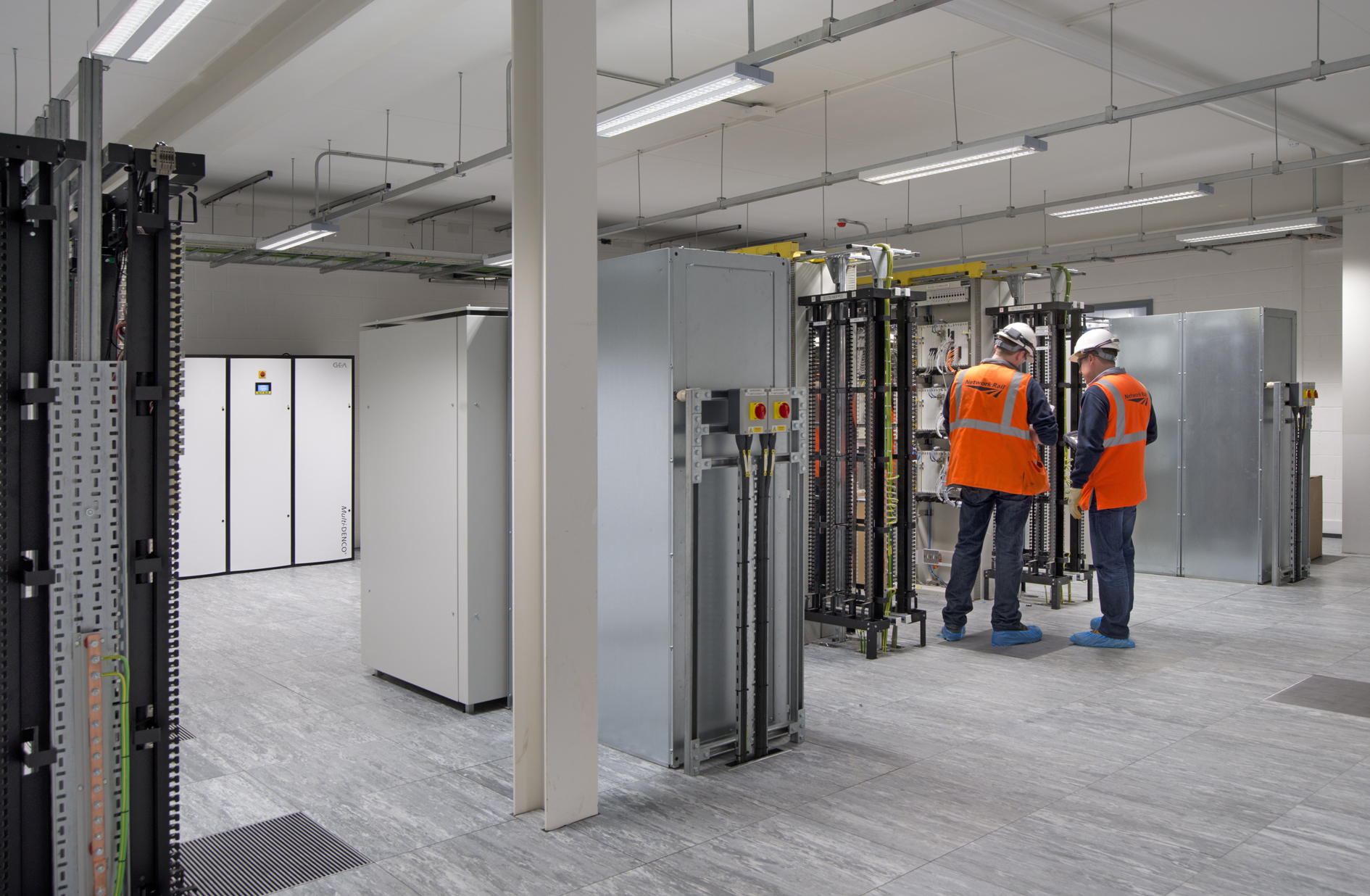
The railway uses railway specific equipment, not normal PCs. A lot of the railway specific equipment is not the workstation that you see signallers using in photos. It's normally mounted in rows of 19 inch cubicles/racks and uses the railways own telecommunication cables. Plus there is specific equipment for the telephones and even more if there are CCTV level crossings...

Here's a photo showing an equipment room before all the equipment has been installed:
24d478904c484be2ac2f7bd77f08b683


Rail Engineer also has a photo showing equipment racks in their article here.

I wasn’t thinking of getting IBM to do it, but what would be needed for a NR emergency ROC space?
Is all the equipment in those racks directly related to a particular installation and not reprogrmmable with software? Even if it is can it be ‘logged into’ from workstations elsewhere on the railway comms network - ie if the equipment room was undamaged but the human bit unusable?
Some things are easier to track by pen & paper, particularly notes from telephone calls. Paper copies of things like the PON/WON might be evident or any specific station workings.
I would have thought notes from official calls should be typed into an online system for safety and recording keeping reasons?
 

The Puddock

Member
Joined
10 Jan 2023
Messages
482
Location
Frog
I wasn’t thinking of getting IBM to do it, but what would be needed for a NR emergency ROC space?
Is all the equipment in those racks directly related to a particular installation and not reprogrmmable with software? Even if it is can it be ‘logged into’ from workstations elsewhere on the railway comms network - ie if the equipment room was undamaged but the human bit unusable?
All the equipment is directly related to the workstations and the interface with the interlockings. We're getting into slightly dodgy territory from an information security and business continuity point of view here. Posting more detailed information about how it all works to this anonymous, accessible-to-anyone-with-google online forum may not be wise.

I would have thought notes from official calls should be typed into an online system for safety and recording keeping reasons?
Some things are logged in the Occurrence Book or Train Register Book but the vast majority of personal notes just go on scrap paper.
 

Llanigraham

On Moderation
Joined
23 Mar 2013
Messages
6,485
Location
Powys
I would have thought notes from official calls should be typed into an online system for safety and recording keeping reasons?

Do you understand just how many phone calls a signaller can receive?
Expecting them to be typed by that signaller is frankly ridiculous. Just one User Worked Crossing can produce several, and they still have to signal trains whilst dealing with it.
In a mechanical box they will be written in the TRB, in the ROCs I've been in they will be written in an Occurence Book. Both of those are legal documents.
 

Horizon22

Established Member
Associate Staff
Jobs & Careers
Joined
8 Sep 2019
Messages
10,945
Location
London
I would have thought notes from official calls should be typed into an online system for safety and recording keeping reasons?

No need as the calls are recorded if needed for competency management or a review.

Safety-critical communications procedures should mean everything is repeated back, a clear understanding is reached, no assumptions are made etc. Written notes are an aide mémoire and allow quick reference and might be useful for logging.
 

68000

Member
Joined
27 Jan 2008
Messages
832
I wasn’t thinking of getting IBM to do it, but what would be needed for a NR emergency ROC space?
Is all the equipment in those racks directly related to a particular installation and not reprogrmmable with software? Even if it is can it be ‘logged into’ from workstations elsewhere on the railway comms network - ie if the equipment room was undamaged but the human bit unusable?

I would have thought notes from official calls should be typed into an online system for safety and recording keeping reasons?
There are generally three computerised control systems in use on NR infrastructure - Resonate IECC, Siemens Westcad and Alstom MCS. Each of those control systems has to interface to the actual interlockings (remote and local) as well as TD systems, EBB systems, HABD systems and level crossing systems. Standardised it is not
 

Meerkat

Established Member
Joined
14 Jul 2018
Messages
9,276
All the equipment is directly related to the workstations and the interface with the interlockings. We're getting into slightly dodgy territory from an information security and business continuity point of view here. Posting more detailed information about how it all works to this anonymous, accessible-to-anyone-with-google online forum may not be wise.
Thanks. Totally understand on limits of security.
Do you understand just how many phone calls a signaller can receive?
Expecting them to be typed by that signaller is frankly ridiculous. Just one User Worked Crossing can produce several, and they still have to signal trains whilst dealing with it.
In a mechanical box they will be written in the TRB, in the ROCs I've been in they will be written in an Occurence Book. Both of those are legal documents.
Isn’t it quicker to type than write?
Plus easier to search for the one you need.
 

Llanigraham

On Moderation
Joined
23 Mar 2013
Messages
6,485
Location
Powys
Isn’t it quicker to type than write?
Plus easier to search for the one you need.

Not for everyone, no, plus you presume that every box has a keyboard in a suitable position, which they often don't.
And it is remarkably easy to search through a TRB or Occurence Book.
To be honest I really don't think you understand what a signaller does, either in a mechanical box or a more modern one, in relation to phone calls.
 

MarkyT

Established Member
Joined
20 May 2012
Messages
7,549
Location
Torbay
There are generally three computerised control systems in use on NR infrastructure - Resonate IECC, Siemens Westcad and Alstom MCS. Each of those control systems has to interface to the actual interlockings (remote and local) as well as TD systems, EBB systems, HABD systems and level crossing systems. Standardised it is not
On the other hand, by now each of those suppliers has had experience working with a range of different interlocking types. The range of differing interfaces is diminishing too as relay interlockings steadily become extinct. Note it's possible to remote control a mechanical interlocking although I don't think it's ever been done on the mainline network. London Underground command their remote interlocking machines and some earlier power frames from elsewhere using pneumatic actuators. Much of the work was even automated quite early using programme machines.
 

Railsigns

Established Member
Joined
15 Feb 2010
Messages
2,754
Note it's possible to remote control a mechanical interlocking although I don't think it's ever been done on the mainline network.
It was done at Stobcross East, Glasgow in 1896. The signal box, with a full-size mechanical frame, was located in a position with a poor view of the line. A duplicate signal box was built in a position with a better view, but this box was too narrow to house a full-size frame. It was therefore provided with a frame of miniature levers, which remotely operated the mechanical frame in the other box using hydraulic apparatus.
 

Signal_Box

Member
Joined
25 Dec 2021
Messages
739
Location
UK
National staffing levels are critical as they are across the grade, in large SCC/ROC it’s even more worse. Trainees are failing school like water out or a leaky bucket at the moment which is delaying the pipe line of promotions, and transfers at each location.

Combine this with declined leave due to the shortage of staff, and other roc based morale issues and you’ve a very unhappy workforce.

Thames Valley and South Wales control centres were never designed to be ROCS in the full sense of the concept so simply aren’t big enough to support the areas the grand plan envisioned.

Even if you can show horn another signalling desk in on the operations floor, there isn’t room downstairs in the interlocking room for all the support equipment.

The original idea / fantasy of switching on demand ROC to ROC was never ever going to work, even on the most basic matter of staffing let alone funding to have a multi location workstation fully equipped to deal with any other workstation it was meant to cover.
 

MarkyT

Established Member
Joined
20 May 2012
Messages
7,549
Location
Torbay
It was done at Stobcross East, Glasgow in 1896. The signal box, with a full-size mechanical frame, was located in a position with a poor view of the line. A duplicate signal box was built in a position with a better view, but this box was too narrow to house a full-size frame. It was therefore provided with a frame of miniature levers, which remotely operated the mechanical frame in the other box using hydraulic apparatus.
Found this discussion about it on another forum:
Fascinating idea, although I assume it couldn't work over any significant distance, and was no longer needed once safe and reliable track circuits were properly established in the industry a few years later to overcome similar visibility constraints. The mini box was particularly cute!
 

Western 52

Established Member
Joined
19 Jun 2020
Messages
1,672
Location
Burry Port
Parkeston Box still used a fax until a couple of months ago, it was also their only printer !
Can't be easy getting maintenance for those machines these days. Where I work, fax went entirely when email was introduced.
 

Horizon22

Established Member
Associate Staff
Jobs & Careers
Joined
8 Sep 2019
Messages
10,945
Location
London
Parkeston Box still used a fax until a couple of months ago, it was also their only printer !

Remote sending to a printer is much easier than it used to be now, which is basically what fax was needed for.

Fairly easy to scan and send too now.
 

The Puddock

Member
Joined
10 Jan 2023
Messages
482
Location
Frog
Thanks. Totally understand on limits of security.

Isn’t it quicker to type than write?
Plus easier to search for the one you need.
The Train Register Book/Occurrence Book which is used in every signalbox is a handwritten document - there is no option for the signaller to type it. All the operational forms are still primarily handwritten (although some can be partially completed on a computer). A lot of other stuff is done by email - which replaced fax - but handwriting is still at the heart of operational record keeping in signalboxes. You can argue that it is old fashioned but so far Network Rail seems to have little interest in moving to digital record keeping for signallers. There was a trial application of digital forms on early tablets about 15 years ago but the technology wasn’t up to it at that time and it was quickly abandoned.

Parkeston Box still used a fax until a couple of months ago, it was also their only printer !
The current standard Network Rail signalbox printer is the Hewlett Packard MFP M430, which is a combined printer/scanner/photocopier/fax machine. However as each internal phone exchange is progressively migrated to digital VOIP, the fax lines are being disconnected. By now there must be very few remaining Network Rail locations left with the capability to send and recieve faxes as the national changeover to VOIP is almost complete.
 

Meerkat

Established Member
Joined
14 Jul 2018
Messages
9,276
Not for everyone, no, plus you presume that every box has a keyboard in a suitable position, which they often don't.
And it is remarkably easy to search through a TRB or Occurence Book.
To be honest I really don't think you understand what a signaller does, either in a mechanical box or a more modern one, in relation to phone calls.
They do a safety critical job, which is why I am surprised they are writing notes
 

The Puddock

Member
Joined
10 Jan 2023
Messages
482
Location
Frog
They do a safety critical job, which is why I am surprised they are writing notes
They’re just little notes on scrap paper to remind you of things, they go in the bin when they’re actioned. Safety critical information goes in the official documentation (TRB and/or forms) and all phone calls in and out of the signalbox are recorded. It’s really not the big deal you’re suggesting.
 

Gloster

Veteran Member
Joined
4 Sep 2020
Messages
12,941
Location
Up the creek
I am an old style signalman, but I have worked at desks. Having a keyboard that is only intermittently used in the way would strike me as a thorough nuisance. In particular, the inconvenience if you knock the key board when doing something else could be a serious distraction at times. Alternatively, you have to shuffle things about to move the keyboard or take your eye away from what you should be looking at. Train registers and incident books don’t have that risk: they just sit there, but are instantly ready.
 

43066

Veteran Member
Joined
24 Nov 2019
Messages
12,089
Location
London
National staffing levels are critical as they are across the grade, in large SCC/ROC it’s even more worse. Trainees are failing school like water out or a leaky bucket at the moment which is delaying the pipe line of promotions, and transfers at each location.

Out of interest, are more trainees than usual failing? If so that might point to problems at the recruitment stage, in terms of progressing the wrong people.

== Doublepost prevention - post automatically merged: ==

They do a safety critical job, which is why I am surprised they are writing notes

Lots of safety critical information is hand written, eg (in the train crew context) not to call orders/special stop orders, emergency special working tickets. They’re completed on a pro forma template but still written out by hand.
 

The Puddock

Member
Joined
10 Jan 2023
Messages
482
Location
Frog
Out of interest, are more trainees than usual failing? If so that might point to problems at the recruitment stage, in terms of progressing the wrong people.
In my experience yes, and the ones that do pass are arriving back from the school for signalbox training with some strange ideas. It’s interesting to hear another poster suggesting the because I thought our area might just have been unlucky.
 

TheBigD

Established Member
Joined
19 Nov 2008
Messages
2,043
Out of interest, are more trainees than usual failing? If so that might point to problems at the recruitment stage, in terms of progressing the wrong people.

== Doublepost prevention - post automatically merged: ==

From my dealings with recent recruits/trainees is that it is the exception to have someone who cares about, or has an interest in the job. For most, it's "just a job" and a general indifference to it. Some have even been surprised that they have to work weekends and shifts.
 
Last edited:

Gloster

Veteran Member
Joined
4 Sep 2020
Messages
12,941
Location
Up the creek
Some have even been surprised that they have to work weekends and shifts.

I still have a few friends that haven’t retired from the railway and they have mentioned this point. Most of those who aren’t at least prepared to give it a try seem to get weeded out early on, but a few get through. A particular bugbear seems to be Sundays.
 
Status
Not open for further replies.

Top