• Our new ticketing site is now live! Using either this or the original site (both powered by TrainSplit) helps support the running of the forum with every ticket purchase! Find out more and ask any questions/give us feedback in this thread!

How are you going to deal with Climate Change?

Status
Not open for further replies.

The Ham

Veteran Member
Joined
6 Jul 2012
Messages
12,069
Nice that you found something that John Fleck wrote eleven years ago. For Lake Mead that was true at the time but climate change has subsequently had its similar way with Lake Powell upstream which has had further and massive negative impact upon the situation.

Have you also read what Fleck has to say about the Rio Grande?

A more recent quote:
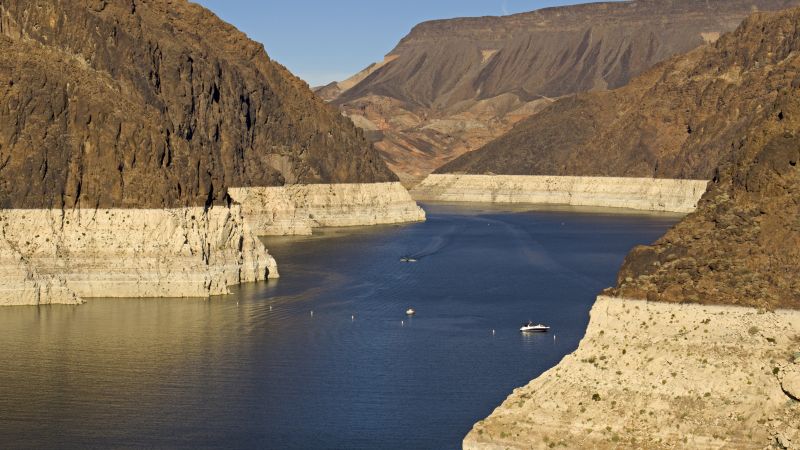
"Even without climate change, we would have a problem because we're taking more water out than the river could provide," John Fleck, director of the Water Resources Program at the University of New Mexico, told CNN. "But climate change has made the problem much worse by substantially reducing the flow in the river."

Some points from elsewhere in the article:

The lake loses around 6 feet of water to evaporation each year and climate change is making that worse. As temperatures warm, the snowmelt that supplies the river decreases and more water evaporates, especially during extreme heat waves like the West is experiencing this week. Six feet of water is an average loss of 300 billion gallons per year on top of the water withdrawn for human use and power generation. About 40 percent of the annual evaporation occurs in June, July and August — enough to supply water to 75,000 Las Vegas Valley homes for 12 months. Excessive heat waves can easily account for more than 10 billion gallons of evaporated water this week alone. That's enough water to fill 15,000 Olympic-sized swimming pools. Hoover Dam power generation is down 25 percent due to low water levels.

Yes clearly lack of change in water being extracted is the main issue (especially given that water levels have been falling year on year for sometime now and little has changed in the amount being extracted) however the fact that climate change is making that worse would only mean that the falls are larger still.

Three fact that many people ignored the warnings may well mean that other (less climate friendly) sources of power will need to be added and that much tougher water restrictions put in place.

More worrying it doesn't appear that lessons are being learnt:

In 2015, the city built another intake, also known as the "third straw," as a last-ditch effort to keep Lake Mead's water flowing. The more than $800 million structure is essentially a three-mile long tunnel that would suck water directly from the bottom of Lake Mead.
"There's a risk when [water managers] cling to the hope of a big snowpack bailing us out," Fleck said. "We need to recognize that there's going to be less water to work with."
 
Sponsor Post - registered members do not see these adverts; click here to register, or click here to log in
R

RailUK Forums

nlogax

Established Member
Joined
29 May 2011
Messages
6,050
Location
Mostly Glasgow-ish. Mostly.
Yes clearly lack of change in water being extracted is the main issue (especially given that water levels have been falling year on year for sometime now and little has changed in the amount being extracted) however the fact that climate change is making that worse would only mean that the falls are larger still.

Indeed, this. What continues to astonish me is the never ending suburban growth of the Las Vegas metropolitan area. LV is the 2nd fastest growing city in the US. Planning gone mad against a looming regional environmental tipping point - the potential of Lake Mead dropping to a point where the Hoover Dam ceases to operate, resulting in more brown-outs as well as the ensuing water shortages without alternatives being found. Local government and utilities appear to be in complete denial.
 

westv

Established Member
Joined
29 Mar 2013
Messages
4,411
Indeed, this. What continues to astonish me is the never ending suburban growth of the Las Vegas metropolitan area. LV is the 2nd fastest growing city in the US. Planning gone mad against a looming regional environmental tipping point - the potential of Lake Mead dropping to a point where the Hoover Dam ceases to operate, resulting in more brown-outs as well as the ensuing water shortages without alternatives being found. Local government and utilities appear to be in complete denial.
I had to Google that. Never heard of the term.
 

najaB

Veteran Member
Joined
28 Aug 2011
Messages
33,756
Location
Scotland
I had to Google that. Never heard of the term.
That's life in the developed world for you. Brownouts and blackouts are a fact of life in many less-developed countries and the USA. (Is that a tautology?)
 

najaB

Veteran Member
Joined
28 Aug 2011
Messages
33,756
Location
Scotland
Brown outs may become a fact of life here too...
Which would be a complete and total indictment of successive Government's lack of foresight and planning in setting a cohesive energy policy. We have enough renewable potential to power a significant portion of Western Europe. And we were a leader in nuclear technology in the 70s and 80s.
 

nlogax

Established Member
Joined
29 May 2011
Messages
6,050
Location
Mostly Glasgow-ish. Mostly.
How would electric cars work if there's a reduction in electrical power?

I imagine that in the UK that brown-outs will be much less of an issue especially with our ever-growing generation from renewables and our relatively tiny reliance on aircon in homes. We still need to solve the storage problem though.

Biggest challenge to EVs in the UK right now is the still-pitiful charging infrastructure.
 

102 fan

On Moderation
Joined
14 May 2007
Messages
790
I imagine that in the UK that brown-outs will be much less of an issue especially with our ever-growing generation from renewables and our relatively tiny reliance on aircon in homes. We still need to solve the storage problem though.

Biggest challenge to EVs in the UK right now is the still-pitiful charging infrastructure.


Well, will there be brown and black outs in the UK or not?
 

Dai Corner

Established Member
Joined
20 Jul 2015
Messages
6,998
Realistically who can say for certain? It's less likely than certain other countries though.
Stability of the electricity grid is becoming increasingly challenging as we have more 'unreliables' like solar and wind power in the mix.

One way National Grid are addressing this is described here


Deeside Power Station, a combined cycle gas turbine (CCGT) power plant, is providing inertia and reactive power to National Grid Electricity System Operator (ESO) in what is believed to be a “world first”.

Triton Power’s CCGT plant in Flintshire has started supplying the critical system support services to keep Britain’s power system secure without generating any electricity, reducing the need for carbon emitting generators to come online and enabling the generation of more wind and solar power.

Under the terms of the six-year stability contract, awarded in January 2020, it will provide the grid with support services including inertia and reactive power, which helps to keep the electricity system running at the right frequency to reduce the risk of power cuts.

It will achieve this through using a small amount of power from the grid to spin the rotors and provide stability.

This service was traditionally a by-product of the kinetic energy in the spinning parts of large traditional power stations – as the country’s electricity system has transitioned from traditional sources of power like coal to renewables, such as wind and solar, there has been an increased need to separately procure inertia to maintain stable, secure supplies of power.
This partnership is part of a “world-leading” approach to managing the decarbonisation of the grid, securing electricity supplies, saving consumers money and enabling more zero carbon power.

Consumers are expected to save up to £128 million over six years through the stability tender National Grid ESO has procured, which is the equivalent amount of inertia that would have been provided by five coal-fired power stations.

Julian Leslie, Head of Networks at National Grid ESO said: “Seeing Triton Power’s transformation of Deeside Power Station – from burning gas, to just providing stability services to the grid – is incredibly exciting.

“Innovations such as this, part of our new approach to system stability, are cheaper and greener than the alternative, reducing emissions and saving money for electricity consumers.

“Our stability pathfinder – creating a market for inertia and other stability services – is the first of its kind anywhere in the world and is a huge step forward in our ambition to be able to operate
 

najaB

Veteran Member
Joined
28 Aug 2011
Messages
33,756
Location
Scotland
How would electric cars work if there's a reduction in electrical power?
I suspect that there will be plenty of power available for charging overnight. The problem is managing early evening peak demand.

Stability of the electricity grid is becoming increasingly challenging as we have more 'unreliables' like solar and wind power in the mix.

One way National Grid are addressing this is described here

This is one reason that I'm a huge fan of flywheels for energy storage.
 

The Ham

Veteran Member
Joined
6 Jul 2012
Messages
12,069
I suspect that there will be plenty of power available for charging overnight. The problem is managing early evening peak demand.


This is one reason that I'm a huge fan of flywheels for energy storage.

Demand for early evening car charging is likely to be less than feared by some.

As generally the amount of travel that a lot of people will do will be less than 40 (with still significant numbers doing noticeably less) miles a day, so even if they have a circa 100 mile range in their car they only need to charge every other day.

Now many will likely it have a 200+ range car, which might mean charging once or twice a week.

There's quite a few who'll charge away from home for various reasons, which will further reduce demand. As will an increase in Working from home.

Add in smart chargers so that the car draws a given amount by a given time and the peak problems would likely be fairly limited.
 

DynamicSpirit

Established Member
Joined
12 Apr 2012
Messages
9,218
Location
SE London
On the subject of climate change and climate denial, the Telegraph has just published this opinion piece, which strongly argues for doing more to combat global warming. It seems quite significant to me because it's only 5-6 years ago that the Telegraph was regularly pushing climate-denial stuff.

Telegraph said:
It’s estimated that around 500 people died during British Columbia’s recent heatwave. In the town of Lytton, nestled in the mountains of western Canada, on the same latitude as London, the temperature hit 49.6C on June 29. That’s hotter than it’s ever been in Miami. The next day, most of the town was incinerated by wildfire.

This is the twelfth consecutive year of above-average temperatures in the wider region, and the records are not just being broken, they are being smashed (in this case by 4.6 degrees). A severe drought, the most widespread on record, and warming mountains have contributed to a high pressure “heat dome” that, among other things, melts snow. As Lytton burned, further down the road there were flood warnings.

The scientific consensus is that this is linked to man-made emissions. The good news is that politicians are taking action and that the market, too, is adjusting: fossil fuels look increasingly unpopular at the same time as the cost of renewables is falling. The bad news is that what we’re doing now would probably have been a game changer 30 years ago, but today is too little too late. Canada suggests that climate change models, dismissed as alarmist, might have been too conservative. We are already up 1.2C on pre-industrial levels; we’re anticipated to hit 1.5C by early next decade.

The UK Government is doing a lot of good things, and our emissions are way down, but between Brexit and Covid, the greatest challenge of our time hasn’t been given the prominence it deserves, and it doesn’t help that Blighty, though beset by rising temperatures and flooding, enjoys generally clement weather, persuading some that we can just ride this one out. They’re wrong. When, say, food becomes insecure or millions try to migrate here, you will suddenly be very conscious of what’s going on in Africa and Asia.

Those who still imagine that climate change is some left-wing conspiracy to justify increased taxes would do well to note that the Telegraph is very decidedly not left-wing, and tends to have a strongly low-tax small-Government bias. There's no way the Telegraph would be arguing for more Government intervention unless it was convinced it was completely necessary.
 

najaB

Veteran Member
Joined
28 Aug 2011
Messages
33,756
Location
Scotland
Demand for early evening car charging is likely to be less than feared by some.
The problem is that we're also moving away from gas for heating, which means a lot of people getting home in the winter and wanting to heat, eat, watch, wash and charge.
 

The Ham

Veteran Member
Joined
6 Jul 2012
Messages
12,069
The problem is that we're also moving away from gas for heating, which means a lot of people getting home in the winter and wanting to heat, eat, watch, wash and charge.

Indeed, however that's where hydrogen may play a part. As it's more efficient to (if you are going to create hydrogen from excess renewables) use the hydrogen to create electricity than use it for other purposes.
 

nlogax

Established Member
Joined
29 May 2011
Messages
6,050
Location
Mostly Glasgow-ish. Mostly.
Those who still imagine that climate change is some left-wing conspiracy to justify increased taxes would do well to note that the Telegraph is very decidedly not left-wing, and tends to have a strongly low-tax small-Government bias. There's no way the Telegraph would be arguing for more Government intervention unless it was convinced it was completely necessary.

I fear this about-turn by the centre-right press isn't going to change the minds of some who appear to be entrenched in their viewpoints and lack the imagination to consider actual environmental evidence.
 

brad465

Veteran Member
Joined
11 Aug 2010
Messages
11,609
Location
Taunton or Kent
I thought we weren't allowed to have children because hurr durr climate change?
Frankie Boyle made some jokes about this, including "They say the best thing you can do for the planet is veganism, I disagree, the biggest thing you can do is cannibalism. If you eat another person you've reduced their carbon footprint by 100%. If you really want to make a difference, eat a pilot".

Then there was the more controversial "You do what you can for the planet, I've had two children, so I decided to carbon offset by buying a serial killer a campervan." :lol:


It is the economy, stupid. So many new products are being made to replace perfectly good working ones, which are then scrapped. Cars, for example, the new ones are bigger and heavier. Surely electric conversion kits could be made for existing vehicles!

Often enough too perfectly good trains are scrapped instead of being repaired.
This comes back to our use of GDP as a measure of "human wellbeing". We must keep making and using more stuff to achieve the impossible concept of "infinite growth", which I take to be the biggest cause of climate change and other environmental damage.

The real problem is population growth around the world, everything else is fiddling at the edges. The resources in some populous countries will never match the population growth. eg Saint Bob Geldof 'saved' people in parts of Africa, there are now around 3 times as many people as before and they will be looking for aid and a new country (such as UK) as soon as the next harvest fails and many more will likely die. In the UK, we don't actually know how many people are here - they've recently discovered around 2 million europeans floating about which they didn't know about. This matters because lots of extra people exacerbates the UK housing shortage - take away immigration and undocumented peoples and wouldn't be such a housing problem. Population growth is exacerbated by religions (who usually like to see increased membership), lack of education, inability to control their lust, lack of pensions (where your wealth in old age depends on how many decendents you have to support you etc. We (globally) are wiping out species at an alarming rate and the population growth will likely only be stopped by pandemics, war, starvation, pestillence etc. Surprisingly only the Chinese ahve attempted (successfully) to limit population growth - although even they have given up as there are not enough young to pay for the old. Spending lots of money keeping old people alive (and i'm fairly old) when they have reached the stage when they have no quality of life is madness. Rock on Dignitas (with reasonable safeguards).
In line with above, population growth is not talked about much by those with power and money, because if/when population goes down, our economic model of boosting GDP will collapse (if it hasn't already by this point). The economy is basically a pyramid scheme, where we must keep population growth at the bottom to boost the wealth of those at the top. This often involves exploiting the developing world to the point they don't get out of poverty, which further ensures they don't control their populations so much.
 

Dai Corner

Established Member
Joined
20 Jul 2015
Messages
6,998
In line with above, population growth is not talked about much by those with power and money, because if/when population goes down, our economic model of boosting GDP will collapse (if it hasn't already by this point). The economy is basically a pyramid scheme, where we must keep population growth at the bottom to boost the wealth of those at the top. This often involves exploiting the developing world to the point they don't get out of poverty, which further ensures they don't control their populations so much.
I thought both the number and proportion of people living below the international poverty line had declined considerably over the last 50 years?
 

Xenophon PCDGS

Veteran Member
Joined
17 Apr 2011
Messages
35,495
Location
A typical commuter-belt part of north-west England
By living the good life whilst I can.
There's no point in me as a 30 year old planning for a conventional retirement.

The situation now is beyond any hope of recovery. In 40 years time we will all be either burning, starving, drowning or fighting off the people who are.
In 40 years time, I hope to have had a certain item from the Queen and looking forward to celebrating my 117th birthday.
 

matacaster

On Moderation
Joined
19 Jan 2013
Messages
1,646
Location
Huddersfield
I suspect that there will be plenty of power available for charging overnight. The problem is managing early evening peak demand.


This is one reason that I'm a huge fan of flywheels for energy storage.
This is one reason that I'm a huge fan of huge flywheels for energy storage.

There fixed that for you!
 

Xenophon PCDGS

Veteran Member
Joined
17 Apr 2011
Messages
35,495
Location
A typical commuter-belt part of north-west England
I thought both the number and proportion of people living below the international poverty line had declined considerably over the last 50 years?
Mainly because in recent years they had taken the day cruise across the English Channel and other methods such as playing "Hide in the lorry" to enter a country in which they hope to reside that will be far different from their home areas.
 

najaB

Veteran Member
Joined
28 Aug 2011
Messages
33,756
Location
Scotland
Mainly because in recent years they had taken the day cruise across the English Channel and other methods such as playing "Hide in the lorry" to enter a country in which they hope to reside that will be far different from their home areas.
The number of people migrating to Europe is barely going to make a dent in the population statistics of sub-Saharan Africa. The demographic changes have been driven from within.
 

Xenophon PCDGS

Veteran Member
Joined
17 Apr 2011
Messages
35,495
Location
A typical commuter-belt part of north-west England
The number of people migrating to Europe is barely going to make a dent in the population statistics of sub-Saharan Africa. The demographic changes have been driven from within.
I was recently speaking to a Muslim doctor whose family had moved to England not long after the 1947 partition of India and his opinion that many of the sub-Saharan countries on the eastern side of the African continent were established as an early part of the Islamic empirical trading areas with countries in the Indian sub-continent for exotic items such as spices and silks, an example he gave was that of what was once called Zanzibar (now Tanzania) being a short distance from what we now term as Saudi Arabia. He was very careful in expressing his views and said that there were many Muslim people who made the cross-Saharan journey to the North African countries with aid from people smugglers which all regard themselves as Muslim countries in order to gain access to Europe, even though they regard many European countries as being Christian. He was at pains to point out that many people in Britain today do not realise the depth of hate that exists between the Sunni and the Shia versions of the Islamic faith that has been the case for the last 1500 years. He quoted the current war between the rebel forces in Yemen and the Saudi Arabian coalition forces as an example of this.

He said with regards to the Muslim population of the Lancashire belt from Blackburn to Colne were from poor village areas who came to Britain to work in the cotton mills of that area of Lancashire and would have had no real understanding of British culture, but under the guidance of appointed Imams who adhered to a very strict version of the Sunni Muslim faith in those early days. It is now the third-generation of those people where the young people have a much better understanding of British culture.
 

Geezertronic

Established Member
Joined
14 Apr 2009
Messages
4,127
Location
Birmingham
As generally the amount of travel that a lot of people will do will be less than 40 (with still significant numbers doing noticeably less) miles a day, so even if they have a circa 100 mile range in their car they only need to charge every other day.

Now many will likely it have a 200+ range car, which might mean charging once or twice a week.

There's quite a few who'll charge away from home for various reasons, which will further reduce demand. As will an increase in Working from home.

Add in smart chargers so that the car draws a given amount by a given time and the peak problems would likely be fairly limited.

The charging time would have to come down a lot. I am probably one of the people who if I had an electric car, would charge it every night regardless of the days use to ensure it had a "full tank" for the next days use - just in case, because I don't have the time to sit at a charging station for 1 hour or so to let the thing charge. That's assuming there would not be an available charging point at my destination that day
 

najaB

Veteran Member
Joined
28 Aug 2011
Messages
33,756
Location
Scotland
The charging time would have to come down a lot. I am probably one of the people who if I had an electric car, would charge it every night regardless of the days use to ensure it had a "full tank" for the next days use - just in case, because I don't have the time to sit at a charging station for 1 hour or so to let the thing charge. That's assuming there would not be an available charging point at my destination that day
On the car side there's no reason that 'fast charge' technology couldn't be introduced similar to many mobile phones today - c. 85% capacity in ten to fifteen minutes. The problem is that in most places the local distribution network wouldn't be able to handle the huge draw. Similar issues are going to be faced as we introduce more BEMUs into the network, though they at least have the advantage that they can charge while on the move.
 

Dai Corner

Established Member
Joined
20 Jul 2015
Messages
6,998
On the car side there's no reason that 'fast charge' technology couldn't be introduced similar to many mobile phones today - c. 85% capacity in ten to fifteen minutes. The problem is that in most places the local distribution network wouldn't be able to handle the huge draw. Similar issues are going to be faced as we introduce more BEMUs into the network, though they at least have the advantage that they can charge while on the move.
Use local storage which is charged up as quickly as solar panels or, failing that, the existing grid connection will allow and then 'fast charge' the vehicle from that. Newport Transport are doing this with their rechargeable buses.
 

Xenophon PCDGS

Veteran Member
Joined
17 Apr 2011
Messages
35,495
Location
A typical commuter-belt part of north-west England
The thread question should really read "How are you going to deal with the effects of climate change".

You need to be a deity of sorts "to deal with climate change". See what has happened in the last few days on the Pacific coastal region temperature-wise in both Canada and the north-western states of America.
 
Status
Not open for further replies.

Top