
Network Rail made this announcement on 21 July:Tamping is a consequence of adjusting the track geometry. The tamper picks up the rail with lifting clamps and lifts and slews the track into the correct position. The tines are then inserted into the ballast while the tamper is still lifting the track and the tines vibrate, to fluidize the ballast and make it behave like a liquid, and pinch, to force the ballast into any voids created under the track as a result of lifting it. The tines are then withdrawn and the tamper then releases the track and the track will remain in the correct position and moves forward to repeat the same process.
Tamping doesn't happen because new ballast is laid, tamping happens because track geometry needs adjustment. New ballast is laid, either because new track is laid, the old ballast is worn out or because there isn't enough ballast available to restore the track to the correct geometry, and the tamper aligns the track.
The way that normal ballast works, the size and shape of the stones causing them to lock together, means that there will be some settlement post tamping, the track is actually slightly over lifted when tamped to allow for this settlement. Track that has been tamped is generally reopened with a TSR (temporary speed restriction) in place while the settlement is allowed to happen and then the TSR is lifted.
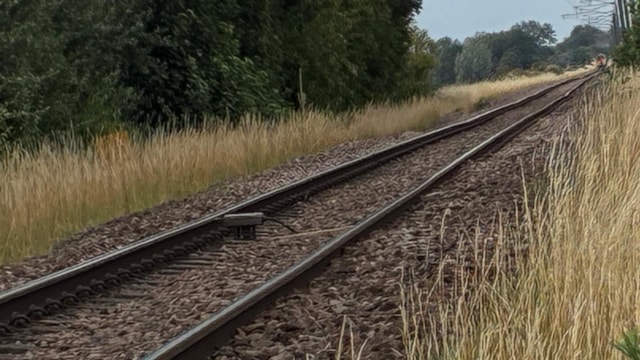
Service changes as Anglia soil dries out in the heat
From Monday 3 August, there will be timetable changes on the line to and from King’s Lynn, and extra late night engineering works on other Anglia routes, as track is again affected by hot weather and sustained low rainfall.
 www.networkrailmediacentre.co.uk
Service changes as Anglia soil dries out in the heat
Region & Route: Eastern: Anglia
From Monday 3 August, there will be timetable changes on the line to and from King’s Lynn, and extra late night engineering works on other Anglia routes, as track is again affected by hot weather and sustained low rainfall.
"Other Anglia routes" included the Southend Victoria line:
Meanwhile, extra engineering work to treat dried-out soil will also affect some other Anglia routes late at night and very early in the morning on Mondays – Thursdays from 3 August:
- Greater Anglia. The London Liverpool Street – Southend Victoria and Wickford – Southminster routes, with changes to some services from 22:45 onwards including buses replacing some trains.
The work that Network Rail has been doing does include new ballast see here:
Network Rail engineers reduce the effects of dried-out soil by using machines called tampers to lift the track, push stone ballast underneath and create a solid foundation so that trains can run smoothly. New ballast is also put down to help raise the level of the track.
My understanding is that the soil has dried out and shrunk so significantly that new ballast is required to restore the required track geometry.


