• Our new ticketing site is now live! Using either this or the original site (both powered by TrainSplit) helps support the running of the forum with every ticket purchase! Find out more and ask any questions/give us feedback in this thread!

EMR Class 222’s - declining reliability

Merle Haggard

Established Member
Joined
20 Oct 2019
Messages
3,850
Location
Northampton
The best system was in British Rail days when they owned all the trains and everything else.No silly expensive lease contracts then,thats why there was always plenty of spare stock at holiday times costing nothing as its value had been written down over the years.Take Northern paying lease costs of £500,000 a year for a 40 year old Sprinter and ripping of the taxpayer.Under BR they would be nil value now!

What's curious (information from a mole now retired from the DfT, so can't provide proof) is that lease charges do not reduce with age. So, for example, the Pacer lease in their last year was the same as when first sold off (in real terms, i.e. increased due to inflation).
Rarely it seems the lease companies' attitude of no negotiation of leases does result in their bluff being called. A new franchise has to take over leases from the previous franchisee (possibly known as a Section 20 or something similar) but not always, and it's only when the stock isn't covered that there's an opportunity to obtain stock cheaper elsewhere.
Bearing in mind the amount that taxpayers pay to underwrite all these opaque conditions it's hardly fair that we aren't allowed to know any of the details.
 
Sponsor Post - registered members do not see these adverts; click here to register, or click here to log in
R

RailUK Forums

Trainman40083

Established Member
Joined
29 Jan 2024
Messages
4,521
Location
Derby
What's curious (information from a mole now retired from the DfT, so can't provide proof) is that lease charges do not reduce with age. So, for example, the Pacer lease in their last year was the same as when first sold off (in real terms, i.e. increased due to inflation).
Rarely it seems the lease companies' attitude of no negotiation of leases does result in their bluff being called. A new franchise has to take over leases from the previous franchisee (possibly known as a Section 20 or something similar) but not always, and it's only when the stock isn't covered that there's an opportunity to obtain stock cheaper elsewhere.
Bearing in mind the amount that taxpayers pay to underwrite all these opaque conditions it's hardly fair that we aren't allowed to know any of the details.
Well, let's think about this. When a franchise changes hands, the lease moves across with it. That is a franchise let by the Government. The incoming TOC doesn't really have an option. The DfT dictates what rolling stock the TOC will use. Highly doubtful, it would permit a TOC to purchase rolling stock or enter into a different lease for rolling stock. Okay, if the lease was 20 years, that might be different. In some cases, the availability of spare rolling stock has given alternatives. Maybe the 387/379s on Great Northern. But leases can vary. Many will include maintenance. Said maintenance cost would reasonably be expected to increase over the life of the train.
 

Merle Haggard

Established Member
Joined
20 Oct 2019
Messages
3,850
Location
Northampton
Well, let's think about this. When a franchise changes hands, the lease moves across with it. That is a franchise let by the Government. The incoming TOC doesn't really have an option. The DfT dictates what rolling stock the TOC will use. Highly doubtful, it would permit a TOC to purchase rolling stock or enter into a different lease for rolling stock. Okay, if the lease was 20 years, that might be different. In some cases, the availability of spare rolling stock has given alternatives. Maybe the 387/379s on Great Northern. But leases can vary. Many will include maintenance. Said maintenance cost would reasonably be expected to increase over the life of the train.

Thanks
Just wonder how the incoming West Midlands franchise managed to escape the expensive 350/2 lease. There were other cases, I think, when the new franchise didn't take over the lease on a class.
 

Trainman40083

Established Member
Joined
29 Jan 2024
Messages
4,521
Location
Derby
Thanks
Just wonder how the incoming West Midlands franchise managed to escape the expensive 350/2 lease. There were other cases, I think, when the new franchise didn't take over the lease on a class.
Possibly, but by no means certain, the need to extend trains to the 730s came into play. Just think, had the Midland Mainline been electrified to Leicester, we could have seen units. One of the posts seemed to convey the lease contract was between EMR and Hitachi. The lease company is in between. One party will be contracted to provide, say 31 out of 33 trains , for service, every day. If they don't, there will be a penalty. That may be part of the lease cost.
 

WesternLancer

Veteran Member
Joined
12 Apr 2019
Messages
14,950
What's curious (information from a mole now retired from the DfT, so can't provide proof) is that lease charges do not reduce with age. So, for example, the Pacer lease in their last year was the same as when first sold off (in real terms, i.e. increased due to inflation).
Rarely it seems the lease companies' attitude of no negotiation of leases does result in their bluff being called. A new franchise has to take over leases from the previous franchisee (possibly known as a Section 20 or something similar) but not always, and it's only when the stock isn't covered that there's an opportunity to obtain stock cheaper elsewhere.
Bearing in mind the amount that taxpayers pay to underwrite all these opaque conditions it's hardly fair that we aren't allowed to know any of the details.
presumably because the TOC had no choice but to lease that pacer to deliver the specified service because no one had produced enough DMUs?
This what an economist would term a 'market failure' I presume.

== Doublepost prevention - post automatically merged: ==

Go and speak to Porterbrook about the 350s and 458s, or Angel about the 175s and come back and say it is "risk free".
I see your point. But were the 350s overpriced when offered for the lease?
If the market was working they would find the right price point. I would have assumed...
 

Trainman40083

Established Member
Joined
29 Jan 2024
Messages
4,521
Location
Derby
presumably because the TOC had no choice but to lease that pacer to deliver the specified service because no one had produced enough DMUs?
This what an economist would term a 'market failure' I presume.

== Doublepost prevention - post automatically merged: ==


I see your point. But were the 350s overpriced when offered for the lease?
If the market was working they would find the right price point. I would have assumed...
Just think. If a unit isn't earning, it is costing.
 

WesternLancer

Veteran Member
Joined
12 Apr 2019
Messages
14,950
Just think. If a unit isn't earning, it is costing.
Indeed - and the idea of a market is that you cut the price to earn something rather than earn nothing / incur costs of storage, or at least cut the price it so low that it's not actually costing you more to lease it (eg wear and tear) - same principle as a landlord with an empty house - tho a house can go up in value even if not making an income - but a train can't
 

The exile

Established Member
Joined
31 Mar 2010
Messages
9,305
Location
Somerset
Indeed - and the idea of a market is that you cut the price to earn something rather than earn nothing / incur costs of storage, or at least cut the price it so low that it's not actually costing you more to lease it (eg wear and tear) - same principle as a landlord with an empty house - tho a house can go up in value even if not making an income - but a train can't
No - but it can help to maintain the higher value of others (at least in theory)
 

43096

On Moderation
Joined
23 Nov 2015
Messages
18,727
Indeed - and the idea of a market is that you cut the price to earn something rather than earn nothing / incur costs of storage, or at least cut the price it so low that it's not actually costing you more to lease it (eg wear and tear) - same principle as a landlord with an empty house - tho a house can go up in value even if not making an income - but a train can't
That assumes it is a rational market. I’d suggest the railway here is anything but - it’s completely dysfunctional.
 

apinnard

Member
Joined
2 Aug 2017
Messages
378
Location
Kettering
It may be "obvious" but when you're spending several £million on refurbishment you need a contract signed guaranteeing a return on the investment. If you were Eversholt/Beacon's commercial director, would you sign that refurbishment contract without a lease signed up?
Oh, absolutely. The Renatus refurb of 30 321’s must have been unprofitable for the then Eversholt. At the time I worked there it was thought of as a speculative refurb, as we were hoping they would get snapped up by another TOC after leaving GA, who would want a “modern spec” emu.
 

Trainman40083

Established Member
Joined
29 Jan 2024
Messages
4,521
Location
Derby
Oh, absolutely. The Renatus refurb of 30 321’s must have been unprofitable for the then Eversholt. At the time I worked there it was thought of as a speculative refurb, as we were hoping they would get snapped up by another TOC after leaving GA, who would want a “modern spec” emu.
I guess, another TOC wanted something even more modern.....or cheaper. Wasn't there another class "upgraded"? 455s?
 

apinnard

Member
Joined
2 Aug 2017
Messages
378
Location
Kettering
I guess, another TOC wanted something even more modern.....or cheaper. Wasn't there another class "upgraded"? 455s?
Yes, however, the 455 upgrade paid for itself easily, as it was not speculative. Mostly by the fact it dramatically reduced the time units spent on depot needing inspection and repair. This in turn allowed SWR to bring in the then new 707s without needing to build more depot capacity. The weight saving of the new motors and brake kit also saved operating cost and the regen braking helped in that regard, somewhat.

@Big Jumby 74 might be able to elaborate. Possibly.
 

Potteries 323

Member
Joined
28 Aug 2024
Messages
61
Location
Stoke on Trent
Cant see Loco Services paying £500,000 a year to rent their Pacer even if it includes maintenance,for the same reason they own all their locomotives and coaching stock too. I wonder why? Same for all the heritage lines.
 

Amos390

Member
Joined
22 Jan 2025
Messages
677
Location
Nottingham
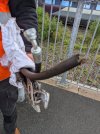
Found out today that in the early hours, 222015 struck a tree branch inbetween Toton and Chesterfield in the Alfreton area, causing damage to the brake lines, the unit has now been returned to Etches I understand. I have attached images I was sent.
Service: https://live.rail-record.co.uk/train/?c=C88349&d=2026-06-02
 

Attachments

  • IMG-20260602-WA0002.jpg
    IMG-20260602-WA0002.jpg
    528.7 KB · Views: 184
  • IMG-20260602-WA0007.jpg
    IMG-20260602-WA0007.jpg
    229.2 KB · Views: 182

Trainman40083

Established Member
Joined
29 Jan 2024
Messages
4,521
Location
Derby
Cant see Loco Services paying £500,000 a year to rent their Pacer even if it includes maintenance,for the same reason they own all their locomotives and coaching stock too. I wonder why? Same for all the heritage lines.
Nothing to stop Loco Services buying redundant rolling stock. Possibly bought it at scrap price. But TOCs generally can't.
 

Clarence Yard

Established Member
Joined
18 Dec 2014
Messages
3,262
What's curious (information from a mole now retired from the DfT, so can't provide proof) is that lease charges do not reduce with age. So, for example, the Pacer lease in their last year was the same as when first sold off (in real terms, i.e. increased due to inflation).
Rarely it seems the lease companies' attitude of no negotiation of leases does result in their bluff being called. A new franchise has to take over leases from the previous franchisee (possibly known as a Section 20 or something similar) but not always, and it's only when the stock isn't covered that there's an opportunity to obtain stock cheaper elsewhere.
Bearing in mind the amount that taxpayers pay to underwrite all these opaque conditions it's hardly fair that we aren't allowed to know any of the details.

It’s no secret about lease charges not reducing with age - that’s the regime and has been from day one. It’s called “Modern Equivalent Asset Value” - “MEAV” and it is designed to make replacement stock easier to fund. So the capital part of the lease never falls, as it would do if the asset was on your own books and you depreciated it year on year. It eliminates that steep “step-up” when you switch to new stock.

The reason the 350/2 units were expensive is because they were funded at a time of higher interest rates so it made them vulnerable to replacement by new stock funded at a lower interest rate. This skews the capital lease cost elements in favour of the newer stock, especially if currency exchange rate values have also fluctuated or the non-capital (heavy repair) elements have also moved in favour of the newer stock.
 

Trainman40083

Established Member
Joined
29 Jan 2024
Messages
4,521
Location
Derby
It’s no secret about lease charges not reducing with age - that’s the regime and has been from day one. It’s called “Modern Equivalent Asset Value” - “MEAV” and it is designed to make replacement stock easier to fund. So the capital part of the lease never falls, as it would do if the asset was on your own books and you depreciated it year on year. It eliminates that steep “step-up” when you switch to new stock.

The reason the 350/2 units were expensive is because they were funded at a time of higher interest rates so it made them vulnerable to replacement by new stock funded at a lower interest rate. This skews the capital lease cost elements in favour of the newer stock, especially if currency exchange rate values have also fluctuated or the non-capital (heavy repair) elements have also moved in favour of the newer stock.
I'm glad someone remembers how it worked. It seems a distant memory to me.
 

WesternLancer

Veteran Member
Joined
12 Apr 2019
Messages
14,950
It’s no secret about lease charges not reducing with age - that’s the regime and has been from day one. It’s called “Modern Equivalent Asset Value” - “MEAV” and it is designed to make replacement stock easier to fund. So the capital part of the lease never falls, as it would do if the asset was on your own books and you depreciated it year on year. It eliminates that steep “step-up” when you switch to new stock.

The reason the 350/2 units were expensive is because they were funded at a time of higher interest rates so it made them vulnerable to replacement by new stock funded at a lower interest rate. This skews the capital lease cost elements in favour of the newer stock, especially if currency exchange rate values have also fluctuated or the non-capital (heavy repair) elements have also moved in favour of the newer stock.
Thanks for this post
 

Merle Haggard

Established Member
Joined
20 Oct 2019
Messages
3,850
Location
Northampton
It’s no secret about lease charges not reducing with age - that’s the regime and has been from day one. It’s called “Modern Equivalent Asset Value” - “MEAV” and it is designed to make replacement stock easier to fund. So the capital part of the lease never falls, as it would do if the asset was on your own books and you depreciated it year on year. It eliminates that steep “step-up” when you switch to new stock.

/snip/

Thanks, very informative
I now realise that it has advantages, particularly avoiding the step when, inevitably. the fully-depreciated stock has to be replaced - you can't just ignore the fact that that situation will arise. I will stay silent on some BR traffic costing methodology, to protect the guilty....
 

Trainman40083

Established Member
Joined
29 Jan 2024
Messages
4,521
Location
Derby
I could imagine if leases reduced over the life of the train, that some operators , in pursuit of a good return, might keep running 40 year old trains.....cos they were cheaper than new. But as we have seen, if interest rates drop, then the incentive is to replace fairly new trains with brand new ones.
 

Merle Haggard

Established Member
Joined
20 Oct 2019
Messages
3,850
Location
Northampton
To be clear, my comment about 'secrecy' was not about the accounting convention used, but about what was being paid to the leasing companies for a train set in each class.
For instance, how much is paid to the leasing company for an 810, and what payment is still made when they cfail - even before they leave the depot? who is paying for the Hitachi travelling fitters? The delay-repay incurred by all their failures? All this is in the end taxpayers' money after all, also it should reasonably be in the public domain.
\
 

3RDGEN

Member
Joined
6 Mar 2023
Messages
584
Location
Hull
To be clear, my comment about 'secrecy' was not about the accounting convention used, but about what was being paid to the leasing companies for a train set in each class.
For instance, how much is paid to the leasing company for an 810, and what payment is still made when they cfail - even before they leave the depot? who is paying for the Hitachi travelling fitters? The delay-repay incurred by all their failures? All this is in the end taxpayers' money after all, also it should reasonably be in the public domain.
\
EMR lease the 810's from Rock Rail so will pay the lease fees on the units they have accepted, they have a maintenance contract with Hitachi which I believe is direct between EMR and Hitachi although it may involve Rock Rail too. That maintenance contract will have performance criteria in it for availability and reliability along with other areas too, although how that works whilst the units are in the early introduction phase may differ to once the full fleet is in place. EMR will pay the delay-repay, no manufacturer will open themselves upto those type of payments that they can't control.

Both those contracts will be commercially confidential so your not going to get specific figures, once EMR is nationalised you could try a FOI request but I can't see them releasing figures. Rock Rail quoted £400 million for the 810 fleet back in 2019 when the contract was announced.
 

Clarence Yard

Established Member
Joined
18 Dec 2014
Messages
3,262
The DfT regard all rolling stock contracts as “commercially confidential”. People have tried to FOI them before and failed to get any information.

But no manufacturer or ROSCO covers delay repay. That cost sits with the TOC (or rather the DfT these days) like other consequential losses.
 

Potteries 323

Member
Joined
28 Aug 2024
Messages
61
Location
Stoke on Trent
If leasing is so good why did Merseytravel purchase the Class 777 units outright? Probably because they were being ripped off with the sky high lease costs on the 45 year old Class 507 and 508 units that went straight for scrap after use.
 

Merle Haggard

Established Member
Joined
20 Oct 2019
Messages
3,850
Location
Northampton
The DfT regard all rolling stock contracts as “commercially confidential”. People have tried to FOI them before and failed to get any information.

But no manufacturer or ROSCO covers delay repay. That cost sits with the TOC (or rather the DfT these days) like other consequential losses.

Thanks for the information. So it's the DfT that make the claim that it's 'commercially sensitive'.


EMR lease the 810's from Rock Rail so will pay the lease fees on the units they have accepted, they have a maintenance contract with Hitachi which I believe is direct between EMR and Hitachi although it may involve Rock Rail too. That maintenance contract will have performance criteria in it for availability and reliability along with other areas too, although how that works whilst the units are in the early introduction phase may differ to once the full fleet is in place. EMR will pay the delay-repay, no manufacturer will open themselves upto those type of payments that they can't control.

Both those contracts will be commercially confidential so your not going to get specific figures, once EMR is nationalised you could try a FOI request but I can't see them releasing figures. Rock Rail quoted £400 million for the 810 fleet back in 2019 when the contract was announced.

Thank you.


//

I have the following thoughts which are not intended to be 'shooting the messengers' who answered my questions above.

It would be interesting to know the number of 810s actually being leased and paid for as it appears that 3 or 4 manage to get off the depot of a morning.

Contracts for supply are usually between a party receiving the goods or services and the supplier. The party receiving them is also contractually required to pay for them. It is the case (though, again, not particularly transparent) that the railways receive support from the taxpayer at the level of just over £12,000,000,000 per annum. One might well argue that the taxpayer is party to the contract as provider of at least some of the money due. Logically the protection of 'commercial sensitivity' should not apply to parties in the contract. It would be a crazy world to hand over your debit card for payment for something and the vendor debiting your account but refusing to tell you how much you had been charged and then your bank saying that they couldn't tell you the amount debited, either, because of 'commercial sensitivity'. I wonder why the DfT are at pains to keep these details out of then public's view.
Interesting that the railways (or, more likely, the DfT) regard delay repay payments and also penalties for loss of future business (caused by disenchantment with railway reliability by prospective customers) as not recoverable from train builders or leasing companies because they're consequential; but another arm of the railways, Network Rail, successfully (according to another thread) recover consequential payments (delay minutes fines) from road hauliers when their lorries damage bridges. Network Rail have successfully argued in court that consequential damage is recoverable, as well as physical damage - there's case law.

 

Efini92

Established Member
Joined
14 Dec 2016
Messages
2,133
It’s no secret about lease charges not reducing with age - that’s the regime and has been from day one. It’s called “Modern Equivalent Asset Value” - “MEAV” and it is designed to make replacement stock easier to fund. So the capital part of the lease never falls, as it would do if the asset was on your own books and you depreciated it year on year. It eliminates that steep “step-up” when you switch to new stock.

The reason the 350/2 units were expensive is because they were funded at a time of higher interest rates so it made them vulnerable to replacement by new stock funded at a lower interest rate. This skews the capital lease cost elements in favour of the newer stock, especially if currency exchange rate values have also fluctuated or the non-capital (heavy repair) elements have also moved in favour of the newer stock.
Were all the BR assets paid for by the time the roscos were created?
 

dosxuk

Established Member
Joined
2 Jan 2011
Messages
2,428
It would be a crazy world to hand over your debit card for payment for something and the vendor debiting your account but refusing to tell you how much you had been charged and then your bank saying that they couldn't tell you the amount debited, either, because of 'commercial sensitivity'.
The two scenarios are in no way comparable.
I wonder why the DfT are at pains to keep these details out of then public's view.
Because if all the details of the contracts were in the public domain you'd quickly get to a scenario where you couldn't negotiate terms. It's not just interested members of the public who would read the details, it's also every other bidder for that contract and future similar ones. The next time that contract gets renewed every single bidder will know exactly what the last accepted deal was.

This is not limited to the DfT. Basically all government contracts are classified as confidential when people try and FoI them, for the same reasons.
 

WesternLancer

Veteran Member
Joined
12 Apr 2019
Messages
14,950
Were all the BR assets paid for by the time the roscos were created?
I assume they were bought up front using hm treasury money. I don’t think BR leased rolling stock generally, unless some was for pre privatisation trials.

The HM Treasury money may itself be government borrowing however.
But presumably how a new school or hospital gets funded. Or did then eg pre PFI school contracts.

I’ll happily be corrected by people on here who know more about BR procurement than I do.

They were then sold to the ROSCOs. Many said at far too cheap a price. Then leased back to TOCs at sums mentioned. Ultimately paid by taxpayers with overall subsidies paid to TOCs to run the services.
 

Trainman40083

Established Member
Joined
29 Jan 2024
Messages
4,521
Location
Derby
I assume they were bought up front using hm treasury money. I don’t think BR leased rolling stock generally, unless some was for pre privatisation trials.

The HM Treasury money may itself be government borrowing however.
But presumably how a new school or hospital gets funded. Or did then eg pre PFI school contracts.

I’ll happily be corrected by people on here who know more about BR procurement than I do.

They were then sold to the ROSCOs. Many said at far too cheap a price. Then leased back to TOCs at sums mentioned. Ultimately paid by taxpayers with overall subsidies paid to TOCs to run the services.
I think the Class 365 emus were among the last to be bought by the Government.
 

Top