
-
Our new ticketing site is now live! Using either this or the original site (both powered by TrainSplit) helps support the running of the forum with every ticket purchase! Find out more and ask any questions/give us feedback in this thread!
You are using an out of date browser. It may not display this or other websites correctly.
You should upgrade or use an alternative browser.
You should upgrade or use an alternative browser.
Fire at Glasgow Central (08/03/26)
- Thread starter teaspoon
- Start date
- Status
- Not open for further replies.
Sponsor Post - registered members do not see these adverts; click here to register, or click here to log in
R
RailUK Forums
Drainage would be a factor. After the York Minster fire, many cathedrals reassessed their fire safety and found that water pooling in the vaulting was one of the biggest risks.Wondering if the fire fighting effort included spraying water on the adjacent areas of the station roof to keep it cool?
Winchester cathedral has some very fetching polystyrene plugs in the base of each fan vault that will release if there’s a certain weight of water, preventing it bringing the whole structure down

Though water landing on the outside of a station roof is what said roof is built to cope with. The vaulting of a church is not designed to be exposed to the elements.Drainage would be a factor. After the York Minster fire, many cathedrals reassessed their fire safety and found that water pooling in the vaulting was one of the biggest risks
zwk500
Veteran Member
WCRC Thunderbird been in station overnight and removed two Pendolinos and a TPE unit to Polmadie.
So that means there are 8 units remaining, all ScotRail, unless they've managed to get any of those out and I've missed something.
Split thread discussing the recovery here: https://www.railforums.co.uk/threads/57314-moving-stranded-trains-out-of-glasgow-central.299609/Traksy only shows 7 platforms occupied (3, 6, 9, 10, 12, 13, 14)
Just speculating but maybe one was a 156 that could leave on its own power?
Up to a point - that water has to be able to go somewhere, and if it cannot, then you have to consider whether the structure can carry that weight. And, unlike snow, that weight is liable to be highly concentrated.Though water landing on the outside of a station roof is what said roof is built to cope with. The vaulting of a church is not designed to be exposed to the elements.


Though water landing on the outside of a station roof is what said roof is built to cope with. The vaulting of a church is not designed to be exposed to the elements.
Water landing on the station roof from clouds is very different to water landing on it from high pressure fire hoses.

DarloRich
Veteran Member
The fire brigade are going to be on site damping down for a while - that is fairly standard for such a big fire surely?
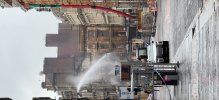
My partner just snapped this photo from Renfield Street, looks like more fell down compared to some of the earlier photos. I wonder if they’ll want to pull it all down before opening the station?
Photo shows image of the destroyed building, with water being sprayed down towards it
Photo shows image of the destroyed building, with water being sprayed down towards it
Attachments

Strathclyder
Established Member
Yep, pretty standard for major blazes like this. Added caveat being the epicenter of this one being a store filled to the brim with lithium batteries. Yeah, they're gonna be continuing to drown this one for a while. Better safe now than very sorry later.The fire brigade are going to be on site damping down for a while - that is fairly standard for such a big fire surely?
@realemil Pulling it down before it falls down of it's own accord, a full inspection (structural, electrical systems and so on) of the station and conducting any repairs as needed, and draining any and all floodwater before even a partial reopening is considered. In most reopening scenarios, the Ayrshire/Inverclyde side of the high-level station is the most likely to return to use first given it's distance from the fire. Whenever that may be.
Last edited:
Warrior2852
Member
- Joined
- 27 Oct 2018
- Messages
- 319
NRE now confirming Central remaining closed until at least end of Wednesday, with beyond that still seeming likely as there's no reopening estimate.
 www.nationalrail.co.uk
Incident: Glasgow Central | National Rail
Glasgow Central is closed: major disruption expected until at least the end of the day on Wednesday 11 March. Find details of all current incidents on National Rail Enquiries.
We have no estimate on when the station will reopen. We expect disruption to continue on routes to / from / through Glasgow Central until at least the end of the day on Wednesday 11 March.
Last edited:
Latest BBC update has the structural integrity of the remaining facade (facing Gordon Street) compromised, which isn't really a surprise.
https://www.bbc.co.uk/news/articles/cvgjqzl7wrzo
That suggests demolition as soon as the hoses are turned off - not that easy in such a built-up area, which implies Central won't reopen anytime soon.
https://www.bbc.co.uk/news/articles/cvgjqzl7wrzo
Scotland's busiest station remains closed following a huge fire that destroyed a neighbouring building.
Glasgow Central Station has been shut since Sunday, when a blaze spread from a vape shop on Union Street through a B-listed Victorian building.
The remaining facade of the building is now in a state of "ongoing and uncontrolled collapse", according to the city council.
Network Rail said its staff and fire service teams were continuing to work on the site and disruption to rail services was expected to "continue in the coming days".
That suggests demolition as soon as the hoses are turned off - not that easy in such a built-up area, which implies Central won't reopen anytime soon.
Strathclyder
Established Member
The rest of this working week and well beyond that, it's looking increasingly likely. Especially given what's just been reported by the BBC and quoted by @d70g above me. Not surprising in the slightest. Soon as the hoses are off, and it's deemed safe to do so, demolition time. Which ain't going to be easy given how built-up the area is.
Oh, what a sorry mess this is. The absolute last thing Glasgow needed was a kick to the economical groin of this size and scale.
Oh, what a sorry mess this is. The absolute last thing Glasgow needed was a kick to the economical groin of this size and scale.

matchmaker
Established Member
I've mentioned the Cheapside Street fire of 1960. At that time, Glasgow Fire Brigade had a fireboat "St Mungo". It was used to feed water from the Clyde to 31 hoses for fighting the fire. It could draw 32 tons of water per minute from the river. Had it not been available it is possible that the public water supply would have been inadequate for fighting the fire.Plenty of Road over Canal bridges in Birmingham have FireBrigade access hatches built into them to provide quick access for suction hoses if required
== Doublepost prevention - post automatically merged: ==
And the fact that water from fire fighting will probably be contaminated with carbon debris
I've seen demolition taking place very close to roads with traffic and pedestrians flowing normally. Recent example on Newport Road which I rode past dozens of times. I can see the Gordon Street entrance being shut for a while but it's not immediately obvious why the other entrances couldn't operate as normal.Latest BBC update has the structural integrity of the remaining facade (facing Gordon Street) compromised, which isn't really a surprise.
https://www.bbc.co.uk/news/articles/cvgjqzl7wrzo
That suggests demolition as soon as the hoses are turned off - not that easy in such a built-up area, which implies Central won't reopen anytime soon.
Warrior2852
Member
- Joined
- 27 Oct 2018
- Messages
- 319
There might be a capacity problem - the other two usable entrances on the west side are significantly smaller than the Gordon Street one so there could easily be a bottleneck problem in the peaks - particularly the Low Level ticket hall entrance at the Argyle Street corner with the narrow escalator up to High Level.I can see the Gordon Street entrance being shut for a while but it's not immediately obvious why the other entrances couldn't operate as normal.
Definitely a major issue. They could I suppose open up the old vehicle entrance which goes up to platforms 12/13 etc.There might be a capacity problem - the other two usable entrances on the west side are significantly smaller than the Gordon Street one so there could easily be a bottleneck problem in the peaks - particularly the Low Level ticket hall entrance at the Argyle Street corner with the narrow escalator up to High Level.

pdeaves
Established Member
I expect that capacity will be a major consideration. The last thing anyone wants is too many people trying to pile through too small a doorway. Similar reasons that Covent Garden Underground station is closed at certain times.There might be a capacity problem - the other two usable entrances on the west side are significantly smaller than the Gordon Street one so there could easily be a bottleneck problem in the peaks - particularly the Low Level ticket hall entrance at the Argyle Street corner with the narrow escalator up to High Level.
Plenty of London stations have bottlenecks in the peaks. For example, in the morning peak there is usually a crowd waiting for the down escalator opposite platform 1-5.There might be a capacity problem - the other two usable entrances on the west side are significantly smaller than the Gordon Street one so there could easily be a bottleneck problem in the peaks - particularly the Low Level ticket hall entrance at the Argyle Street corner with the narrow escalator up to High Level.
Warrior2852
Member
- Joined
- 27 Oct 2018
- Messages
- 319
Here the bottleneck of people trying to get into the station up that escalator very quickly would lead onto a very busy crossroads road junction if it got too busy from the extra Gordon Street and Union Street traffic being redirected, there's not far from the entrance to the escalators at all.Plenty of London stations have bottlenecks in the peaks. For example, in the morning peak there is usually a crowd waiting for the down escalator opposite platform 1-5.
Bletchleyite
Veteran Member
I don't think I'd overstate the complexity of demolition based on Ayr or anything like that. That was an ownership issue, not a complexity of demolition issue.
If you look at a Streetview of it the road is wider than the building is tall, so pulling it down towards the road, with suitable boarding on the buildings on the opposite side, should not be too onerous compared to e.g. taking down Grenfell Tower.
If you look at a Streetview of it the road is wider than the building is tall, so pulling it down towards the road, with suitable boarding on the buildings on the opposite side, should not be too onerous compared to e.g. taking down Grenfell Tower.
DarloRich
Veteran Member
Looking at the pictures it is very lucky, imo, that the fire didn't spread to the station or the hotel. The fire brigade have done a very good job in stopping that from happening.

LNW-GW Joint
Veteran Member
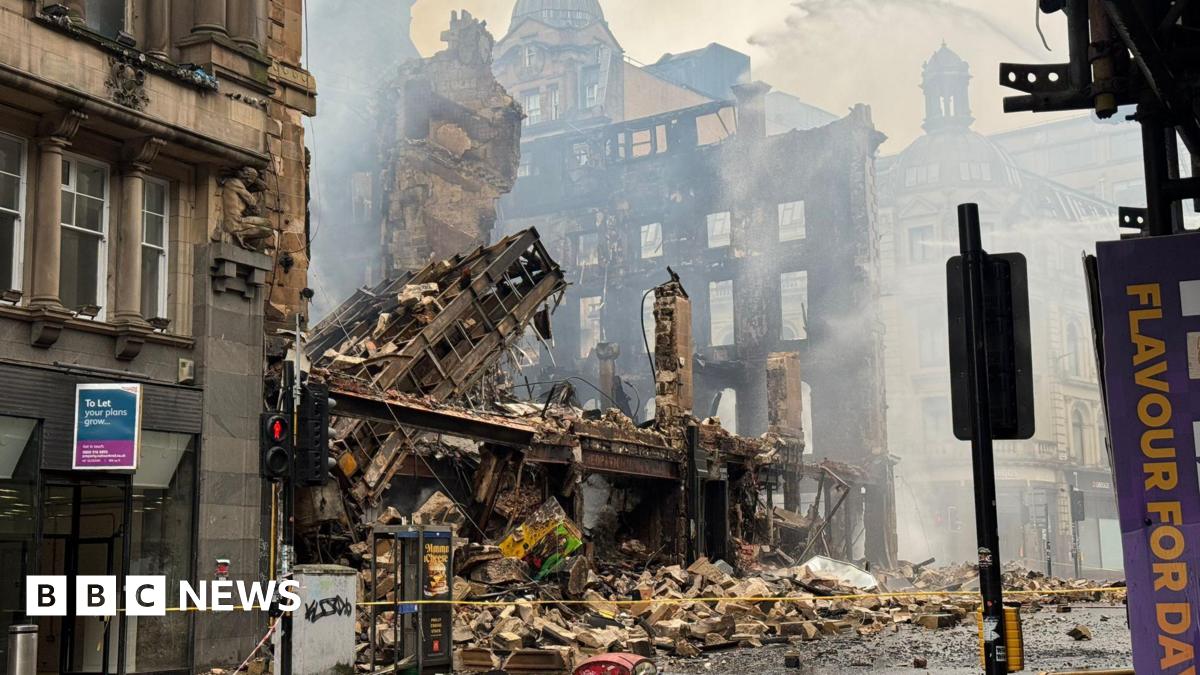
There's a new report from the BBC about the condition of the station after the fire, and it looks optimistic that the station itself has not been seriously damaged,
 www.bbc.co.uk
From the sectional appendix the signalling is controlled from the West of Scotland SCC (Cowlairs), and the OHLE from Cathcart ECR, well away from the fire.
Glasgow Central's main station to remain closed until next week but low-level services resume
A huge fire destroyed a neighbouring building but Network Rail staff believe the station has not been seriously damaged.
www.bbc.co.uk
The report states that signalling and overhead wires are controlled away from Central station.Scotland's busiest railway station remains closed following a huge fire that destroyed a neighbouring building – but appears to have avoided any major damage in the blaze.
Glasgow Central Station has been shut since Sunday, when a blaze spread from a vape shop on Union Street through a B-listed Victorian building.
Network Rail said its staff and fire service teams were continuing to work on the site and disruption to services is expected to continue for the coming days.
However, BBC Scotland News understands Network Rail staff believe there has not been serious damage inside the station, which they have now been able to visit following the fire.
Engineers at the rail operator also believe the station concourse is in good shape and have also visited the nearby Caledonian Chambers building, which apparently has not suffered major damage either.
A fire break between the Union Corner building - which was destroyed in the blaze - and the external wall of the station is thought to have stopped Sunday's inferno spreading further.
From the sectional appendix the signalling is controlled from the West of Scotland SCC (Cowlairs), and the OHLE from Cathcart ECR, well away from the fire.
Last edited:
I don't think I'd overstate the complexity of demolition based on Ayr or anything like that. That was an ownership issue, not a complexity of demolition issue.
If you look at a Streetview of it the road is wider than the building is tall, so pulling it down towards the road, with suitable boarding on the buildings on the opposite side, should not be too onerous compared to e.g. taking down Grenfell Tower.
At risk of going off topic, there is a big difference between controlled demolition and tackling the remains of a building that (judging by Glasgow City Council's comments) could come down at any moment. Demolition plans take time (I expect engineers have been studying what services - gas mains especially - lay beneath Gordon/Union Street, for example), securing the site takes time, whilst I probably wouldn't be too keen to be boarding up shopfronts on the other side of the road whilst there's significant risk of further collapse.

cf111
Established Member
- Joined
- 13 Nov 2012
- Messages
- 1,398
Massive credit has to go to the fire service for saving the station. When I went to bed on Sunday evening it looked, to my untrained eye, that we'd be lucky to have Central still standing on Monday morning.There's a new report from the BBC about the condition of the station after the fire, and it looks optimistic that the station itself has not been seriously damaged,
Glasgow Central's main station to remain closed until next week but low-level services resume
A huge fire destroyed a neighbouring building but Network Rail staff believe the station has not been seriously damaged.
Clydeflyer
Member
- Joined
- 4 Aug 2019
- Messages
- 52
In the absence of a 'Like' button, hear hear! I reckon the city is lucky today that the station and the hotel and the building above the Union Street entrance are largely intact. A blaze that size could have jumped walls and fire breaks and the fact that it was contained to the one building is a credit to the crews who responded.Looking at the pictures it is very lucky, imo, that the fire didn't spread to the station or the hotel. The fire brigade have done a very good job in stopping that from happening.
"Citizen Firefighter" already stands in Gordon Street honouring the city's fire crews past and present. I reckon there should be something now placed on the station concourse that acknowledges and gives thanks that all that the visitor to the station/city sees as they stand there... the roof, the architecture, etc.. are only there thru the efforts of Scottish Fire and Rescue's crews who responded and the support services (rail industry and otherwise) that backed them up that day.
Best case scenario is once the scene is handed back from the fire service and to here is no structural damage with heat then some sort of controlled reintroduction of services to Central is undertaken on a reduced service to limit passenger numbers using Hope Street and Argyle Street entrance.
Its going to take a while to demolish the building at Gordon street and make that entrance safe for use again along with any damage done to the Hotel and Station on that side with smoke damage being the major factor at the very least
Its going to take a while to demolish the building at Gordon street and make that entrance safe for use again along with any damage done to the Hotel and Station on that side with smoke damage being the major factor at the very least
I don't think I'd overstate the complexity of demolition based on Ayr or anything like that. That was an ownership issue, not a complexity of demolition issue.
If you look at a Streetview of it the road is wider than the building is tall, so pulling it down towards the road, with suitable boarding on the buildings on the opposite side, should not be too onerous compared to e.g. taking down Grenfell Tower.
Indeed, there isn't a huge amount left to take down either, looking back a few weeks and I know it was on a much smaller scale, but what was left of Primrose Hill was being demolished next to the live WCML.
The clean-up and safety inspections may take a while though.
In this case they had to pump water from the Clyde. In a place without a massive river nearby, definitely not.When large, old buildings like this catch fire do the fire service have enough capacity in terms of both equipment and water availability to be able to extinguish the fire before it gets out of control ? If not, do they concentrate on saving the adjoing buildings?
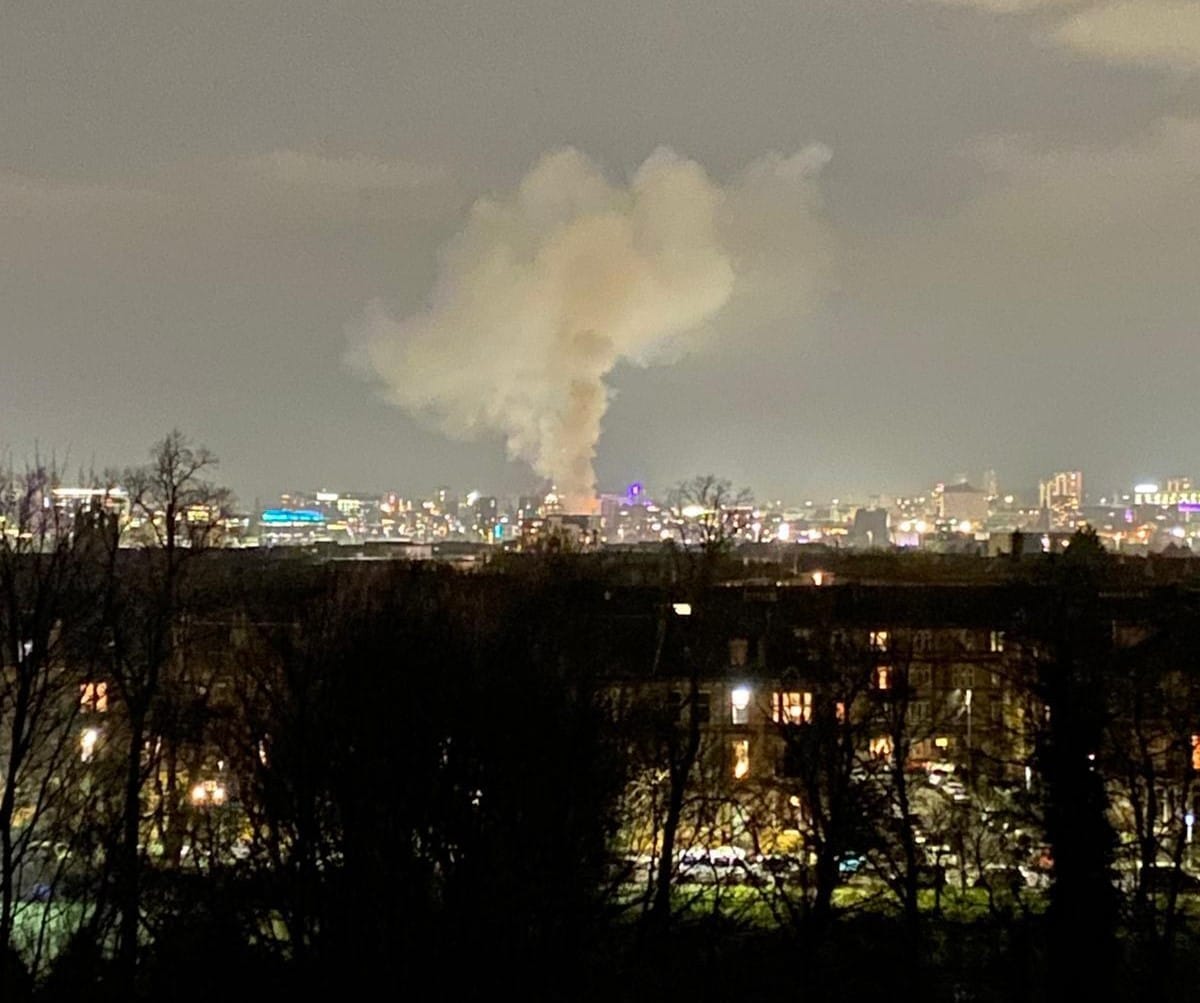
Very interesting and eye-opening article about the shop where it started and fire safety enforcement generally.
Revealed: Shop where Glasgow fire started had not registered to sell vapes or paid business taxes
A Ferret investigation has found there was no registration to sell vapes at the Union Street premises in Glasgow where a major fire started - and we can reveal the name of the company behind the shop.
 www.theferret.scot
norbitonflyer
Established Member
Also a higher priority froma customer service perspective as there is no alternative route (unlike from the SW via Motherwell and the Argyle Line)In most reopening scenarios, the Ayrshire/Inverclyde side of the high-level station is the most likely to return to use first given it's distance from the fire. Whenever that may be.
- Status
- Not open for further replies.