
Sad Sprinter
Established Member
I remember seeing them in Hornby catalogues. And coaches called things like ‘1st brake open’. Did they actually help the train brake?


Yes. Usually would have been attached at the back of a freight train that didn't have continuous braking. Only the locomotive and the brake van would have had brakes. Not sure if/where they're still used. A simplistic explanation. Can anyone expand on it?Did they actually help the train brake?
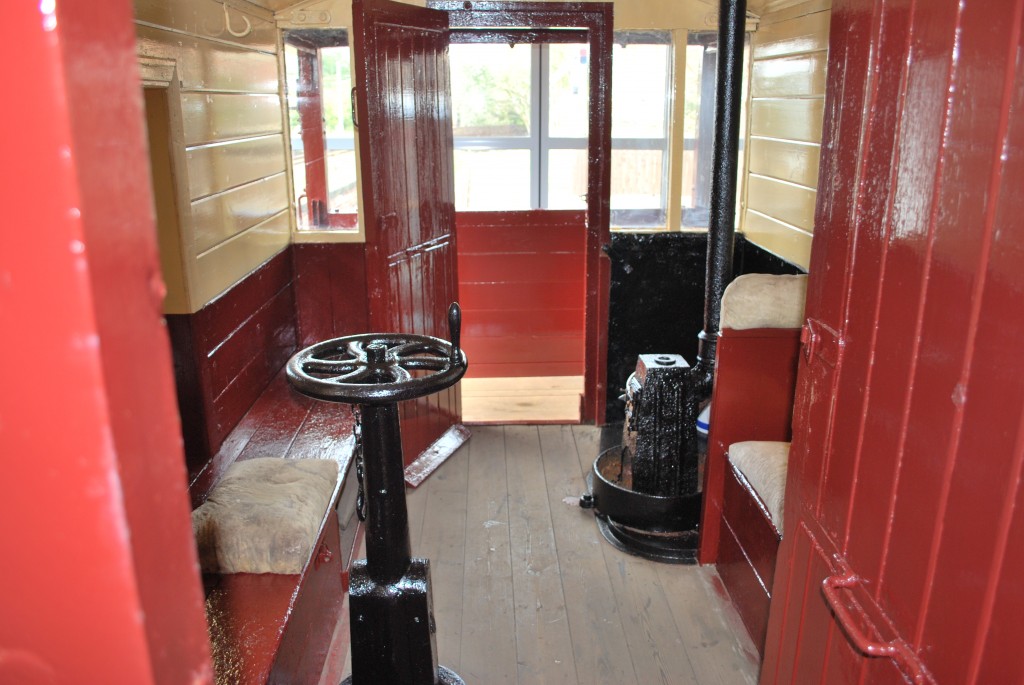
That was the screw operated handbrake, but MK1 BG, BSK and BCK coaches had an emergency brake valve as well, that could apply train brakes in an emergency.. ...like in the two I mentioned.In both cases they were vehicles with a handbrake. In passenger service these brakes would only be used for parking.
And back in the day, some demarcation disputes arose caused by a NUR guard (being in charge if the train) applying the brake because they considered the ASLEF driver was driving recklessly, the effect of which was to cause the train to run late. Much fun and games had by management sorting it all out!In the Morpeth and Eltham crashes, both involving passenger trains, the guards in both cases were frantically applying the brake in their brake coach while thepisseddrivers were going too fast......so they were useful on passenger trains at times.
There was. An essential ingredient for conducting brake tests after coupling up a loco.On reflection, I'm sure there was a brake gauge of some sort in a MK1 brake coach as well
I'm sticking my neck out here, MK3s had a gauge as well.On reflection, I'm sure there was a brake gauge of some sort in a MK1 brake coach as well
The braking of unfitted goods train was a particular challenge, especially on heavily graded routes, where the guard's brake was used to help keep the train under control and to keep the couplings between wagons taut to avoid snatches (and broken couplings in consequence). If a coupling broke and the train parted on a gradient it would only be guard's brake which could halt the runaway.
Or partially fitted. Where possible, the fitted vehicles would be formed up behind the loco as a fitted head.The braking of unfitted goods train was a particular challenge, especially on heavily graded routes, where the guard's brake was used to help keep the train under control and to keep the couplings between wagons taut to avoid snatches (and broken couplings in consequence). If a coupling broke and the train parted on a gradient it would only be guard's brake which could halt the runaway.
Would there not need to be a brake van on all services operated by steam? On a diesel, there's the back cab, but if steam opearted there's no accomodation for the guard.Brake vans were also used on fully-braked freights running over lines with Traincrew-operated level crossings
Some trains also had a brake van each end because they ran round on the way. Upton Park goods was one example with a run round at Barking.Sometimes (not always) when a train had to propel back it would have a brake van, and the guard would be looking out ahead and able to stop the train with the brake valve if necessary. A variant on this was containerised waste trains that went to the Marston Vale line via reversal at Bedford, where the guard had their own special "container". There were also guard's containers on some early Freightliners.
Not as far as I know. In fact, I'm not sure if any still have guards (excepting the different meaning of 'Guard' for the nuclear flask trains).On a parallel question, do freight trains still always have guards?
Steam ended well before the agreement with the unions for suitable trains to operate without a guard, so yes all steam-hauled trains would have needed a brake van or a passenger brake, with very limited local exceptions. I think a brake van would also have been needed before those agreements for haulage by a single Class 20 or other loco with only one cab.Would there not need to be a brake van on all services operated by steam? On a diesel, there's the back cab, but if steam opearted there's no accomodation for the guard.
And, on a tangent, slip coaches.Reverting to the OP, there were instances until the end of steam where passenger stock was controlled by the guard's hand brake alone. One example was the curious run round arrangement at Cowes where, after arrival, the loco shunted the train partway out of the station so as to clear access to the release road. After the loco had got out of the way, the points were reset and train was then allowed to trundle back to the stops powered by gravity and braked by the guard.
 www.railforums.co.uk
IIRC any type of coach that had a brake handle also had a gauge.I'm sticking my neck out here, MK3s had a gauge as well.
Through braking on early goods vehicles was usually so they could be marshalled in passenger services. I believe the GWR started the XP designation for that.While the passenger coaches had through brakes, right up to the 1960s or 1970s most goods wagons didn’t
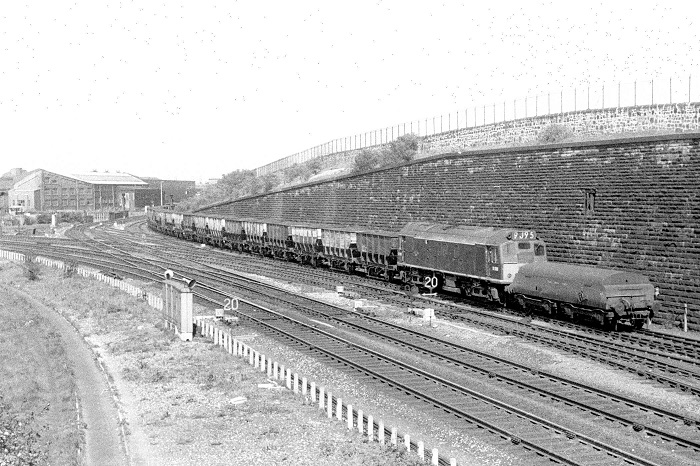
Back in the 1960s, due to their lower braking power, diesels pulling unfitted freight trains used to push “brake tenders” to improve braking. Were these permanently attached to the locomotive?
Thankyou, I also think they had concrete in body to make them heavier. They always seemed to be pushed, I never saw one being pulled.No, they weren’t allocated to specific locos, just used on whichever train required them; they could be coupled and uncoupled as necessary. When the train got to its terminal yard they were uncoupled from the loco and stabled to await their next duty unless the loco was going straight on to another train that needed them; they still might need to be runround. They were just heavy wagons with brakes controlled by the loco that provided extra braking power directly under the control of the driver.
However, some of the earliest continuous brakes were not failsafe. In the Armagh accident mentioned above, the train was fitted with "Smith's Vacuum Brake" where the creation of vacuum would apply the brake. The train was unable to climb a severe gradient and had to be split, so the continuous brake was immediately ineffective. The front portion is through to have rolled back into the rear one, overcoming the handbrake and some stones under is wheels so it in turn rolled back down the gradient and was wrecked at the bottom. This led to a legal requirement to continuous automatic brakes on passenger trains, where the creation of vacuum releases the brakes. Each fitted coach or wagon has an on-board reservoir of vacuum which is used to apply the bake if the train pipe pressure becomes closer to atmospheric. An emergency application or uncoupling of the train just opens the pipe to the atmosphere. These days air brakes are used instead, which follow the same principle but use excess air pressure instead of vacuum.By the latter part of the nineteenth century all passenger trains had continuous brakes, i.e. one controlled by the driver or the guard whereever he was in the train.
In short, a combination of knowledge of the route, permitted speeds and gradients; observing signals; and whistle codes from the driver. But there were some pretty scary accidents over the years with unfitted trains.How did the operation of the brake van work in practice? Did the guards have to continually monitor speed etc and brake accordingly? How did they know the speed, and hence when to apply the brake?
I don't think so. They were not always in front of the loco, (the pair would run round their train coupled together if required) but were built with very low height to make this psossible.Back in the 1960s, due to their lower braking power, diesels pulling unfitted freight trains used to push “brake tenders” to improve braking. We’re these permanently attached to the locomotive?


It never reached the bottom. The line was operated on the time interval system and the next train was already on its way.The front portion is thought to have rolled back into the rear one, overcoming the handbrake and some stones under its wheels so it in turn rolled back down the gradient and was wrecked at the bottom.
D L Smith's writings about the GSWR are peppered with tales of heroics working unfitted goods trains on the switchback Stranraer road. Pieces of point rodding used to get extra turns on the brake wheel, brake van floors catching fire from the heat generated by the brake blocks, divided trains being accelerated by their drivers to try to keep ahead of runaways, etc etc. Railway operating in the raw, not perhaps as it's recognised in the 21st century!In short, a combination of knowledge of the route, permitted speeds and gradients; observing signals; and whistle codes from the driver. But there were some pretty scary accidents over the years with unfitted trains.
Same way as the driver did - experience and route knowledge. Speedometers on locos were a relatively late phenomenon, IIRC.How did the operation of the brake van work in practice? Did the guards have to continually monitor speed etc and brake accordingly? How did they know the speed, and hence when to apply the brake?
So, as alluded to in a previous post, if the guard thought the driver was going too fast, they'd apply the brake?Same way as the driver did - experience and route knowledge. Speedometers on locos were a relatively late phenomenon, IIRC.


