• Our new ticketing site is now live! Using either this or the original site (both powered by TrainSplit) helps support the running of the forum with every ticket purchase! Find out more and ask any questions/give us feedback in this thread!

How could the UK reduce the cost of large infrastructure projects?

Status
Not open for further replies.

Peter Sarf

Established Member
Joined
12 Oct 2010
Messages
9,833
Location
Croydon
Maybe there are some cost saving ideas for Thanet to have taken on? But a car park should be pretty cheap to construct as well - that isn't going to make a meaningful difference.
Car parks have a large rain collecting surface area with no where for the water to go unless you manage it. Decades ago no one cared but nowadays council planners expect the water to be kept out of the local drainage system. It even applies to peoples own driveways - if you wanted to build a driveway for a house now then you would have to demonstrate you have adequate rain water collection and a soak-away. You are not allowed to use the existing drainage network. Multiply that by, say, 300 for a car park and you need big man made pond areas. The reason standards have got more onerous is not just from hindsight but because we now get heaver bursts of rain than we used to - global warming.

Climate change affects all infrastructure projects not just rail. Bad example but we are seeing more and more Victorian rail infrastructure not coping with the extremes of heat and rain.

Whether we are over compensating in the UK for global-warming / climate-change I do not know. Whether the UK is more at risk I do not know.

NEW THREAD ANYBODY ?.
But as a gardener I am really noticing the difference. I remember about fifteen years ago talking to a climate expert about global warming. He said do not expect warmer drier summers. He said in the UK we will get milder winters and wetter more tropical weather all year. As a gardener I can now see its coming true. We have had our dry spells BUT I can say I suffer more from damp than I used to - I have to manage rain water run off undermining part of my amateur civil engineering. Plants growing faster and all through winter. No longer just a cutting back once in Spring and once in Autumn. I remember when you could judge Spring was warm enough too plant out when the grass needed mowing. Now I see people struggling to mow their grass on damp winter days.
Lockerbie is the equivalent of Haute Picardie in terms of population density. Even Oxenholme/Penrith where it is also similar have tourism. The population density south of Manchester is much higher.
I think Haute Picarde was built new on the LGV ?. It was not already there on a classic line whereas Lockerbia is so not expense and I am not sure how many passing HS2 trains will serve it.
OK so here is the complete list of stations that are at least sometimes overcrowded - or have been upgraded to give them more space.

On the Victoria Line:
  • Kings Cross St Pancras
  • Oxford Circus
  • Green Park
  • Victoria
Off the Victoria Line:
  • Bank
  • Camden Town
  • Covent Garden
  • All the stations built with narrow island platforms
So yes the stations on the Victoria line in zone 1 were clearly built too small, and the ones built with narrow island platforms around 1900 have proven dangerous. However the size was increased for the Jubilee Line Extension which has proved completely adequate, before being increased again for the Elizabeth Line and perhaps would be even larger for Crossrail 2 which has significantly higher costs per km than Crossrail 1.
My fear is the Jubilee line will not cope for much longer. I can see the Elizabeth line is already getting quite full and already extra trains being ordered.

I think our more and more expensive designs are only just keeping ahead !.

Actually perhaps the problem in the UK is we should not try to cater for the demand we expect but just build same as we did 20, 40 or 60 years ago. It would be easier to get justification. Then when the new route quickly filled up we could say there you are look how successful that was and ask for the money to build yet another line. Overall it might cost more but we will have done it in manageable chunks. Parallels with road building apply.

Instead we think as far ahead as the infrastructure life would be, come up with a good estimate but then have an uphill struggle getting a go ahead. So we perhaps build something expensive but start so late it is guaranteed to fill up so soon.

In Hiogh Speed rail terms everyone else got going 40 years before us.
For a given number of people using a station they are more spread out along the train so there will be fewer reaching the exit at the same time, so if anything you could get away with smaller exits.
Not in my experience. In many places the station exit(s) cope at a slower pace than the people walking along the platform. Gets really alarming when the queue to leave is still there as the next train disgorges its passengers !. I have noticed the Elizabeth line filling up but it is reassuring to see it is still coping - currently. With the extra trains already ordered I can see platform exits getting really busy. My rough feeling is that the Elizabeth line has revealed how much pent up demand there really was when it was conceived - more than expected.

== Doublepost prevention - post automatically merged: ==

OK so what's the total ridership predicted to be? 300m like the Victoria line got in 2019? And with a larger number of suburban stops?

So basically that would point to what we could call the bronze solution for the suburban stations where there is a single Victoria Line suburban entrance plus a lift for the disabled plus a staircase at the other end for emergencies. Even something that basic would almost certainly prove perfectly adequate.

Silver would be two Victoria line style entrances - one at each end - plus lifts for the disabled. Gold would be Jubilee line extension style stations, and platinum would be anything more elaborate than that.

I think we are well into the platinum for the suburban stops, it's ridiculous.

Presenting a "silver" and a "gold" solution from the above to the politicians would be giving them a reasonable choice that makes good use of taxpayers money.
BUT for how long would the cheaper solutions last ?.
(short term-ism).

But, on the other hand, then can we justify thinking that far ahead to the politicians ?.
(too much forward thinking for many).
 
Sponsor Post - registered members do not see these adverts; click here to register, or click here to log in
R

RailUK Forums

JamesT

Established Member
Joined
25 Feb 2015
Messages
4,916
OK so what's the total ridership predicted to be? 300m like the Victoria line got in 2019? And with a larger number of suburban stops?

So basically that would point to what we could call the bronze solution for the suburban stations where there is a single Victoria Line suburban entrance plus a lift for the disabled plus a staircase at the other end for emergencies. Even something that basic would almost certainly prove perfectly adequate.

Silver would be two Victoria line style entrances - one at each end - plus lifts for the disabled. Gold would be Jubilee line extension style stations, and platinum would be anything more elaborate than that.

I think we are well into the platinum for the suburban stops, it's ridiculous.

Presenting a "silver" and a "gold" solution from the above to the politicians would be giving them a reasonable choice that makes good use of taxpayers money.
Estimates of Crossrail2 passenger numbers in the peak per hour are ~45k, the Victoria line is 30-35k. Which correlates reasonably well with running something like a Cl345 (1500 passengers) at 30tph, versus 2009 tube stock (1100) at 33tph.
So you’re looking at something that can handle 50% more passengers to start with. Elizabeth Line core stations were also designed to cope with extending the rolling stock by another two cars. Which given how passenger numbers have risen, is very much not gold plating but good planning foresight.
If you build something sized for Victoria line numbers, it’s going to be regularly overwhelmed by much larger numbers of passengers.
 

MatthewHutton

Member
Joined
17 Aug 2024
Messages
1,084
Location
Oxford
Estimates of Crossrail2 passenger numbers in the peak per hour are ~45k, the Victoria line is 30-35k. Which correlates reasonably well with running something like a Cl345 (1500 passengers) at 30tph, versus 2009 tube stock (1100) at 33tph.
So you’re looking at something that can handle 50% more passengers to start with. Elizabeth Line core stations were also designed to cope with extending the rolling stock by another two cars. Which given how passenger numbers have risen, is very much not gold plating but good planning foresight.
If you build something sized for Victoria line numbers, it’s going to be regularly overwhelmed by much larger numbers of passengers.
Which is a strong argument for the central London stations being larger, it doesn’t mean the suburban ones need to be.

Even just my “silver plated” solution has twice as big exit capacity as the suburban Victoria line stations that are managing just fine with 65-75% of the demand.

== Doublepost prevention - post automatically merged: ==

My fear is the Jubilee line will not cope for much longer
Even Baker Street and Bond Street on the original Jubilee line haven’t had peak usage restrictions, so we are a fair way from having issues on the much more elaborately constructed Jubilee Line extension.
Actually perhaps the problem in the UK is we should not try to cater for the demand we expect but just build same as we did 20, 40 or 60 years ago.
The only time we messed up on this since world war 2 was the central stations on the Victoria line. So mostly we have succeeded in catering for the demand that occured.
 
Last edited:

JamesT

Established Member
Joined
25 Feb 2015
Messages
4,916
Which is a strong argument for the central London stations being larger, it doesn’t mean the suburban ones need to be.

Even just my “silver plated” solution has twice as big exit capacity as the suburban Victoria line stations that are managing just fine.

== Doublepost prevention - post automatically merged: ==


Even Baker Street and Bond Street on the original Jubilee line haven’t had peak usage restrictions, so we are a fair way from having issues on the much more elaborately constructed Jubilee Line extension.

The only time we messed up on this was the central stations on the Victoria line.
What suburban stations would Crossrail2 be building? The intention is it’s like the Elizabeth line, you’re only building a central core and connecting existing lines either side of London.
 

MatthewHutton

Member
Joined
17 Aug 2024
Messages
1,084
Location
Oxford
BUT for how long would the cheaper solutions last ?.
(short term-ism).

But, on the other hand, then can we justify thinking that far ahead to the politicians ?.
(too much forward thinking for many).
Crossrail 2 looks to have about 30km of tunnelling and apparently was budgeted to cost £45bn in 2017 or £1.5bn/km. That would be £2bn/km adjusted for general inflation only. The Jubilee Line extension was £330m/mile or £205m/km, which would be £425m/km today adjusted for general inflation only.
What suburban stations would Crossrail2 be building? The intention is it’s like the Elizabeth line, you’re only building a central core and connecting existing lines either side of London.
Kings Road Chelsea, Balham, Wimbledon, Angel, Dalston, Seven Sisters, Turnpike Lane, Alexandra Palace, New Southgate, Tottenham Hale.

I am counting Clapham Junction, Victoria, Tottenham Court Road and Euston-St Pancras as non suburban and they are clearly going to have extremely high traffic.

EDIT with 20% construction inflation you’d be looking at £72bn for the existing Crossrail 2 proposal vs maybe £20bn for a “Jubilee line extension“ style proposal including £5.5bn for additional upgrades for the 4 core stations.
 
Last edited:

JamesT

Established Member
Joined
25 Feb 2015
Messages
4,916
Crossrail 2 looks to have about 30km of tunnelling and apparently was budgeted to cost £45bn in 2017 or £1.5bn/km. That would be £2bn/km adjusted for general inflation only. The Jubilee Line extension was £330m/mile or £205m/km, which would be £425m/km today adjusted for general inflation only.
You can’t simply divide the total cost by the length. A third of the jubilee line extension was above ground. Assuming the CR2 project is like EL, then upgrading non-core stations will also be included, not just the core construction.
Another point would be the size of tunnels. JL is 4.35m internal diameter versus 6.2m for EL.

Kings Road Chelsea, Balham, Wimbledon, Angel, Dalston, Seven Sisters, Turnpike Lane, Alexandra Palace, New Southgate, Tottenham Hale.

I am counting Clapham Junction, Victoria, Tottenham Court Road and Euston-St Pancras as non suburban and they are clearly going to have extremely high traffic.

EDIT with 20% construction inflation you’d be looking at £72bn for the existing Crossrail 2 proposal vs maybe £20bn for a “Jubilee line extension“ style proposal including £5.5bn for additional upgrades for the 4 core stations.
I don’t know how you’re defining some of these as suburban. They’re all inner London, in the tunnels. A bunch of them are in zone 1!
 

Peter Sarf

Established Member
Joined
12 Oct 2010
Messages
9,833
Location
Croydon
Crossrail 2 looks to have about 30km of tunnelling and apparently was budgeted to cost £45bn in 2017 or £1.5bn/km. That would be £2bn/km adjusted for general inflation only. The Jubilee Line extension was £330m/mile or £205m/km, which would be £425m/km today adjusted for general inflation only.

Kings Road Chelsea, Balham, Wimbledon, Angel, Dalston, Seven Sisters, Turnpike Lane, Alexandra Palace, New Southgate, Tottenham Hale.

I am counting Clapham Junction, Victoria, Tottenham Court Road and Euston-St Pancras as non suburban and they are clearly going to have extremely high traffic.

EDIT with 20% construction inflation you’d be looking at £72bn for the existing Crossrail 2 proposal vs maybe £20bn for a “Jubilee line extension“ style proposal including £5.5bn for additional upgrades for the 4 core stations.
Just a quick reply. I do not knw about many of of the others but I think Wimbledon needs a complete rebuild because I believe there are going to be a lot of people changing between Waterloo bound and CR2 bound or vice versa. Balham is surely inner suburban.
 

MatthewHutton

Member
Joined
17 Aug 2024
Messages
1,084
Location
Oxford
I don’t know how you’re defining some of these as suburban. They’re all inner London, in the tunnels. A bunch of them are in zone 1!
So are all the stops on the Jubillee line extension. And it’s only the ones within or on the circle line where the Victoria line has had capacity issues.

== Doublepost prevention - post automatically merged: ==

Just a quick reply. I do not knw about many of of the others but I think Wimbledon needs a complete rebuild because I believe there are going to be a lot of people changing between Waterloo bound and CR2 bound or vice versa. Balham is surely inner suburban.
Highbury and Islington in north London is big like that too, and that hasn’t had capacity issues even with the Victoria line that was much more austere than the jubilee line extension.
 
Last edited:

Peter Sarf

Established Member
Joined
12 Oct 2010
Messages
9,833
Location
Croydon
So are all the stops on the Jubillee line extension. And it’s only the ones within or on the circle line where the Victoria line has had capacity issues.

== Doublepost prevention - post automatically merged: ==


Highbury and Islington in north London is big like that too, and that hasn’t had capacity issues even with the Victoria line that was much more austere than the jubilee line extension.
Do you know Elizabeth line trains and Cross Rail 2 trains are a lot longer and also wider than tube trains ?.

Cross rail 2 trains will be taking over from existing 10 car so 200m long (and 12 car ?) railway trains.
The Victoria line trains are 133m long.

Maybe this is a UK problem not grasping the true scale of newer projects ?.
 
Last edited:

MatthewHutton

Member
Joined
17 Aug 2024
Messages
1,084
Location
Oxford
Do you know Elizabeth line trains and Cross Rail 2 trains are a lot longer and also wider than tube trains ?.
I was assuming there would be fewer stops so it would balance out.

That said if you could build an express tube line for 1/4 of the cost and you got a tube line with 2/3rds of the capacity instead of “Crossrail” is that the end of the world?
 

The Pelican

Member
Joined
3 Oct 2025
Messages
428
Location
London
Ultimately you look at passenger throughput maximising station design, look at your favourite metro and tram systems- often old and eccentric- and realise that lots of passenger maximising lines aren't very interesting. Then you become a John Ruskin and Jean Jacques Rousseau enthusiast for the rural, sentimental etc.
 

JamesT

Established Member
Joined
25 Feb 2015
Messages
4,916
I was assuming there would be fewer stops so it would balance out.

That said if you could build an express tube line for 1/4 of the cost and you got a tube line with 2/3rds of the capacity instead of “Crossrail” is that the end of the world?
Back in 2013, TfL produced two options for Crossrail 2. A ‘metro’ option, which was based upon DLR sized trains and tunnels. And a ‘regional’ option with mainline trains. The former was costed at £9.4bn, the latter at £12bn.
So you’re only getting 2/3rds of the capacity, but still paying 3/4ths of the cost.
 

Peter Sarf

Established Member
Joined
12 Oct 2010
Messages
9,833
Location
Croydon
I was assuming there would be fewer stops so it would balance out.

That said if you could build an express tube line for 1/4 of the cost and you got a tube line with 2/3rds of the capacity instead of “Crossrail” is that the end of the world?
For both Crossrail two (and the Elizabeth line) Your "express tube line" would mean not running through beyond the ends of the central section (Wimbledon to somewhere beyond Bethnal Green) unless you wanted to cripple existing capacity further out by converting existing services to 2/3rd capacity - a no no.

The result is you would be designing towards a tube line that began and ended within the suburbs of London and with its terminus stations capable of handling ALL the passengers at each end. You would also then not be relieving pressure on the existing London termini and their approaches - unless you wanted to terminate, for example, Waterloo bound services at Wimbledon effectively making Wimbledon station an even bigger monster. Same applies for out of Liverpool Street. Need I mention the passengers' views on having to change trains at say Wimbledon.
 

MatthewHutton

Member
Joined
17 Aug 2024
Messages
1,084
Location
Oxford
Back in 2013, TfL produced two options for Crossrail 2. A ‘metro’ option, which was based upon DLR sized trains and tunnels. And a ‘regional’ option with mainline trains. The former was costed at £9.4bn, the latter at £12bn.
So you’re only getting 2/3rds of the capacity, but still paying 3/4ths of the cost.
So how did it go from £12bn in 2013 to £45bn in 2017?
 

JamesT

Established Member
Joined
25 Feb 2015
Messages
4,916
So how did it go from £12bn in 2013 to £45bn in 2017?
I expect the two numbers are not measuring the same thing. The full cost of the scheme includes new rolling stock and upgrading stations on the feeder routes, plus a level of contingency. I suspect the earlier number is just the cost of the core with none of the rest.
 

Peter Sarf

Established Member
Joined
12 Oct 2010
Messages
9,833
Location
Croydon
So how did it go from £12bn in 2013 to £45bn in 2017?
This will possibly be the problem this thread is asking about.
It could be different terms so the 2017 figure might include more things.

Was it railway project inflation in the UK OR was it UK project inflation ?.
 

The exile

Established Member
Joined
31 Mar 2010
Messages
9,481
Location
Somerset
Crossrail 2 looks to have about 30km of tunnelling and apparently was budgeted to cost £45bn in 2017 or £1.5bn/km. That would be £2bn/km adjusted for general inflation only. The Jubilee Line extension was £330m/mile or £205m/km, which would be £425m/km today adjusted for general inflation only.

Kings Road Chelsea, Balham, Wimbledon, Angel, Dalston, Seven Sisters, Turnpike Lane, Alexandra Palace, New Southgate, Tottenham Hale.

I am counting Clapham Junction, Victoria, Tottenham Court Road and Euston-St Pancras as non suburban and they are clearly going to have extremely high traffic.

EDIT with 20% construction inflation you’d be looking at £72bn for the existing Crossrail 2 proposal vs maybe £20bn for a “Jubilee line extension“ style proposal including £5.5bn for additional upgrades for the 4 core stations.
Of those, 6 are interchanges with inbound mainline traffic so potentially have to cope with very large flows at certain times. They won't all necessarily develop that interchange role - but they could.
 

Peter Sarf

Established Member
Joined
12 Oct 2010
Messages
9,833
Location
Croydon
I expect the two numbers are not measuring the same thing. The full cost of the scheme includes new rolling stock and upgrading stations on the feeder routes, plus a level of contingency. I suspect the earlier number is just the cost of the core with none of the rest.
Makes sense because the DLR style solution would have only been costed for the new inner London section whereas Crossrail 2 would encompass more.
 

FMerrymon

Member
Joined
11 Dec 2024
Messages
362
Location
Reading
I expect the two numbers are not measuring the same thing. The full cost of the scheme includes new rolling stock and upgrading stations on the feeder routes, plus a level of contingency. I suspect the earlier number is just the cost of the core with none of the rest.

The £12bn was the then base cost in 2012 prices https://www.businessldn.co.uk/sites/default/files/documents/2018-05/Funding-Crossrail-2.pdf - its £20bn with full contingency. It was stated without rolling stock.

In 2016, the cost was estimated to be £32.6bn in 2014 prices. By 2017, "there are reports" of hitting £45bn, however, it seems that's from the Financial Times who like to mess around with base years and outturn costs and there is no associated base year in these reports. https://researchbriefings.files.parliament.uk/documents/CBP-8481/CBP-8481.pdf

In 2019, its reported to be £40bn, but again, no mention of the base year or whether this is an estimate of outturn. https://www.cityam.com/crossrail-2-costs-surge-over-40bn/
 

ABB125

Established Member
Joined
23 Jul 2016
Messages
4,354
Location
University of Birmingham
How much are contingency allowances contributing to increased costs? Or, in other words, the project should cost £X, but "they" insist that you add 40% (or whatever) contingency. The contractors building the project then immediately know that £X +40% of money is available, and conveniently that's how much it ends up costing. (Obviously this doesn't necessarily happen at the bidding stage of the project, but over time all the "there's a random blue circle on that drawing so we've built a random blue circle in the middle of the trackbed. But it's in the way, so you're going to have to pay us £lots to unbuild it again" adds up. Yes this is a deliberately facetious example in order to make the point.)

In other words, contingencies become a self-fulfilling prophecy.
 

FMerrymon

Member
Joined
11 Dec 2024
Messages
362
Location
Reading
A bit more info about the difference between the 2012 price and the 2016 price: https://www.pwc.co.uk/capital-proje...s/crossrail-2-funding-and-financing-study.pdf

@JamesT correct that rolling stock wasn't included but was in the second figure and that there are additional works included in that cost.

1771181146686.png

== Doublepost prevention - post automatically merged: ==

How much are contingency allowances contributing to increased costs? Or, in other words, the project should cost £X, but "they" insist that you add 40% (or whatever) contingency. The contractors building the project then immediately know that £X +40% of money is available, and conveniently that's how much it ends up costing. (Obviously this doesn't necessarily happen at the bidding stage of the project, but over time all the "there's a random blue circle on that drawing so we've built a random blue circle in the middle of the trackbed. But it's in the way, so you're going to have to pay us £lots to unbuild it again" adds up. Yes this is a deliberately facetious example in order to make the point.)

In other words, contingencies become a self-fulfilling prophecy.
Good question.
 

Transilien

Member
Joined
10 Mar 2024
Messages
763
Location
Ayrshire
The Americans have recently got a 235 mile high speed line at ZERO cost to the goverment! And being subsidised heavily each year by the company's investors... the nationalisation fans are rather deluded.

Brightline is struggling financially though…
source:%20Florida%20Today
https://share.google/5F45dmappGT4pcyEQ
 

MatthewHutton

Member
Joined
17 Aug 2024
Messages
1,084
Location
Oxford
Of those, 6 are interchanges with inbound mainline traffic so potentially have to cope with very large flows at certain times. They won't all necessarily develop that interchange role - but they could.
The thing with the Victoria Line is that broadly we spent a a bit less than we did on the Jubilee Line Extension for something worse. So on the one hand that's bad, but on the other hand it's not like we spent three times as much for something worse.

So I think even if the odds of needing to expand all of the stations was even 25% that it's probably best to go a bit small and expand later.

Plus we have a lot more data now. We have 2-3 RER style lines in London and 5 in Paris to gather data from - and we could look outside of Europe as well. Whereas when the Victoria Line was built we had no real idea how an express metro line would do. Therefore I think the odds are probably much more like 5% or even less given the amount of data we have.

How much are contingency allowances contributing to increased costs? Or, in other words, the project should cost £X, but "they" insist that you add 40% (or whatever) contingency. The contractors building the project then immediately know that £X +40% of money is available, and conveniently that's how much it ends up costing. (Obviously this doesn't necessarily happen at the bidding stage of the project, but over time all the "there's a random blue circle on that drawing so we've built a random blue circle in the middle of the trackbed. But it's in the way, so you're going to have to pay us £lots to unbuild it again" adds up. Yes this is a deliberately facetious example in order to make the point.)

In other words, contingencies become a self-fulfilling prophecy.
The transit cost people believe 10-20% contingency is the sort of figure that low cost countries go for. So that is probably part of it.
 

FMerrymon

Member
Joined
11 Dec 2024
Messages
362
Location
Reading

The 2015 Financial Review identified P80 capital costs for the full regional scheme of £30.9bn (in real Q2 2014 prices). After accounting for capital cost inflation, this is equivalent to outturn/nominal capital costs of £45.3bn.

£45bn for crossrail 2 is outturn, so that explains quite a lot of the jump.

== Doublepost prevention - post automatically merged: ==

The thing with the Victoria Line is that broadly we spent a a bit less than we did on the Jubilee Line Extension for something worse. So on the one hand that's bad, but on the other hand it's not like we spent three times as much for something worse.

So I think even if the odds of needing to expand all of the stations was even 25% that it's probably best to go a bit small and expand later.

Plus we have a lot more data now. We have 2-3 RER style lines in London and 5 in Paris to gather data from - and we could look outside of Europe as well. Whereas when the Victoria Line was built we had no real idea how an express metro line would do. Therefore I think the odds are probably much more like 5% or even less given the amount of data we have.


The transit cost people believe 10-20% contingency is the sort of figure that low cost countries go for. So that is probably part of it.

They have low contingencies because they are used to building these projects and have a greater confidence in their figures as a result. That is also part of the reason why they a low cost in the first place.
 

ABB125

Established Member
Joined
23 Jul 2016
Messages
4,354
Location
University of Birmingham
We were cheaper when we did less.
Back 40+ years ago, smaller construction companies were far more prevalent than now I believe. J Bloggs Roadbuilders would be more than capable of building your average town bypass. Nowadays, the biggest thing that J Bloggs Contracting will do is the access road to a new housing estate or something - they no longer have the experience or the financial clout to do a bigger scheme any more (partly because costs have gone up so much... If you normally are working on £5 million value schemes, going in for a £150m scheme is an enormous financial risk). Big schemes are the preserve of this tier 1 and 2 contractors who are massive by comparison.

This material change to the industry will have had an effect on costs
 

Bald Rick

Veteran Member
Joined
28 Sep 2010
Messages
35,965
OK so what's the total ridership predicted to be? 300m like the Victoria line got in 2019? And with a larger number of suburban stops?

The Elizabeth Line is at 300m now. Crossrail 2 will have been sized for ridership in 2033 plus 30%-50% future growth.


Even something that basic would almost certainly prove perfectly adequate.

I was perhaps not clear enough previously. The Crossrail 2 team will have done extensive studies of demand for each station, based on detailed modelling, and after much optioneering decided what was necessary to meet that demand and future growth. This is what the Transport Planning profession is about. Not….

I was assuming
 

quantinghome

Established Member
Joined
1 Jun 2013
Messages
2,917
Ok so the “M40” proposal follows the chiltern mainline from West Ruislip to Bicester before following the M40.

I think broadly the line is pretty straight and was built to support 4 tracking. The challenges to my mind are the West Wycombe curve and the one north of Princes Risborough, the latter of which would be easy to cut, the former of which might have to be in the High Wycombe tunnel.

Denham Golf Club to just beyond Gerrards Cross is another challenge.
'Pretty straight' isn't good enough - there are plenty of locations with curves that reduce linespeed to below 100mph. Even a 140mph railway would need a new alignment. And for comparison, remember that HS2 uses bits of old alignments where it can.

Judging from the structures it doesn't look like it was build for future four-tracking (some of the stations were built four tracks wide to allow for overtaking, but it doesn't seem to have been any more than that). Even if that was the case historically then there has been severe alignment encroachment since which makes it impractical.

Then you've got the issue of four-tracking through several built up areas - Gerrard's Cross, Beaconsfield, High Wycombe.

I'm struggling to see how this is a better route.
 

FMerrymon

Member
Joined
11 Dec 2024
Messages
362
Location
Reading
Not sure how this is news as it refers to a scenario documented in 2024, but another example of issues in UK construction. The budget increase is of a very similar scale to HS2. https://www.theguardian.com/uk-news...oint-c-delayed-to-2030-as-costs-climb-to-35bn

The latest delay will wipe almost £3bn from the French state-owned developer’s accounts and take the total cost of building the nuclear plant to £35bn, or almost double the estimate of £18bn when it was given the green light in 2016. However, the final cost will be far higher once inflation is taken into account as EDF gives its cost estimates in 2015 prices
 
Last edited:

Snow1964

Established Member
Joined
7 Oct 2019
Messages
11,276
Location
West Wiltshire
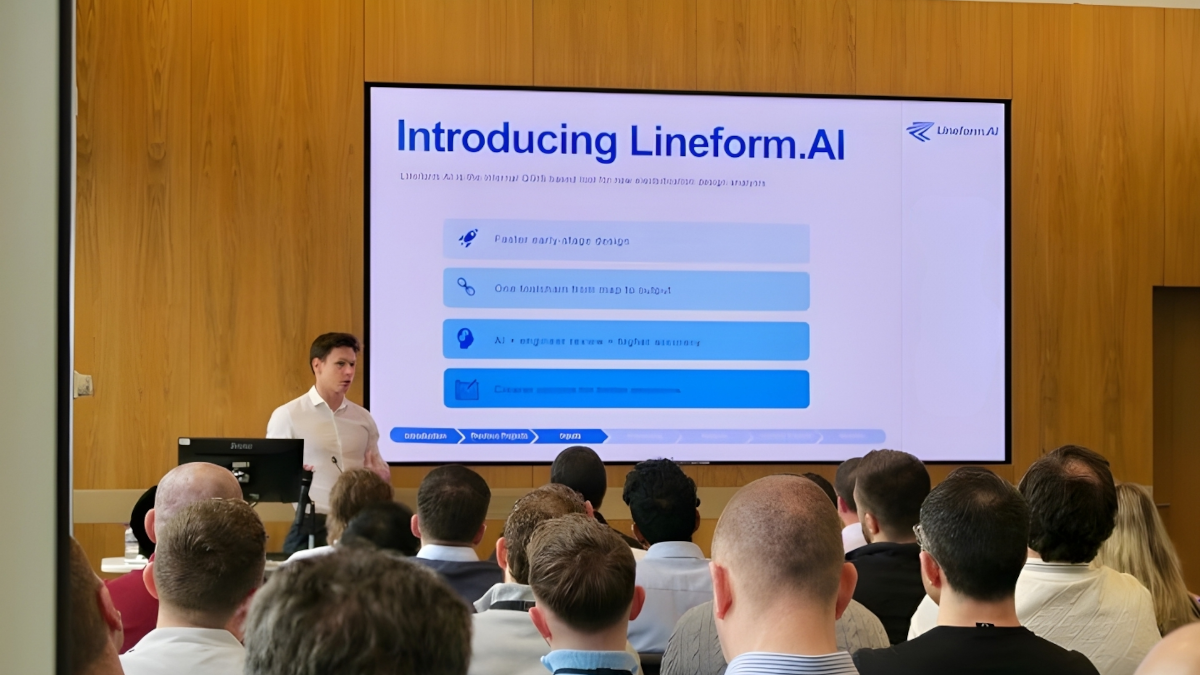
Article on a presentation in Glasgow regarding cutting cost of electrification, an AI tool developed by Furrer and Frey
An AI tool has been premiered in Glasgow that is already helping the UK’s Network Rail make savings on electrification upgrades.

Developed by Furrer+Frey, Lineform.AI works with data beamed down from Airbus satellites and uploaded from an array of datasets to develop recommendations for electrification. It also provides high level cost estimates as well as embodied carbon data for each option and can then draw up concept designs.

Having been trained by engineers, Lineform.AI surveys satellite images to spot rail infrastructure and assess any existing line – mapping out culverts, signals, bridges and level crossings. With its understanding of a line’s constraints, and access to an in-depth database of electrification system standards, weather models and averaged construction costs, it develops hundreds of electrification options for review by engineers.

The AI tool can quickly run complex calculations that consider multiple interdependent variables, such as wind speeds, span lengths, cable tensions, catenary height and more, to optimise an overhead line system and the structures that support it.

The tool has already helped modify UK infrastructure standards and supported contracting strategies on key projects in the UK and Ireland. Following detailed AI analysis of the Perth to Aberdeen corridor, Network Rail implemented UK wide changes in the way it designs rail electrification to reduce cost.

The latest phase of work has now examined ScotRail’s Barrhead to Kilmarnock and Troon routes, helping shape early plans for upgrades pencilled in to start in Network Rail’s Control Period 8 (from 2029). It has also been used to inform early design strategy for Irish Rail’s extension of the Dublin Area Rapid Transit (DART+) scheme. Analysis is underway for further British and continental European routes considering electrification.

Richard Stainton, Electrification Expert at Network Rail, said: “These tools have supported Network Rail in making savings in electrification projects. Incremental gains in lowering the cost of electrification are how we make projects deliverable.”

Noel Dolphin, Head of UK Projects at Furrer+Frey, said: “The Scottish case studies demonstrate how AI enabled design can reduce cost and embodied carbon while increasing transparency and speed. What this really means is that ultimately, we will be able to deliver benefits to passengers sooner. We are using AI for good – to give engineers better data, not to replace engineers.”

Attended by around 50 delegates from across industry at the University of Strathclyde’s Technology and Innovation Centre, the AI tool was showcased to demonstrate how it can help keep costs down and manage complexity.

The project to develop the tool was awarded funding by the UK Space Agency and supported by Airbus Space and Defence and Network Rail.

Lineform.AI’s development was also supported by funding from the Department for Transport and Innovate UK’s 2025 First of a Kind competition to develop uses of AI for complex processes.

 
Status
Not open for further replies.

Top