• Our new ticketing site is now live! Using either this or the original site (both powered by TrainSplit) helps support the running of the forum with every ticket purchase! Find out more and ask any questions/give us feedback in this thread!

How could the UK reduce the cost of large infrastructure projects?

Status
Not open for further replies.

Peter Sarf

Established Member
Joined
12 Oct 2010
Messages
9,783
Location
Croydon
Those two points are not opposites, they align. Ministers should not continually change scope, thats the main point about changes, but also better planning reduces the need for changes later on. The big issue that Sir Jon was raising when initially talking about the bat tunnel was that they needed separate approvals for almost every structure. Local authorities often delayed approvals and some led to redesigns. That is fixable.

There were issues around contract procurement and risk transfer that were apparently fixed for phase 2a contracts.

There are issues with our construction industry as a whole that needs fixing, its expensive for everything here, not just hs2. Blaming hs2 specs is popular but its nowhere near the biggest issue. The way the industry is set up involves multiple layers of subcontracting which raises costs.

There are issues with energy costs, material costs (partly affected by energy) and a skills shortage increasing labour costs. We should be encouraging people into construction, but the volatile nature of government funding probably puts a lot off. Training up the current workforce and their initial inexperience has been expensive.

A long term plan, hopefully protected from the whims of dodgy journalists masquerading as advisers, that the supply chain could trust could go some way to helping reduce costs.

== Doublepost prevention - post automatically merged: ==


Definitely. Unfortunately, even our most trusted media brands are not helping inform the public. Take for example the 15 minute city rubbish in the telegraph lately, whilst those complaining say the traffic is terrible and the buses arent on time...

mods note - split from this thread

Furthermore this is of course similar to the UKs approach to electrification - discontinuous. Where teams get set up to design and install the electrification. It takes time and money to get staff all trained up and good at it. Then we let them go as there is no more work due to slow decision making. Then we have to go through all the set up and training again next time we want to do the same thing in a different part of the UK.

This all adds to the costs and does not attract the best designers as they will go for a career that is more secure. The workforce on the actual worksite will be more likely to be made up of temporary staff who cannot or prefer not to have a steady job and easily move on - so you might be training people who are harder to train and do not stay even for the short duration of the actual work available. Easy come easy go.
 
Last edited by a moderator:
Sponsor Post - registered members do not see these adverts; click here to register, or click here to log in
R

RailUK Forums

slowroad

Member
Joined
23 Jul 2021
Messages
372
Location
Wales
I think this is a problem. That the difference between what is right for the United Kingdom and what is popular is becoming a widening gulf.
The problem is that HS2 was not clearly right for the UK. The claim that it would secure significant regional rebalancing lacked solid evidence. The appalling cost overruns arose in the context of a project that had been promoted on the basis of hype and wildly exaggerated claims. (None of this is to deny that there capacity issues that needed to be addressed.)
 

FMerrymon

Member
Joined
11 Dec 2024
Messages
362
Location
Reading
The problem is that HS2 was not clearly right for the UK. The claim that it would secure significant regional rebalancing lacked solid evidence. The appalling cost overruns arose in the context of a project that had been promoted on the basis of hype and wildly exaggerated claims. (None of this is to deny that there capacity issues that needed to be addressed.)

Nonsense
 

Peter Sarf

Established Member
Joined
12 Oct 2010
Messages
9,783
Location
Croydon
To be fair I would say it was not that there was no justification for HS2 BUT that it was not clear enough to enough of the decision makers. So when the cost ran out of control there were then too many questions being asked and no one sure enough that HS2 was necessary.
 

Shrop

Established Member
Joined
6 Aug 2019
Messages
1,358
To be fair I would say it was not that there was no justification for HS2 BUT that it was not clear enough to enough of the decision makers. So when the cost ran out of control there were then too many questions being asked and no one sure enough that HS2 was necessary.
HS2 was absolutely necessary, and yes for the UK, not just for England. It was just all designed, sold and then managed incredibly badly.
I've just arrived in Strasbourg a short while ago, one minute early in 1h45m from Paris, a distance a little further than London to Newcastle.
To their credit the French designed, built and delivered this railway just as they set out to do. And before anyone claims that they have available land for such schemes, tell that to the Japanese who have a much bigger population than the UK, in hardly any more land area, and they have far more mountains to contend with too, but they manage, and they run trains on time too.
It's a sheer embarrassment to live with the incompetence that we have in the UK, where we survive on failures, compromises and excuses :'(
 

Farnborough

Member
Joined
2 Mar 2025
Messages
319
Location
Farnborough
Furthermore this is of course similar to the UKs approach to {most things} - discontinuous.
Not just electrification, but most things...

Just look are the strategic road network where every improvement is standalone with no big picture - hence bypasses become a series of loops, all at different standards, rather than a new strategic road.

At least HS2 was a strategic attempt at adding capacity...
 

Peter Sarf

Established Member
Joined
12 Oct 2010
Messages
9,783
Location
Croydon
Not just electrification, but most things...

Just look are the strategic road network where every improvement is standalone with no big picture - hence bypasses become a series of loops, all at different standards, rather than a new strategic road.

At least HS2 was a strategic attempt at adding capacity...
Let down by a poor attention span from those at the helm. And mission creep.
 

slowroad

Member
Joined
23 Jul 2021
Messages
372
Location
Wales
To be fair I would say it was not that there was no justification for HS2 BUT that it was not clear enough to enough of the decision makers. So when the cost ran out of control there were then too many questions being asked and no one sure enough that HS2 was necessary.
Britain, especially England, is geographically compact. There is no good evidence that very high speed rail would deliver large benefits in aggregate, or that any benefits would accrue disproportionately to the desired locations (rather than encouraging further centralisation in London).

In effect, high speed rail in France has only reduced the rail “distance” between their major cities so that it is now similar to the UK. (But at generally lower frequencies, of course.)

In the British context, fair greater benefits would have been gained by spending the HS2 cash on other things.
 

FMerrymon

Member
Joined
11 Dec 2024
Messages
362
Location
Reading
Britain, especially England, is geographically compact. There is no good evidence that very high speed rail would deliver large benefits in aggregate, or that any benefits would accrue disproportionately to the desired locations (rather than encouraging further centralisation in London).

In effect, high speed rail in France has only reduced the rail “distance” between their major cities so that it is now similar to the UK. (But at generally lower frequencies, of course.)

In the British context, fair greater benefits would have been gained by spending the HS2 cash on other things.

Again, this is nonsense.

The UK has one of the longest domestic rail routes in europe, it was the second longest at least until recently. We also have regular domestic flights into London from Newcastle, Manchester, Edinburgh, Glasgow, etc all would have been served by hs2, some still will be. Its a myth to claim its too geographically close for high speed rail. High speed rail works best on routes 90-500 miles - apart from Birmingham, most of the destinations to be served were 200miles+.

In any case, the primary reason it was being built was for capacity, that north south connectivity on both road and rail would be at capacity by the 2030s. The capacity release of the designed scheme though is far greater than that and would have, in full, taken out many of the biggest bottle necks on the network and with the effects of that spreading around the country.

If youre building a new line, might as well build it fast. It doesnt cost much extra - the biggest cost per mile sections of phase 1 are the slower bits such as the new stations and the urban parts needed for the CAPACITY. France doesnt include costs of stations in their latest buulds nor the connectivty to their network nor does it have any urban sections, termini, rolling stock in their costs. Often the land costs arent included because the government already bought it.

Speed also helps capacity, it provides a faster alternative to cross country services and to ecml, despite going via Birmingham. It means more trains arriving before the end of rush hour. Speed provides additional economic impact from trabsport benefits..

The econonic returns where never calculated in full since they didnt need to be it passed the test fine without including the economic impacts of the additional services on ecisting lines or redevelopment of old oak, Birmingham, euston, etc.

Providing connectivity to London is two way - companies can move outside with still easy access to their extensive london client base, which Birmingham is already benefiting from. But the real benefit from hs2 was the connectivity of places like Birmingham to manchester, leeds to Nottingham, Sheffield-York and the connectivity of the regions to UK's main international hubs.

This is before we talk about the benefit to housing, and how places like MK cannot grow without providing the necessary infrastructure. The redevelopment of ooc alone will provide 10s of 1000s of homes and similar in Birmingham.

What better things would you spend the money on? When the government went over that exercise during network north, they included projects that were already built because they didnt know what to spend on.
 

InTheEastMids

Established Member
Joined
31 Jan 2016
Messages
1,407
HS2 was absolutely necessary, and yes for the UK, not just for England. It was just all designed, sold and then managed incredibly badly.
Britain, especially England, is geographically compact. There is no good evidence that very high speed rail would deliver large benefits
In effect, high speed rail in France has only reduced the rail “distance” between their major cities

I was reading some HS2 docs back from 2010-ish, and I feel there is actually a strategic clarity in them that has long since gone missing because everything became about journey times and costs per km (this is, of course, partly HS2's and Government's own fault).

The LGV network is a journey-time led programme to shrink France and TGVs made the traditional IC services obsolete and substituted TGV for traditional IC trains. Hence TGV could use existing infrastructure within cities. Whereas, in the UK, where the problem is lack of capacity across the network meant HS2 - which is driven by the existing railway being full, could not simply steal all of the platforms at Euston for its own trains, so then the logic flows towards what HS2 proposed to build.

So this led to the requirement for separate stations and new lines into city centres. These are super-expensive and disruptive, so are only going to get done once.
This meant - for instance - a single terminus in London capable of serving all of the Midlands, the North and Scotland.

To serve a large number of destinations and customers, it needed long trains running at short headways - it cannot be a mixed-traffic railway.

So if building an inter-city passenger railway, it's going to be a high-speed railway as the construction costs are not that different and journey time reductions do provide benefits (is obviously visible in house prices, for instance).

To get a high-frequency, high-speed, short-headway railway to be reliable, then it cannot be at the mercy of disruption imported from legacy network (because you have to surrender capacity for reliability), so the overall aim is to build a segregated network.

UK lacks the capacity to build an entire network at once, so start with London-Birmingham and accept the impacts from using the legacy network further North, for now. Future phases progressively segregate the operation from the classic network.

In the context of Ph2a, it suggests segregation is more important than out-and-out speed. However, it also means having HS2 interface at a significant bottleneck on the legacy network is not going to be great for reliability, as well as not being great for capacity. You can kind of see why Hendy has said what he's said about Manchester-Birmingham.
 

MatthewHutton

Member
Joined
17 Aug 2024
Messages
1,084
Location
Oxford
The LGV network is a journey-time led programme to shrink France and TGVs made the traditional IC services obsolete and substituted TGV for traditional IC trains. Hence TGV could use existing infrastructure within cities. Whereas, in the UK, where the problem is lack of capacity across the network meant HS2 - which is driven by the existing railway being full, could not simply steal all of the platforms at Euston for its own trains, so then the logic flows towards what HS2 proposed to build.
There are also 4 tracks into e.g Gare De Lyon which have the TGV services, a half hourly TER service and two half hourly Transillen services - or a total of 6 “regional” services that are all non stop on the shared section.

And there’s 22 platforms.

Obviously there is also the RER but that’s completely separate.

So you are still in a position where you could build an entire second LGV Sud Est without any extra platform capacity at the Paris end - and you could certainly run at least 8 trains an hour on it. And probably more on the basis you can run more trains when they are slower.

Theres nothing like that going into London.
 

HSTEd

Veteran Member
Joined
14 Jul 2011
Messages
20,374
Stop picking avoidable political fights.

HS2 tried to force surface route across the Chilterns, it eventually capitulated but only after years of delay with associated cost overruns.

Engineering problems are, in my experience, virtually always more solvable than socio-political ones.
 

MatthewHutton

Member
Joined
17 Aug 2024
Messages
1,084
Location
Oxford
We also have regular domestic flights into London from Newcastle, Manchester, Edinburgh, Glasgow, etc all would have been served by hs2, some still will be
A lot of those are for connecting passengers from long haul.

Or the issue is cost.

You aren’t going to fly from London-Manchester/newcastle which like all flights will take 5 hours when you can do the train in 2-2.5.

== Doublepost prevention - post automatically merged: ==

Engineering problems are, in my experience, virtually always more solvable than socio-political ones.
Certainly when we don’t have any mountains in the way.
 

HSTEd

Veteran Member
Joined
14 Jul 2011
Messages
20,374
The LGV network is a journey-time led programme to shrink France and TGVs made the traditional IC services obsolete and substituted TGV for traditional IC trains. Hence TGV could use existing infrastructure within cities. Whereas, in the UK, where the problem is lack of capacity across the network meant HS2 - which is driven by the existing railway being full, could not simply steal all of the platforms at Euston for its own trains, so then the logic flows towards what HS2 proposed to build.

So this led to the requirement for separate stations and new lines into city centres. These are super-expensive and disruptive, so are only going to get done once.
This meant - for instance - a single terminus in London capable of serving all of the Midlands, the North and Scotland.
The problem with this argument is it posits that the existing railway is non-negotiable. This is probably not the correct play.

HS2 appears to have started from the idea that the maximum achievable railway capacity was 18-ish 400m trains per hour, then worked backwards to find trains to redirect to get up to this magic figure.
Hence we end up with a core section which can't deliver large benefits unless a sprawling system is completed to feed trains into it.

However without large benefits delivered early in the scheme you can't sustain the political consensus necessary to build the thing in the first place!

The capacity of a modern, fully segregated railway running 400m high speed trains is so enormous that it becomes difficult to fill with only long distance traffic.
To get a high-frequency, high-speed, short-headway railway to be reliable, then it cannot be at the mercy of disruption imported from legacy network (because you have to surrender capacity for reliability), so the overall aim is to build a segregated network.
If this is true would they have proposed HS2, because even when "fully complete", half the trains would be classic compatibles primed to import delays from the legacy system?
They would have built a fully or almost fully segregated Shinkansen.

They had 3 trains to Birmingham, 3 trains to Manchester and 2.5 trains per hour to Leeds, essentially everything else was always going onto the legacy system.
 
Last edited:

deltic

Established Member
Joined
8 Feb 2010
Messages
3,721
The answer to the original question is to give every decision maker a copy of Bent Flyvberg's book "How big things get done" and follow his rules: namely

1) Hire a masterbuilder ie someone who has done it before
2) Get the right team into support them - ie people who have done it before and not a revolving cast of civil servants
3) Ask Why - why are you proposing to build what you are planning to build - is it the right solution to the problem
4) build with lego as he puts it - ie modular build using the same design over and over again
5) think slow: act fast - spend time planning and designing and then build rapidly - none of this stop start business or designing while building
6) learn from similar projects - no project is really unique it contains elements that have all been done before - learn from them
7) watch the downside - plan for risks, mitigate them
8) be prepared to say no and walk away - if the project cant be delivered to the proposed budget and timescale - say so - HS2 failed in part because people kept saying it could be delivered for an unrealistic budget and when it became apparent it couldnt, politicians lost confidence in it
9) make friends and keep them - HS2 had few friends and burnt through its political capital by not being honest and transparent on costs and timescale
 

GRALISTAIR

Established Member
Joined
11 Apr 2012
Messages
10,566
Location
Preston Lancs
The answer to the original question is to give every decision maker a copy of Bent Flyvberg's book "How big things get done" and follow his rules: namely

1) Hire a masterbuilder ie someone who has done it before
2) Get the right team into support them - i.e. people who have done it before and not a revolving cast of civil servants
3) Ask Why - why are you proposing to build what you are planning to build - is it the right solution to the problem
4) build with Lego as he puts it - i.e. modular build using the same design over and over again
5) think slow: act fast - spend time planning and designing and then build rapidly - none of this stop start business or designing while building
6) learn from similar projects - no project is really unique it contains elements that have all been done before - learn from them
7) watch the downside - plan for risks, mitigate them
8) be prepared to say no and walk away - if the project cant be delivered to the proposed budget and timescale - say so - HS2 failed in part because people kept saying it could be delivered for an unrealistic budget and when it became apparent it couldn't, politicians lost confidence in it
9) make friends and keep them - HS2 had few friends and burnt through its political capital by not being honest and transparent on costs and timescale
An absolutely fabulous set of rules/guidelines. I will bookmark this one.
 

deltic

Established Member
Joined
8 Feb 2010
Messages
3,721
An absolutely fabulous set of rules/guidelines. I will bookmark this one.
His book is available paperback and well worth a tenner and a couple of hours of anyone's time who is involved in any aspect of planning or delivering a major project.
 

Peter Sarf

Established Member
Joined
12 Oct 2010
Messages
9,783
Location
Croydon
The purpose of this thread is to explore what is wrong and could be done better in UK infrastructure projects. Not just HS2 and not just rail.

And thank you to the moderator(s) hiving this off from a railway specific thread.
Stop picking avoidable political fights.

HS2 tried to force surface route across the Chilterns, it eventually capitulated but only after years of delay with associated cost overruns.

Engineering problems are, in my experience, virtually always more solvable than socio-political ones.
Sums up where we are nicely.

I could argue the UK government(s) did not have the political clout to push on regardless and this has happened with roads as well. So large infrastructure projects really need to be done more "sympathetically" and that costs money but maybe less if you start off by understanding you cannot win the fights and being realistic. Or legislation change.

An example was the struggle to build the A34 road improvements. The building of the Newbury Bypass struggled throughout the 1990s to get done.
The answer to the original question is to give every decision maker a copy of Bent Flyvberg's book "How big things get done" and follow his rules: namely

1) Hire a masterbuilder ie someone who has done it before
2) Get the right team into support them - ie people who have done it before and not a revolving cast of civil servants
3) Ask Why - why are you proposing to build what you are planning to build - is it the right solution to the problem
4) build with lego as he puts it - ie modular build using the same design over and over again
5) think slow: act fast - spend time planning and designing and then build rapidly - none of this stop start business or designing while building
6) learn from similar projects - no project is really unique it contains elements that have all been done before - learn from them
7) watch the downside - plan for risks, mitigate them
8) be prepared to say no and walk away - if the project cant be delivered to the proposed budget and timescale - say so - HS2 failed in part because people kept saying it could be delivered for an unrealistic budget and when it became apparent it couldnt, politicians lost confidence in it
9) make friends and keep them - HS2 had few friends and burnt through its political capital by not being honest and transparent on costs and timescale
Thanks for posting - there is a lot in there I think is correct.

In a project one really needs to know where one is starting from and why it is needed (in the case of HS2 that might even have influenced the name) and needs to have an outline plan before jumping into detailed plans or worse still building.

In IT/IS/DP/computing I recall encountering the phrase mission creep. It was also apparent that some people viewed it as best to avoid raising some issues until after work was so far progressed that backing out was not appropriate. There is no good way to proceed in a project if you are afraid of telling the truth. It does not generate trust for the next project.

In the case of rail quite likely the rocketing costs of GW electrification caused a stall - if a continuous electrification programme was ever going to happen. HS2 has made Might Speed rail a dirty word. Elizabeth line should actually be held up as a shining example.
 

brad465

Veteran Member
Joined
11 Aug 2010
Messages
11,562
Location
Taunton or Kent
Have a rolling programme for x project type and make the word "bespoke" taboo. Plenty of rail projects would benefit from this, but also nuclear power in the UK would as well.

Also, make politicians accountable for projects throughout their delivery, even if the completion date is well after their careers finish. There is no incentive to follow through on things that specific politicians won't benefit from.
 

HSTEd

Veteran Member
Joined
14 Jul 2011
Messages
20,374
The purpose of this thread is to explore what is wrong and could be done better in UK infrastructure projects. Not just HS2 and not just rail.

And thank you to the moderator(s) hiving this off from a railway specific thread.

Sums up where we are nicely.

I could argue the UK government(s) did not have the political clout to push on regardless and this has happened with roads as well. So large infrastructure projects really need to be done more "sympathetically" and that costs money but maybe less if you start off by understanding you cannot win the fights and being realistic. Or legislation change.

An example was the struggle to build the A34 road improvements. The building of the Newbury Bypass struggled throughout the 1990s to get done.
I think you could draw parallels with the Hindhead Tunnel.

It took many (~20?) years of failing to find a surface route before they agreed that a tunnel was necessary.

After the tunnel was agreed upon things went quite quickly. Project joined the lists of schemes that were desired by government in 2001 and construction started in 2007 and completed in 2011.

Perhaps it would have been better to just put in a tunnel to start with.

EDIT:

The stonehenge tunnel saga is another example.
Even by 1995 it was realised that a ~2.5 mile bored tunnel was necessary to do the job, but the Government has spent 30 years trying to shrink the tunnel or convert it to cut and cover (fundamentally destroying a major point of the tunnel!) and consequently nothing has been achieved.
 
Last edited:

Farang

Member
Joined
17 May 2018
Messages
148
The Elizabeth Line leadership was predicting it would be built on time and on budget until, like Wiley Coyote realising that he’d run past the cliff edge, they suddenly realised it couldn’t. The people who knew the true state of affairs didn’t say anything because, well, why would you? If you were a contractor, it meant you remained in work longer.
About 3 years late and billions over budget isn't a shining example.
 

Magdalia

Established Member
Joined
1 Jan 2022
Messages
7,431
Location
The Fens
Have a rolling programme for x project type and make the word "bespoke" taboo.
Some parts of some projects are inevitably "bespoke".

For example, the two most critical bits of the eastern leg of East West Rail are going to be rebuilding Bedford and rebuilding Cambridge. Although there are some previous rebuilds to learn from, such as London Bridge and Reading, rebuilding Bedford and rebuilding Cambridge are inevitably bespoke.
 

CMS1

Member
Joined
15 Feb 2025
Messages
245
Location
uk
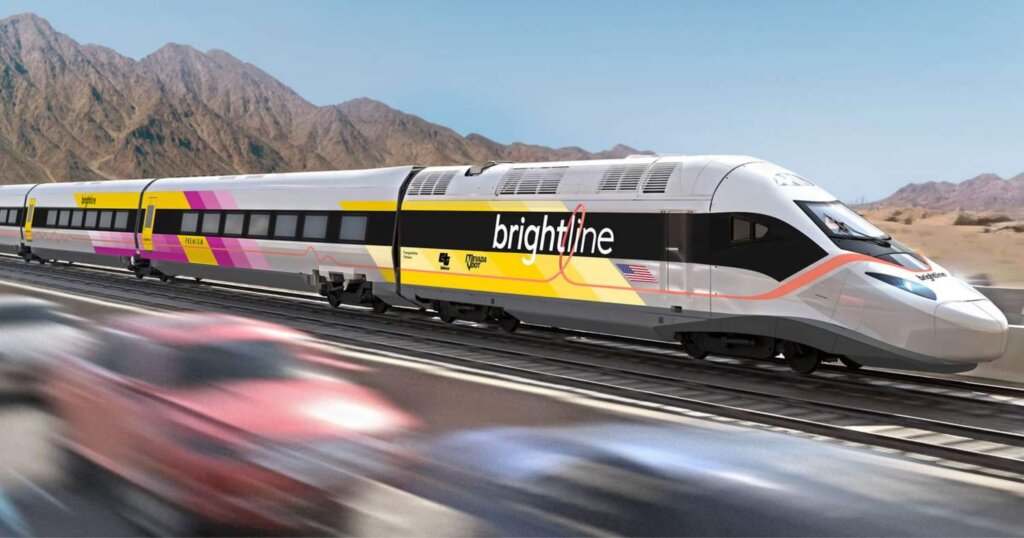
The Americans have recently got a 235 mile high speed line at ZERO cost to the goverment! And being subsidised heavily each year by the company's investors... the nationalisation fans are rather deluded.


HSTEd

Veteran Member
Joined
14 Jul 2011
Messages
20,374
The Americans have recently got a 235 mile high speed line at ZERO cost to the goverment! And being subsidised heavily each year by the company's investors... the nationalisation fans are rather deluded.

Several railway stations on this route were paid for by government.

Also the subsidies will not continue forever, the railway continues to rack up piles of debt (billions of dollars so far!) which will ultimately be paid for by society when they inevitably go bankrupt.
 

FMerrymon

Member
Joined
11 Dec 2024
Messages
362
Location
Reading
The Americans have recently got a 235 mile high speed line at ZERO cost to the goverment! And being subsidised heavily each year by the company's investors... the nationalisation fans are rather deluded.


Their new line to Las Vegas is being hit in a similar way to other projects, with cost increases and delays. There is an issue globally with construction inflation.


The exile

Established Member
Joined
31 Mar 2010
Messages
9,471
Location
Somerset
Just out of interest, if an electrification scheme requires the rebuilding of a 150 year old girder overbridge at a cost of (say) £20M - how much of that is charged to the electrification scheme?
 

CMS1

Member
Joined
15 Feb 2025
Messages
245
Location
uk
Also the subsidies will not continue forever, the railway continues to rack up piles of debt (billions of dollars so far!) which will ultimately be paid for by society when they inevitably go bankrupt.
If they go bankrupt it will be the investors who bear the loss not society. It does seem likely they will need subsidy before long, which is fair enough, but doesn't change the fact most of it was done at no cost to the public purse.

Their new line to Las Vegas is being hit in a similar way to other projects, with cost increases and delays
Yes, but the point is it's hitting Brightline, not nearly bankrupting the country like HS2.
 
Status
Not open for further replies.

Top