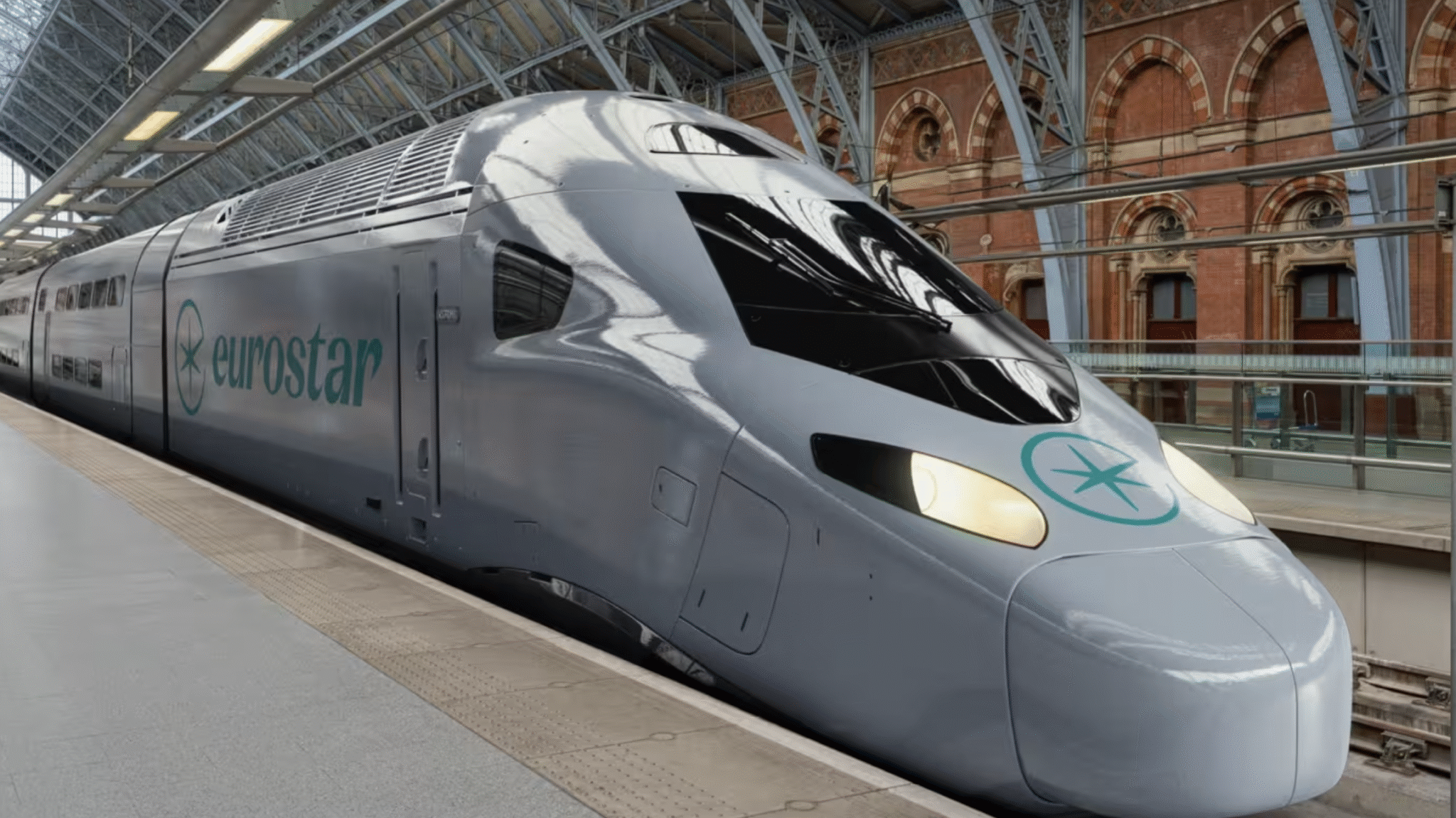
They must have specified a very low density interior. The BBC article states 1080 seats on a 400m train. SNCF claim 740 for a 200m latest generation TGV M, so 1480 seats for a 400m train.
1080 seats is not much more than the 902 of a class 374 (e320).
The 740 seats is the high density version, that the budget brands use, not those with plenty of luggage space, good business/first class, and big catering provision
A while ago, I asked on another thread about the possibility of double deck stock on HS1 domestic services and was told it should be possible except for the problem that many of the services deviate onto the older lines.
Not likely on HS1 because virtually no trains stay exclusively on new line. However for HS2 the original plan was 2 batches of trains, the first batch built to UK conventional size, and later a second double deck batch for exclusive use on HS2. Displacing the batch 1 trains to services running to other destinations (and of course pendolinos would have been around 40 years old by then).
It wouldn’t be the first time this happened. There are concerns about the ICE-L on Dutch tracks due to its axle load.
The axle load of older duplex is around 16-17t loaded, new ones might be lower, because it has distributed drive. Possibly the lower seat count means it is lower still (bear in mind normally work on about 12-13 passengers per tonne). Of course there are 2 axles on articulated sets per vehicle, and the new ones have 9 shorter trailers, not 8 as on older TGV. (I realise some are motored, but using term loosely to distinguish from power cars)
I heard concerns that the weight may be too high when it’s filled with passengers, because a double decker carriage carries more people. Would you think this is a concern?
With shorter vehicles, less weight per vehicle, I wouldn't be suprised if near 15t axle load with lower density layout. Things have moved on a lot since the original trains were built 30-33 years ago. They were effectively derivatives to the TGV Atlantique fleet design from late 1980s which was before some of the better weight saving came about.
Thirty trains should just about cover the sixteen ex-Thalys sets along with the eleven remaining 373s including some spares, and in the case of the former 540 seats is a capacity increase over the original 404. But for the 373s it's quite a reduction down from 758.
Some Of the numbers are for 200m trains, and others 400m. So go to be careful if comparing half length formations with capacity of 400m trains.
On that basis it seems like the new stock will primarily be for what are currently the Eurostar Red services with the Eurostar Blue services mostly consisting of the e320s that could be covered by the optional twenty extra sets, with some of the quieter or more premium cross-channel services also getting the new trains.
I am guessing they are waiting and seeing what happens regarding competition, if the deliveries do not start until 2031, probably got 2-4 years to decide on drawing down options