• Our new ticketing site is now live! Using either this or the original site (both powered by TrainSplit) helps support the running of the forum with every ticket purchase! Find out more and ask any questions/give us feedback in this thread!

About a proposed City Widened Lines extension to Euston

Status
Not open for further replies.

R848

Member
Joined
10 Feb 2018
Messages
61
Read the other day about an aborted plan to extend the City Widened Lines to Euston, supposedly sourced on page 75 in one of the London Railway Atlas editions.

I am interested in the background behind this proposal for the City Widened Lines, when it was first conceived as well as what route it would have likely taken to Euston.

Also had the City Widened Lines extension to Euston been built, how would it have likely been affected by the later relocation of King's Cross Thameslink to St Pancras or would there have likely been another way for the route to Euston from Farringdon to not end up bypassing King's Cross St Pancras?
 
Sponsor Post - registered members do not see these adverts; click here to register, or click here to log in
R

RailUK Forums

edwin_m

Veteran Member
Joined
21 Apr 2013
Messages
28,684
Location
Nottingham
There was a long thread about this on RMWeb a year or two back. From what I recall, the Euston connecting tunnel was bored about as far as Midland Road and later became part of the Kings Cross Met/Circle station when it was relocated here in about 1940. So if the Euston extension had been completed then it would have had to be abandoned by that time, or the Met/Circle station would have looked very different.
 

R848

Member
Joined
10 Feb 2018
Messages
61
Would the unfinished Euston connecting tunnel be the same as the one seen in Rail Map Online, which appears to show an uncompleted route that stops at Midland Road where present day Gothic Bar is located or is that something else entirely?
 

Snow1964

Established Member
Joined
7 Oct 2019
Messages
11,158
Location
West Wiltshire
Euston also had a proposal for a loop, the (fourth rail) electrified lines through Queens Park would have entered a one way loop and returned North West. Think it was dropped during WW1

I will try and find some details later, to see if proposed schemes were independent or linked
 

etr221

Established Member
Joined
10 Mar 2018
Messages
1,601
My understanding - and I may be wrong - is that the 'Widened Line to Euston' was a Metropolitan proposal 'while they were at it' with the Widened Lines, to have a link to the LNWR, for services from the LNWR towards Moorgate, or on to the LCDR City extension down towards Herne Hill. How far it progressed as a scheme, and what interest there was from the LNWR, I've no idea - there were Victorian crayonistas :). My thinking is that it would have been an extra tunnel, parallel to and just North of the Metropolitan Railway/Euston Road from Kings Cross (how far had St Pancras got at that time?) to a curve round into the east side of Euston stn. And that the bit of tunnel which was built - essentially under the forecourt of St Pancras Stn - was done while the contractors were at it, and it was all dug up anyway...

Would the unfinished Euston connecting tunnel be the same as the one seen in Rail Map Online, which appears to show an uncompleted route that stops at Midland Road where present day Gothic Bar is located or is that something else entirely?
Essentially, yes. What isn't clear from Rail Map Online is part of that tunnel was used by the LPTB for the eastbound track of the new Met/Circle line platforms at Kings's Cross in the 1936-41 period.
Euston also had a proposal for a loop, the (fourth rail) electrified lines through Queens Park would have entered a one way loop and returned North West. Think it was dropped during WW1

I will try and find some details later, to see if proposed schemes were independent or linked
The Euston loop was an LNWR Edwardian era proposal - inspired perhaps by New York Grand Central Terminal - as a terminal for the new, electric line from Watford. But it was dropped in favour of an extension of, and through running from, the Bakerloo line via Queens Park.
 

stuving

Member
Joined
26 Jan 2017
Messages
734
Would the unfinished Euston connecting tunnel be the same as the one seen in Rail Map Online, which appears to show an uncompleted route that stops at Midland Road where present day Gothic Bar is located or is that something else entirely?
That's about it, and the explanation I have found matches @etr221's too.

What I found is, in (bizarrely) the Derbyshire Advertiser and Journal of 16 July 1926. This article says it was built by the MR for the Met when the Midland hotel was built, since it was going underneath it. Its purpose "appears to have been" to connect the L&NWR to the Widened Lines along with its neighbours, but it stopped in a blank wall at Midland Road awaiting developments. For whatever reason - money, the cost of land, and company politics, most likely - these never happened.

During 1924-26 this bit of unused tunnel was brought into use in a project sometimes called doubling the Circle Line. This involved digging up the two parallel tunnels and linking them, and putting some major steelwork in place to hold up Euston Road. A single line then went from the Outer Rail via this old tunnel to "Midland Junction" with the MR St Pancras Branch and so onto the Widened Lines. That enlarged tunnel later became the new Kings Cross St Pancras station.

At the same time, the Widened Lines were electrified and Moorgate Station altered to provide a double bay and two single bays. That is much as now (or before the Thameslink changes) except the P3/4 headshunt was a connection to the Widened Lines. This arrangement can be seen in this truly wonderful modern version of the signalling diagram from 1933 at Harsig's Signalling Page. The site has later ones too, after Kings Cross St Pancras station was moved and this link removed ca. 1940. (I've tried to clip a small image from those but can't as it needs so much zoom.)

How much use the link ever got is not clear from these sources, but after it was gone it was seen with hindsight as primarily a goods line. That would make sense while Smithfield (GWR) depot was still in use, but that closed in 1959 and no doubt was in decline long before and so didn't call for much capacity by 1939.

The large-scale OS plans from the 1950s show some tunnels, but mostly only ones regarded as "Underground". The one set that looks as if it might have other railways is missing the sheets needed for this. I suspect those hatched lines for tunnels were not revised, either. There is a similar set of plans from the 1870s, but none I can see from 1926-1939, when part of the tunnel was actually in use.

 

Gloster

Veteran Member
Joined
4 Sep 2020
Messages
13,011
Location
Up the creek
The Euston loop was an LNWR Edwardian era proposal - inspired perhaps by New York Grand Central Terminal - as a terminal for the new, electric line from Watford. But it was dropped in favour of an extension of, and through running from, the Bakerloo line via Queens Park.

London’s Termini by Alan A. Jackson (Pan, 1972) states that terminal loop idea dated from 1906, being part of the plan for an electrified line to Watford. After the L&NWR took over the NLR in 1909 and negotiations with the Underground company, an agreement of 1911 saw rearrangement of services into three (L&NWR to Euston and Broad Street, and Underground from Queen’s Park to the West End): the idea of a loop was then abandoned.
 

norbitonflyer

Established Member
Joined
24 Mar 2020
Messages
5,765
Location
SW London
The LNWR was unlikely to be very interested in connecting to the Widened Lines, as they had their own independent access to the City at Broad Street. (This is also why the original Metropolitan Railway did not - and still does not - serve Euston directly)
 

stuving

Member
Joined
26 Jan 2017
Messages
734
There is a feature article from Rail Magazine by Phil Haigh that deals with the Widened Lines and related subjects, and this suggests that the primary intended route for the extension under the Midland Grand Hotel was towards Praed Street Junction, between Edgware Road and Paddington stations. Presumably this was to add capacity on the part of the Met (Circle) line heavily used by GWR and Met trains.

The Widened Lines and their northward connections were being planned and built at the same time as Kings Cross and St Pancras stations and their hotels (and the line into Broad Street). So the link lines to the GNR and Midland had to be built as soon as possible once suggested, as there were hotels or parts of stations needing to be built on top of them. So it's not surprising that some turned out to be not needed in the end.
 

Pigeon

Member
Joined
8 Apr 2015
Messages
1,123
My understanding - and I may be wrong - is that the 'Widened Line to Euston' was a Metropolitan proposal 'while they were at it' with the Widened Lines, to have a link to the LNWR, for services from the LNWR towards Moorgate, or on to the LCDR City extension down towards Herne Hill. How far it progressed as a scheme, and what interest there was from the LNWR, I've no idea - there were Victorian crayonistas :). My thinking is that it would have been an extra tunnel, parallel to and just North of the Metropolitan Railway/Euston Road from Kings Cross (how far had St Pancras got at that time?) to a curve round into the east side of Euston stn. And that the bit of tunnel which was built - essentially under the forecourt of St Pancras Stn - was done while the contractors were at it, and it was all dug up anyway...
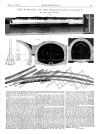
The Met applied for powers to add the stub of tunnel branching off the Widened Lines Midland connection when that was being built, so that any future capacity enhancements in that area, whatever they might be part of, wouldn't have to dig it all up again now with St Pancras on top of it and all. The Midland threw a wobbly at the associated running powers for the Met over their tracks, and blocked it. They then built the stub of tunnel themselves, and rented it back to the Met - who were apparently sufficiently keen to have it that they continued paying rent for this wee bit of tunnel for years and years without actually ever using it. One wonders what they really wanted it for - maybe they were coining snide half-crowns down there or something :)

The thing about a link to the LNWR seems to be some kind of tale that has grown in the telling; at the time of construction they were thinking in terms of going all the way to Paddington. It would of course have been possible to throw off a branch to the LNWR on the way past, but so would it have been when the original line was constructed (as was done with the GNR); the LNWR were never really into the idea, having their own route to Broad Street, but this seems to get overlooked a lot.

The actual tunnel built went as far as the edge of Midland Road and then stopped. That was all that it was ever intended to do at the time - to save trouble in the future if they ever made up their minds about what to join onto it. They never did, although they did do some reconstruction along the Euston Road in the course of time. What they did do eventually was knock through the side of it in 1926/7 to create a loop off the eastbound Met to the up Widened; apparently this was so that trains could get to the south (terminating) side of Moorgate without a flat crossing of the Met. It was also used to loop freights out of the way of the passenger service, and I have a feeling there was at least one accident when they put two in there one behind the other and the second one didn't stop soon enough.

The name "Chalton St Junction" is associated with the connection from the Met to the loop. Chalton St is quite a bit further along the Euston road, about half way to Euston station, but I can't find any evidence of the stub tunnel ever being extended westwards thus making the loop long enough to justify such a name. All they ever did was knock through between the two tunnels in front of St Pancras forecourt, leaving the end bit of the stub tunnel still unused - I guess they were concerned not to destabilise the great big pile of bricks on top of that bit - and the junction so located that "Midland Road Junction" would have been a more appropriate name, but then the naming of railway locations after weirdly inappropriate bits of the local geography seems to be a widespread and chronic dysfunction of railway toponymy.

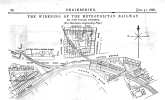
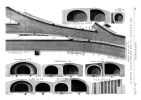
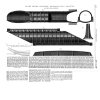
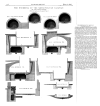
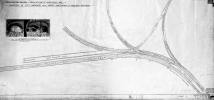
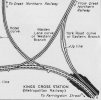
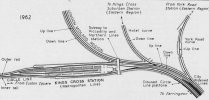
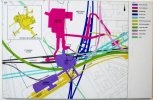
I shall try and attach some of the stuff I've accumulated relating to this location...
 

Attachments

  • met-widening-1.png
    met-widening-1.png
    4.8 MB · Views: 124
  • met-widening-2.png
    met-widening-2.png
    1.4 MB · Views: 113
  • met-widening-3.png
    met-widening-3.png
    5.8 MB · Views: 112
  • met-widening-4.png
    met-widening-4.png
    3.3 MB · Views: 103
  • met-widening-5.png
    met-widening-5.png
    3 MB · Views: 107
  • gn-midland-widened-junc-1868-a.png
    gn-midland-widened-junc-1868-a.png
    611.8 KB · Views: 116
  • KX-connections-in-1863-a.JPG
    KX-connections-in-1863-a.JPG
    75.9 KB · Views: 110
  • KX-connections-in-1962-a.jpg
    KX-connections-in-1962-a.jpg
    116.9 KB · Views: 116
  • kx-tunnel-diagram-a.jpg
    kx-tunnel-diagram-a.jpg
    130.8 KB · Views: 123

Helvellyn

Established Member
Joined
28 Aug 2009
Messages
2,575
Interesting to speculate what would have happened if the widened lines had got all the way to Paddington what that could have done to either WR suburban services (Midland Electeic style electrification in the early 1980s to still use Moorgate?), or if London Underground would have made a pitch to run the Metropolitan Line Watford services and/or Wimbledom-Edgeware District Line services through to Moorgate.
 

MarlowDonkey

Established Member
Joined
4 Apr 2013
Messages
1,869
Interesting to speculate what would have happened if the widened lines had got all the way to Paddington what that could have done to either WR suburban services
The Bishop's Road part of Paddington was until the 1960s four platforms connecting to the Circle. The branch line to Hammersmith, now part of the H&C was originally GWR. Perhaps with quadruple track east of Paddington, the GWR suburban lines could have been electrified on the four rail system. This could perhaps have gone all the way out to Slough and included the Greenford, Staines, Uxbridge and Windsor branches. With the additional possibility of running trains from Ealing Broadway along the District line tracks to the Mansion House etc, a "crossrail" service could have been in place as part of the initial impetus of electrifying London suburban routes. But I doubt the GWR was that interested.

A different form of 1923 grouping might have consolidated all of London's suburban and underground railways under one management, including all the services then operated by the main line companies. Thus a TfL or NSE well ahead of its time. The LNWR including the North London had already adopted four rail DC electrification and integrated with the future Bakerloo and District lines.
 

Merle Haggard

Established Member
Joined
20 Oct 2019
Messages
3,947
Location
Northampton
The Bishop's Road part of Paddington was until the 1960s four platforms connecting to the Circle. The branch line to Hammersmith, now part of the H&C was originally GWR. Perhaps with quadruple track east of Paddington, the GWR suburban lines could have been electrified on the four rail system. This could perhaps have gone all the way out to Slough and included the Greenford, Staines, Uxbridge and Windsor branches. With the additional possibility of running trains from Ealing Broadway along the District line tracks to the Mansion House etc, a "crossrail" service could have been in place as part of the initial impetus of electrifying London suburban routes. But I doubt the GWR was that interested.

A different form of 1923 grouping might have consolidated all of London's suburban and underground railways under one management, including all the services then operated by the main line companies. Thus a TfL or NSE well ahead of its time. The LNWR including the North London had already adopted four rail DC electrification and integrated with the future Bakerloo and District lines.
Quoting from the R.C.T.S. The Locomotives of the Great Western Railway part 11; 'The (G.W.R. ) Electric Rail Motor vehicles... a half share in forty electric motor coaches for multiple unit working on the Hammersmith & city Railway which was jointly owned by the G.W.R. and Metropolitan Railway' and 'their G.W..R existence was little more than. a book entry'.

Obscure, curious but perhaps relevant.
 

Rescars

Established Member
Joined
25 May 2021
Messages
2,559
Location
Surrey
Quoting from the R.C.T.S. The Locomotives of the Great Western Railway part 11; 'The (G.W.R. ) Electric Rail Motor vehicles... a half share in forty electric motor coaches for multiple unit working on the Hammersmith & city Railway which was jointly owned by the G.W.R. and Metropolitan Railway' and 'their G.W..R existence was little more than. a book entry'.

Obscure, curious but perhaps relevant.
Or in other words, "not conceived or built at Swindon"! :)
 

norbitonflyer

Established Member
Joined
24 Mar 2020
Messages
5,765
Location
SW London
The Widened Lines and their northward connections were being planned and built at the same time as Kings Cross and St Pancras stations and their hotels (and the line into Broad Street).
Broad Street and St Pancras yes (opened in 1865 and 1868 respectively), but Kings Cross had opened 16 years before, in 1852. The connection from the Met to Kings Cross opoened in 1866
 

edwin_m

Veteran Member
Joined
21 Apr 2013
Messages
28,684
Location
Nottingham
Broad Street and St Pancras yes (opened in 1865 and 1868 respectively), but Kings Cross had opened 16 years before, in 1852. The connection from the Met to Kings Cross opoened in 1866
Perhaps this explains why the York Road and Hotel curves were so tightly curved (to avoid going under the already existing station), while the link to the Midland was slightly easier. Was the Hotel Curve built before the hotel?
 

swt_passenger

Veteran Member
Joined
7 Apr 2010
Messages
34,283
Perhaps this explains why the York Road and Hotel curves were so tightly curved (to avoid going under the already existing station), while the link to the Midland was slightly easier. Was the Hotel Curve built before the hotel?
The Great Northern hotel was built first, they claim in 1854, to fit the then curve of Pancras Road. The latter was built over the culverted River Fleet. The Hotel Curve was opened in 1863 so nearly 10 years after the hotel, it seems possible the space left behind the hotel at the corner of the station may have been intentional.

I think the York Rd ‘curve’ mostly follows the road above it for the maximum distance possible, and then the curve at the south end is the optimal path to join the original Metropolitan up line near the platform end, so it had to go under the buildings east of York Road.
 
Last edited:

norbitonflyer

Established Member
Joined
24 Mar 2020
Messages
5,765
Location
SW London
Perhaps this explains why the York Road and Hotel curves were so tightly curved (to avoid going under the already existing station), while the link to the Midland was slightly easier. Was the Hotel Curve built before the hotel?
No. The hotel was built in 1854. I read somewhere that its curved shape was because of the course of the River Fleet (which later had to be diverted to make room for the Hotel Curve)
 

Wilts Wanderer

Established Member
Joined
21 Nov 2016
Messages
3,199
Interesting to speculate what would have happened if the widened lines had got all the way to Paddington what that could have done to either WR suburban services (Midland Electeic style electrification in the early 1980s to still use Moorgate?), or if London Underground would have made a pitch to run the Metropolitan Line Watford services and/or Wimbledom-Edgeware District Line services through to Moorgate.
I suspect it might have resulted in the closure of Marylebone in the 1970s which of course was proposed and subsequently dropped due to insufficient capacity In the Paddington terminus. An extra set of tracks into the city from the Western would’ve created platform space to accommodate the remaining rump of Chiltern services at Paddington, if GWML local traffic went down a hole. We therefore we probably would not have got Thameslink either although the Widened Lines could have become a different form of Crossrail!
 

Helvellyn

Established Member
Joined
28 Aug 2009
Messages
2,575
I suspect it might have resulted in the closure of Marylebone in the 1970s which of course was proposed and subsequently dropped due to insufficient capacity In the Paddington terminus. An extra set of tracks into the city from the Western would’ve created platform space to accommodate the remaining rump of Chiltern services at Paddington, if GWML local traffic went down a hole. We therefore we probably would not have got Thameslink either although the Widened Lines could have become a different form of Crossrail!
Or in such a scenario Thameslink would have seen GWML suburban services heading South of the River rather than ECML suburban ones.

Also wonder if a westward extension actually happened if there would have been a push to try extend eastwards beyond Moorgate in the early Twentieth Century.
 

Merle Haggard

Established Member
Joined
20 Oct 2019
Messages
3,947
Location
Northampton
I'm just a bit confused about how far towards the City G.W.R. services came. Did they use what's now called the Hammersmith & City? I have a dim recollection that they served Mansion House as well.

Certainly the reason for the condenser fitted panniers (9700-10) was to run through the L.T. tunnels - a work colleague remembered being surprised by seeing one run through while waiting for a train at Euston Square, presumably on a Smithfield meat train.
 

Wilts Wanderer

Established Member
Joined
21 Nov 2016
Messages
3,199
There were no through GWR passenger services after the initial broad-gauge operations ceased. My understanding is that there was a daily scheduled trip freight to Smithfield which the adapted panniers worked. Until the post-steam remodelling at Paddington the LU lines were physically connected with the WR Relief Line side - some local GWML traffic stopped at Royal Oak - and therefore presumably the Smithfield freight ran from Old Oak Common yard and simply went through the LU platforms at Padd and down the hole, gaining access to the Widened Lines side at Kings Cross (until 1940) or Farringdon (thereafter).


You can see the arrangement at Royal Oak in the first 2 mins of this film.
 
Last edited:

Merle Haggard

Established Member
Joined
20 Oct 2019
Messages
3,947
Location
Northampton
There were no through GWR passenger services after the initial broad-gauge operations ceased. My understanding possibility that there was a daily scheduled trip freight to Smithfield which the adapted panniers worked. Until the post-steam remodelling at Paddington the LU lines were physically connected with the WR Relief Line side - some local GWML traffic stopped at Royal Oak - and therefore presumably the Smithfield freight ran from Old Oak Common yard and simply went through the LU platforms at Padd and down the hole, gaining access to the Widened Lines side at Kings Cross (until 1940) or Farringdon (thereafter).

Thanks for the explanation.
Looking through accident reports in Railways Archive I've noticed collisions on the Metropolitan Railway involving Great Western trains, I'll have a look back through to see where they were.
On the subject of Paddington I remember that some of the standard WR 3-car suburban sets had notices in the cab (visible from the passenger saloon) reading something on the lines of 'must not work into Paddington Suburban platforms' presumably because they were fitted with GWR/WR ATC, the shoes of which would contact the fourth rail.
 

MarlowDonkey

Established Member
Joined
4 Apr 2013
Messages
1,869
Not correct. There were through trains changing from steam to Met electric locos at Paddington.
There was a service from Windsor to Southend, but I thought that ran via Ealing Broadway and the District Line.
 

Harpo

Established Member
Joined
21 Aug 2024
Messages
3,874
Location
Newport
There was a service from Windsor to Southend, but I thought that ran via Ealing Broadway and the District Line.
The Windsors ran through Paddington to the City as a GWR/Met service.

The Southends (or some shorter destinations) started from Ealing Broadway and ran over the District Line with pairs or single electric locos initially to Whitechapel and eventually to Barking for steam forward. These were District/LTSR services initially.
 

edwin_m

Veteran Member
Joined
21 Apr 2013
Messages
28,684
Location
Nottingham
I'm just a bit confused about how far towards the City G.W.R. services came. Did they use what's now called the Hammersmith & City?
Certainly in the sense that the GWR had a partial interest in the H&C and was part owner of the electric stock.
 

Merle Haggard

Established Member
Joined
20 Oct 2019
Messages
3,947
Location
Northampton
An example of the G.W.R. sort-of serving the City is given in an accident at Mansion House on 28-8-81 (recorded in Railways Archive). This involved a Great Western 07.49 from Addison road. (A former work colleague who became a City management consultant was one of many such that frequented a wine bar near Mansion House after work, so I regard it as City-ish :) ) Althought I was once involved operationally I've always found cross-London routings difficult to comprehend, so I'm not sure how it reached there, and whether it was booked to continue beyond Mansion house.

Certainly in the sense that the GWR had a partial interest in the H&C and was part owner of the electric stock.

I did mention this up-thread in a low key way (not always easy to remember all the posts, I've done similar myself not infrequently) but it seems to be something that the GWR was very shy about, to say the least.
 

Wilts Wanderer

Established Member
Joined
21 Nov 2016
Messages
3,199
An example of the G.W.R. sort-of serving the City is given in an accident at Mansion House on 28-8-81 (recorded in Railways Archive). This involved a Great Western 07.49 from Addison road.

There was a curve which ascended from the West London Line up to the H&C in the vicinity of Latimer Road. In theory you could get to Mansion House by either this route (via Met) or Earls Court and the District Railway. The northern route reminds me of the ‘Outer Circle’ concept, was this possibly part operated by the GWR?
 

Gloster

Veteran Member
Joined
4 Sep 2020
Messages
13,011
Location
Up the creek
There were no through GWR passenger services after the initial broad-gauge operations ceased. My understanding is that there was a daily scheduled trip freight to Smithfield which the adapted panniers worked. Until the post-steam remodelling at Paddington the LU lines were physically connected with the WR Relief Line side - some local GWML traffic stopped at Royal Oak - and therefore presumably the Smithfield freight ran from Old Oak Common yard and simply went through the LU platforms at Padd and down the hole, gaining access to the Widened Lines side at Kings Cross (until 1940) or Farringdon (thereafter).

Rather more than that. In BR’s first year, at a time when meat rationing was still in force, there were eight return workings timetabled a day. For this they had eleven 9700 condensing panniers, although most of the dozen AA7 ‘Acton’ brake vans had been with withdrawn.
 
Status
Not open for further replies.

Top