
That photo’s making my eyes go funny Peter...Smooth looking front, but does appear to have the BIL / HAL raked roof shape otherwise I'd have thought it to be an EPB... Could it be an EPB with a shadow on the roof, I wonder?
View attachment 88038

-
Our new ticketing site is now live! Using either this or the original site (both powered by TrainSplit) helps support the running of the forum with every ticket purchase! Find out more and ask any questions/give us feedback in this thread!
You are using an out of date browser. It may not display this or other websites correctly.
You should upgrade or use an alternative browser.
You should upgrade or use an alternative browser.
Where is this station?
- Thread starter Inversnecky
- Start date
- Status
- Not open for further replies.
Sponsor Post - registered members do not see these adverts; click here to register, or click here to log in
R
RailUK Forums
Journeyman
Established Member
- Joined
- 16 Apr 2014
- Messages
- 6,295
It could also be a pre-war suburban unit, the last of which ran in service in around 1960.Ref the "longer" emu...Very difficult to say from the blurred image. I initially thought 2 BILs. I remember them being coupled up together, as many as 4 sets. 2HALs are also a possibility, lots of them moved over from the SE division when EPB type stock became the norm there, l think in the mid 50s.

Bungle158
Member
One of the older 4 SUBs? Yes certainly. I have an idea that they were called Queen Marys. The 405/1 SUBs of course had a flat frontIt could also be a pre-war suburban unit, the last of which ran in service in around 1960.

Inversnecky
Member
None of the EMUs have small yellow warning panels either, so it can't be later than about 1962.
Thanks all for your replies.
It’s from a 1962 film on signal engineering.
== Doublepost prevention - post automatically merged: ==
Here’s the link for it on YouTube:
Attachments
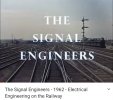
Thanks all for your replies.
It’s from a 1962 film on signal engineering.
== Doublepost prevention - post automatically merged: ==
Here’s the link for it on YouTube:
There’s some great footage on that film that shows the old hitting up against the new (relatively speaking).
I love all the shots that you get in those sort of films of a group of boffins staring at some plans and gazing wistfully into the middle distance imagining it all coming into life...

Welcome to the forum by the way.
Bungle158
Member
Having looked closely on my admittedly small phone screen, l now think that the unit, left side of grab, is a 405/1 4 SUB. It appears to be flat fronted. Opinion only and posted welcoming correction.
contrex
Established Member
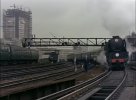
It's immediately recognisable as Waterloo. There was/is a tall block of flats that was a favourite spot for still and film photographers. Not much later than late 1963 as no yellow panel on the SUB. Certainly before late 1964 as there is a 4COR with white opal headcode box for stencils (all CORs & BUFs has roller blinds fitted by then)

Not sure what 'flat fronted' means in relation to the SUB; all the SUBs from the 1925 SR types, via the Shebas (4101-4110) to the Queen Mary (4111 onwards) were bay- or bow-fronted, although the Shebas had a domed roof over the cab. Having viewed the video in full screen, the EMU formation entering Waterloo to the right of the emerging steam loco is formed of a 1944 type Sheba 4SUB at the London end coupled to a 1946 type Queen Mary 4SUB.

Interestingly at 02:06 there is an unusual QM style SUB showing headcode 57 which looks like it has a Sheba-style canvas roof (see the gutter at cantrail position). Can't quite see the unit number. Could be 4111. I've been hunting for a picture of one of these.

Not sure what 'flat fronted' means in relation to the SUB; all the SUBs from the 1925 SR types, via the Shebas (4101-4110) to the Queen Mary (4111 onwards) were bay- or bow-fronted, although the Shebas had a domed roof over the cab. Having viewed the video in full screen, the EMU formation entering Waterloo to the right of the emerging steam loco is formed of a 1944 type Sheba 4SUB at the London end coupled to a 1946 type Queen Mary 4SUB.
Interestingly at 02:06 there is an unusual QM style SUB showing headcode 57 which looks like it has a Sheba-style canvas roof (see the gutter at cantrail position). Can't quite see the unit number. Could be 4111. I've been hunting for a picture of one of these.
Last edited:

On "flat-fronted" - I take that to be anything without the domed cab roof, ie 4111 onwards.
I concur that the arriving EMU on the far right (Up Main Local) has one of 4101-10 leading (the screenshot made me think of a prewar unit, but incorrectly).
At 2:01 filmed trackside, just after the steam departure there is another Local arrival with a pre-war set including a 6-a-side "augmentation" trailer. A few of these lasted till 1962, so it's possible the sequence was taken not long before the film. The classic "Terminus" is also dated 1962 IIRC and I imagine the footage for both was shot around the same time.
I concur that the arriving EMU on the far right (Up Main Local) has one of 4101-10 leading (the screenshot made me think of a prewar unit, but incorrectly).
At 2:01 filmed trackside, just after the steam departure there is another Local arrival with a pre-war set including a 6-a-side "augmentation" trailer. A few of these lasted till 1962, so it's possible the sequence was taken not long before the film. The classic "Terminus" is also dated 1962 IIRC and I imagine the footage for both was shot around the same time.

WesternLancer
Veteran Member
- Joined
- 12 Apr 2019
- Messages
- 15,116
Great link - thanks - good thread too has emerged!Thanks all for your replies.
It’s from a 1962 film on signal engineering.
== Doublepost prevention - post automatically merged: ==
Here’s the link for it on YouTube:
I'd not see that BTF film before - good to know it is on line and BFI DVD.
I see camera work by, amongst others, David 'Out of Africa Oscar winner' Watkin. No wonder it is good.
as @30907 remarks, Terminus is from similar date, and BTF often re-used spare footage, and if they were based at Waterloo then that would have been an easy location to take stock film for general use.
Last edited:
Inversnecky
Member
There’s some great footage on that film that shows the old hitting up against the new (relatively speaking).
I love all the shots that you get in those sort of films of a group of boffins staring at some plans and gazing wistfully into the middle distance imagining it all coming into life...
Welcome to the forum by the way.
Thanks for the welcome to the forum

Yes, it is a fascinating find. Besides the technology, it’s also an amazing glimpse into past times and different social attitudes, as well as approaches to health and safety (!) -
Attachments
It's on Disc 1 of Volume Eight "Points and Aspects" of the DVD reissues by the BFI, published in 2008.Great link - thanks - good thread too has emerged!
I'd not see that BTF film before - good to know it is on line as I don't think it is on the BFI commercially released BTF DVD film compilations......
If I'd seen that film while still at school in 1962, I might have had a rather different career!
WesternLancer
Veteran Member
- Joined
- 12 Apr 2019
- Messages
- 15,116
Great - thanks - of course I'd not actually checked that before posting carefully, so appreciate the correction! I'll edit my post.It's on Disc 1 of Volume Eight "Points and Aspects" of the DVD reissues by the BFI, published in 2008.
If I'd seen that film while still at school in 1962, I might have had a rather different career!

Bevan Price
Established Member
- Joined
- 22 Apr 2010
- Messages
- 8,328
Thanks for the correction; the photo is not very sharp on my screen,and I could not see enough detail.It is not a Merchant Navy - their plates were round and mounted on the boiler. Judging by the style of the crest above the nameplate it is a rebuilt West Country so it is after June 1957 when the first was rebuilt...

Wychwood93
Member
The 5 chain link opened in July 1865. See: London Waterloo station - Wikipedia about 3 paras into the 'Expansion' section.Looks like the link was removed in 1911 according to Kent Rail as well:
alistairlees
Established Member
- Joined
- 29 Dec 2016
- Messages
- 4,398
At 5’ 03” is that chislehurst junction, before more of the lines were added?
marsker
Member
Just to add a little bit, the EMU behind the rebuilt Bullied looks to have the later white round British Railways badge rather than the old lion and wheel.
From the headcodes, the train departing is a Bournemouth line service and there is another rebuilt Bullied on a West of England line service in the station.
From the headcodes, the train departing is a Bournemouth line service and there is another rebuilt Bullied on a West of England line service in the station.

CarltonA
Member
Looks like a Battle of Britain to me, the West Country had a red scroll under the crest with the name of the town. This one seems to be blue and have a different shape to the name part. Rather pedantic of course as they were the same class in reality.It is not a Merchant Navy - their plates were round and mounted on the boiler. Judging by the style of the crest above the nameplate it is a rebuilt West Country so it is after June 1957 when the first was rebuilt...


Fred Dibnah, I assume?Right I’m going for 1st August 1959 10:12am and Fred was driving the Bulleid...
-Peter
contrex
Established Member
Yes! I didn't see that before. I think the last augmented 3-car sets were withdrawn 20 January 1962.At 2:01 filmed trackside, just after the steam departure there is another Local arrival with a pre-war set including a 6-a-side "augmentation" trailer. A few of these lasted till 1962

== Doublepost prevention - post automatically merged: ==
Yup. That's the Chislehurst Junction signal box you can see.At 5’ 03” is that chislehurst junction, before more of the lines were added?
Last edited:
Fred Dibnah, I assume?
-Peter
I suppose it shows my age by knowing who Fred Dibnah is, and remembering the tv series which propelled him to fame. An unlikely star, but a very watchable series, or number of series. (Apols for being off topic)
== Doublepost prevention - post automatically merged: ==
Thanks all for your replies.
It’s from a 1962 film on signal engineering.
== Doublepost prevention - post automatically merged: ==
Here’s the link for it on YouTube:
The absence of hi-vis and safety harnesses in the video is notable.
I spent many an enjoyable hour watching his stuff during lockdown. He's long been someone I've been fond of - his attitude to his work, his love for all thing steam, and his projects. Maybe a thread to share peoples' favourite examples of his work would be a nice idea sometime...?I suppose it shows my age by knowing who Fred Dibnah is, and remembering the tv series which propelled him to fame. An unlikely star, but a very watchable series, or number of series. (Apols for being off topic)
-Peter
Inversnecky
Member
It's immediately recognisable as Waterloo. There was/is a tall block of flats that was a favourite spot for still and film photographers. Not much later than late 1963 as no yellow panel on the SUB. Certainly before late 1964 as there is a 4COR with white opal headcode box for stencils (all CORs & BUFs has roller blinds fitted by then)
View attachment 88062
Not sure what 'flat fronted' means in relation to the SUB; all the SUBs from the 1925 SR types, via the Shebas (4101-4110) to the Queen Mary (4111 onwards) were bay- or bow-fronted, although the Shebas had a domed roof over the cab. Having viewed the video in full screen, the EMU formation entering Waterloo to the right of the emerging steam loco is formed of a 1944 type Sheba 4SUB at the London end coupled to a 1946 type Queen Mary 4SUB.
View attachment 88060
Interestingly at 02:06 there is an unusual QM style SUB showing headcode 57 which looks like it has a Sheba-style canvas roof (see the gutter at cantrail position). Can't quite see the unit number. Could be 4111. I've been hunting for a picture of one of these.
View attachment 88061
I’m not as up on my MUs as I should be. What class did they become under TOPS?
contrex
Established Member
@Inversnecky - the 4SUBs that survived to the TOPS era were given the Class 405 code.

AlbertBeale
Established Member
I'd have thought it's earlier than that, from the extent of the bomb damage to the building on the left. Although there were still bomb sites around in the 1950s and maybe early 60s, I think that sort of damage would have been repaired, or the building demolished, before then.
There were significant bomb sites right in the middle of London up until at least the 1980s, before they were re-used for anything other than an area of gravel to park cars on. Bombed-out buildings obviously didn't last until then, but once they were pulled down, some of the the fenced-off sites lasted - pretty much untouched - until something was built on them in the 1980s.


Peter Mugridge
Veteran Member
There were significant bomb sites right in the middle of London up until at least the 1980s, before they were re-used for anything other than an area of gravel to park cars on. Bombed-out buildings obviously didn't last until then, but once they were pulled down, some of the the fenced-off sites lasted - pretty much untouched - until something was built on them in the 1980s.
There was some publicity only about ten years ago about the last WW2 bombsite finally getting redeveloped, so around 2010...!!

DelW
Established Member
- Joined
- 15 Jan 2015
- Messages
- 5,974
I agree that cleared sites lasted much longer, but I'm still surprised that the building would have been left derelict but standing right alongside the railway for maybe fifteen to twenty years (since it's now been established that the film dates from 1962). However unless the damage was the result of a later fire, as another post speculated, it presumably must have been.There were significant bomb sites right in the middle of London up until at least the 1980s, before they were re-used for anything other than an area of gravel to park cars on. Bombed-out buildings obviously didn't last until then, but once they were pulled down, some of the the fenced-off sites lasted - pretty much untouched - until something was built on them in the 1980s.
Either way, my original deduction that the shot dated from the 1950s was wrong!
- Status
- Not open for further replies.