• Our new ticketing site is now live! Using either this or the original site (both powered by TrainSplit) helps support the running of the forum with every ticket purchase! Find out more and ask any questions/give us feedback in this thread!

What is that Handle on a Bus For?

Status
Not open for further replies.

Schnellzug

Established Member
Joined
22 Aug 2011
Messages
2,926
Location
Evercreech Junction
Why do we need these now?

I travelled on London buses in the '80s and '90s and they were for ever bashing into the ends of branches, and didn't have any of those gubbins. There didn't seem to be any problem then.

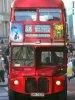
The first picture is the new Routemaster btw.

I suppose it's because the upstairs front windows are much bigger and one piece, whereas in the Old days they were smaller and less vulnerable (and I suppose more easily replaceable).
 
Sponsor Post - registered members do not see these adverts; click here to register, or click here to log in
R

RailUK Forums

GearJammer

Member
Joined
12 Nov 2009
Messages
897
Location
On the Southern
I suppose it's because the upstairs front windows are much bigger and one piece, whereas in the Old days they were smaller and less vulnerable (and I suppose more easily replaceable).

Makes ya wonder what muppet designed these buses like that with large front windows, almost makes ya think that there designed to look good first, and practical second!
 

BestWestern

Established Member
Joined
6 Feb 2011
Messages
6,736
Makes ya wonder what muppet designed these buses like that with large front windows, almost makes ya think that there designed to look good first, and practical second!

No, surely not?! :D

What is there to be impractical about an enormous sheet of glass in a bus with no air-con on a hot summer's day? :roll:
 

bus man

Member
Joined
21 Oct 2010
Messages
155
I cant remember who the operator was/is but someone fits them to both sides as they use narrow lanes with trees on both sides
 

341o2

Established Member
Joined
17 Oct 2011
Messages
2,014
Presumably the designers think that branches will only be encountered on the nearside, so an offside deflector is not needed
--- old post above --- --- new post below ---
back in the old days when companies were allowed and could be bothered to do things for themselves, bus companies had their own tree Loppers, converted double deckers that went round bus routes and chopped off overhanging branches. Now they wouldn't be allowed to do that because of health & Safety and Conservation.

My local bus company - Wilts & Dorset still uses an old open top bus for tree lopping
 

trentside

Established Member
Joined
14 Aug 2010
Messages
3,391
Location
Messroom
I cant remember who the operator was/is but someone fits them to both sides as they use narrow lanes with trees on both sides

Lincolnshire RoadCar (pre-Stagecoach) fitted bars protecting both sides and above the windows of their East Lancs bodied Volvo B7TLs. These at times used narrow lanes, but I'd imagine that the decision was taken based on the quality of the ELCB bodywork - which falls apart with very little effort. I believe at least one of them has received serious damage to the upper deck from a tree branch.
 

CardiffKid

Member
Joined
13 Feb 2011
Messages
1,081
Location
Cardiff
By having those two photos above/below, it makes me wonder why the hell we needed some crazy design and not just the 'normal' look like seen below.

Because people have this lovely romantic idea of the days gone past when they travelled on a route-master :roll:
 

transmanche

Established Member
Joined
27 Feb 2011
Messages
6,021
By having those two photos above/below, it makes me wonder why the hell we needed some crazy design and not just the 'normal' look like seen below. You could still have had a different internal layout but not the odd look, with crazy lights and all the ingredients for something that looks 'out there' today and totally stupid tomorrow.
One word... Boris.
 

R Sytch

Member
Joined
13 Jan 2012
Messages
5
NBfL1.jpg

(large and white)

Why does that look like someone forgot to fit one and then commissioned the local B&Q to nail a towel rail to the side???
 

BestWestern

Established Member
Joined
6 Feb 2011
Messages
6,736
The 'Borismaster'/New Bus For London/Routemaster 2/whatever you want to call it is nothing more than a catastrpohic waste of taxpayer's money on a pointless vanity project. At a time when belts are being tightened it beggars belief that one of the top priorities of our capital city is to have its very own bus designed when there are so many perfectly acceptable products readily available. TfL already graces itself with some very substantial sets of specifications, which cause considerable cost to the manufacturers who have to essentially engineer every new design of vehicle to be suitable for London, before reverting back to the less complex set of standards which oddly enough are deemed perfectly acceptable in every other part of the country. Presumably the average London bus passenger, if confronted with a bus built to non-TfL specifications, would of course be able to immediately point out all of the highly significant differences and would refuse to travel on such a vehicle :roll: I would be enormously surprised to see anything other than a tiny fleet of the Borismaster ever enter service, in London or anywhere else. They're too expensive, too obscure, and offer far too little over other vehicles to ever justify their extraordinary expense.

As for the above mentioned problem of modern buses being flimsy, we can thank the EU for that. As regulations slowly strangle vehicle design further and further, manufacturers must contend with less efficient engines and the need to fit more and more gear to their vehicles. The result is buses which are increasingly thirsty and in many cases approaching double the weight of their counterparts of a generation or two back. Compulsory low floor chassis and the need to lug around tanks of AdBlue and so on are leading to buses with eyewatering unladen weights, before a single passenger even boards. To give an illustration of how bad things have got, your average full size single decker bus in the days before low floors came along, would generally offer about 52 seats with an unladen weight well under 10 tons. Back in the day, a Routemaster would offer somewhere in the region of 70 seats in a double decker with a weight of, I believe, about 8 tons. Fast forward to now, and the 54-plate Scania single deckers that I used to drive offered 41 seats, in a full length bus, with an empty weight of a whopping 11.5 tons! The late-90's Volvo B10BLE/Wright Renown's that we also ran - a superb bus by the way! - fared a little better, managing 44 seats and about a ton lighter, but still a very heavy vehicle. This was before the advent of the dreaded AdBlue, which ads still further the weight of another tank of fluid.

The result of all this nonsense is that manufacturers are under constant pressure from operators to reduce weight, and the best way they can do this is by making the bodywork lighter, taking out strength and replacing it with flimsy fibreglass. Hence tangles with stout branches and the like, which a few years ago would have resulted in a simple repair, are now regularly removing entire upper deck roofs with ease. By the same token if you take a look at any modern bus which has had a heavy front corner impact, you will frequently see the whole structure of that part of the vehicle has been wiped out, as again it is little more than fibreglass. It's a popular material as it stands up well to the sort of low impact bumps that buses are often subjected to, flexing and cracking and allowing an easy repair with a blob of filler, but you don't want a sheet of the stuff protecting you in a serious smash.

 
Last edited:
Status
Not open for further replies.

Top