• Our new ticketing site is now live! Using either this or the original site (both powered by TrainSplit) helps support the running of the forum with every ticket purchase! Find out more and ask any questions/give us feedback in this thread!

West Yorkshire bus franchising

adam rogan

Member
Joined
1 Feb 2026
Messages
65
Location
Liverpool
Hence my earlier comment about how some counties actually get around that. It's entirely reasonable for someone in Halifax to want to travel to Rochdale but then travel to Bolton and then to Wigan? So yes, cross border acceptance to an obvious traffic objective would seem logical.
This was more doable when one company had a foothold on both sides of the pennines. So if First had a foothold in Rochdale , Oldham, Huddersfield and Halifax like it used to, you would have had the possibility of localized pass for just those areas but as the franchising model prohibits companies selling their own tickets and with First being reduced to a dozen or so routes, the only real option would be a pass which covered Merseyside, GM, West Yorks, South Yorks and perhaps Lancashire/Derbyshire if they were willing to join in but this would probably occur deep into the process. Otherwise people on the fringes will effectively either buy singles or if they frequently cross boundaries, will need to buy two monthly passes which is a nightmare. Places like South Elmsall, Calder Valley, Keighley, Newmillerdam, Marsden and many more where cross boundary flows are common will be disadvantaged. Many parts of Sheffield have more links to Derbyshire and vice versa so this not an easy issue to solve.

I believe we could afford a nationwide subsidized bus pass but our government prefers to spend our money on soft power on the other side of the globe and things most tax payers don't support but that's for a different forum to discuss fiscal policy.
 
Last edited:
Sponsor Post - registered members do not see these adverts; click here to register, or click here to log in
R

RailUK Forums

TheGrandWazoo

Veteran Member
Joined
18 Feb 2013
Messages
22,945
Location
Somerset with international travel (e.g. across th
This was more doable when one company had a foothold on both sides of the pennines. So if First had a foothold in Rochdale , Oldham, Huddersfield and Halifax like it used to, you would have had the possibility of localized pass for just those areas but as the franchising model prohibits companies selling their own tickets and with First being reduced to a dozen or so routes, the only real option would be a pass which covered Merseyside, GM, West Yorks, South Yorks and perhaps Lancashire/Derbyshire if they were willing to join in but this would probably occur deep into the process. Otherwise people on the fringes will effectively either buy singles or if they frequently cross boundaries, will need to buy two monthly passes which is a nightmare. Places like South Elmsall, Calder Valley, Keighley, Newmillerdam, Marsden and many more where cross boundary flows are common will be disadvantaged. Many parts of Sheffield have more links to Derbyshire and vice versa so this not an easy issue to solve.
The only real option?

As I say, aside from enthusiasts wanting to bash buses, there really isn't a need for a ticket that stretches across all of northern England. As I illustrated with the Transport North East Day Saver, you can have a ticket that allows you to travel across the Tees Valley border to Hartlepool, Darlington or Stockton.

So for West Yorkshire, it shouldn't be beyond them to agree validity to Rochdale, Burnley, Harrogate, Skipton, Tadcaster, Oldham etc.
 

Deerfold

Veteran Member
Joined
26 Nov 2009
Messages
13,722
Location
Yorkshire
This was more doable when one company had a foothold on both sides of the pennines. So if First had a foothold in Rochdale , Oldham, Huddersfield and Halifax like it used to, you would have had the possibility of localized pass for just those areas but as the franchising model prohibits companies selling their own tickets and with First being reduced to a dozen or so routes, the only real option would be a pass which covered Merseyside, GM, West Yorks, South Yorks and perhaps Lancashire/Derbyshire if they were willing to join in but this would probably occur deep into the process. Otherwise people on the fringes will effectively either buy singles or if they frequently cross boundaries, will need to buy two monthly passes which is a nightmare. Places like South Elmsall, Calder Valley, Keighley, Newmillerdam, Marsden and many more where cross boundary flows are common will be disadvantaged. Many parts of Sheffield have more links to Derbyshire and vice versa so this not an easy issue to solve.
As I mentioned, First used to offer a West Yorkshire and Greater Manchester ticket. They got rid of this before they stopped running cross-border buses. For a little while they did have their West Yorkshire and Greater Manchester tickets both valid on the whole of the 365/184 Between Oldham and Huddersfield - if buying on the bus you could chooe which one to buy.

The Skåne region of Southern Sweden, much bigger than most counties in the UK, has a nice option for day tickets - you tell it as many places you know you want to go to in a day as you want and it creates a ticket with validity to all of them and gives you a map showing which zones it's valid in.
 

TheGrandWazoo

Veteran Member
Joined
18 Feb 2013
Messages
22,945
Location
Somerset with international travel (e.g. across th
The Skåne region of Southern Sweden, much bigger than most counties in the UK, has a nice option for day tickets - you tell it as many places you know you want to go to in a day as you want and it creates a ticket with validity to all of them and gives you a map showing which zones it's valid in.
Similar to North Wales bus and rail rover - you can choose two, three or all zones.
 

noddingdonkey

Member
Joined
2 Nov 2012
Messages
923
As I mentioned, First used to offer a West Yorkshire and Greater Manchester ticket. They got rid of this before they stopped running cross-border buses. For a little while they did have their West Yorkshire and Greater Manchester tickets both valid on the whole of the 365/184 Between Oldham and Huddersfield - if buying on the bus you could chooe which one to buy.
I was never convinced that this wasn't an error in compiling the leaflet and not what they intended.

Cross boundary travel was always going to be problematic with these insular looking Mayoralties. It would be so much better to have tickets based on each district and you can pick and mix the choice of zones you require. In the Colne Valley, I'm much more interested in travel to Oldham and beyond than say Keighley.
 

Deerfold

Veteran Member
Joined
26 Nov 2009
Messages
13,722
Location
Yorkshire
I was never convinced that this wasn't an error in compiling the leaflet and not what they intended.

Cross boundary travel was always going to be problematic with these insular looking Mayoralties. It would be so much better to have tickets based on each district and you can pick and mix the choice of zones you require. In the Colne Valley, I'm much more interested in travel to Oldham and beyond than say Keighley.
And, similarly, from Keighley, I go to Skipton or Barnoldswick more often than I go to Huddersfield (though both used to be in the same county as me). Transdev has just increased the Day tickets to those places by 25%, so it's now 10% cheaper for me to get 3 buses to Huddersfield and back than 1 to Skipton and back.
 

YorkRailFan

Established Member
Joined
6 Sep 2023
Messages
3,351
Location
York
RouteOne reports that a WYCA meeting on 12 March anticipates the first round of successful bidders to be announced in June:
The West Yorkshire Combined Authority (WYCA) expects to finalise round one bus franchise contract awards in June, with work also ongoing to procure new zero-emission buses to a Weaver Network specification for use by winning bidders.

That position is within a report to a WYCA meeting on 12 March. Tendering for round one contracts began in October 2025, with final Invitation to Tender documents now issued. Evaluation will take place in April and May, with the expectation that the first contracts will be entered into at the end of June.
 

mattb7tl

Member
Joined
1 Jan 2022
Messages
255
Location
Huddersfield
RouteOne reports that a WYCA meeting on 12 March anticipates the first round of successful bidders to be announced in June:

The authority has also granted more time for companies to work on their bids upon requests. It means the launch of franchising is delayed by a month but they believe it will result in more bids and ones of quality.


Mrwerdna1

Member
Joined
18 Jul 2018
Messages
148
Location
The Continent
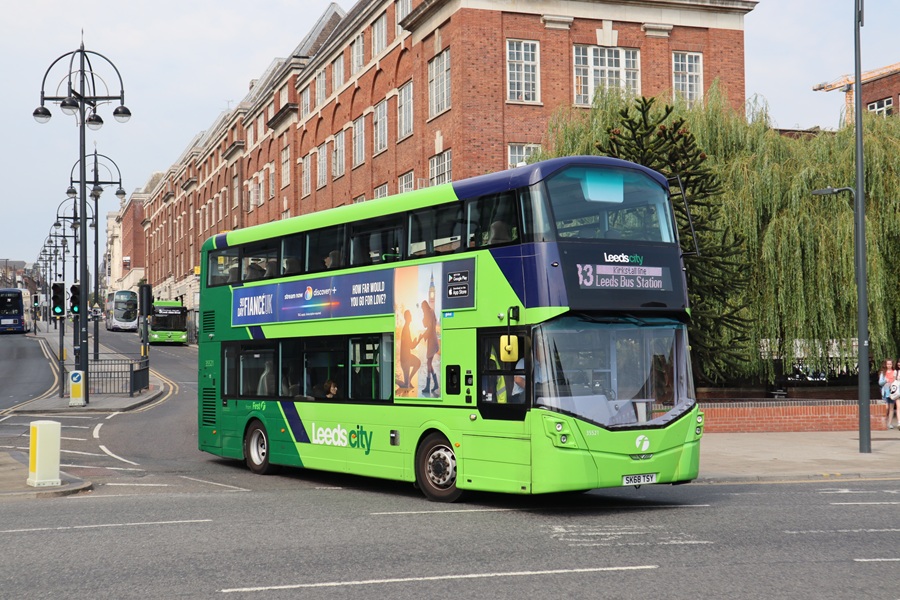
New bus fleet criticised over single-door access
https://www.bbc.co.uk/news/articles/c5y9g62696lo (18.03.2026)

This is just so pathetic. In response to the well founded complaints, WYCA officials have merely said that they "remain open to the idea of dual-door buses" and might "consider route-specific consultations in future".

I was in Brighton recently, which made me realise that what separates a great bus system from a decent one is not necessarily franchising, though it can and does help (see London, and Manchester with its recent improvements through the Bee Network).

I just don't understand why more places, including West Yorkshire, are not moving towards high-frequency bus lines with dual-door buses like you get on several routes in Brighton. There are so many benefits to this, but two major ones are:
  1. dwell times at stops are greatly reduced, and
  2. the timetable no longer really matters because you always know another bus will be coming along soon.
To be clear: for many parts of the country, getting a bus every 30 minutes, let alone every 12–15 minutes, is a complete luxury. And getting any bus, whether that's a single-decker, double-decker, single-door or dual-door bus, etc., is preferable to no bus at all. But in reality, the real magic starts to happen when you start getting a bus every 5–10 minutes. At that point, even if the bus is late and bus bunching happens, the end result is still somewhat tolerable. And that's when you start to get a proper increase in ridership too.

But if the bus only runs 3–4 times an hour and is delayed, you could be stuck at a bus stop for over 20, 30, or in extreme cases over 40 minutes. This has happened to me several times both in London and in Manchester. It's precisely this sort of thing—coupled with buses constantly getting stuck at red traffic lights, in car traffic, or having to swerve around dozens of cars and delivery vans parked in the bus lanes, or buses being slowed to a pitiful crawl by the ridiculously short distance between stops and long dwell times (I could go on), that can make taking the bus such a painful experience in the UK compared to other places throughout Europe.

London's buses are, on average, still a lot nicer than Manchester's, and Manchester's buses in turn are somewhat nicer than those in many other UK cities (cough, Firstbus Glasgow, cough), but there remain significant issues in both cities despite everything being franchised and publicly regulated now.

Then there is the subject of single-door buses. And before the usual UK-centric excuses are thrown about (cost, fare dodging, risk of "injury", accessibility issues, etc.), let me once again underline: the UK is an absolute outlier on this. Not just slightly, but entirely. Single-door buses are virtually unheard of in western continental Europe in an urban setting. Not only are two-door buses bog standard in cities and urban areas (often a legal requirement even), but increasingly many cities throughout Europe are moving towards buses with three doors (Barcelona, Rome, Paris, Amsterdam, Valencia, Munich, Copenhagen, Oslo, Stockholm, just to name a few). This is for non-articulated buses, because for articulated buses the door count can reach as high as five!

Dual-door buses are also basically standard in London and Dublin now, but of course everywhere else in the UK it's a case of "terribly sorry chaps, it just can't be done here". Yeah. Right.

Obviously there are constraints in the current system, which is a system that has been plagued by underfunding, fragmentation and managed decline, and these shortcomings will need to be taken into account. But the fact that neither TfGM nor the WYCA have created a serious and committed vision, plan or roadmap for a longer-term conversion of all bus stops and most buses to 2–3 door operation in the future is simply beyond me. Lazy, lazy small-c conservative thinking, in my honest opinion. The end result is that we are lagging behind the rest of Europe to a staggering degree and it's frankly embarrassing.

 

Andyh82

Established Member
Joined
19 May 2014
Messages
4,580
The protest mentioned in the news story sounds pathetic and very entitled. Quite amusing it’s taking place at Leeds Bus Station, where buses start empty so dual doors wouldn’t be any benefit (not that they’d be able to be accommodated in this style of bus station in any case)

I don’t know about anyone else but I’m soooo excited about the single vs double door debate kicking off here again. No doubt it’ll get heated and pages later not a single person will have moved from their initial position…
 

TheWierdOne

Member
Joined
30 Oct 2020
Messages
399
Location
Yorkshire
New bus fleet criticised over single-door access
https://www.bbc.co.uk/news/articles/c5y9g62696lo (18.03.2026)

This is just so pathetic. In response to the well founded complaints, WYCA officials have merely said that they "remain open to the idea of dual-door buses" and might "consider route-specific consultations in future".

I was in Brighton recently, which made me realise that what separates a great bus system from a decent one is not necessarily franchising, though it can and does help (see London, and Manchester with its recent improvements through the Bee Network).

I just don't understand why more places, including West Yorkshire, are not moving towards high-frequency bus lines with dual-door buses like you get on several routes in Brighton. There are so many benefits to this, but two major ones are:
  1. dwell times at stops are greatly reduced, and
  2. the timetable no longer really matters because you always know another bus will be coming along soon.
To be clear: for many parts of the country, getting a bus every 30 minutes, let alone every 12–15 minutes, is a complete luxury. And getting any bus, whether that's a single-decker, double-decker, single-door or dual-door bus, etc., is preferable to no bus at all. But in reality, the real magic starts to happen when you start getting a bus every 5–10 minutes. At that point, even if the bus is late and bus bunching happens, the end result is still somewhat tolerable. And that's when you start to get a proper increase in ridership too.

But if the bus only runs 3–4 times an hour and is delayed, you could be stuck at a bus stop for over 20, 30, or in extreme cases over 40 minutes. This has happened to me several times both in London and in Manchester. It's precisely this sort of thing—coupled with buses constantly getting stuck at red traffic lights, in car traffic, or having to swerve around dozens of cars and delivery vans parked in the bus lanes, or buses being slowed to a pitiful crawl by the ridiculously short distance between stops and long dwell times (I could go on), that can make taking the bus such a painful experience in the UK compared to other places throughout Europe.

London's buses are, on average, still a lot nicer than Manchester's, and Manchester's buses in turn are somewhat nicer than those in many other UK cities (cough, Firstbus Glasgow, cough), but there remain significant issues in both cities despite everything being franchised and publicly regulated now.

Then there is the subject of single-door buses. And before the usual UK-centric excuses are thrown about (cost, fare dodging, risk of "injury", accessibility issues, etc.), let me once again underline: the UK is an absolute outlier on this. Not just slightly, but entirely. Single-door buses are virtually unheard of in western continental Europe in an urban setting. Not only are two-door buses bog standard in cities and urban areas (often a legal requirement even), but increasingly many cities throughout Europe are moving towards buses with three doors (Barcelona, Rome, Paris, Amsterdam, Valencia, Munich, Copenhagen, Oslo, Stockholm, just to name a few). This is for non-articulated buses, because for articulated buses the door count can reach as high as five!

Dual-door buses are also basically standard in London and Dublin now, but of course everywhere else in the UK it's a case of "terribly sorry chaps, it just can't be done here". Yeah. Right.

Obviously there are constraints in the current system, which is a system that has been plagued by underfunding, fragmentation and managed decline, and these shortcomings will need to be taken into account. But the fact that neither TfGM nor the WYCA have created a serious and committed vision, plan or roadmap for a longer-term conversion of all bus stops and most buses to 2–3 door operation in the future is simply beyond me. Lazy, lazy small-c conservative thinking, in my honest opinion. The end result is that we are lagging behind the rest of Europe to a staggering degree and it's frankly embarrassing.
Among the bus industry professionals I’ve talked to the main arguments are usually down to the risk of fare evasion, that not all bus stops are long enough to accommodate two sets of doors (especially in rural areas), and that it can make disabled access trickier particularly for wheelchair users.

Edit: not to mention that every additional set of doors is a chunk of lost passenger capacity, and therefore lost revenue.
 

Goldfish62

Veteran Member
Joined
14 Feb 2010
Messages
13,183
Among the bus industry professionals I’ve talked to the main arguments are usually down to the risk of fare evasion, that not all bus stops are long enough to accommodate two sets of doors (especially in rural areas), and that it can make disabled access trickier particularly for wheelchair users.
Very glib excuses in the opinion of this industry professional.

The risk of people boarding through the centre door is just an excuse with no evidence to back it up, while at unsuitable stops you simply use the front door, where you would also have wheelchair access (Brighton and Hove have this on their dual door buses).

The apparent argument that two doors makes wheelchair access more difficult is a new one on me and totally baffling. Clearly centre door access via an electric ramp with the bay opposite the door is easier boarding via the front door, doing a 90 degree turn and manoeuvring between the front wheelarches.

I note that Robert Montgomery, the former MD of Stagecoach UK Bus, has been calling for dual door buses in franchised areas for a while now.
 

stevieinselby

Established Member
Joined
6 Jan 2013
Messages
1,698
Location
Selby
The apparent argument that two doors makes wheelchair access more difficult is a new one on me and totally baffling. Clearly centre door access via an electric ramp with the bay opposite the door is easier boarding via the front door, doing a 90 degree turn and manoeuvring between the front wheelarches.
Maybe to do with not always being easy to line up the centre door with the raised kerb.
I note that Robert Montgomery, the former MD of Stagecoach UK Bus, has been calling for dual door buses in franchised areas for a while now.
The majority of Stagecoach buses don't run in franchised areas. He could have insisted on dual door buses for all Stagecoach buses – or even just for those running in urban areas – but when it was a commercial decision he chose to stick with single door buses.
 

Goldfish62

Veteran Member
Joined
14 Feb 2010
Messages
13,183
The majority of Stagecoach buses don't run in franchised areas. He could have insisted on dual door buses for all Stagecoach buses – or even just for those running in urban areas – but when it was a commercial decision he chose to stick with single door buses.
Yes, but he was last in charge nine years ago and has the right to change his mind, and in any case vehicle specification in franchised areas is not a commercial decision for operators. In his consultancy role he's clearly been thinking a lot wider than a narrow operator view for a while, most recently culminating in his just-announced appointment to Transport for Wales to roll out bus franchising.

It sounds to me that the LTAs have been listening too much to operators who want to maintain the status quo in respect of vehicle design. A major opportunity missed.

== Doublepost prevention - post automatically merged: ==

Maybe to do with not always being easy to line up the centre door with the raised kerb.
It's managed in London OK. It would clearly require the highways authorities to ensure that their stops are properly accessible rather than just bodgeing it in some cases. However, as I pointed out you can still have wheelchair access at the front on a dual door bus and this is what London had initially before moving to the international standard of centre /second door access.
 
Last edited:

stevieinselby

Established Member
Joined
6 Jan 2013
Messages
1,698
Location
Selby
It sounds to me that the LTAs have been listening too much to operators who want to maintain the status quo in respect of vehicle design. A major opportunity missed.
Or maybe the people who are actually running the buses know what buses are best to run ... why would operators have any kind of vested interest in "maintaining the status quo of vehicle design" if that status quo wasn't the best option?
 

johncrossley

Established Member
Joined
30 Mar 2021
Messages
4,417
Location
London
I'm impressed that someone has raised this issue in West Yorkshire. In Greater Manchester they have continued to buy single door buses without any criticism at all, locking in slow boarding times for the foreseeable future.
 

Goldfish62

Veteran Member
Joined
14 Feb 2010
Messages
13,183
Or maybe the people who are actually running the buses know what buses are best to run ... why would operators have any kind of vested interest in "maintaining the status quo of vehicle design" if that status quo wasn't the best option?
Best for themselves you mean, because of less maintenance and simply because it avoids change and more dual door buses on the secondhand market.

Why would it be the best option when literally no where else on the planet thinks that single door buses on urban services are a good idea?

== Doublepost prevention - post automatically merged: ==

I'm impressed that this issue has been raised in West Yorkshire. In Greater Manchester they have continued to buy single door buses without any criticism at all, locking in slow boarding times for the foreseeable future.
Indeed. A massive opportunity missed, which even if reversed today would take well over a decade to implement given the huge investment in new buses for the Bee Network.
 

TheWierdOne

Member
Joined
30 Oct 2020
Messages
399
Location
Yorkshire
Very glib excuses in the opinion of this industry professional.

The risk of people boarding through the centre door is just an excuse with no evidence to back it up, while at unsuitable stops you simply use the front door, where you would also have wheelchair access (Brighton and Hove have this on their dual door buses).

The apparent argument that two doors makes wheelchair access more difficult is a new one on me and totally baffling. Clearly centre door access via an electric ramp with the bay opposite the door is easier boarding via the front door, doing a 90 degree turn and manoeuvring between the front wheelarches.

I note that Robert Montgomery, the former MD of Stagecoach UK Bus, has been calling for dual door buses in franchised areas for a while now.
While I can’t provide hard numbers on fare evasion, so I shall agree to disagree with you on that, speaking as someone who routinely travels accompanying a wheelchair user, I would contest your assertion that mid-vehicle boarding is easier. From both personal and professional experience, front door boarding with a manual ramp is often preferred by users and operators because it ensures contact with the driver, so any specific needs can be communicated and the driver is aware of the destination of the passenger.

Additionally, the driver getting out of their cab to unload the ramp has the wonderful side effect of alerting people that they need to move out of the wheelchair space, which means the space is already clear by the time the user has rolled up the ramp and into the bus. This avoids a lot of arguments, and allows disabled passengers to feel a lot more confident when travelling.

As to your point about actually driving a wheelchair in from the front being more difficult, it is at worst, about the same as entering from the middle. Buses are designed to accommodate wheelchairs within the reference standard of the PSVAR 2000 regs, and most wheelchairs can turn on the spot making manoeuvring quite easy for a wheelchair user. What is difficult to accommodate, is mobility scooters, which are far bigger and less manoeuvrable than wheelchairs. Buses aren’t designed for them, and they are generally not regarded as essential aids in the way that wheelchairs are.

Oh and as for bus stop design, Wales alone has 27,000 stops, if you want to write the business case for retrofitting even just the urban stops for 2-door suitability I would be very interested to read it.
 

Goldfish62

Veteran Member
Joined
14 Feb 2010
Messages
13,183
While I can’t provide hard numbers on fare evasion, so I shall agree to disagree with you on that, speaking as someone who routinely travels accompanying a wheelchair user, I would contest your assertion that mid-vehicle boarding is easier. From both personal and professional experience, front door boarding with a manual ramp is often preferred by users and operators because it ensures contact with the driver, so any specific needs can be communicated and the driver is aware of the destination of the passenger.

Additionally, the driver getting out of their cab to unload the ramp has the wonderful side effect of alerting people that they need to move out of the wheelchair space, which means the space is already clear by the time the user has rolled up the ramp and into the bus. This avoids a lot of arguments, and allows disabled passengers to feel a lot more confident when travelling.

As to your point about actually driving a wheelchair in from the front being more difficult, it is at worst, about the same as entering from the middle. Buses are designed to accommodate wheelchairs within the reference standard of the PSVAR 2000 regs, and most wheelchairs can turn on the spot making manoeuvring quite easy for a wheelchair user. What is difficult to accommodate, is mobility scooters, which are far bigger and less manoeuvrable than wheelchairs. Buses aren’t designed for them, and they are generally not regarded as essential aids in the way that wheelchairs are.

Oh and as for bus stop design, Wales alone has 27,000 stops, if you want to write the business case for retrofitting even just the urban stops for 2-door suitability I would be very interested to read it.
OK, well I can't argue against the experience of an actual user, although I would say that moving the ramp to the centre door in London was largely due to lobbying by disability groups. But thanks for your interesting and relevant input.

However, I'll just reiterate for the third time that you can still have a manual ramp at the front of a dual door bus. It's pretty much irrelevant in the single v multi-door debate.

As regards Wales, you seem to be inferring that no stops in urban areas are suitable for dual door buses. From contacts close to it, when Kent Fastrack was converted to dual operation (with centre door ramp) last year it was found that while all stops were only built with single door operation in mind only a tiny handful needed adapting, and that work itself was minimal. So as for a business case for urban stops in Wales in large connurbations such as Cardiff, especially if using a front door ramp, yes, it's perfectly feasible!
 
Last edited:

TheGrandWazoo

Veteran Member
Joined
18 Feb 2013
Messages
22,945
Location
Somerset with international travel (e.g. across th
We've been here so many times but operators have to balance the cost of specifying dual doors (capital), the ongoing cost (maintenance), the accessibility issue (bus stops and bus stations) and a loss of seated capacity on longer duration journeys AGAINST the potential productivity improvements from shorter dwell times.

In a commercial operation, the dwell time benefits are often insufficient to pass that threshold and often it is the least of the operator's worries, especially if you later wish to cascade vehicles onto routes/operations where the reduction in seating capacity is an issue and would necessitate conversion.

In a franchised operation, the operator doesn't care. They may have to either source the vehicles to a mandated spec or have them allocated to them. Maintenance costs are baked in (same for every contractor). The franchising authority is picking up the cost... and if you're paying, you can have what you want. Might explain Bob's differing views...

A few other observations
  • Even in Brighton, quite a number of the fleet is actually single door, and that includes on local routes.
  • 1/3 of passengers are ENCTS (and a greater proportion outside peaks obviously) so it may be a consideration not to reduce lower deck capacity in order not to force pensioners upstairs
  • If you travel around on an urban operation, you'll see the adoption of m-tickets and TOTO has eroded the dwell benefits and perhaps that also influenced the view of TfGM
This may be the oldest of all the bus enthusiast chestnuts.
 

Dwarfer1979

Member
Joined
24 Feb 2025
Messages
450
Location
Leicester
The apparent argument that two doors makes wheelchair access more difficult is a new one on me and totally baffling. Clearly centre door access via an electric ramp with the bay opposite the door is easier boarding via the front door, doing a 90 degree turn and manoeuvring between the front wheelarches.
You have to be able to align the middle door to the pavement which requires road furniture to be changed, better parking enforcement and often road geometry changed none of which are within the control of a bus operator (or sometimes the transport authority) and is a cost to the local authority. My local stop that I use near my house, on a relatively straight and wide road through the housing estate, rarely allows the bus to sit straight alongside the curb due to parked cars meaning it is coming in at an angle and the paved area between grass verges isn't wide enough for both a front & middle door to be against the hardstanding at the same time.

In terms of the general pro's/con's of dual-door vehicles:
Capacity
A second door takes out a number of accessible seats (4 normally but can be 6), most UK provincial passengers expect a seat and do complain if they regularly have to stand so this is an issue, and if all you are doing is adding a second door you aren't mitigating this issue. London, and Europe, favours designs laid out to allow a higher proportion of standing passengers (Europe especially so) which minimises the impact on total capacity but as I have said may create complaints - at least initially until passengers learn to adapt to the different concept but I suspect this would be a long term source of disgruntlement.

Safety
50 years of experience gives lots of evidence of the safety issues around a middle door, it is why it was state owned operators who stopped buying dual-door buses in the late 70's & early 80's. In many ways it is technology in the last decade, high quality cameras & displays, that has reduced this one but it is still there. The basic issue is that the door is not in direct line of sight of the driver so incidents of passengers getting trapped in doors happen - we have one route normally run with dual-door vehicles and have had a more incidents of such on those vehicles that make up 1% of buses in the entire fleet than the other 99% combined. Not sure about how UK litigiousness compares to Europe but I suspect there is more of a claim culture for minor incidences in the UK - someone has to pay the higher insurance premiums caused by more claims, in London that is probably rolled into the contract price so TfL end up doing so but in the provinces that is on the operator and with tight margins that can be enough to make this unviable. If franchise authorities wish to take on this risk to their contract prices they can do so but I can see a good argument not to do so.

Accessibility
See point above for main point. You could try and have ramps on both doors but then you have to compromise the interior layout to make the wheelchair bay accessible from both doors which is difficult. London uses the middle doors so can have seats between the middle & front doors but this means wheelchairs can't enter through the front doors as they won't be able to fit between the seats.
Also the middle doors takes out a number of seats from the low-floor accessible area, already under pressure, so for ambulant with difficulty passengers like the elderly they have more of a struggle to find a seat if more of that area is taken up by things other than seats (open boarding through multiple doors minimises this but then the issues over fare evasion becomes more real as London showed)

Bus Station layout
The standard UK layout of bus stations is Drive In/Reverse Out which means a middle door can't be used (and many authorities like West Yorkshire explicitly ban such vehicles) which limits their usefulness particularly in terms of accessibility (see the point about the issues of wheelchair access through either door) and even on many drive through designs the infrastructure blocks middle doors from being used. It would require many bus stations, including pretty much all recently built ones, having to be completely rebuilt to accommodate middle doors.

Speed of boarding/alighting
This is the main argument for but it is only really applicable on a route or area where there are multiple stops where passengers are boarding and alighting at the same time. Outside a handful of cross city routes, where they survive, or a few very big cities like London this just does not exist in the real world. Even with medium sized cities/large towns with cross centre services passengers will tend to alight on the first stop or two in the centre whilst boarding tends to occur on the later half as the centre isn't large enough to make the walking distances too far to do this - there will probably be one stop with both happening but this will also be the timing point where the buses wait time so most of the time speeding boarding/alighting won't speed the bus.

Dual-doors may make sense in London and possible Birmingham & Manchester (the city centres are quite spread out and road/route layout means there are a number of stops with extensive boarding/alighting), less so in Leeds (there are a couple of cross-city routes where an argument could be made) but not really in Bradford or other cities like Nottingham or Leicester except in very specific special cases.

Fare Evasion
This is more of an issue where open boarding was allowed but there will be some level of people sneaking aboard through the middle doors to avoid the driver that will be less of an issue if they have to pass a driver. I don't think this is the big issue that some intimate but it is a minor factor. Seeing the current correspondence around general fare evasion in the Buses letters page do show there is a cultural problem though I think it is more a big city problem than a general one but those big cities are where dual-doors would be most useful so it will be a bigger issue in the very places people want to see dual-door buses introduced. Europe is much more heavy handed in the use of revenue protection staff than is common in the UK, and possibly the sort of fine enforcement would be seen as draconian in the UK politically as well.

Cost
It is cheaper to buy and maintain a single-door bus, there are less issues around body strength having fewer big holes in the side and the price and demand at end of life is higher for single-doors. As London shows none of these are, on their own, definitive but like fare evasion if other things mount against this will add to the case against.

Europe
One of the regular arguments made is that they work perfectly well in Europe which misses the main issue that the UK isn't Europe and what works/exists in one place can't just be translated to the other. Tradition, and so passenger expectation, is different (as mentioned around standing is one big one as is around the willingness to change mode). There is the big chicken and egg issue around capacity and doors particularly driven by infrastructure differences. Britain has higher max standard height that makes double-deckers practical on a general layout (they are possible in Europe but the low height means passenger movements are slower/compromised in comparison) so whilst Britain has historically favoured all-seats Europe has tended to lean into standee layouts to get the same capacity on a single-decker as can be achieved with a double-decker but to ensure that standing space is used effectively you need extra doors further down the bus so people will move down the vehicle to make space as they will still be near a door (you do see this issue in the UK when buses are loaded that standing passengers don't move past the buggy/wheelchair bay as they don't want to be too far from the door for when they will alight but it depends how often this happens as to whether it justifies multi-door or not, in my experience it is generally one or two trips per bus per day on the busiest network).

The UK also has a much higher proportion of, and intensity of, interurban and rural services for which dual-door buses are generally less suitable so there will be an element of reflecting the flexibility of being able to cascade or sell the vehicle in later life without engineering expenditure meaning they are worth more as well as the ability to flexibly allocate at the time at depots which have more than just urban networks.

There is a case for dual-doors but it isn't widespread and it isn't that strong outside a handful of big conurbations. Certainly the case in West Yorkshire is weaker than in Manchester (both due to the geography - dispersed settlements not one contiguous conurbation - and standard bus station layout limiting deployment) but there are significant good operational reasons for not doing so.

Generally speaking the historic reason for not favouring dual-doors is the safety issues thought this is being surpassed in recent years by the accessibility issues that align with the infrastructure costs of making the general road network and specific bus infrastructure suitable for the use of a second door.
 

Goldfish62

Veteran Member
Joined
14 Feb 2010
Messages
13,183
We've been here so many times but operators have to balance the cost of specifying dual doors (capital), the ongoing cost (maintenance), the accessibility issue (bus stops and bus stations) and a loss of seated capacity on longer duration journeys AGAINST the potential productivity improvements from shorter dwell times.

In a commercial operation, the dwell time benefits are often insufficient to pass that threshold and often it is the least of the operator's worries, especially if you later wish to cascade vehicles onto routes/operations where the reduction in seating capacity is an issue and would necessitate conversion.

In a franchised operation, the operator doesn't care. They may have to either source the vehicles to a mandated spec or have them allocated to them. Maintenance costs are baked in (same for every contractor). The franchising authority is picking up the cost... and if you're paying, you can have what you want. Might explain Bob's differing views...
Oh absolutely to all that. However, if everything was left entirely to operators today we'd hardly have any low floor buses, wheelchair access, electric buses, next stop announcements or live tracking.

Once operators are pushed to implement something they're (mostly) excellent at doing so and also at pushing LTAs to get on with their responsibilities. How the industry complained about accessible buses and Euro 6, but operators and manufacturers got on and did the job extremely well because they knew they had to. Left to their own devices apart from a very few top-notch operators, they'll naturally always go for their most economically advantageous option, usually cheapest.
 
Joined
23 Nov 2023
Messages
759
Location
Grimsby
If only they had tried dual-door buses in West Yorkshire (Leeds City Transport AEC Swifts 1960s, "jumbo" Atlanteans and Fleetlines 1970s; Bradford Corporation Leyland Panthers, Daimler Fleetlines and Atlanteans 1970s; First Group Volvo B10LA, B7LA and B7LA "FTR" 1999-2000s and ex-London Olympians c.2003) before!
They were so good that the operators reverted to single-door buses EVERY time. Indeed the Olympians were banned from Leeds bus station until they had been rebuilt.

As is sadly usual for transport-related articles in the UK generally, and West Yorkshire in particular, this one has the air of self-righteous, entitled tosh.
Heavy luggage? Always a nightmare on a bus regardless of whether it has one door, two doors or seventeen doors.
As has been mentioned up thread, the one group that doesn't seem to feature in the "campaign group's" plans are the ambulant disabled- i.e. the thousands of elderly and disabled ENCTS pass holders who can walk but are perhaps unsteady on their feet. Putting in another doorway makes it harder for them; fewer seats to sit on, no handrails for a stretch. The normal "solution" of putting in a high-level handrail hung from the ceiling doesn't work, as a lot of elderly people are unable to reach up that high, and even if they can they lack the upper-body strength to hold on successfully on a moving vehicle.

"Oh, but it works in Europe". Does it? I've travelled on three-door low-floor buses there, crush-loaded with standees. There seems to be a notable lack of elderly people and wheelchair users using the bus, presumably because the travelling environment is so unpleasant it puts them off. Imagine being in a wheelchair with a load of people crushed up against you/towering over you/leaning over you to hold a handrail. Imagine trying to get out through the crowd of standing passengers.
Yes, it can happen here, but not as commonly as on these multiple-doorway cattle trucks.
And of course European transport tends to work differently. You might only be on the bus for a few minutes before you transfer to a tram.

The same as Leeds, of course, where you seamlessly transfer to and from the impressive, modern tram network and the super-sleek underground. Oh, hang on :lol:
 

Bungle965

Established Member
Associate Staff
Buses & Coaches
Joined
2 Jul 2014
Messages
3,381
Location
Calder Valley
The topic of single door vehicles and the advantages/disadvantages has been done many times previously, let’s try not get too far from the subject of the thread please!
 

Mrwerdna1

Member
Joined
18 Jul 2018
Messages
148
Location
The Continent
I don't think I'd be as dissatisfied with the WYCA's response if they had indicated that they might procure say a quarter/third or so of all vehicles with two doors and the rest with single doors. Or promise to do so after adapting a series of key bus stops and interchanges. Why could they not have done that? Not perfect, still lagging behind the rest of Europe perhaps, but as TheGrandWazoo pointed out, a substantial part of the fleet in Brighton is single door. Nonetheless, they have a significant number of dual door vehicles. So do Bristol, Belfast, Cambridge and Edinburgh. These examples also clearly demonstrate that having a mixed fleet can work, even if there are challenges. The best of both worlds perhaps. So why not Leeds?

The problems related to adding a second door have been laid out here in great detail. It is certainly not a case of simply switching from one mode of operation to another, at no cost or potential discomfort to passengers, drivers etc.

However, these considerations do not change my broader case. In fact, they very much strengthen it. It is precisely this long-standing UK wide "tradition" of single door operation which warrants the procurement phase being used as an opportunity to fundamentally re-orient operations. Even if it may be expensive, this is the "cheapest" it will ever get, else risk baking in bad practice right from the start. Any operating "tradition" is worth regularly reviewing and checking for efficacy, otherwise no progress can ever be made. Now was the chance to overhaul everything.

The WYCA therefore dismissing this issue out of hand in such a sizeable procurement effort is frankly disappointing. Even if we take the argument that Leeds (and Bradford) are not Manchester or London, I would wholeheartedly disagree that dual door buses would not have a role to play in the WYCA area. It is still a densely built-up urban belt with an estimate of half a million people living in Leeds alone. In theory, this warrants dual door use more so than in Brighton, certainly on select high frequency city routes.

The argument about fewer seats misses the point too. For busy inner city routes in Leeds and Bradford one will have to balance different needs and having fewer seats and more standing room & flexibility may precisely be an advantage here. That said, many operators in Europe, particularly in Northern Europe, make up for the reduced number of seats as a result of the second door by operating longer vehicles on regional routes (e.g. 14.9m long). Whether or not this is practicable in the WYCA area, I do not know. They could certainly consider using ADL 400XLB style double decks with two doors perhaps, in the long-term. However, for such inter-urban / regional operations with limited stops or stops predominantly outside the city and in the Dales, I am willing to concede that single door buses may be preferable.

It is the blanket refusal by the WYCA to procure at least some number of two or three door vehicles for high density, high frequency urban routes and to work towards adapting the infrastructure over time so that in the long-term there is operational flexibility which lacks any kind of vision or foresight. Most definitely a missed opportunity.
 

Andyh82

Established Member
Joined
19 May 2014
Messages
4,580
One point you’ve chosen to ignore is that dual door buses can’t be accommodated in pretty much any of the major West Yorkshire bus stations

So you’d be getting dual door buses for a few Leeds cross city routes only (and then they still wouldn’t work in Seacroft or at the White Rose Centre either). Just to allegedly save a minute in the city centre at a stop that is already a timing point, It wouldn’t be worth bothering.
 

NorthernSpirit

Established Member
Joined
21 Jun 2013
Messages
2,274
Cross boundary travel was always going to be problematic with these insular looking Mayoralties. It would be so much better to have tickets based on each district and you can pick and mix the choice of zones you require. In the Colne Valley, I'm much more interested in travel to Oldham and beyond than say Keighley.
This would be a great addtioned to the current set of tickets, but as with anything that is "publically" owned it'll never make it off the drawing board.

---

There were reasons why I want to see the whole combined authority idea scrapped, as I knew cross boundary would be one of the many issues which could never be properly resolved due to economics and passenger flows / demand. Others include favoured bias e.g. Leeds, excessive public funds wasted through endless rebrands (I noted a new station totem in the Transpennine Route Upgrade site in Mirfield visible from platform one which has the BR double arrow then underneath is Mirfield and below that Metro in its pre-2014 font - that'll either have to be stickered over when Weaver network commences or hoyed into a skip as Metro is being scrapped), unfinished projects e.g. White Rose and the endless delays on Elland getting built.

This whole Weaver network could work if exiting signage was replaced on an adhoc bais i.e. signs that have become illegible to read, bus stop flags that have either faded or have been damaged and any railway station that opens in West Yorkshire from 2026 should be put into Weaver network branding. I'd even go as far as saying using the Network South East style entrance totem but with the Weaver network W and green band on the lower part of the sign. New buses painted into the new livery, exisitng fleet stays as is.

Might look patchy, but I'd rather have that than an entire refit.
 

tomoufc

Member
Joined
12 Dec 2014
Messages
386
This would be a great addtioned to the current set of tickets, but as with anything that is "publically" owned it'll never make it off the drawing board.

---

There were reasons why I want to see the whole combined authority idea scrapped, as I knew cross boundary would be one of the many issues which could never be properly resolved due to economics and passenger flows / demand. Others include favoured bias e.g. Leeds, excessive public funds wasted through endless rebrands (I noted a new station totem in the Transpennine Route Upgrade site in Mirfield visible from platform one which has the BR double arrow then underneath is Mirfield and below that Metro in its pre-2014 font - that'll either have to be stickered over when Weaver network commences or hoyed into a skip as Metro is being scrapped), unfinished projects e.g. White Rose and the endless delays on Elland getting built.

This whole Weaver network could work if exiting signage was replaced on an adhoc bais i.e. signs that have become illegible to read, bus stop flags that have either faded or have been damaged and any railway station that opens in West Yorkshire from 2026 should be put into Weaver network branding. I'd even go as far as saying using the Network South East style entrance totem but with the Weaver network W and green band on the lower part of the sign. New buses painted into the new livery, exisitng fleet stays as is.

Might look patchy, but I'd rather have that than an entire refit.
In GM the solution has mainly been to put a new sticker on bus stop polls and busses that aren’t planned to remain in long term use. Stations aren’t included yet so retain the legacy TfGM default branding. This was a big job but definitely worth it for a sense of network integration. WY will need the same.
 

mattb7tl

Member
Joined
1 Jan 2022
Messages
255
Location
Huddersfield
This whole Weaver network could work if exiting signage was replaced on an adhoc bais. New buses painted into the new livery, exisitng fleet stays as is.

Might look patchy, but I'd rather have that than an entire refit.
They are doing it on an adhoc basis. It makes little sense to keep buses "as is" since they constantly need touching up or repainting due to damage or weathering.

I knew cross boundary would be one of the many issues which could never be properly resolved due to economics and passenger flows / demand.
The issue is unchanged from deregulation. It will be no better or worse. If cross boundary services had demand they would be ran on a commercial basis. No authority can really justify funding a cross boundary service when services within the region are struggling.

unfinished projects e.g. White Rose and the endless delays on Elland getting built.
People must forget how stagnant our region was prior to the authority. We barely built or improved anything. You do not attract private investment without public investment. As it has been for decades, no authority, council, or political party can build anything on cost or time. It is not a reason to let the region rot and decay. YIMBY.
 

Kaliwax

Member
Joined
24 Oct 2023
Messages
287
Location
UK
I'm interested to see what will happen with Arriva's route 164.

Currently it's operated by Castleford depot, which is West Yorkshire, but it has 1 bus an hour staying in West Yorkshire, but the other bus cross the boundary into North Yorkshire. I.E Selby/Sherburn

I know there's a permit system, but who would actually run it? Would Arriva have to move it to be operated from Selby depot and use a permit before franchising begins or would the route be incorporated
 

Top