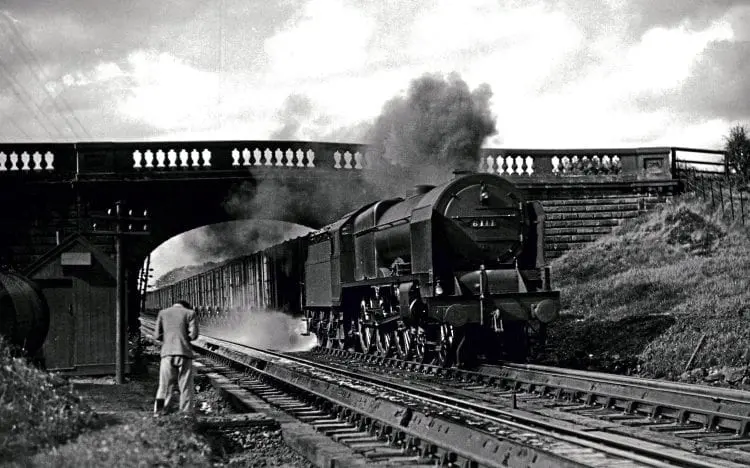
Not sure which section this post should be in, but as water troughs are ancient history now, I will try this one.
A few weeks ago I was reading one of the various railway magazines thast are on the market, and it had an article about water troughs. There was little technical information on them apart from being located on level straightish sections of track, and it mentioned having water tanks to refill them. What I wondered about was what happened if things went wrong and the loco didn't get the scoop up in time? Did it smash the end of the trough off? Was the end spring-loaded so the end was pushed down by the scoop but then sprang back to seal the trough? Did the local platelayers have a supply of bits of trough to repair any damage? Was the trough designed so that that the end would gradually push the scoop up so that the scoop just flipped off the end of the trough - the trough wasn't damaged and the loco had more time to raise the scoop? If the scoop was still down when the loco got to some points, did the points damage the scoop, or were the troughs set above track level so a lowered scoop would miss any rails?
Thanks for any help
A few weeks ago I was reading one of the various railway magazines thast are on the market, and it had an article about water troughs. There was little technical information on them apart from being located on level straightish sections of track, and it mentioned having water tanks to refill them. What I wondered about was what happened if things went wrong and the loco didn't get the scoop up in time? Did it smash the end of the trough off? Was the end spring-loaded so the end was pushed down by the scoop but then sprang back to seal the trough? Did the local platelayers have a supply of bits of trough to repair any damage? Was the trough designed so that that the end would gradually push the scoop up so that the scoop just flipped off the end of the trough - the trough wasn't damaged and the loco had more time to raise the scoop? If the scoop was still down when the loco got to some points, did the points damage the scoop, or were the troughs set above track level so a lowered scoop would miss any rails?
Thanks for any help