In areas that have both polycentric urban form and dwellings take the form of houses rather than flats, cars always dominate, even where public transport provision is excellent. That is one reason why the metro in south Wales will only ever account for a small share of trips and require high ongoing subsidy.It's because as I have gained life experiences, I only see more and more negatives with low occupancy cars clogging urban and suburban areas. It just seems to bring out the worst in people, especially as cars have got larger and larger, making it harder for people to get passed each other. We are told everyone should be responsible for their own actions and yet somehow tolerate all sorts of crap from drivers, when a little more patience would solve the issues. This country really isn't built for the car. It took seeing how little traffic existed in the pandemic for me to realise how nice a lack of private motor traffic really was and how differently that road and parking space could be used. Whatever is put in modern cars, it seems deliberately hostile to anyone not in them!
I agree there needs to be a balance to these things. I have nothing against strategic new roads being built, just think there needs to be an alternative form of transport in as many places as possible and to join it up.
I think that says more about your friend than me. I've ridden every day and night London bus route and only on a handful of occasions saw anything dodgy or felt unsafe on the 1000s of times using buses or waiting at stops. Funny you say Harrow, one of the safest parts of London! Even the so called 'no go' areas are generally fine in reality 99% of the time. If anything it's the inconsiderate phone use that is the worst part of using buses now.
As long as the trains are accessible, I don't see what's wrong with the bus network being reshaped or even cut if there's a perfectly good rail service going the same way. Most towns in the valleys are really compact and small (unlikely to ever sprawl), so walking locally and using the train for longer journeys works. Ideally in areas with less population, buses would act as on road branch lines feeding the railway. The problem with many towns across the country is they go on for miles sprawling away from the railway, hence the need for buses, this seems much less likely in the Welsh Valleys.
If buses are changed when South Wales Metro is finished, that is to be expected. Not everywhere needs buses and trains paralleling each other, especially if no obvious place exists away from the railway.

-
Our new ticketing site is now live! Using either this or the original site (both powered by TrainSplit) helps support the running of the forum with every ticket purchase! Find out more and ask any questions/give us feedback in this thread!
You are using an out of date browser. It may not display this or other websites correctly.
You should upgrade or use an alternative browser.
You should upgrade or use an alternative browser.
Wales Bus Services
- Thread starter Smwrff
- Start date
- Status
- Not open for further replies.
Sponsor Post - registered members do not see these adverts; click here to register, or click here to log in
R
RailUK Forums

TheGrandWazoo
Veteran Member
With respect, if you've not worked in the public sector, nor had a position that demands working with public sector employees, then you don't know the reality.I already know the reality, and that's why I wouldn't touch a local authority job with a barge pole.
Separately, I find it rather interesting to see that the way in which you have written your reply, is very similar to that of typical local authority staff these days and the way that they speak to members of the public. Perhaps coincidence but still rather interesting
I don't know if @RT4038 is or was one of those "typical local authority staff" but even if they were, wouldn't that add more credence to what they say?
If there is fraudulence, that is done by external bodies. However, you are perfectly entitled to ask a local authority to investigate and, if you don't get a satisfactory conclusion, you can always go to the local government ombudsman. That said, they are also limited in resources so they're not going to investigate every single minor infraction.It shouldn't be investigated internally, I agree. Reality doesn't always match. Multiple complaints that I've been privy to have been a case of staff marking their own homework etc.
Again, I wonder if you've ever worked in such an environment where you're essentially trying to cover two or three jobs, one of which you've never had training in. I suspect not.You can often tell whether something is a mistake or incompetence by the way that they react and respond when you make them aware of an issue. A genuine mistake someone will tend to rectify and apologise and do better in the future. Incompetence continues doing the same thing over and over, tries to bury their heads in the sand for as long as they can, and then when they eventually do have to face the music, spends far too long justifying their own actions (often far longer than it would take to fix). Growing numbers of local authority staff are falling into the latter.

markymark2000
On Moderation
£10k sounds great until you realise that £8k of that needs to be put aside for financial standing to get the operators licence and you aren't allowed to spend it, leaving you only £2k for vehicles and everything else. No good having a bus company if you have no ops licence.but now that £10k will just about get you two old but increasingly unreliable buses
As Dai Corner has put, the route is to be taken over by GM Buses. Though details on the new timetable haven't been disclosed yet (least nothing has been shared anywhere publicly). Given it's a Denbighshire Council tender, if you are looking for information it may be worth dropping them a message. Their website is not the best though and I've often found them slow to update things so it's not a surprise that things haven't been picked up on there.Apologies if this isn't the right place to ask, but does anyone know what's happening to the present service 2 - Mold ~ Ruthin via Maeshafn, Graianrhyd & Llanarmon-yn-Ial?
When I last used it - just before Christmas - I overheard a conversation indicating M&H Coaches had lost the contract from the end of January. Today I've looked on 'BusTimes', and the timetable only runs until this coming Saturday 24 January. I tried Flintshire Council's website, which is pretty useless, and merely links to the various operators' sites. So I went to the 'Traveline Cymru' website, entered a random date next week, and got the message "We’re sorry, no journeys were found for your selection."
Dai Corner
Established Member
- Joined
- 20 Jul 2015
- Messages
- 6,998
The other route is to contact the relevant Councillor. They might not be very interested if you live outside the Council area and probably don't use the service you're complaining about / commenting on though.If there is fraudulence, that is done by external bodies. However, you are perfectly entitled to ask a local authority to investigate and, if you don't get a satisfactory conclusion, you can always go to the local government ombudsman. That said, they are also limited in resources so they're not going to investigate every single minor infraction.
TheGrandWazoo
Veteran Member
Indeed though I was referring to formal mechanisms. They will, naturally, be more disposed to deal with queries from their electorateThe other route is to contact the relevant Councillor. They might not be very interested if you live outside the Council area and probably don't use the service you're complaining about / commenting on though.
Who are GM Buses presume a brand new operator?Looks as though GM Buses have got the contract from next week.
Searching on this page brings it up
markymark2000
On Moderation
New to operating local bus services. They have been going a while though under various names due to some past goings on (See here). Hopefully they are past that phase now though.Who are GM Buses presume a brand new operator?
Dwarfer1979
Member
Financial standing hasn't changed much so would be roughly the same figure 20 years ago to now in a calculation so wasn't included in the comparison - you would need less financial standing in my example as you would be buying about a third of the buses to start up though I think the amount per bus in that time frame did increase due to the legislation being tied to EU rules that were done in Euros. I was comparing the most glaring differences in start up costs not providing a fully costed up model to start a business (you would have to add all the other set-up costs incurred before operational start up, like rent, to what I mentioned).£10k sounds great until you realise that £8k of that needs to be put aside for financial standing to get the operators licence and you aren't allowed to spend it, leaving you only £2k for vehicles and everything else. No good having a bus company if you have no ops licence.
The point is that 20 years ago £50k would probably have allowed you to consider setting up a reasonable, small but multi-vehicle, operation (if you allow 10k for vehicles, 10k for financial standing & 5k to cover the initial operation costs until income starts coming in that still leaves 25k for other set-up costs) but now you would probably need that much just to cover your operation costs until the income came in (& I have calculated that on a tight income per bus figure), most of that to buy some vehicles that are less reliable (& your maintenance arrangements are possibly more expensive) so you are looking at needing at least 3 and possibly 4 or 5 times the seed money just to start up (so £250k as target amount isn't ridiculously excessive though you could do it with a little less).
There are other models to be a start-up (concentrating on rail replacement for instance) and being an owner-driver takes some of those set-up costs out as you only have to pay yourself but at some point these costs turn up if you want to get into running local bus services which is why there are fewer operators entering the market to replace those who are leaving (either through retirement/sale, financial failure or simply deciding to concentrate on other sectors like schools or coaching).
markymark2000
On Moderation
I fully agree with what you are saying. I just thought it was useful to add in for the benefit of others.Financial standing hasn't changed much so would be roughly the same figure 20 years ago to now in a calculation so wasn't included in the comparison - you would need less financial standing in my example as you would be buying about a third of the buses to start up though I think the amount per bus in that time frame did increase due to the legislation being tied to EU rules that were done in Euros. I was comparing the most glaring differences in start up costs not providing a fully costed up model to start a business (you would have to add all the other set-up costs incurred before operational start up, like rent, to what I mentioned).
aron2smith
Member
Public transport isn't a natural monopoly
Vehicles are more expensive (accessibility & emissions regs make things more expensive and you may not be able to buy the cheapest due to local emission restrictions, you will need some arrangements or systems to be able to set-up and manage data for legal requirements like BODs and a significant proportion of your initial passengers will not be paying you anything (it is concessionary passengers who will move first to try a new service whilst fare payers will be slower as they may need to wait for season tickets to expire or need you to run for long enough that they can trust you will stay so they move jobs) & the fare cap is currently distorting the market and a new operator will struggle to access that.
When I entered the industry you could pick up a half a dozen cheap but reliable old Merc minibuses and old simple ticket machines and be up and running for less than £10k and be taking cash from day one but now that £10k will just about get you two old but increasingly unreliable buses, your ticket machines will probably cost as much as the buses and you need enough money to run for 6 months with almost no income as you wait for the council procedures to work out your concessionary fares reimbursement to start paying you.
the one clear lesson is that government at all levels doesn't understand the idea of choice at its heart and only the best will listen to the idea they may be missing something and actually make any action to accommodate this. To a local authority if someone has a link to a retail area and an area of employment they have all they need, and they tend to favour ones inside their own council area rather than crossing borders, and if they aren't the right ones for people they just switch to other modes to make the journey they want - those passengers are then lost to public transport and more traffic slows the buses making them less attractive.
Sorry but as a passenger with a strong interest in transport can't agree with any of this.A private and commercial operator has an incentive to take people where they want to go which may involve offering multiple options (they may not be offering the precise one you want all the time but they are offering the ones the most people want) to capture more people and not to just tick political boxes
There is no real competition in public transport, people want to get from A to B effectively and conveniently and do the odd detour every so often. Multi-route and multi-modal journeys should be seamless. How is fragmenting what should act like a network a good thing? The faux competition drives down standards whilst costing passengers and local government more for a worse service. The amount of tatty, old and filthy buses I've seen on rural routes in Herts and Essex, you can't even see outside as the windows are covered in dirt because they don't wash them enough! Don't see that anywhere with franchised or municipal buses!
If anything the competition is convincing the people who drive shorter to medium journeys to cycle or use a bus, a train or a combination of these.
Also is it really a surprise new routes with their own tickets struggle to get fare payers? If every bus in a city or region, accepted each others tickets by default, this wouldn't be an issue. Before getting a disabled bus pass, I was very reluctant to use buses outside London. Why? Because fares were very difficult to find out and company A wouldn't accept company B's tickets! No daily cap and hard to understand. As a result I walked and stuck to trains instead. A while back went up to Scotland, used buses in Strathclyde and Edinburgh. Strathclyde, many operators of all sizes, all with no ticket acceptance, asked for a single on a McGills service, was sold a day ticket! Edinburgh, one operator Lothian, day tram ticket also valid on city buses. Who do you think I would pay to use again? Certainly not Strathclyde!
In Wales, because of how complex bus tickets are, only one region would I use the buses, the north. A whole area has the 1bws ticket system, nearly every bus route and company accepts it, it's clear who doesn't and clear where the ticket can be used and because of the area's size, it's good value for money too. Keeping tickets simple and working together encourages more ridership. The rest of Wales, I won't use buses and stick to trains other than Trawscymru. Being transparent on the cost of fares makes a massive difference. Knowing what the maximum cost could be greatly reduces barriers to using public transport. Currently Trawscymru has a distance based fare system with a £4 single cap, knowing that is a great encouragement to use it.
And electric and hybrid buses are a good thing. Low floor and accessible buses are a lifeline. Not being funny but people don't look back at the days where any tatty old thing was allowed on the road that fondly! And only 30 years ago, wheelchair users chained themselves to buses in London to force the whole industry to become more accessible. https://www.bbc.co.uk/news/disability-34732084
With private operations, you may think you are saving a fortune by using a knackered hand me down bus but the savings won't last when the bus keeps breaking down and you lose all your passengers! Also what made you think if you could cut corners, that others wouldn't?, including the bus manufacturers. The whole lot was a race to the bottom.
Also concessions and things like fare caps are here to stay one way or another. Deregulation more than had its chance to prove itself and it failed. Not surprising things like enhanced partnerships and franchising are here, instead of the free for all that once existed. If we really had to privatise buses, franchises are what should have happened anyway rather than the free market chaos.
And all I can say on government/councils not understanding how transport works, is the people who once planned transport wouldn't still be working in the public sector would they? Unlike their municipal bus counterparts, their job in most places has been totally divorced from local government. It's the same with houses and many aspects of planning. Most of the work relies on rip off consultants when it used to all be done in house. Same with all the builders, carpenters, plumbers, decorators etc. All used to be employed by the council, now they are all self employed contractors.
And I would prefer all areas of a city or region get comparable levels of service rather than 1 area get all the buses and the periphery gets barely anything.
With Wales committing to franchise everything over the next 4 years, we'll have to wait and see how it pans out. But it's clear what way the wind is blowing. To me, it's quite an exciting time.
markymark2000
On Moderation
That is categorically false.A whole area has the 1bws ticket system, nearly every bus route and company accepts it, it's clear who doesn't and clear where the ticket can be used and because of the area's size, it's good value for money too.
Transport for Wales website doesn't explain the validity properly for cross border links. 'fare-capping scheme across North Wales, from the Llŷn Peninsula to Chester and from Anglesey to Aberystwyth.' last time I checked, Chester wasn't in North Wales and they fail to mention the acceptance to Whitchurch on the 146... They also don't list Stagecoach as an operator who sells and accepts the ticket (they don't partake in the tap on tap off though), and fail to mention excluded services
Flintshire Council promotes it as a ticket that is valid on 'any bus in North Wales' despite it not being valid on Townlynx 28 which runs fully within their area. Also doesn't mention cross border.
Denbighshire Council mentions the T12 and X10 services which no longer operate (X10 hasn't operated in a few years). They also say about the Townlynx 6 but the 6 isn't operated by Townlynx anymore. Also failure to mention non acceptance on the 811
Gwynedd Council & Conwy Council says the ticket is valid on the T12 despite the route not existing. Mentions the X10 too which doesn't exist anymore. Both fail to mention that tickets aren't accepted on the 811.
Powys Council say that 1Bws is only valid between Glynfri and Machnellyth on the T2 but it's actually valid on both T2 and T28 all the way to Aberystwyth.
Wrexham Council & Anglesey Councils refuse to acknowledge the existence of 1Bws anywhere on their websites.
TrawsCymru still says that the ticket is valid on the T12
How is that for you? To say it's clear what the acceptance is when right there is 7 council sites, and 2 sites ran by Transport for Wales, and ALL of them have either missing information, outdated, or simply refuse to mention 1Bws.
All bar 2 council areas of Wales are covered by 1 of 4 multi operator tickets.In Wales, because of how complex bus tickets are
1Bws covering North Wales
West Wales Rover covering Carmarthenshire, Ceredigion and Pembrokeshire
Network Rider covering most of South East Wales
Powys Day Rover covering all of Powys and covering all cross border journeys as long as you start/end in Powys
The only areas without multi operators tickets are Neath Port Talbot and Swansea council areas (though I vaguely remember a Gower ticket covering Swansea, but I'm not sure). That said, you can use a West Wales Rover for cross border journeys into Swansea on the First 111, X11, X13.
The only complexities here come from local authorities claiming each route has different acceptance. Ie TFW say the Network Rider is valid on the X44 just not the trips via Clyro (goodness knows why) and valid on Williams Coaches etc, but Powys Council says that Network Rider tickets aren't valid on Powys services. Someone needs to make their mind up what the validity is.
Last edited:
TheGrandWazoo
Veteran Member
@Dwarfer1979 is a bus industry manager. He knows the financial realities.Sorry but as a passenger with a strong interest in transport can't agree with any of this.
I nearly spat my tea out at that one.The amount of tatty, old and filthy buses I've seen on rural routes in Herts and Essex, you can't even see outside as the windows are covered in dirt because they don't wash them enough! Don't see that anywhere with franchised or municipal buses!
Clearly you've not travelled on Ipswich Buses. Or how about this story from just three months ago about cockroach infestations on London's buses? https://www.msn.com/en-gb/news/othe...as-worst-affected-routes-revealed/ar-AA1OlFxK Or that Newport Transport were summoned to appear in front of the Traffic Commissioner after maintenance issues were identified - I remember travelling on an NT Omnicity that had interior coving secured with gaffer taped about that time.
Here's a couple of my own photos taken on days out. A brand new e200mmc at Wigan - I think the wash was out of use awaiting repairs.

Or this pristine e400 in Croydon?

There are none so blind as those who do not wish to see.
Remember that prior to 1986, passenger figures were thudding through the floor, and had been for 30 years. If you think it was sweetness and light before 26 Oct 1986, I can assure you it wasn't.Also concessions and things like fare caps are here to stay one way or another. Deregulation more than had its chance to prove itself and it failed. Not surprising things like enhanced partnerships and franchising are here, instead of the free for all that once existed. If we really had to privatise buses, franchises are what should have happened anyway rather than the free market chaos.
Getting back to South Wales...How is that for you? To say it's clear what the acceptance is when right there is 7 council sites, and 2 sites ran by Transport for Wales, and ALL of them have either missing information, outdated, or simply refuse to mention 1Bws.
Yeah, I think that Wrexham don't actually say anything - just a vague mention that they can't provide "bus prices" (?) and a link to traveline cymru splash page (part of TfW) so you then have to head to Travel Info to find out out bus fares and that's where the 1BWS page is.
The odd thing is that the TrawsCymru site has it's 1BWS page and it does say...
...which is better wording. It does mention that the 28 is not in the scheme but not the 146.One ticket, for all day, valid on every bus in North Wales—Conwy, Denbighshire, Flintshire, Gwynedd, Isle of Anglesey, Wrexham—and on buses from North Wales to Chester, Whitchurch and Machynlleth.
Arguably, the best thing would be for TfW to have one version of the truth on their site, and that every local authority etc simply has a clear link to it. As you say, some of the wording is imprecise or has omissions/errors.
Indeed, I've used many a Network Rider - been around for quite a few years. The West Wales Rover is at least 10 years old?All bar 2 council areas of Wales are covered by 1 of 4 multi operator tickets.
1Bws covering North Wales
West Wales Rover covering Carmarthenshire, Ceredigion and Pembrokeshire
Network Rider covering most of South East Wales
Powys Day Rover covering all of Powys and covering all cross border journeys as long as you start/end in Powys
There are loads of multi-operator tickets. Problem is that operators tend to promote their own tickets in preference (as they retain the revenue - I would also point out that they may have greater coverage too) whilst local authorities are really poor at the promotion of them.Also is it really a surprise new routes with their own tickets struggle to get fare payers? If every bus in a city or region, accepted each others tickets by default, this wouldn't be an issue. Before getting a disabled bus pass, I was very reluctant to use buses outside London. Why? Because fares were very difficult to find out and company A wouldn't accept company B's tickets!
The reason why new routes struggle to get fare payers isn't because of a lack of multi-operator tickets. Most people don't take multi-leg journeys. The reality is that, as with any product, it takes time to build a business/trade/awareness - that gap between cost and revenue is why many businesses (not just bus companies) fold. Also, in the case of some of the BSIP services... they will never be sustainable as it appears that someone has arbitrarily looked at a network, seen a gap and thought they'd fill it without really considering or confirming the actual need. Some of the Cambridgeshire Tiger routes fall into that category!
Dai Corner
Established Member
- Joined
- 20 Jul 2015
- Messages
- 6,998
In discussing the minutiae of fares, routes, timetables and publicity we should remember that as bus enthusiasts we are very much in the minority. Most passengers don't particularly want to be on the bus; they're using it to get to work, education, appointments or wherever they need to be. If they had a car available or could afford a taxi they'd choose that. The idea of buying a multi-operator ticket and studying timetables in order to spend a day ticking off routes and vehicles appears laughable to ordinary passengers, let alone the majority of the population, many of whom wouldn't be seen dead catching a bus.
All they want is a bus that takes them from reasonably close to home to reasonably close to where they need to go, at the time advertised, preferably not have to sit next to a stranger and definitely not have to stand. They have to travel so although they'd like cheap fares they'll pay whatever they need to.
They don't care who owns the bus, who specified the route and timetable or who makes a profit or provides a subsidy.
All they want is a bus that takes them from reasonably close to home to reasonably close to where they need to go, at the time advertised, preferably not have to sit next to a stranger and definitely not have to stand. They have to travel so although they'd like cheap fares they'll pay whatever they need to.
They don't care who owns the bus, who specified the route and timetable or who makes a profit or provides a subsidy.
Last edited:
TheGrandWazoo
Veteran Member
There's a lot of truth in what you say. It's what I was getting at when I say that most people don't do multi-leg journeys on an everyday basis. Perhaps different in some tourist areas but yeah, the views and experience of people on this forum are not typical of the general public!In discussing the minutiae of fares, routes, timetables and publicity we should remember that as bus enthusiasts we are very much in the minority. Most passengers don't particularly want to be on the bus; they're using it to get to work, education, appointments or wherever they need to be. If they had a car available or could afford a taxi they'd choose that. The idea of buying a multi-operator ticket and studying timetables in order to spend a day ticking off routes and vehicles appears laughable to ordinary passengers, let alone the majority of the population, many of whom wouldn't be seen dead catching a bus.
All they want is a bus that takes them from reasonably close to home to reasonably close to where they need to go, at the time advertised, preferably not have to sit next to a stranger and definitely not have to stand. They have to travel so although they'd like cheap fares they'll pay whatever they need to.
I also agree - and suspect the views and advice of many transport planners are closer to those of enthusiasts (whether for bus, rail, or active travel) than the punters. Perhaps a lot of them are enthusiasts….There's a lot of truth in what you say. It's what I was getting at when I say that most people don't do multi-leg journeys on an everyday basis. Perhaps different in some tourist areas but yeah, the views and experience of people on this forum are not typical of the general public!
I am old enough (!) to recall that when Trent and later Trentbarton became privately owned their attitude was that 95% of users only used the one route and weren’t “network” travellers. Hence route branding and single route timetables. Each is its own little company and that approach has stood the test of time. Despite a multitude of bus liveries my local route (Stagecoach Pronto) is known by many as the Pronto company. I thus concur with the comments above. The vast majority of users want their bus to go from pick up to set down at the advertised times. They have no interest in connections or the wider network aspirations. Those of us who do, tend to be a very small minority. We can be vociferous and are perhaps more likely to blind unsuspecting politicians and officials with our perceived wisdom and they end up pursuing our perceived wisdom in such matters rather than focussing on getting basics right first then building on that. Some of the broader objectives then follow naturally.
Lynford1976
Member
- Joined
- 3 Oct 2015
- Messages
- 218
Those interested in bus franchising in Wales, and, in particular, recent events in Powys, may be interested in a recent talk given to members of the Omnibus Society.
The talk was recorded and can be watched back on YouTube:
The talk was recorded and can be watched back on YouTube:
aron2smith
Member
I generally accept the above but I just find it interesting what combinations of buses (and trains) can get me here, there and everything. I want to use them to explore various parts of a country and our scenery at a slower pace.In discussing the minutiae of fares, routes, timetables and publicity we should remember that as bus enthusiasts we are very much in the minority. Most passengers don't particularly want to be on the bus; they're using it to get to work, education, appointments or wherever they need to be. If they had a car available or could afford a taxi they'd choose that. The idea of buying a multi-operator ticket and studying timetables in order to spend a day ticking off routes and vehicles appears laughable to ordinary passengers, let alone the majority of the population, many of whom wouldn't be seen dead catching a bus.
All they want is a bus that takes them from reasonably close to home to reasonably close to where they need to go, at the time advertised, preferably not have to sit next to a stranger and definitely not have to stand. They have to travel so although they'd like cheap fares they'll pay whatever they need to.
I don't want to have to care either but because of the insistence that these things have to make money, I can't reasonably do the journey I want to do as easily as it should be which is isolating. Clearly a political choice with these things after seeing the 242 be restored to a proper route almost like magic one day. When an area only has half the buses that existed 15 years ago, that is a major problem.They don't care who owns the bus, who specified the route and timetable or who makes a profit or provides a subsidy.
So what other names have they ran under can't figure it out from that link only name there is GM BusesNew to operating local bus services. They have been going a while though under various names due to some past goings on (See here). Hopefully they are past that phase now though.

anthony263
Established Member
Probably routes we've lost over the years . Maybe the 143 Neath -Birchgrove- Morriston HospitalIf they are planning 100 new routes in wales what one would you like them to be
== Doublepost prevention - post automatically merged: ==
I know some changes have already been proposed. Eg merge the 3A Swansea to Bracelet bay and 28 Swansea to Penplas to form a crosscity service.
The X1 Bridgend to Swansea is to get the chop which has already caused some backlash.
The original plan was the 83 blaengwynfi to Port Talbot bus was going to be extended to replace it between Port Talbot and Swansea.
Now the plan is for the X3 Maesteg to Port Talbot to be put back up in frequency to hourly and extended back through to Swansea.
Service 87 Neath to Margam service is to be extended hourly at each end through to Bridgend and Pontardawe.
Last edited:
Dai Corner
Established Member
- Joined
- 20 Jul 2015
- Messages
- 6,998
So do I sometimes, but very few other people do. They'd rather drive and do things at their own pace.I generally accept the above but I just find it interesting what combinations of buses (and trains) can get me here, there and everything. I want to use them to explore various parts of a country and our scenery at a slower pace.
Nobody would run a bus company if it didn't make money, either on a commercial basis or through subsidy. If you want taxpayers to subsidise your travel you have to accept the politics. Getting back to Welsh bus services, the upcoming franchising will mean we will get the services politicians think we ought to have rather than the ones operators have found we want. An example of what that might mean is what's happened to the Trawscymru T4 Brecon-Cardiff. It used to run through from Brecon or beyond to Cardiff but now only goes as far as Merthyr Tydfil. Passengers have to change there for the Stagecoach X4 and pay again or walk to the railway station for a train and also pay again. The T4 doesn't serve the station. You can buy a through bus/rail ticket but that is via Neath, a longer and slower route.I don't want to have to care either but because of the insistence that these things have to make money, I can't reasonably do the journey I want to do as easily as it should be which is isolating. Clearly a political choice with these things after seeing the 242 be restored to a proper route almost like magic one day. When an area only has half the buses that existed 15 years ago, that is a major problem.
TheGrandWazoo
Veteran Member
And you know what... there is absolutely nothing wrong in your personal interest in travelling by bus and train, at a slower pace, and all that that entails. May 3rd will be the 40th anniversary of my first buying an NBC Explorer ticket, and I still love getting out and about travelling around. I have several trips a year which I post on the dedicated pinned thread. So yeah, I've done 146 from Bromley and then stood around in Downe, and caught the R8 to Biggin Hill before getting the 464 to enable me to get the tram - all good fun exploring round there.I generally accept the above but I just find it interesting what combinations of buses (and trains) can get me here, there and everything. I want to use them to explore various parts of a country and our scenery at a slower pace.
The thing is... I know that I'm outlier. The vast majority of passengers take single leg journeys because the bus is a means to an end - to get to work, hospital, shops etc, and they're time precious. Only in the tourist areas, like the IOW or Cornwall would I expect to see significant multi-leg/network journeys.
What most passengers want, and it's backed up in research, is reliability (will it turn up, and on time), speed, safety, and then value for money.
There is always a balance. Whilst I think we are all of the view that there are social necessary services that are needed to connect communities etc or to provide actual social mobility, there is a responsibility to spend funds in a cost effective manner. There are not infinite funds and we can't provide all the things we want; we can barely afford all the things we need.I don't want to have to care either but because of the insistence that these things have to make money, I can't reasonably do the journey I want to do as easily as it should be which is isolating. Clearly a political choice with these things after seeing the 242 be restored to a proper route almost like magic one day. When an area only has half the buses that existed 15 years ago, that is a major problem.
Dai Corner
Established Member
- Joined
- 20 Jul 2015
- Messages
- 6,998
So not 100 more routes, just 100 changes?Probably routes we've lost over the years . Maybe the 143 Neath -Birchgrove- Morriston Hospital
== Doublepost prevention - post automatically merged: ==
I know some changes have already been proposed. Eg merge the 3A Swansea to Bracelet bay and 28 Swansea to Penplas to form a crosscity service.
The X1 Bridgend to Swansea is to get the chop which has already caused some backlash.
The original plan was the 83 blaengwynfi to Port Talbot bus was going to be extended to replace it between Port Talbot and Swansea.
Now the plan is for the X3 Maesteg to Port Talbot to be put back up in frequency to hourly and extended back through to Swansea.
Service 87 Neath to Margam service is to be extended hourly at each end through to Bridgend and Pontardawe.
TheGrandWazoo
Veteran Member
I seem to remember that the X3 ran to Swansea about 30 years ago?The X1 Bridgend to Swansea is to get the chop which has already caused some backlash.
The original plan was the 83 blaengwynfi to Port Talbot bus was going to be extended to replace it between Port Talbot and Swansea.
Now the plan is for the X3 Maesteg to Port Talbot to be put back up in frequency to hourly and extended back through to Swansea.
So some of these "new routes" are actually just the amalgamation of services? I'm struggling to see the rationale behind a Pontardawe to Bridgend service if I'm honest.Service 87 Neath to Margam service is to be extended hourly at each end through to Bridgend and Pontardawe.
anthony263
Established Member
I suspect we will see an hourly Margam to Pontardawe service and a Neath to Bridgend service.I seem to remember that the X3 ran to Swansea about 30 years ago?
So some of these "new routes" are actually just the amalgamation of services? I'm struggling to see the rationale behind a Pontardawe to Bridgend service if I'm honest.
The X3 used to yes i used to drive it regularly. 50-55 minutes journey time end to end now its likely to be 65-70 minutes plus tfw want the route to also serve Goytre in port Talbot replacing the current 66 service.
The Velindre section of the 66 is to be served by its own route. In my opinion tfw be better keeping the 66 or extend the 83 Blaengwynfi to Port Talbot service through to Goytre like first cymru did in the early 2000's
== Doublepost prevention - post automatically merged: ==
We might see some.new routes but not many.So not 100 more routes, just 100 changes?
So I think we will see old routes return others enhanced plus doesn't say if its just public bus routes so given the backlash and problems now with school.bus routes being withdrawn i wouldn't be surprised if some of these routes will just be school bus services
Dwarfer1979
Member
That is your right to hold your own opinion and I am expressing mine based on a 40 year interest in transport, almost as long as a passenger and a 23 year (so far) career in the bus industry including time working in a council transport department (with more in logistics before) so it is based on a some solid ground.Sorry but as a passenger with a strong interest in transport can't agree with any of this.
As others have said, you clearly aren't looking if you think that franchised or municipal buses don't get dirty but apart from that those operations tend to be urban and main road businesses where there is less road dirt but you are comparing them to rural operations in a semi-rural county where dirt can build up in minutes - some of the routes go down roads so narrow the bus has wheels in both gutters at the same time chucking up dirt all over all sides. I have seen pristine buses go out at 6am and by 9 they look like they haven't seen a bus wash in weeks on some of these routes. Also age comes from someone being prepared to pay for newer buses, it has always been the case that rural routes got older buses and it always will regardless of who owns or controls the network, they can't pay for new buses and as they are less intensive don't need them.There is no real competition in public transport, people want to get from A to B effectively and conveniently and do the odd detour every so often. Multi-route and multi-modal journeys should be seamless. How is fragmenting what should act like a network a good thing? The faux competition drives down standards whilst costing passengers and local government more for a worse service. The amount of tatty, old and filthy buses I've seen on rural routes in Herts and Essex, you can't even see outside as the windows are covered in dirt because they don't wash them enough! Don't see that anywhere with franchised or municipal buses!
Also, as I said, the competition is less between bus operators (it exists on the ground infrequently now though does still exist in potential if you screw up too much though the artificial restrictions on the start-up costs I mentioned limit this more now) but between buses and other modes (owning a car, getting a lift, taxi, bikes, walking, trains etc) so narrowly focussing on just buses as a separate market misses this. Also my point was that people want to travel to the place they want to go, they aren't really bothered how they get there but will favour the best for them (which is where the convenience of the car makes it the target to aim at) but if you don't bother to provide that link then you lose them and in my experience councils are less prone to work with this. Often a council will work on you have a bus to Town A which has shops, colleges & employment so why would you want to go to Town B which is just the same but for the person in question Town B has what they want whilst Town A doesn't.
It would be lovely if everything could be seamless but unfortunately the real world creeps in and puts grit in the oil. If you prioritise multi-modal by targeting rail stations you will make the majority single-mode travel to the local centre less attractive as most railway stations in the UK aren't well located for the centre of the towns they serve. Just looking at the area of the east midlands I currently live in I'm not sure any of the rail stations are conveniently located for the actual town/city centre they serve. Often they are close enough to be acceptable for a train passenger to accept the walk but too far out to be acceptable to a more local bus passenger to accept as a reasonable point to be dropped off at.
If you only had multi-operator tickets it would not help early months revenue flow of a new business, just like concessionary fares it would take months to see that money flow from the shared revenue pool to any new operator - setting up the agreements, data flow systems and reimbursement rates often require you to provide some actual data of usage to start the process which you can't do until you start and then takes weeks or even months due to organisational delay to get an agreement. If you can last that initial period of no revenue it would mean revenue would rise faster, assuming revenue for multi-operator tickets is distributed from a shared pot, a lot of the schemes work on a "revenue lands where it falls" basis (which means you keep the revenue from any sales made yourself and accept other tickets - this often benefits the bigger operator as they have more access to passengers on average to be the trip that falls on them buying the season ticket). Also the point is that most fare payers have a job so they won't change how they travel immediately (if you are competing) and they certainly won't change their job based on a new route until it has been in for several months to allow them to consider. Retired people, with more time on their hands and a bus pass that means the trip costs them nothing, will try new things early just for a change of scene.Also is it really a surprise new routes with their own tickets struggle to get fare payers? If every bus in a city or region, accepted each others tickets by default, this wouldn't be an issue. Before getting a disabled bus pass, I was very reluctant to use buses outside London. Why? Because fares were very difficult to find out and company A wouldn't accept company B's tickets! No daily cap and hard to understand. As a result I walked and stuck to trains instead. A while back went up to Scotland, used buses in Strathclyde and Edinburgh. Strathclyde, many operators of all sizes, all with no ticket acceptance, asked for a single on a McGills service, was sold a day ticket! Edinburgh, one operator Lothian, day tram ticket also valid on city buses. Who do you think I would pay to use again? Certainly not Strathclyde!
I lived and worked in Cardiff early in my career, as an enthusiast I would often use the Network Rider to explore the Valleys on my days off but as a Cardiff resident who worked in the city I had no need of such a ticket for my regular usage - I may not have even bothered buying an all-city ticket as I lived in Zone 2 and worked in Zone 1 so the cost difference for a few weekends may not have been justified for what I actually used. Even now, though my staff pass is valid on all city operators where I live if I didn't have that I probably wouldn't need a multi-operator season ticket so wouldn't want to pay extra for something I only use infrequently over one for my main travel needs from my home to the city centre.In Wales, because of how complex bus tickets are, only one region would I use the buses, the north. A whole area has the 1bws ticket system, nearly every bus route and company accepts it, it's clear who doesn't and clear where the ticket can be used and because of the area's size, it's good value for money too. Keeping tickets simple and working together encourages more ridership. The rest of Wales, I won't use buses and stick to trains other than Trawscymru. Being transparent on the cost of fares makes a massive difference. Knowing what the maximum cost could be greatly reduces barriers to using public transport. Currently Trawscymru has a distance based fare system with a £4 single cap, knowing that is a great encouragement to use it.
Not necessarily saying it isn't a good thing to have these higher vehicle standard requirements but it has increased the cost of buses both new and later life by a significant degree which puts an artificial barrier into entry into the industry - that makes an artificial monopoly not a natural one.And electric and hybrid buses are a good thing. Low floor and accessible buses are a lifeline. Not being funny but people don't look back at the days where any tatty old thing was allowed on the road that fondly! And only 30 years ago, wheelchair users chained themselves to buses in London to force the whole industry to become more accessible. https://www.bbc.co.uk/news/disability-34732084
That was part of my point - those old Merc minis were bullet proof so even an old one weren't breaking down whereas their equivalents now are unreliable as well as more expensive. Many of those were withdrawn due to accessibility demands not reliability issues. I also wasn't suggesting cutting corners, this was all legal and well resourced in my calculations just that when I entered the industry this was still possible. Many highly successful and well regarded operators of the early part of this century started in this way in the later 90's or early 2000's and moved onto greater quality as they established their operation - Western Greyhound, Norfolk Green, Grant Palmer, Centrebus/D&G etc. The other point is that without these operators the costs for everyone go up, these smaller start ups helped to keep the costs of council tenders down by being cheaper options. This means councils can't fund as much so more potential passengers have no bus because the council has to concentrate on fewer routes to keep those running.With private operations, you may think you are saving a fortune by using a knackered hand me down bus but the savings won't last when the bus keeps breaking down and you lose all your passengers! Also what made you think if you could cut corners, that others wouldn't?, including the bus manufacturers. The whole lot was a race to the bottom.
I can't help feeling that you have a very rose-tinted view of what the bus industry was like before deregulation and privatisation and it was quite often god awful quite frankly. I am a little to young to really remember most of it, being born in the very late seventies, but my dad has many experiences of things like waiting 2 hours for a half-hourly prime interurban service run by an NBC subsidiary due to bus or driver shortage. There were some bright spots then, just as there are some bright spots now, and there were bad areas, as there are now, but you seem to cherry pick the best bits of the past and compare it to the worst bits of today.Also concessions and things like fare caps are here to stay one way or another. Deregulation more than had its chance to prove itself and it failed. Not surprising things like enhanced partnerships and franchising are here, instead of the free for all that once existed. If we really had to privatise buses, franchises are what should have happened anyway rather than the free market chaos.
No they didn't, most councils had very little to do with buses before deregulation, that probably only really applies to the PTEs as I suspect most municipals were run more separate than you may think and none of the county councils and few towns had any involvement in bus operation at all beyond providing some funding to some operators. One of the things deregulation did was to bring in a more formal mechanism for socially necessary but not profitable services giving the council more control over what they were spending their money on and what they were getting. In most of England and Wales the buses were provided by the National Bus Company and if you think Stagecoach or First are ruthless you should look up some of what NBC got up to. It was basically pay us what we think we need to keep the services going or we withdraw everything and when challenged did just that - north Cornwall & north Norfolk are both noted examples of where that was done in the late 70's/early 80's.And all I can say on government/councils not understanding how transport works, is the people who once planned transport wouldn't still be working in the public sector would they? Unlike their municipal bus counterparts, their job in most places has been totally divorced from local government. It's the same with houses and many aspects of planning. Most of the work relies on rip off consultants when it used to all be done in house. Same with all the builders, carpenters, plumbers, decorators etc. All used to be employed by the council, now they are all self employed contractors.
How do you propose funding that one, London achieved what it did by receiving more funding than the rest of the country got combined (they aren't on that now but they were when they did the big improvement drive and they are still benefitting from the growth that expenditure created) and Manchester has received a significant amount of funding from central government as they were setting up. That simply isn't available to everywhere else, the taxpayers won't pay it and the government don't have it. You may be able to dig out a bit more for a few other big cities but you will never manage it for every shire county and city at the same rate.And I would prefer all areas of a city or region get comparable levels of service rather than 1 area get all the buses and the periphery gets barely anything.
markymark2000
On Moderation
Previously traded as Teithio Seren and it was that operators licence which the TC revoked (but in the strangest turn of events, the TC awarded a new ops licence in the excact same PI. Doesn't make sense how you can revoke someones licence then 30 seconds later give them a new one. Anyway, I digress). Teithio Seren originally won the Dolgellau Fflecsi contract but then for some reason it ended up with Lloyds (https://www.railforums.co.uk/threads/lloyds-coaches-machynlleth.262098/#post-6616478)So what other names have they ran under can't figure it out from that link only name there is GM Buses
It's unknown what will operate the 2 service, but Rons Bus and Coach (a strong reliable source within North Wales) reports that GM Buses has recently bought former Pats Coaches, Ilesbus RO71KUW (previously PC71PAT). (source).
aron2smith
Member
I never meant everywhere gets a bus on every route all day every day every 8 to 12 minutes. I meant base the provision on population size and place based policies, so villages would typically get something every 1 to 2 hours, towns anything from every 12 minutes to hourly, depending on if its town to town, town to village, town to suburb etc. I think in my neck of the woods, many of the hourly services would make more sense if half hourly for example.How do you propose funding that one, London achieved what it did by receiving more funding than the rest of the country got combined (they aren't on that now but they were when they did the big improvement drive and they are still benefitting from the growth that expenditure created) and Manchester has received a significant amount of funding from central government as they were setting up. That simply isn't available to everywhere else, the taxpayers won't pay it and the government don't have it. You may be able to dig out a bit more for a few other big cities but you will never manage it for every shire county and city at the same rate.
I think within many towns, it would be ideal to run as many routes as possible, every 15 to 30 minutes (maybe 60 in some cases). Especially with many rail stations opting for a half hourly frequency.
Funding really should be a mixture of sources, not just fares, but specific taxes like business rates, a parking levy and even real estate. Businesses and properties benefit from decent public transport, so there should be consistent contributions including from either rent or council tax. Fares fluctuate, so the other sources of funding should at least allow medium term planning, at least 2 years, ideally 5.
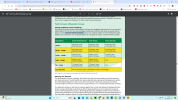
What I should have said is, there should be a minimum level of service and connectivity and an alternative form of transport should be available even in villages of a couple hundred people. Something a bit like the attached from Hertfordshire's 2024 BSIP document is what I mean but would be very difficult to provide without some form of public control. Obviously there needs to be flexibility, but we also need standards too.
I prefer Town B because it's a nicer, more pleasant place to be and better planned out than Town A, despite on paper having similar facilities and services. That's why to me, it only makes sense if a local council looks at all places within its vicinity and surroundings in a similar way and as equally as possible from transport's perspective. That's where franchising will hopefully excel regardless of an urban or rural setting. Just on the principle that people need a choice of destinations in pretty much every direction if everybody was asked where they needed or wanted to go.Often a council will work on you have a bus to Town A which has shops, colleges & employment so why would you want to go to Town B which is just the same but for the person in question Town B has what they want whilst Town A doesn't.
Attachments
Last edited:
anthony263
Established Member
I agree with regards to buses these days being more unreliable. Ive found the solo SRs and Mercedes-Benz sprinters to be far poorer to the olddesign of the optare solos and Mercedes-Benz 709d and varios.That is your right to hold your own opinion and I am expressing mine based on a 40 year interest in transport, almost as long as a passenger and a 23 year (so far) career in the bus industry including time working in a council transport department (with more in logistics before) so it is based on a some solid ground.
As others have said, you clearly aren't looking if you think that franchised or municipal buses don't get dirty but apart from that those operations tend to be urban and main road businesses where there is less road dirt but you are comparing them to rural operations in a semi-rural county where dirt can build up in minutes - some of the routes go down roads so narrow the bus has wheels in both gutters at the same time chucking up dirt all over all sides. I have seen pristine buses go out at 6am and by 9 they look like they haven't seen a bus wash in weeks on some of these routes. Also age comes from someone being prepared to pay for newer buses, it has always been the case that rural routes got older buses and it always will regardless of who owns or controls the network, they can't pay for new buses and as they are less intensive don't need them.
Also, as I said, the competition is less between bus operators (it exists on the ground infrequently now though does still exist in potential if you screw up too much though the artificial restrictions on the start-up costs I mentioned limit this more now) but between buses and other modes (owning a car, getting a lift, taxi, bikes, walking, trains etc) so narrowly focussing on just buses as a separate market misses this. Also my point was that people want to travel to the place they want to go, they aren't really bothered how they get there but will favour the best for them (which is where the convenience of the car makes it the target to aim at) but if you don't bother to provide that link then you lose them and in my experience councils are less prone to work with this. Often a council will work on you have a bus to Town A which has shops, colleges & employment so why would you want to go to Town B which is just the same but for the person in question Town B has what they want whilst Town A doesn't.
It would be lovely if everything could be seamless but unfortunately the real world creeps in and puts grit in the oil. If you prioritise multi-modal by targeting rail stations you will make the majority single-mode travel to the local centre less attractive as most railway stations in the UK aren't well located for the centre of the towns they serve. Just looking at the area of the east midlands I currently live in I'm not sure any of the rail stations are conveniently located for the actual town/city centre they serve. Often they are close enough to be acceptable for a train passenger to accept the walk but too far out to be acceptable to a more local bus passenger to accept as a reasonable point to be dropped off at.
If you only had multi-operator tickets it would not help early months revenue flow of a new business, just like concessionary fares it would take months to see that money flow from the shared revenue pool to any new operator - setting up the agreements, data flow systems and reimbursement rates often require you to provide some actual data of usage to start the process which you can't do until you start and then takes weeks or even months due to organisational delay to get an agreement. If you can last that initial period of no revenue it would mean revenue would rise faster, assuming revenue for multi-operator tickets is distributed from a shared pot, a lot of the schemes work on a "revenue lands where it falls" basis (which means you keep the revenue from any sales made yourself and accept other tickets - this often benefits the bigger operator as they have more access to passengers on average to be the trip that falls on them buying the season ticket). Also the point is that most fare payers have a job so they won't change how they travel immediately (if you are competing) and they certainly won't change their job based on a new route until it has been in for several months to allow them to consider. Retired people, with more time on their hands and a bus pass that means the trip costs them nothing, will try new things early just for a change of scene.
I lived and worked in Cardiff early in my career, as an enthusiast I would often use the Network Rider to explore the Valleys on my days off but as a Cardiff resident who worked in the city I had no need of such a ticket for my regular usage - I may not have even bothered buying an all-city ticket as I lived in Zone 2 and worked in Zone 1 so the cost difference for a few weekends may not have been justified for what I actually used. Even now, though my staff pass is valid on all city operators where I live if I didn't have that I probably wouldn't need a multi-operator season ticket so wouldn't want to pay extra for something I only use infrequently over one for my main travel needs from my home to the city centre.
Not necessarily saying it isn't a good thing to have these higher vehicle standard requirements but it has increased the cost of buses both new and later life by a significant degree which puts an artificial barrier into entry into the industry - that makes an artificial monopoly not a natural one.
That was part of my point - those old Merc minis were bullet proof so even an old one weren't breaking down whereas their equivalents now are unreliable as well as more expensive. Many of those were withdrawn due to accessibility demands not reliability issues. I also wasn't suggesting cutting corners, this was all legal and well resourced in my calculations just that when I entered the industry this was still possible. Many highly successful and well regarded operators of the early part of this century started in this way in the later 90's or early 2000's and moved onto greater quality as they established their operation - Western Greyhound, Norfolk Green, Grant Palmer, Centrebus/D&G etc. The other point is that without these operators the costs for everyone go up, these smaller start ups helped to keep the costs of council tenders down by being cheaper options. This means councils can't fund as much so more potential passengers have no bus because the council has to concentrate on fewer routes to keep those running.
I can't help feeling that you have a very rose-tinted view of what the bus industry was like before deregulation and privatisation and it was quite often god awful quite frankly. I am a little to young to really remember most of it, being born in the very late seventies, but my dad has many experiences of things like waiting 2 hours for a half-hourly prime interurban service run by an NBC subsidiary due to bus or driver shortage. There were some bright spots then, just as there are some bright spots now, and there were bad areas, as there are now, but you seem to cherry pick the best bits of the past and compare it to the worst bits of today.
No they didn't, most councils had very little to do with buses before deregulation, that probably only really applies to the PTEs as I suspect most municipals were run more separate than you may think and none of the county councils and few towns had any involvement in bus operation at all beyond providing some funding to some operators. One of the things deregulation did was to bring in a more formal mechanism for socially necessary but not profitable services giving the council more control over what they were spending their money on and what they were getting. In most of England and Wales the buses were provided by the National Bus Company and if you think Stagecoach or First are ruthless you should look up some of what NBC got up to. It was basically pay us what we think we need to keep the services going or we withdraw everything and when challenged did just that - north Cornwall & north Norfolk are both noted examples of where that was done in the late 70's/early 80's.
How do you propose funding that one, London achieved what it did by receiving more funding than the rest of the country got combined (they aren't on that now but they were when they did the big improvement drive and they are still benefitting from the growth that expenditure created) and Manchester has received a significant amount of funding from central government as they were setting up. That simply isn't available to everywhere else, the taxpayers won't pay it and the government don't have it. You may be able to dig out a bit more for a few other big cities but you will never manage it for every shire county and city at the same rate.
In face if a coaches can be used on service as long as they are equipped with a wheelchair lift etc then the old varios which were fitted with a wheelchair lift at the rear nearside should sti be getting produced today.
Far more reliable machines and higher off the ground so ride quality is far better
Dwarfer1979
Member
I didn't think you meant you expected London frequencies, which would require extra funding an order of magnitude higher to achieve, I assumed you meant proportional funding to provide a proportional service enhancement. It still needs a funding increase the likes of which UK public transport has never seen and which, at this moment in time, we can't really afford to dedicate to this when other more vital things are equally underfunded and much more supported by the general public (health, education & defence currently for instance). You still need to work out where to get the extra money from however much you end up needing, you list some possibles most of which have been tried by councils and in most cases they couldn't even get them introduced due to public outcry (you mention contributions from council tax but where do you think councils get some of their income from already) so you need to work out how to make these things acceptable to a general public who don't view buses at least in the same positive light as you or I do. It should be possible to change public perception but it isn't a quick process and it requires politicians to stick their neck out in the way few outside London, and now Andy Burnham in Manchester, have ever been willing to do but what it isn't is something that can be done over night to make funding available for franchise schemes coming in over the next few years.I never meant everywhere gets a bus on every route all day every day every 8 to 12 minutes. I meant base the provision on population size and place based policies, so villages would typically get something every 1 to 2 hours, towns anything from every 12 minutes to hourly, depending on if its town to town, town to village, town to suburb etc. I think in my neck of the woods, many of the hourly services would make more sense if half hourly for example.
I think within many towns, it would be ideal to run as many routes as possible, every 15 to 30 minutes (maybe 60 in some cases). Especially with many rail stations opting for a half hourly frequency.
Funding really should be a mixture of sources, not just fares, but specific taxes like business rates, a parking levy and even real estate. Businesses and properties benefit from decent public transport, so there should be consistent contributions including from either rent or council tax. Fares fluctuate, so the other sources of funding should at least allow medium term planning, at least 2 years, ideally 5.
What I should have said is, there should be a minimum level of service and connectivity and an alternative form of transport should be available even in villages of a couple hundred people. Something a bit like the attached from Hertfordshire's 2024 BSIP document is what I mean but would be very difficult to provide without some form of public control. Obviously there needs to be flexibility, but we also need standards too.
From my experience inside the industry almost all of the cuts you were seeing overall in the late 2010's came from councils cutting services due to funding cuts and cost spiralling in other sectors (like social care that is more supported by the general public and more statutory in what you must provide) though there were undoubtedly some bigger operators who were making a mess of things even then (like Arriva) but there were smaller operators around willing to pick up that sort of work. Around 2019, and certainly after COVID, you saw the effect of major cost spikes (wage demands, fuel & parts costs all jumped massively around 2021 to now) knocking a lot of marginal services into loss making and operators having to cut back heavily but councils didn't have the funding to pick a lot of this stuff up themselves - if we don't get the funding into the system, whoever gets it, you can't do more or cover cost increases when they come and right now we are struggling to get that viable long term support for everyone, BSIP and similar streams has brought money in but it isn't long term nor is it ongoing. Whilst we have seen some of our councils get good funding for the next couple of years and so are pushing on with improvements we do have others who didn't do so well this time round and are looking at withdrawing much of the support they were providing and we are now having to look, at fairly last minute matters (we may well end up running some stuff commercially for a couple of months between the funding ending probably in March and us being able to withdraw stuff after 70-days), at what has become commercial, what is close to commercial, what we may be able to persuade the council to fund normally and what has to be dropped as not viable in any timescale we deem realistic.
And if you read my point I said that, in my experience of working for a council and interacting with around two dozen other council transport departments, it is more likely that a council (as would be running a franchise scheme) would say to you that you have a bus to Town A so there is no reason to fund one to Town B. It is more likely that a commercial operator would say there is demand for travel to Town A & Town B so we will run buses to both, assuming enough of you want to go to Town B to support the link.I prefer Town B because it's a nicer, more pleasant place to be and better planned out than Town A, despite on paper having similar facilities and services. That's why to me, it only makes sense if a local council looks at all places within its vicinity and surroundings in a similar way and as equally as possible from transport's perspective. That's where franchising will hopefully excel regardless of an urban or rural setting. Just on the principle that people need a choice of destinations in pretty much every direction if everybody was asked where they needed or wanted to go.
- Status
- Not open for further replies.