• Our new ticketing site is now live! Using either this or the original site (both powered by TrainSplit) helps support the running of the forum with every ticket purchase! Find out more and ask any questions/give us feedback in this thread!

Transport for Wales Class 230

Steve B

Member
Joined
23 Sep 2011
Messages
82
Looks like 2 x 197s today and just 1 x 230 on the Wrexham-Bidston service.
And so it was for much of last week, except that it isn't 1 230, but 2 - they swap over during the day...

Clearly they are having problems as outlined above, but at least TFW seem to be trying to run the timetable, even if it means moving 197s in to cover.

I've mentioned before the number of other causes for disruption on this line - yesterday saw a fire near the line closing it completely for much of the day.
 
Sponsor Post - registered members do not see these adverts; click here to register, or click here to log in
R

RailUK Forums

jamesst

Established Member
Joined
4 May 2011
Messages
1,372
Location
Merseyside
And so it was for much of last week, except that it isn't 1 230, but 2 - they swap over during the day...

Clearly they are having problems as outlined above, but at least TFW seem to be trying to run the timetable, even if it means moving 197s in to cover.

I've mentioned before the number of other causes for disruption on this line - yesterday saw a fire near the line closing it completely for much of the day.
To be fair it was a Merseyrail unit blocking the platform at Bidston yesterday due to a substation fire that meant the Wrexhams were cancelled.
 

Steve B

Member
Joined
23 Sep 2011
Messages
82
To be fair it was a Merseyrail unit blocking the platform at Bidston yesterday due to a substation fire that meant the Wrexhams were cancelled.
Thank you - none of the reports I read gave any details. From that I'm guessing that the line to West Kirby was shut as well.
 

jamesst

Established Member
Joined
4 May 2011
Messages
1,372
Location
Merseyside
Thank you - none of the reports I read gave any details. From that I'm guessing that the line to West Kirby was shut as well.
West Kirby and New Brighton lines were both closed until they could bypass the damaged substation.
 

Trainguy34

Established Member
Joined
29 Apr 2023
Messages
1,231
Location
Kent
Are the 230s also kept at Chester or is it just Birkenhead?
Trying to work out if it's limited to just the two that start from Birkenhead tomorrow.
 

sd0733

Established Member
Joined
7 Nov 2012
Messages
5,194
Are the 230s also kept at Chester or is it just Birkenhead?
Trying to work out if it's limited to just the two that start from Birkenhead tomorrow.
No not in normal service. Any diagrams coming from Chester will be a 197.
 

Steve B

Member
Joined
23 Sep 2011
Messages
82
According to RTT there are 2 x 230s out today, with 1x 197. No planned unit swaps. First time for a while?
 
Joined
19 May 2023
Messages
13
Location
London
Can I ask why the TfW ones seem so unreliable?

If I remember correctly, they were very reliable when under TfL, and the GWR unit seems to be doing fine too.
 

Sheridan

Member
Joined
11 Jan 2012
Messages
630
Can I ask why the TfW ones seem so unreliable?

If I remember correctly, they were very reliable when under TfL, and the GWR unit seems to be doing fine too.
They’re all different, on TfL they were powered from the 4th rail, GWR’s run off batteries which are fast-charged at one end of the route, while TfW’s are powered by batteries charged from on-board diesel engines acting as generators.

Since VivaRail’s demise they are presumably running their own maintenance regimes separately.

It’s been said in this thread that TfW changed the type of brake blocks they used and this caused some issues.

Also I think the GWR line is quite short while Wrexham-Bidston is over 20 miles with some significant gradients.
 

Prime586

Member
Joined
26 May 2023
Messages
292
Location
Knowsley
Can I ask why the TfW ones seem so unreliable?

If I remember correctly, they were very reliable when under TfL, and the GWR unit seems to be doing fine too.
Basically only the bodyshells and bogies remained after conversion from D78 Stock to one of the Class 230 variants.

The Marston Vale DEMU varant was very unreliable (engines kept failing, and they had a couple of fires). They ended up getting withdrawn and replaced with Class 150s.

The TfW Battery DEMU hybrid variant has had issues with engines overheating, clogged radiators (similar to the issues experienced with the Marston Vale units) and batteries overheating due to the battery raft design not including a cooling system (these issues are what originally necessitated the midday unit swaps). Over the autumn/winter thay have also suffered from hot brakes, excessive brake wear and tyre damage which has required the brake blocks to repeatedly replaced and visits to the wheel lathe.

The GWR BEMU variant has had retification work recently due to issues with the interlock sensing on it's charging system. Even then it's only working weekends on a very short shuttle service. It's still too early to judge it's reliabilty after only a few weekends.

The first two variants suffered from being rushed into service without sufficiient development and testing. In my opinion there were also substandard engineering and maintenance practices at VivarRail, particularly surrounding the specification, design, operation and maintenance of the engine rafts (which was discussed earlier in the thread), which seemed to stem from a lack of relevant design experience (before they went bankrupt, VivaRail were looking to replace the engine rafts with a new design using engines that were desiged to run as generators instead of powering vans and pickups). TfW and Stadler's maintenance engineers at Birkenhead North have been working to try and mitigate and resolve their issues.


Did they? I thought that they hadn't changed the type of brake blocks they used, and therefore they disintegrated from adhesion gel or something?
Yes, that was my theory from earlier in the thread. The D78s in LU service never had to cope with Sandite, and it's Sandite contaminattion of the brake blocks that is causing the excessive wear to both them and the tyres. I also think that the significant weight increase with the addition of the battery and engine rafts means that the brakes also get hotter and wear faster in conditions where regenerative braking cannot be used (i,e when the battery managment system decides that braking current cannot be dumped into the batteries).

 
Last edited:

Invincible

Member
Joined
23 Apr 2022
Messages
856
Location
Surrey
Also in hybrid mode the diesel engines should be switched off at times, especially approaching stations when the batteries could be topped up by regenerative braking.
Then battery power only can be used more to leave stations. But there seems to be reluctance to do this in case the engines do not restart.
 

Peter Sarf

Established Member
Joined
12 Oct 2010
Messages
9,674
Location
Croydon
Can I ask why the TfW ones seem so unreliable?

If I remember correctly, they were very reliable when under TfL, and the GWR unit seems to be doing fine too.
Don't let the class number fool you. They are very different within the same class.

The diesel engines used in the TfW 230s and the Marston Vale 230s are the same as used in a Ford Ranger (pickup truck) and some Ford vans. Diesel engines the are reliable in other applications often suffer badly in a rail environment. But the Ford Ranger is not renowned for engine reliability anyway - if it is the engine I think it is then I would never consider using it for anything (uses a wet cambelt if I am correct about the engine used).

The GWR 230 is a very different unit traction wise - just batteries and a fast charging system, no diesel engine.

The issue with the brakes seems to have arisen since a different method of treating the rails to stop trains slipping was introduced.
I think this might have lead to suggestions that the type of brake block needs changing because other types of train do not seem to suffer.

Bear in mind the TfW Wrexham to Bidston line is actually a very demanding route. Gradients and a tight timetable. There are other unit types that could not cope but 197s are probably the answer until Mersey Rail incorporate the route into the routes served by 777s (but that is a big if).
 
Last edited:

Prime586

Member
Joined
26 May 2023
Messages
292
Location
Knowsley
The diesel engines used in the TfW 230s and the Marston Vale 230s are the same as used in a Ford Ranger (pickup truck) and some Ford vans. Diesel engines the are reliable in other applications often suffer badly in a rail environment. But the Ford Ranger is not renowned for engine reliability anyway - if it is the engine I think it is then I would never consider using it for anything (uses a wet cambelt if I am correct about the engine used).
The 3.2 5-cylinder 'Puma' turbodiesel engines have a chain-driven oil pump and cams. They have nothing in common with the 3 cylinder 'Fox' (1.0/1.1) and 'Dragon' (1.5) EcoBoost petrol engines or the 1.5/2.0 'Panther' EcoBlue diesel engines that have the wet cambelt and oil pump belts (the 'Fox' engine has since switched to a cam chain, but still uses a wet oil pump belt).

In it's automotive applications the 5-cylinder Puma engine is relatively reliable - the biggest issue is EGR cooler failure which leads to coolant loss/overheating and eventually complete engine failure., but that's not an uncommon issue with other modern diesels. The injectors are also known to clog/fail leading to rough idling and running, and eventually piston failure if not addressed.

I believe injector swaps are what led to the two Marston Vale fires, as VivaRail were reusing the high pressure fuel pipes to save money after changing injectors, despite Ford's maintenance instructions saying they were 'one time use' components. The flares on new fuel pipes are intended to deform when the compression fittings are first tightened down to provide the seal. If they are reused they therefore will not seal properly and will leak fuel (at high pressure).
 
Last edited:

Peter Sarf

Established Member
Joined
12 Oct 2010
Messages
9,674
Location
Croydon
The 3.2 5-cylinder 'Puma' turbodiesel engines have a chain-driven oil pump and cams. They have nothing in common with the 3 cylinder 'Fox' (1.0/1.1) and 'Dragon' (1.5) EcoBoost petrol engines or the 1.5/2.0 'Panther' EcoBlue diesel engines that have the wet cambelt and oil pump belts (the 'Fox' engine has since switched to a cam chain, but still uses a wet oil pump belt).

In it's automotive applications the 5-cylinder Puma engine is relatively reliable - the biggest issue is EGR cooler failure which leads to coolant loss/overheating and eventually complete engine failure., but that's not an uncommon issue with other modern diesels. The injectors are also known to clog/fail leading to rough idling and running, and eventually piston failure if not addressed.

I believe injector swaps are what led to the two Marston Vale fires, as VivaRail were reusing the high pressure fuel pipes to save money after changing injectors, despite Ford's maintenance instructions saying they were 'one time use' components. The flares on new fuel pipes are intended to deform when the compression fittings are first tightened down to provide the seal. If they are reused they therefore will not seal properly and will leak fuel (at high pressure).
Thankyou. Very informative.

So quit likely just down to a reliable enough engine in normal applications suffering from the rail environment as other diesel engines have.

Added to the particular application in a small space not helping airflow istr BUT as you say also incorrect maintenance procedures (the re-use of high pressure fuel hoses).
 

tfw756rider

On Moderation
Joined
30 Nov 2024
Messages
1,974
Location
Wales (sometimes in England), thanks for replying!
The diesel engines used in the TfW 230s and the Marston Vale 230s are the same as used in a Ford Ranger (pickup truck) and some Ford vans. Diesel engines the are reliable in other applications often suffer badly in a rail environment. But the Ford Ranger is not renowned for engine reliability anyway - if it is the engine I think it is then I would never consider using it for anything (uses a wet cambelt if I am correct about the engine used).
Yes, it's the 3.2-litre 5-cylinder Ford Duratorq that was optionally available on Rangers and bigger Transits from about 2008 to 2020.

It actually doesn't have a wet belt (even though the standard 4-cylinder engine of the above vehicles was changed in 2016/2017 from the 2.2/2.4 that didn't, to the 2.0 that does).

However, the 3.2 is still considered to be less reliable than the 2.2/2.4, particuarly in terms of issues relating to oil, longevity and emissions controls.

Edit: @Prime586's reply since seen and acknowledged.
 

Peter Sarf

Established Member
Joined
12 Oct 2010
Messages
9,674
Location
Croydon
Yes, it's the 3.2-litre 5-cylinder Ford Duratorq that was optionally available on Rangers and bigger Transits from about 2008 to 2020.

It actually doesn't have a wet belt (even though the standard 4-cylinder engine of the above vehicles was changed in 2016/2017 from the 2.2/2.4 that didn't, to the 2.0 that does).

However, the 3.2 is still considered to be less reliable than the 2.2/2.4, particuarly in terms of issues relating to oil, longevity and emissions controls.

Edit: @Prime586's reply since seen and acknowledged.
I had a Vectra with an American engine (2.2 VVT). Parts were very expensive from the US. I fear the same might apply to the engines used in the (diesel) 230s - would explain the re-use of high pressure fuel hoses.
 

DavidGrain

Established Member
Joined
29 Dec 2017
Messages
1,488
I have a recollection of a report some time ago, I am guessing it was on this thread relating to the TfW 230s, that the trains were then out of service awaiting replacement engines from Ford in America.

EDIT I have since remembered that this matter did not apply to the Class 230s but to the Parry People Movers used on the Stourbridge Town Branch.
Apologies but I shall not delete this post as others have commented on it.
 
Last edited:

Prime586

Member
Joined
26 May 2023
Messages
292
Location
Knowsley
I had a Vectra with an American engine (2.2 VVT). Parts were very expensive from the US. I fear the same might apply to the engines used in the (diesel) 230s - would explain the re-use of high pressure fuel hoses.
The GM Ecotec 2.2 VVT engines for Europe were maufactured at the Kaiserslautern engine plant in Germany. After the sale of GM's European operation to Stellantis in 2017, the Kaiserslautern engine factory ceased production and was to be changed over to electric powertrain production. Any genuine GM spares for the 2.2 Ecotec engines presumably now have to come from the US, where they were manufactured for the US market at GM's Tonawanda engine plant in Buffalo, New York.

Its about £150 for a set of new genuine high pressure fuel injector pipes.
I have a recollection of a report some time ago, I am guessing it was on this thread relating to the TfW 230s, that the trains were then out of service awaiting replacement engines from Ford in America.
The 5 cylinder Puma diesel engines for the European market are manufactured in Ford's Struandale Engine Plant in Port Elizabeth, South Africa.
 

Peter Sarf

Established Member
Joined
12 Oct 2010
Messages
9,674
Location
Croydon
The GM Ecotec 2.2 VVT engines for Europe were maufactured at the Kaiserslautern engine plant in Germany. After the sale of GM's European operation to Stellantis in 2017, the Kaiserslautern engine factory ceased production and was to be changed over to electric powertrain production. Any genuine GM spares for the 2.2 Ecotec engines presumably now have to come from the US, where they were manufactured for the US market at GM's Tonawanda engine plant in Buffalo, New York.

Its about £150 for a set of new genuine high pressure fuel injector pipes.

The 5 cylinder Puma diesel engines for the European market are manufactured in Ford's Struandale Engine Plant in Port Elizabeth, South Africa.
A fuel pump for the 2.2 VVT was £500 iirc !.

I suppose £150 is a lot for the high pressure injector pipes but maybe not enough to flag up on the MDs desk as a money saving need ?.
 

Prime586

Member
Joined
26 May 2023
Messages
292
Location
Knowsley
A fuel pump for the 2.2 VVT was £500 iirc !.

I suppose £150 is a lot for the high pressure injector pipes but maybe not enough to flag up on the MDs desk as a money saving need ?.
They appear to be NLA now, but when they were last available a genuine GM high pressure fuel pump (OEM by Siemens or Continental) for the L61/Z22 engine had an RRP of about £1000. The only options available now are a recon unit or to rebuild it yourself. They were an unusual rotary design driven off the end of one of the cams, rather than the more conventional camlobe-driven piston type used in other GDI HP injection systems.

£150 is not bad for a set of pre-formed high pressure metal fuel lines. According to VivaRail's internal investigation report it was the subcontractor who they outsourced the supply of the genset rafts to who was reusing the HP fuel lines when they went back for maintenance and repair, against Ford's maintenance procedures. They had also told VivaRail's maintenance staff that they could be reused as long as they were not damaged (though VivaRail also had access to the Ford maintenance manuals too, which stated they should not be reused). The same subcontractor was also sourcing replacement short engines from other suppliers (presumably used or rebuilt road vehicle engines) as they were going through engines quicker than it took Ford Powertrain to deliver new PT32 industrial-spec crate engines from South Africa (like the reuse of the fuel lines, I'm sure cutting costs in aid of their margin on the contract was also a factor in this decision too).

VivaRail's maintenance staff had known about fuel leaks from the HP fuel line unions for some time (which were present on most of the gensets that had been back to the supplier for maintenance or rebuilds) as they had to keep nipping them back up, but never sought to investigate or find a solution to the issue.
 

Wyrleybart

Established Member
Joined
29 Mar 2020
Messages
2,633
Location
South Staffordshire
Many thanks "Prime586" for your posts on this topic. Really interesting and a great insight into how a good idea can sometimes prove not to be so good. I was at work in Birmingham when 230001 in it's new shiny form caught fire at Kenilworth. The subsequent information and rumour about automotive components in it's power assemblies which didn't really help in the fire were a concern.

Obviously Vivarail moved on a long way from that incident and were hoping to discontinue use of IC power after 230006-010, and I wonder if other heavy rail rolling stock manufacturers use automotive components in drive trains. Or actually is it the automotive new technology that is the "problem" anyway ? Wet belts / turbos etc. My mate has a '72 plate Fort Focus which he is happy with, but I read that a newish Ford with a smaller turbo boosted engine is more maintenance hungry than a previous generation.


Whilst keeping to the topic ISTR the big selling point for the Vivarail 230s was the ability to swap an engine raft in 15 minutes with the aid of a stacker truck. Has that / does it happen ? I invision a rack of "fresh" rngine rafts in the maintenance facility, but guess it might not be reality.
 

Prime586

Member
Joined
26 May 2023
Messages
292
Location
Knowsley
I have a recollection of a report some time ago, I am guessing it was on this thread relating to the TfW 230s, that the trains were then out of service awaiting replacement engines from Ford in America.

EDIT I have since remembered that this matter did not apply to the Class 230s but to the Parry People Movers used on the Stourbridge Town Branch.
Apologies but I shall not delete this post as others have commented on it.
Yes, the Parry People Mover uses the Ford DSG-423 industrial engine. It is a industrial version of the RWD variant of the 2.3L Ford/Mazda L-series Duratec engine that was fitted to Ford and Mazda pickups in the US between 2001-2011. The engines are built at Ford's Dearborn Engine Plant in Michigan (part of Ford's historic Rouge River plant). The PPM uses the LPG-powered version.
 

tfw756rider

On Moderation
Joined
30 Nov 2024
Messages
1,974
Location
Wales (sometimes in England), thanks for replying!
Yes, the Parry People Mover uses the Ford DSG-423 industrial engine. It is a industrial version of the RWD variant of the 2.3L Ford/Mazda L-series Duratec engine that was fitted to Ford and Mazda pickups in the US between 2001-2011. The engines are built at Ford's Dearborn Engine Plant in Michigan (part of Ford's historic Rouge River plant). The PPM uses the LPG-powered version.
I was going to mention that, but wasn't sure if the 139s counted as "heavy rail stock", even though they run on a tiny bit of "heavy rail" track.
 

tfw756rider

On Moderation
Joined
30 Nov 2024
Messages
1,974
Location
Wales (sometimes in England), thanks for replying!
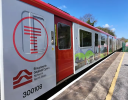
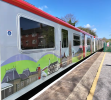
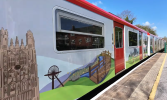
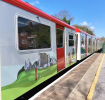
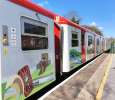
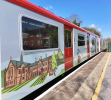
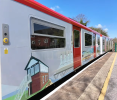
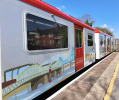
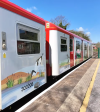
I came across something at 4:00 in this video by SimOnTrains uploaded on Sun 26/4/26 (cropped still frames attached at the bottom of this post). 230008 appears to now have a special livery with the Network North Wales logo and illustrations in a similar style to the ones on the Active Travel 153s.


Attachments

  • Screenshot (12569).png
    Screenshot (12569).png
    5.3 MB · Views: 54
  • Screenshot (12570).png
    Screenshot (12570).png
    5 MB · Views: 52
  • Screenshot (12572).png
    Screenshot (12572).png
    5.7 MB · Views: 50
  • Screenshot (12573).png
    Screenshot (12573).png
    3.7 MB · Views: 47
  • Screenshot (12574).png
    Screenshot (12574).png
    4.2 MB · Views: 44
  • Screenshot (12577).png
    Screenshot (12577).png
    5 MB · Views: 39
  • Screenshot (12578).png
    Screenshot (12578).png
    4.8 MB · Views: 35
  • Screenshot (12579).png
    Screenshot (12579).png
    5 MB · Views: 38
  • Screenshot (12580).png
    Screenshot (12580).png
    4.1 MB · Views: 51

Top