
Haywain
Veteran Member
- Joined
- 3 Feb 2013
- Messages
- 24,847
The number of people making that journey is minuscule.Reading to Shenfield is not an inner-suburban hop.

The number of people making that journey is minuscule.Reading to Shenfield is not an inner-suburban hop.

Normally yes, totally agree with you. In this case the overhead power lines were brought down and I think it affected all tracks because of the headspans. Therefore no electric trains could move and diesel locos had to be brought in. (I’m not saying it’s acceptable to make people wait hours on a stranded train, it isn’t)Why does it take so long to get people off the train/tube?
Get a train that's going in the opposite direction. Take it out of service at the previous stop and get everyone off.

Reading services are to Abbey Wood, roughly 1:25.It was pointed out on this forum before the line opened that not having toilets on these trains was a mistake that would be regretted.
Reading to Shenfield is not an inner-suburban hop. One can only sympathise with the cleaners who need to service this fleet.
The number of people making that journey is minuscule.
Reading services are to Abbey Wood, roughly 1:25.
Shenfield to Heathrow T5 is 1:30.
It's certainly the longest I'd want to hold it, but I expect the number of passengers travelling end to end average in the low single digits per train, if not less.
You can always get off at one of the many toiletted stations en route and hop on the next, it's a metro service after all. Only in disruption does it become a problem.
I'm sure there are issues at night but I don't think they'd necessarily be much different if the journey was half that.

Yep, that's definitely the big issue that they seem to be ignoring and blaming passengers instead. As far as I'm aware it was all the tracks effected so nothing was running, and with the exception of around Heathrow, all the station are within a reasonable walk, so when it became clear nothing was moving for hours (which couldn't have taken more than an hour), surely then get everyone who can walk offToilets or not, maybe it will take a few more incidents like this to drive home the message to the industry that you can't just keep passengers stranded on trains for several hours.

Couldn't agree more. Does anyone know why it wasn't possible to atleast drive to the next station, as it was a caternery issue not a power supply, the whole incident seem so poorly managedThere seems an obsession within the industry that railways are a dangerous place even when no trains are operating and the power is off and trains can only be evacuated when there are large numbers of staff to support. Faster evacuation should be feasible for the vast majority of passengers perfectly safely, making conditions less unpleasant for those who are less mobile and need to remain on board until additional help can be provided. Providing toilets on metro trains is a red herring - they would be unusable after an hour or so. (Written at the same time as @Northerngirl 's post with whom I agree.)

You're a genius and that's a master plan.
How do you do that in a single track tunnel with no power?
The power was off?Does anyone know why it wasn't possible to atleast drive to the next station, as it was a caternery issue not a power supply,
I’ve been skimming this thread for answers and I have some (please feel free to correct me if wrong)Couldn't agree more. Does anyone know why it wasn't possible to atleast drive to the next station, as it was a caternery issue not a power supply, the whole incident seem so poorly managed
 www.railforums.co.uk

Only on Crossrail, Jubilee Line Extension, and I believe Heathrow T5 extension.Hold on if the train is stuck in a single bored tunnel, there is a path alongside the tracks is there not? As well as tunnel lighting. Surely passengers could get off and walk away pretty safely.
Voyagers have these in the emergency equipment cupboard.Having been involved with a number of major breakdowns on the mainline network over the years, the main thing that could really do with a rethiink is battery provision on trains that don't have natural ventilation. There is only limited provision available (you may remember a major failure on the ECML on a very hot day in 2005, which led to the idea of having emergency door bars--allowing doors to be opened for ventilation whilst the passengers remained on the train--which followed a similar kind of self-evacuation incident on what was, in theory a 125mph railway).
Thanks for the explanation, I assumed there would be some sensible reason to turn it all off, even with network rails incompetent that seemed an oversightI’ve been skimming this thread for answers and I have some (please feel free to correct me if wrong)
GWML / Elizabeth line disruption due to OLE down near Paddington
Sat just west of Paddington right now with no overhead power according to the driver!
- 25kV wire came down on the fast lines and wrapped itself round a train, so system had to be isolated.
- Complicated area with lots of crossovers, meaning isolating only fast lines is complex. All lines were isolated
- Lack of motorised switches to isolate lines made it hard to isolate some lines
- all trains in this area are electric; rescue diesel locomotives had to be sent for
- GWR had a drivers strike that day, so didn’t have a driver for their own rescue diesel loco
- Passengers self-evacuated which meant Network Rail had to be more cautious in allowing rescue trains in
- An Elizabeth line train was stranded in the boundary area between Elizabeth line and Network Rail infrastructure, meaning Elizabeth line trains couldn’t terminate in Westbourne Park sidings or go to the depot.
What should happen is the people that need to make the decisions, need to actually make them in a timely manner taking into account all of the information, there was absolutely no need for people to be stuck on a train for 4 hours when it was clear after 20 mins that things aren’t going to be moving quickly, from the small amount of information I’ve read, it was prioritised removing the wires from the train that brought them down rather than getting trains evacuatedPerhaps all trains should be equipped with an emergency bucket for passenger needs, in case of stranding.
What needs to be publicised better is the facilities available at stations.I can well understand it. We travelled to Farringdon from Reading on the Elizabeth Line (first time we'd used it) a couple of weeks ago and I just assumed there would be toilets on the train. I'd been rehydrating following a bit of a heavy night and I was definitely at the crossing my legs stage by the time we got off. I'd really be struggling if I had to go four hours without a wee.
As I remember it, Crossrail's web pages (long before the line opened) promised toilets on all core stations. Having tried to locate some, I don't think any were built - apart from "accessible" ones that are kept locked. There are existing toilets at Paddington and Liverpool Street, but in the mainline stations so a long way away and outside the barriers. There is one at Farringdon, also in the old station, but much closer and with no barriers in between.What needs to be publicised better is the facilities available at stations.
There are only two stations on the entire line without toilet facilities!
Toilets
All surface stations on the Elizabeth line have toilet facilities, and nine out of ten Elizabeth line central section stations have toilet facilities or toilet provisions in an adjacent building. This means 40 of 41 stations have toilet facilities within the station or in an adjacent building. Where toilet facilities exist within stations, at least one will be fully accessible. As a high-frequency, metro-style service, there are no toilets on the Elizabeth line trains.
A Radar key will be needed to unlock some accessible toilets at stations but these can be requested to be opened by a staff member if needed. A link to the accessible toilet map can be found here: TfL Toilets Map.
This came up on tfls site via Google:As I remember it, Crossrail's web pages (long before the line opened) promised toilets on all core stations. Having tried to locate some, I don't think any were built - apart from "accessible" ones that are kept locked. There are existing toilets at Paddington and Liverpool Street, but in the mainline stations so a long way away and outside the barriers. There is one at Farringdon, also in the old station, but much closer and with no barriers in between.
I found this in the Web Archive:
I've not tried to get hold of a staff RADAR keyholder to use one of the locked ones yet, but perhaps all of us with stroppy prostates should make a point of doing so when need arises. However, I don't imagine it's going to be quick enough to allow nipping off one train intending to get back on the next train for the same destination, which was part of the logic (if not the public justification) of not putting them on the trains.
@Horizon22 is spot on here. I am struggling a bit to see why there is so much debate about the presence or absence of toilets on the trains.Indeed.
No toilet facilities only became a problem because a) the train was stranded and b) Network Rail were unable to mobilise response effectively enough.
Batteries definitely look like a potential solution to provide a last-gasp capability to the train, and also keep essential on-train services running longer; this is an approach to mitigating the risk, but as implied above, avoiding stranding with a super-reliable railway, or having comprehensive and rapid mobilisation of a response are also strategies that are available.Couldn't this also be achieved with a battery. Even if it only crawled a few miles before dying.
And that's the attitude that causes people to self-evacuate in the first placeHave any passengers been prosecuted as a result of this incident? For example, by urinating inside the train or disembarking from the train without permission after the doors were forced open.
That's because railways are a dangerous place, even when trains are stopped and power is off. Tripping hazards, slipping hazards. People, if not assisted, may trip and break and ankle. Then they will need more staff to evacuate them.There seems an obsession within the industry that railways are a dangerous place even when no trains are operating and the power is off and trains can only be evacuated when there are large numbers of staff to support. Faster evacuation should be feasible for the vast majority of passengers perfectly safely, making conditions less unpleasant for those who are less mobile and need to remain on board until additional help can be provided. Providing toilets on metro trains is a red herring - they would be unusable after an hour or so. (Written at the same time as @Northerngirl 's post with whom I agree.)
Can you please edit your post to include a quote from the article, as well as a comment of your own, as per forum rules? Many thanks in advance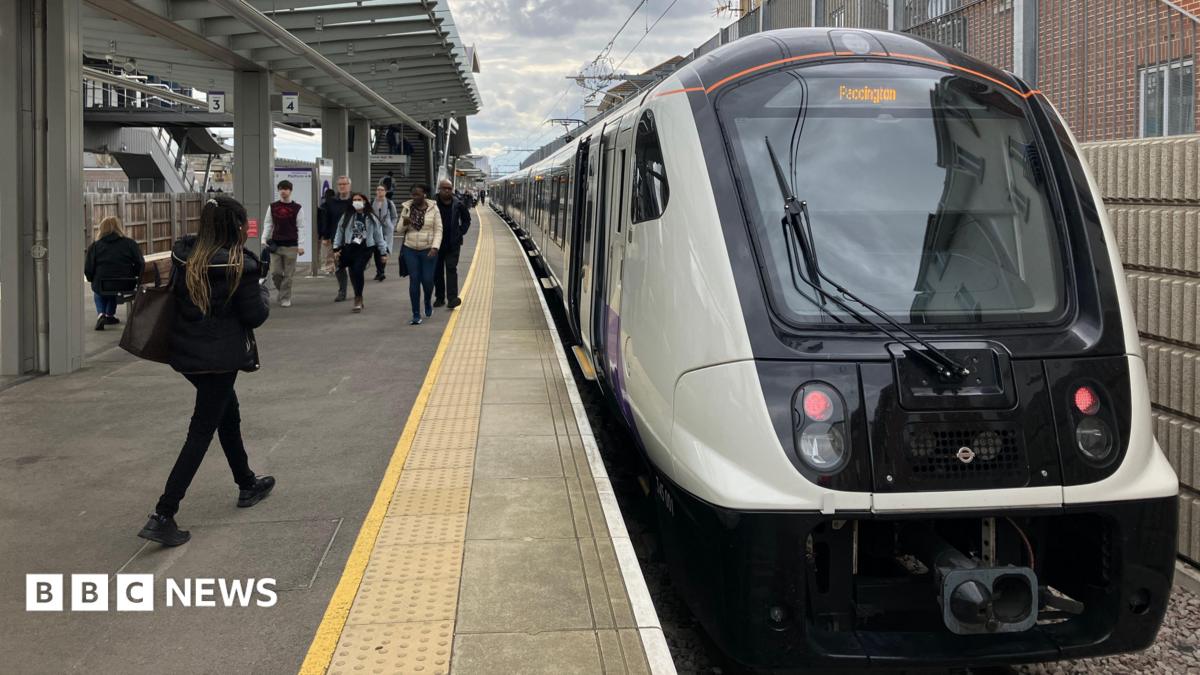
Elizabeth line: Toiletless trains blamed for forced door openings
A lack of Elizabeth line toilets is blamed for stranded passengers "violently" forcing open doors.www.bbc.co.uk
Apologies if this thread has already been created

Liz Line won't be the same, as its not LU, its NR (except maybe the Core section)IIMU LU procedures (and I am not an operator) for stalled trains is to commence considering detraining so that passengers are detrained at 1 hour. ((yes I know that does not always work and there is no need for citing every personal example where this has not happened.))
Eliz line is or ought to be the same - indeed there are somewhat more reasons on Eliz line for this to be much easier what with tunnel side walkways and so on.
I did say /ought/ to be the same, I am talking about the core as an example, ok , I did not state that, but, since I did mention the tunnel walkways, it ought to have been read.Liz Line won't be the same, as its not LU, its NR (except maybe the Core section)
There won't be the staff available to assist detraining like there is on LU, as station staff on NR aren't PTS trained. Distance between stations and access points are also far greater, as is the number of passengers.
The thing which needs to happen is to reduce trains becoming stranded as soon as there's wind of an incident, by keeping them in stations , although there aren't many stations on the GWML to keep trains in)
There's also other stretches of open railway, such as the Hammersmith & City, which run alongside, which would need to be shut to allow evacuations
I think you need a pretty big battery to even trundle a 345, but even then :I assume it’s too late to add a trundle battery on 345.
So what if there's no update from Control for 25 minutes, for whatever reason? Then you don't have regular announcements, and passengers start getting concerned because of the silence, as in the first quoted bullet point. Especially on an Elizabeth Line train, where there is no member of staff for reassurance other than the driver.I think what it means is don't keep repeating messages like waiting for update from control, and should get update soon.
Correct me if I'm wrong, but isn't it necessary to contact the signaller before contacting Control? Imagine, then, an incident such as this occurring again - for every train to contact the signaller and then contact Control is going to take more than 10-15 minutes. Neither will Control have the time to provide a detailed update for each train every ten minutes.Basically using vague timelines of soon, or rolling on and repeating just few minutes is unacceptable. Simply control needs to start indicating the plan and instructions for passengers by about 10-15 minutes, and start giving detailed updates every 10 minutes that can be relayed.


