Our new ticketing site is now live! Using either this or the original site (both powered by TrainSplit) helps support the running of the forum with every ticket purchase! Find out more and ask any questions/give us feedback in this thread!
Why they were built without toilets I'll never understand. People will be quick to blame passengers but not everyone is able to just hold it for 2 hours especially when there was no expectation that they were going to need to on a local commuter train
To be fair, even if there was one universal toilet in that circumstance it would quickly have become full.
The priority, rightly or wrong, is conveying passengers over short distances, sometimes with crush loads. They did add extra toilets at stations on the route.
There are many commutes from the edges of the underground network which may take over an hour - but most people see why it wouldn't be practical to have toilets on the tube. It's unusual for high capacity metro services to have toilets.
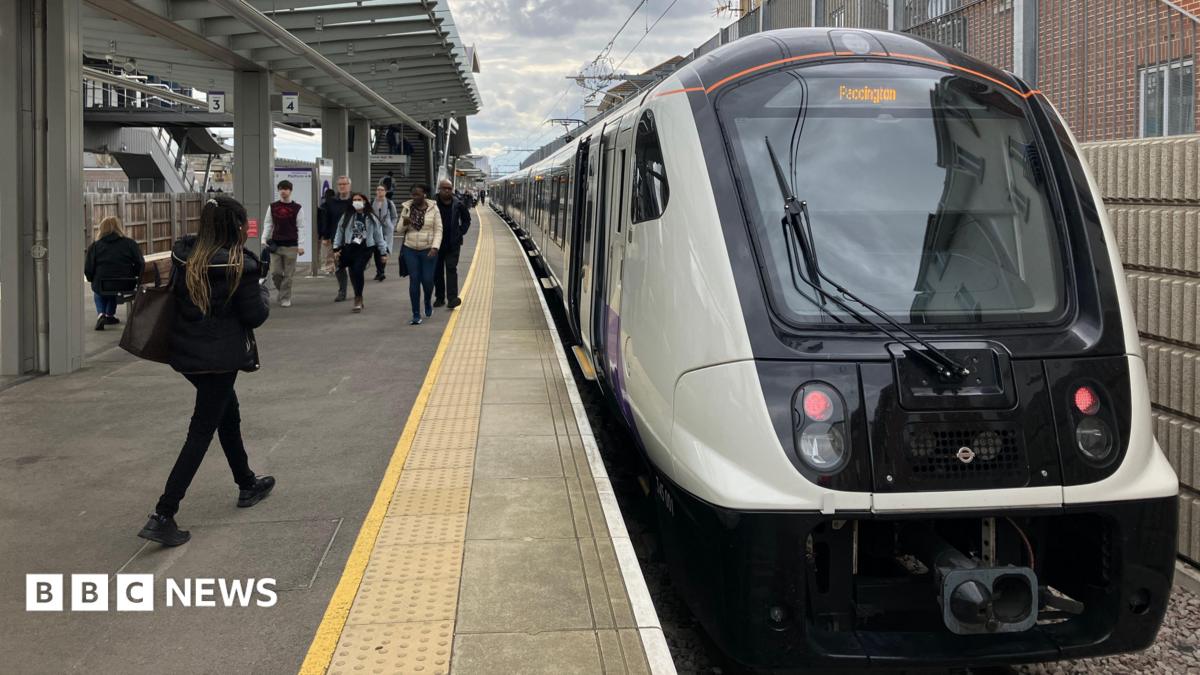
The real fault here is how long the evacuation took.
There are many commutes from the edges of the underground network which may take over an hour - but most people see why it wouldn't be practical to have toilets on the tube. It's unusual for high capacity metro services to have toilets.
The real fault here is how long the evacuation took.
There are many commutes from the edges of the underground network which may take over an hour - but most people see why it wouldn't be practical to have toilets on the tube. It's unusual for high capacity metro services to have toilets.
The real fault here is how long the evacuation took.
And why exactly would it not be practical to have toilets on the tube in 2024?
Most lines are old and kept that way, back when the lines were built it certainly would have been impractical given how toilet systems were emptied and that they run in tunnels but that is no longer the case.
On the lines where there are long journeys then toilets should be considered as much as any other train. Arguably even more so given tube stations rarely have toilets compared to national rail ones.
Personally I'd say any rail service where at least 15% of passenger journeys are over 30 minutes should have a toilet. Certainly the SWR urban network, Thameslink Hertford loop, Elizabeth line, overground and some of the longer tube lines should have them. The rest of the country has toilets on commuter trains, why not London?
Have any passengers been prosecuted as a result of this incident? For example, by urinating inside the train or disembarking from the train without permission after the doors were forced open.
And given the incident involved loss of supply from the overhead line, then they'd quickly run out of power to operate the toilet. As the batteries drain, the train systems will load shed to prioritise lighting, PA etc and shut the toilet. Having been in such a power loss situation on a train with toilets, my first move when it was announced we had lost power was to go to the toilet before anyone else did.
Considering the state of some of the Thameslink toilets and the short turnaround at stations, would toilets really be feasible on the Elizabeth line? Also, where would the waste from a very busy day on a unit be disposed of? I doubt tanks could hold a full day's worth of waste from X number of Elizabeth line passengers before dumping for the next day.
Unlike Elizabeth line trains, Thameslink trains do not regularly terminate and go into a siding roughly every 5 minutes, so toilets can be properly checked for passengers before doors are locked. In doing so, you would add a few minutes to some already tight turnarounds as staff would need to check possibly two or three toilets before closing passenger doors, which at that station probably has some passengers attempting to board the train who may slip through to other locked-out carriages.
I highly doubt one toilet will be fitted to the Lizzy train if it were ever considered, meaning you'd potentially have two or three toilets and less capacity.
I don't condone the damage people caused, but this has happened over and over, most famously with Lewisham a few years ago, where there was a similar outcome. What I remember from that incident was that there were multiple failures, that further delay was caused by passengers disembarking, that there was a complete lack of hierarchical command, but that "control" seemed more concerned with "getting the trains to the right destination", than, er, passengers. Both cases deserve revisiting
And why exactly would it not be practical to have toilets on the tube in 2024?
Most lines are old and kept that way, back when the lines were built it certainly would have been impractical given how toilet systems were emptied and that they run in tunnels but that is no longer the case.
On the lines where there are long journeys then toilets should be considered as much as any other train. Arguably even more so given tube stations rarely have toilets compared to national rail ones.
Personally I'd say any rail service where at least 15% of passenger journeys are over 30 minutes should have a toilet. Certainly the SWR urban network, Thameslink Hertford loop, Elizabeth line, overground and some of the longer tube lines should have them. The rest of the country has toilets on commuter trains, why not London?
The tube network is designed to carry a high volume of passengers over a short distance - space taken up by toilets is better used for additional standing capacity.
I completely agree that more stations should have toilets and indeed more public toilets in general should be available.
I don't think any of the other metro systems in the country have toilets on trains - Newcastle metro, Merseyrail, Glasgow subway for example. And I can't think of any city rapid transit in the world which does. It's definitely not unique to London.
The report is a classic of the ‘operators should have frequent updates even if they’re still uncertain on the situation so passengers are reassured, but shouldn’t do frequent updates if the situation might change as passengers can get frustrated’ genre.
Nor can all the trains have the limitless refreshments the writers sound like they would like. How would the driver on a standing only Lizzy Line train walk through with enough water for the the thousand+ passengers.
Ultimately this report feels like it approaches train evacuations like they can happen in an ideal world where the operator knows whats going to happen, rather than the reality that evacuations of busy trains are always going to be difficult and some passengers will be confused
And given the incident involved loss of supply from the overhead line, then they'd quickly run out of power to operate the toilet. As the batteries drain, the train systems will load shed to prioritise lighting, PA etc and shut the toilet. Having been in such a power loss situation on a train with toilets, my first move when it was announced we had lost power was to go to the toilet before anyone else did.
The report is a classic of the ‘operators should have frequent updates even if they’re still uncertain on the situation so passengers are reassured, but shouldn’t do frequent updates if the situation might change as passengers can get frustrated’ genre.
Nor can all the trains have the limitless refreshments the writers sound like they would like. How would the driver on a standing only Lizzy Line train walk through with enough water for the the thousand+ passengers.
Ultimately this report feels like it approaches train evacuations like they can happen in an ideal world where the operator knows whats going to happen, rather than the reality that evacuations of busy trains are always going to be difficult and some passengers will be confused
Frequent updates are good so long as the PA system actually works, which is normally gone after 60-90 minutes. Also storing crates of water is also not always super practical.
One issue is often the operator and the team doing the recovery are not the same people (TOC or Network Rail), so timeframes are missed or are not aligned. Something you would hope will improve in future. The main issue is the stranded trains in the first place, which is normally an infrastructure failing.
The tube network is designed to carry a high volume of passengers over a short distance - space taken up by toilets is better used for additional standing capacity.
I completely agree that more stations should have toilets and indeed more public toilets in general should be available.
I don't think any of the other metro systems in the country have toilets on trains - Newcastle metro, Merseyrail, Glasgow subway for example. And I can't think of any city rapid transit in the world which does. It's definitely not unique to London.
If more toilets were provided at EL stations, there would be complaints from those who have so little time in their lives that they would not be able to step off the train to relieve themselves and demand onboard facilities.
Having spent over 60 minutes yesterday evening stuck on a packed circle line train that refused to move despite the drivers efforts I can see how tempting it would be to force the doors open. Things were getting quite fraught. We had already had the emergency pas com pulled. The gent on the floor near me very obviously suffering with claustrophobia would very readily have bailed if he had known how to. It is only a minority like me who understand the dangers of getting out of a stranded train.
In these situations the operators rely far too heavily on the patience of a trainload of people - good luck with that.
EDIT
I don't think loos would have made a huge difference in my case above - not for another hour perhaps.
The tube network is designed to carry a high volume of passengers over a short distance - space taken up by toilets is better used for additional standing capacity.
In principle I agree, so then the issue becomes that the tube network is not always being used in that way.
Perhaps we need proper commuting trains to the extremities of the tube instead, I'm sure the people of epping, Uxbridge etc would very much prefer a proper train service over a slow tube line .
At which point I think we come full circle and realise tube trains with toilets is cheaper and easier than building new lines for the passengers using the tube as commuter lines (s bahn) rather than as a local u bahn metro system
== Doublepost prevention - post automatically merged: ==
If more toilets were provided at EL stations, there would be complaints from those who have so little time in their lives that they would not be able to step off the train to relieve themselves and demand onboard facilities.
The thing with toilets on trains is that they are there and open when people are travelling.
Toilets at stations seem to be closed more often than not. For example I visited 3 stations with toilets today and all 3 were closed:
Brookwood at 16:30 - I've never seen this toilet open, presumably just permanently locked despite no sign saying as much
Farnborough main -2 hour delay stranded from 18:00 to 20:00. Locked gated toilet. No idea when this opens if at all
Guildford: 22:30 -locked due to flooding. To be fair this is normally open so I'll give it a pass, though how the flooding at Winchester managed to flood a relative high point station toilet at Guildford I do not know
Point is, it's very rare to find operational toilets at stations to the point it's better to assume they're not there. That's never going to be the case on trains. Even if one gets locked out there'd be another a few carriages down, especially on a long train like the Elizabeth line
And why exactly would it not be practical to have toilets on the tube in 2024?
Most lines are old and kept that way, back when the lines were built it certainly would have been impractical given how toilet systems were emptied and that they run in tunnels but that is no longer the case.
On the lines where there are long journeys then toilets should be considered as much as any other train. Arguably even more so given tube stations rarely have toilets compared to national rail ones.
Personally I'd say any rail service where at least 15% of passenger journeys are over 30 minutes should have a toilet. Certainly the SWR urban network, Thameslink Hertford loop, Elizabeth line, overground and some of the longer tube lines should have them. The rest of the country has toilets on commuter trains, why not London?
It's only in recent times that rolling stock manufacturers have worked out how to fit air conditioning into the very tight loading gauge of the deep tube lines. Even with the innovation of the "New Tube For London" stock (mixed vehicle length and staggered bogie positions) you'd struggle to fit both aircon equipment and toilet tanks for 'grey' water and waste in that space.
In addition, if toilets were fitted at least one would need to be a large universal access unit, which would take up a large portion of whichever carriage it was in. I'm not sure you'd even be able to provide a suitable door mechanism that could open as wide as required in the cramped carriage dimensions.
The crowding on the central sections is so severe that even if a toilet was provided you'd struggle to get to it unless you'd boarded out in zone 5 and selected a seat in the right area. Then there's the vandalism issue, particularly on late night services in the outer areas. Providing a space that's by necessity hidden from CCTV coverage would just encourage anti-social behaviour.
As for other networks, the SWR suburban lines don't have toilets at present for the most part, though will gain them if and when the 701s enter squadron service. Thameslink has them, but those units run as far as Brighton so it makes more sense. Merseyrail doesn't, and for a long time much of the Glasgow suburban lines didn't either.
If the tube should have toilets, then shouldn't the Superloop buses have them too?
Agreed. I don't blame anyone for forcing their way out. To abandon customers for so long is totally unacceptable, and to expect people to meekly stay put all that time only works in Britain where people are generally so docile (except when drunk!).
Have any passengers been prosecuted as a result of this incident? For example, by urinating inside the train or disembarking from the train without permission after the doors were forced open.
I think what it means is don't keep repeating messages like waiting for update from control, and should get update soon.
Basically using vague timelines of soon, or rolling on and repeating just few minutes is unacceptable. Simply control needs to start indicating the plan and instructions for passengers by about 10-15 minutes, and start giving detailed updates every 10 minutes that can be relayed. At moment control tends to think about trains, crews, emergency response only, and often forgets to explain the plan for the trapped passengers.
Why does it take so long to get people off the train/tube?
Get a train that's going in the opposite direction. Take it out of service at the previous stop and get everyone off.
Take that train to where the stranded train is, line up the doors and transfer everyone across? Then take them to the next station where they'll have to find their own way until disruption ends.
Even if you could only line up one set of doors (due to need to supervise and or need for a ramp or similar between the trains), could that still work, everyone walks through the train to the end with the ramp, then walk back through the new train to make room for others.
Surely that's got to be better than waiting 2 hours and running the risk of having people exiting the train/tube themselves.
Toilets or not, maybe it will take a few more incidents like this to drive home the message to the industry that you can't just keep passengers stranded on trains for several hours.
Why does it take so long to get people off the train/tube?
Get a train that's going in the opposite direction. Take it out of service at the previous stop and get everyone off.
Take that train to where the stranded train is, line up the doors and transfer everyone across? Then take them to the next station where they'll have to find their own way until disruption ends.
Even if you could only line up one set of doors (due to need to supervise and or need for a ramp or similar between the trains), could that still work, everyone walks through the train to the end with the ramp, then walk back through the new train to make room for others.
We are aware of an issue with emails from the Forum to Microsoft-based email accounts (hotmail/outlook/live.com email addresses). This is being looked into currently, thanks for your patience meanwhile.

 www.bbc.co.uk


