Given the consistency, and complete lack of any smell, I’m pretty sure one place I visited had just filled their dispensers with water!Some places seem to use such thin watery "gel" that I'm sure it is being diluted. TK Maxx is an example of this - all their stores that I've been in it just runs through your fingers.

-
Our new ticketing site is now live! Using either this or the original site (both powered by TrainSplit) helps support the running of the forum with every ticket purchase! Find out more and ask any questions/give us feedback in this thread!
You are using an out of date browser. It may not display this or other websites correctly.
You should upgrade or use an alternative browser.
You should upgrade or use an alternative browser.
the most over the top restrictions introduced
- Thread starter Jamiescott1
- Start date
- Status
- Not open for further replies.
Sponsor Post - registered members do not see these adverts; click here to register, or click here to log in
R
RailUK Forums

Observe how many people use sanitiser if it's just placed there with nobody watching it.
Yes, that. That's why.
(Clue: it's not about protecting the individual, it's about protecting others)
The theory behind sanitising is that virus won’t be transmitted from surfaces you touch to your eyes/nose. It’s more about protecting oneself from infection, unlike the theory behind masks, for example.
By all means leave sanitiser out for people who wish to use it, but there’s no need for staff to insist every customer applies it (I’m pleased to say in my experience that isn’t generally happening - most shop staff have more sense!). If I’ve just washed my hands I’m not going to needlessly sanitise them again just to satisfy someone standing at the entrance of M&S. That’s just pointless theatrics.
It's theatre, nothing more.
That really sums up many of the restrictions we have seen described on this thread. Silly, ineffectual rituals, mindlessly followed, just to be seen to be doing something.
Jamiescott1
Member
- Joined
- 22 Feb 2019
- Messages
- 1,116
(Clue: it's not about protecting the individual, it's about protecting others)
Can you quote any stats of how many people have died from covid 19 caught by touching clothes in a shop that an infected person has touched ?

Skimpot flyer
Established Member
- Joined
- 16 Nov 2012
- Messages
- 1,939
I think the high levels of compliance with many of the restrictions and ineffectual rituals, grudgingly followed, are testimony to people’s wish to be seen to be doing ‘the right thing’. They don’t necessarily agree with the measures, but are afraid of looking bad in front of others.The theory behind sanitising is that virus won’t be transmitted from surfaces you touch to your eyes/nose. It’s more about protecting oneself from infection, unlike the theory behind masks, for example.
By all means leave sanitiser out for people who wish to use it, but there’s no need for staff to insist every customer applies it (I’m pleased to say in my experience that isn’t generally happening - most shop staff have more sense!). If I’ve just washed my hands I’m not going to needlessly sanitise them again just to satisfy someone standing at the entrance of M&S. That’s just pointless theatrics.
That really sums up many of the restrictions we have seen described on this thread. Silly, ineffectual rituals, mindlessly followed, just to be seen to be doing something.
My friend’s daughter forced her own mother to put on a face covering on entry to a coffee shop the other day, even though my friend could legitimately claim to be exempt. The daughter was anxious and even said ‘please don’t make a scene’


trainophile
Established Member
It's sardonically amusing that many stations still have the toilets locked out of use, while displaying large posters asking passengers to wash their hands before and after travelling by train. There doesn't seem to be any joined up thinking nowadays.
I noticed this whilst travelling on Merseyrail. No toilets on the trains and not one at every station. Most stations have a single toilet that you have to press a buzzer to ask ticket office staff to release the door. In what world do the people that devise these notices live? Do they think that people will form a queue to use the toilet to wash their hands? In the real world they definitely don't.It's sardonically amusing that many stations still have the toilets locked out of use, while displaying large posters asking passengers to wash their hands before and after travelling by train. There doesn't seem to be any joined up thinking nowadays.
Skimpot flyer
Established Member
- Joined
- 16 Nov 2012
- Messages
- 1,939
Last week, two out of five adjoining basins in the gents’ washroom where I work have been taped ‘out of use, to assist in social distancing’.
Two drivers were discussing this development, one remarking on how it had ‘only taken seven months to put signs up’.
Are people really incapable of thinking for themselves in such situations? They need to be directed in every such situation ?
The irony is, one of the two hand-dryers in that facility is not functional at the moment, so people queue at the one that works... directly behind people using basins 5 and 3, and if maintaining social distancing properly, basin 1 too!
Two drivers were discussing this development, one remarking on how it had ‘only taken seven months to put signs up’.
Are people really incapable of thinking for themselves in such situations? They need to be directed in every such situation ?
The irony is, one of the two hand-dryers in that facility is not functional at the moment, so people queue at the one that works... directly behind people using basins 5 and 3, and if maintaining social distancing properly, basin 1 too!
WelshBluebird
Established Member
- Joined
- 14 Jan 2010
- Messages
- 5,608
Are people really incapable of thinking for themselves in such situations? They need to be directed in every such situation ?
Given some people's behaviour - yes they do sadly!
Last week, two out of five adjoining basins in the gents’ washroom where I work have been taped ‘out of use, to assist in social distancing’.
Two drivers were discussing this development, one remarking on how it had ‘only taken seven months to put signs up’.
Are people really incapable of thinking for themselves in such situations? They need to be directed in every such situation ?
The irony is, one of the two hand-dryers in that facility is not functional at the moment, so people queue at the one that works... directly behind people using basins 5 and 3, and if maintaining social distancing properly, basin 1 too!
Yep, exactly the same sort of nonsense where I work. These kinds of measures are not thought through properly (or even at all!) and can actually be counter productive. But so long as there are lashings of black and yellow tape everywhere, and lots of idiotic signposts stating the bleeding obvious, the relevant boxes can be ticked!
Bletchleyite
Veteran Member
The theory behind sanitising is that virus won’t be transmitted from surfaces you touch to your eyes/nose. It’s more about protecting oneself from infection, unlike the theory behind masks, for example.
It's both. Sanitising on entering somewhere is so you don't get the COVID on your mucky hands onto the products you handle in that shop and spread it to others. Sanitising on exit is so you don't get the COVID you got on your hands from the products you handled into your eyes and nose when you eventually touch them.
It's both. Sanitising on entering somewhere is so you don't get the COVID on your mucky hands onto the products you handle in that shop and spread it to others. Sanitising on exit is so you don't get the COVID you got on your hands from the products you handled into your eyes and nose when you eventually touch them.
I don’t think that follows. When I go into marks to buy a sandwich and a bottle of water, I’m not going to handle anything other than the items I will purchase. These are not the kind of products that are likely to be picked up, examined and replaced on the shelf. There’s no need to even touch the tills as items can be scanned, and paid for with contactless.
Insisting that people sanitise on entry to these kinds of shops is yet another knee jerk policy which simply hasn’t been thought through properly. Sanitising upon leaving (in case the products themselves have virus on them) makes a lot more sense.
Last edited:

Howardh
Established Member
- Joined
- 17 May 2011
- Messages
- 9,796
I'm glad that Lidl and other shops have a hand/trolly sanitising station when I walk in. I give the handles a thorough clean. It's interesting how they lay out the trollies, the same half-dozen will be used all day, the other 20 in the queue left alone - because you put your trolly back at the front and the next shopper takes it. So after a few hours it could be full of the virus.I don’t think that follows. When I go into marks to buy a sandwich and a bottle of water, I’m not going to handle anything other than the items I will purchase. These are not the kind of products that are likely to be picked up, examined and replaced on the shelf. There’s no need to even touch the tills as items can be scanned, and paid for with contactless.
Insisting that people sanitise on entry to these kinds of shops is yet another knee jerk policy which simply hasn’t been thought through properly. Sanitising upon leaving (in case the products themselves have virus on them) makes a lot more sense.
DustyBin
Established Member
I’ve always taken hand hygiene fairly seriously, I’m not obsessive (I don’t think!) but I carried a little bottle of sanitiser with me long before Covid-19 arrived. I’d mostly use it if I couldn’t wash my hands before eating. I do however wonder whether there will be a long term effect on our immune systems as a result of over sanitising? There doesn’t appear to be any strong evidence to suggest that our immune systems actually regress, but there is some concern that young children won’t develop immunity to everyday germs as they aren’t being exposed. Sorry a bit OT but it’s something to consider.
In the summer a place I went to had a 10l tub with a push down pump, it squirted a huge quantity of foul smelling very runny liquid all over my hand and me. Closer inspection revealed the contents to be liquid with some kind of solids floating about. I don't know if the heat had degraded it or what, but I certainly wasn't convinced it had sanitised my hands - more likely dosed them with all sorts of stuff. Real irony was I needn't have bothered. It was for filling in the movements log at an unmanned airfield, and the pen they had provided didn't work anyway, so I used my own!Some places seem to use such thin watery "gel" that I'm sure it is being diluted. TK Maxx is an example of this - all their stores that I've been in it just runs through your fingers.
Also, I do wonder whether any residual "gel" (especially the watery stuff) gets onto items on the rails and shelves. If I were a shopkeeper I would be doubtful about displaying a rack of silk shirts (for example) while everyone is dripping with hand sanitiser. Some places provide a roll of paper to wipe with but not all of them do.
Then you get the places where the gel is horribly slimy, or scented. I was eating my lunch last week and wondered why my wrap had a bitter taste. Then I realised the gel I'd used hours earlier had left a residue on my hands (yes I had washed them subsequently!). Tea tree oil.
Bletchleyite
Veteran Member
Then you get the places where the gel is horribly slimy, or scented. I was eating my lunch last week and wondered why my wrap had a bitter taste. Then I realised the gel I'd used hours earlier had left a residue on my hands (yes I had washed them subsequently!). Tea tree oil.
I must admit I've wondered for a second if I was experiencing COVID related change of taste, then realised it was sanitiser from my hands.

jumble
Established Member
- Joined
- 1 Jul 2011
- Messages
- 1,500
And I'd inform you that you were unwelcome to ever return to my store. Large stores will not suffer from the loss of one customer. Ryanair has made a successful business of telling people who are awkward that they aren't worth their while catering for.
Unless you have an allergy, in which case (a) say so, and (b) use whatever you've brought yourself as a non-allergic alternative in front of them, you are just being stubborn for the sake of being stubborn and just making the shop's job hard for no particular reason.
How come supermarkets here in London do not as a rule do not have anyone checking if people are sanitising ?
I imagine their risk assessment says there is no need to try and enforce this and presumably this applies to other shops as well
It might be concluded that any problems your shop encounters are of their own making
I dont like sanitising in every shop if i have done so in the previous few minutes as my skin does not feel healthy and I do not need someone to tell me to do so as I am not 12 years old
Howardh
Established Member
- Joined
- 17 May 2011
- Messages
- 9,796
Just an aside r/e hand gel, last month I had a small bottle in the kitchen which I'd frogotten to put the top back on. The following morning there were six mummified fruit-flies in there. I think I've found the answer to my annual autumn problem!!
How come supermarkets here in London do not as a rule do not have anyone checking if people are sanitising ?
I imagine their risk assessment says there is no need to try and enforce this and presumably this applies to other shops as well
It might be concluded that any problems your shop encounters are of their own making
I dont like sanitising in every shop if i have done so in the previous few minutes as my skin does not feel healthy and I do not need someone to tell me to do so as I am not 12 years old
Supermarkets as a rule are (rightly) not expecting their staff to enforce any of the Covid measures. Staff members taking it upon themselves to ask questions and insist on sanitiser etc. are most likely simply being jobsworths, and should be ignored or complained about.
I hope you're spraying the handles and waiting a full 5 minutes for the disinfectant to evaporate. Otherwise it's a waste of time.I'm glad that Lidl and other shops have a hand/trolly sanitising station when I walk in. I give the handles a thorough clean. It's interesting how they lay out the trollies, the same half-dozen will be used all day, the other 20 in the queue left alone - because you put your trolly back at the front and the next shopper takes it. So after a few hours it could be full of the virus.
Bletchleyite
Veteran Member
I hope you're spraying the handles and waiting a full 5 minutes for the disinfectant to evaporate. Otherwise it's a waste of time.
It's not absolute and that makes about as much sense as "the virus comes out after 10pm" jibe does. Its effect will be best if you do that. It's likely that doing something lesser will still have some effect.
It has no effect. It's the same as household bog cleaner. If you flush immediately it doesn't work. You may as well spit on the handle and wipe it off. It leads to a false sense of security. There is no substitute for hand washing /sanitising and not touching your face.It's not absolute and that makes about as much sense as "the virus comes out after 10pm" jibe does. Its effect will be best if you do that. It's likely that doing something lesser will still have some effect.
I hope you're spraying the handles and waiting a full 5 minutes for the disinfectant to evaporate. Otherwise it's a waste of time.
Correct, it'll be an inverse exponent.It's not absolute and that makes about as much sense as "the virus comes out after 10pm" jibe does. Its effect will be best if you do that. It's likely that doing something lesser will still have some effect.
Washing your hands the way you always have is almost as effective as washing them very thoroughly whilst singing "Happy Birthday" twice, for similar reasons.
In the food industry, D-values are used to ensure food is safe to eat. For example the major risk with canned food is Clostoridium Botulinum. At 121C this has a D-value of 12 seconds, which means that there is a 1 log, or 90% reduction in the population of that bacteria in 12 seconds at that temperature. As you can never absolutely ensure that every last bacteria has been killed, the food industry accepted standard is "12 D". So your tin of beans goes through a retort which ensures the centre of the food reaches 121C for at least 144 seconds.
If you assume every can is contaminated prior to treatment, this means that 1 in a trillion will be contaminated after treatment.
If you treated them for 6D, one in a million would be contaminated.
It's the same with the 5 minutes or whatever the value is for sanitising the handle of a trolley. If 5 minutes is 12D, then 25 seconds of contact time is going to reduce any pathogen load by 90%. That's good enough for most people as you aren't likely to injest the trolley handle. And of course it would continue to work anyway as yo proceed round the store.
For the record, I view sanitising the trolley or basket handles as utterly pointless, given everything in the shop will have been touched by many people anyway. It's another of the facile measures I refuse to partake in.
It's likely that doing something lesser will still have some effect.
Quite an assumption being made there.
That attitude is what has led to people mindlessly driving around with masks on, alone in their cars, wearing visors with no masks as a comfort blanket etc. Whether it actually makes any difference doesn’t matter, it’s a case of “everyone else is doing it so we will do it anyway”. It’s simply ritualistic, thoughtless behaviour.
Bletchleyite
Veteran Member
It has no effect.
False. If you spray it and rub with a clean cloth, the alcohol combined with the rubbing WILL have an effect. It just won't be as good as using it as listed.
There is no substitute for hand washing /sanitising and not touching your face.
You should do that as well.

kristiang85
Established Member
- Joined
- 23 Jan 2018
- Messages
- 2,745
Last weekend some selfish fool in Bedgelert occupied an outside table for two leaving an almost identical table for one free
This cost the pub a couple of drinks that we would have had.
To be fair, I think pubs tell you where to sit now, and you can't move of your own accord. So it might well be s/he was put there by the pub when it was the only space, and the other table's occupant left before you got there.
jumble
Established Member
- Joined
- 1 Jul 2011
- Messages
- 1,500
Maybe but I have not been told where to sit in any pub I have been in for the last few weeks except for one where we partook of luncheon and the imbeceles put us all near the kitchen closer than 1 meter to other punters clearly for their own convenience when the rest of the pub was emptyTo be fair, I think pubs tell you where to sit now, and you can't move of your own accord. So it might well be s/he was put there by the pub when it was the only space, and the other table's occupant left before you got there.
I seriously thought of grassing them up to their head office but was not convinced anyone would care
Scotrail12
Member
- Joined
- 16 Nov 2014
- Messages
- 840
What constitutes as an essential item? And what is the point of this crappy rule?
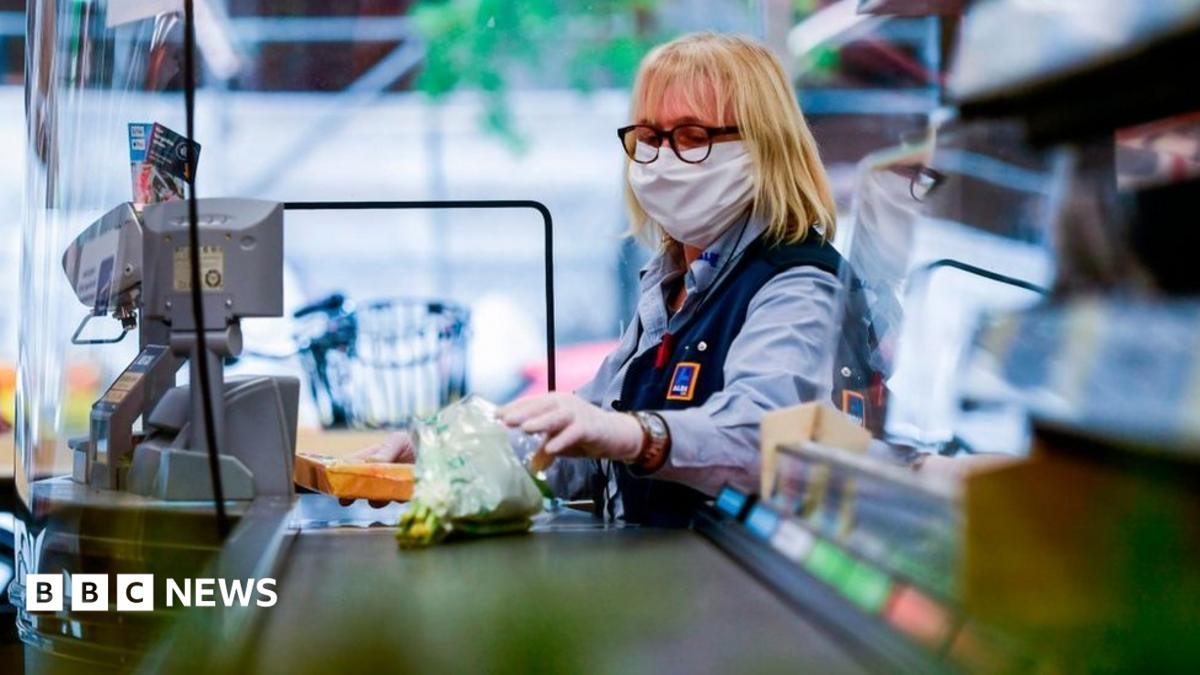
 www.bbc.co.uk
Wales lockdown: Supermarkets told to sell only essential items
Retailers will be barred from selling items like clothes when Wales goes into a two-week lockdown.
www.bbc.co.uk
Supermarkets will be unable to sell items like clothes during the 17-day Covid firebreak lockdown in Wales.
First Minister Mark Drakeford said it will be "made clear" to them they are only able to open parts of their business that sell "essential goods".
During lockdown many retailers will be forced to shut.
But food shops, off-licences and pharmacies can stay open when lockdown begins on Friday at 18:00 BST.
Last edited:
What constitutes as an essential item? And what is the point of this crappy rule?
Wales lockdown: Supermarkets told to sell only essential items
Retailers will be barred from selling items like clothes when Wales goes into a two-week lockdown.
I think he's half-rightMr Drakeford told a Senedd committee on Friday that "in the last lockdown, people were reasonably understanding of the fact that supermarkets didn't close all the things that they may have needed to".
"I don't think people will be as understanding this time."
- Joined
- 13 Dec 2018
- Messages
- 4,583
Which makes him half wrong?!!!I think he's half-right
Mr Drakeford told a Senedd committee on Friday that "in the last lockdown, people were reasonably understanding of the fact that supermarkets didn't close all the things that they may have needed to".
What, so he seriously thinks that people were actually bothered that supermarkets hadn't reduced what they were selling, and this time will be grateful that nobody is allowed to buy any socks? What planet are these people on?
And why exactly do they "need" to stop selling socks (or USB cables, or whatever)?
- Status
- Not open for further replies.