Used as described, massive amiounts of irradiated dirt, aka fallout.So what would the side effects of these "low yield nuclear weapons" be?

-
Our new ticketing site is now live! Using either this or the original site (both powered by TrainSplit) helps support the running of the forum with every ticket purchase! Find out more and ask any questions/give us feedback in this thread!
You are using an out of date browser. It may not display this or other websites correctly.
You should upgrade or use an alternative browser.
You should upgrade or use an alternative browser.
The Middle East conflict
- Thread starter Killingworth
- Start date
Sponsor Post - registered members do not see these adverts; click here to register, or click here to log in
R
RailUK Forums
Used as described, massive amiounts of irradiated dirt, aka fallout.
So the stated regime considers this acceptable, presumably. Assuming the alleged comments are correct.
If they are, we should have nothing to do with them until the leadership changes to one less willing to throw nuclear weapons around as if they were toys.

Class73Electro
Member
Which ends up very ironic, seeing as this is essentially the "reason" (if you can call it that, depends on the day!) for the invasion of Iran... and Iraq...So the stated regime considers this acceptable, presumably. Assuming the alleged comments are correct.
If they are, we should have nothing to do with them until the leadership changes to one less willing to throw nuclear weapons around as if they were toys.

brad465
Veteran Member
Another story from Dubai that will do nothing to help the image of the city and UAE as a whole attract British nationals:
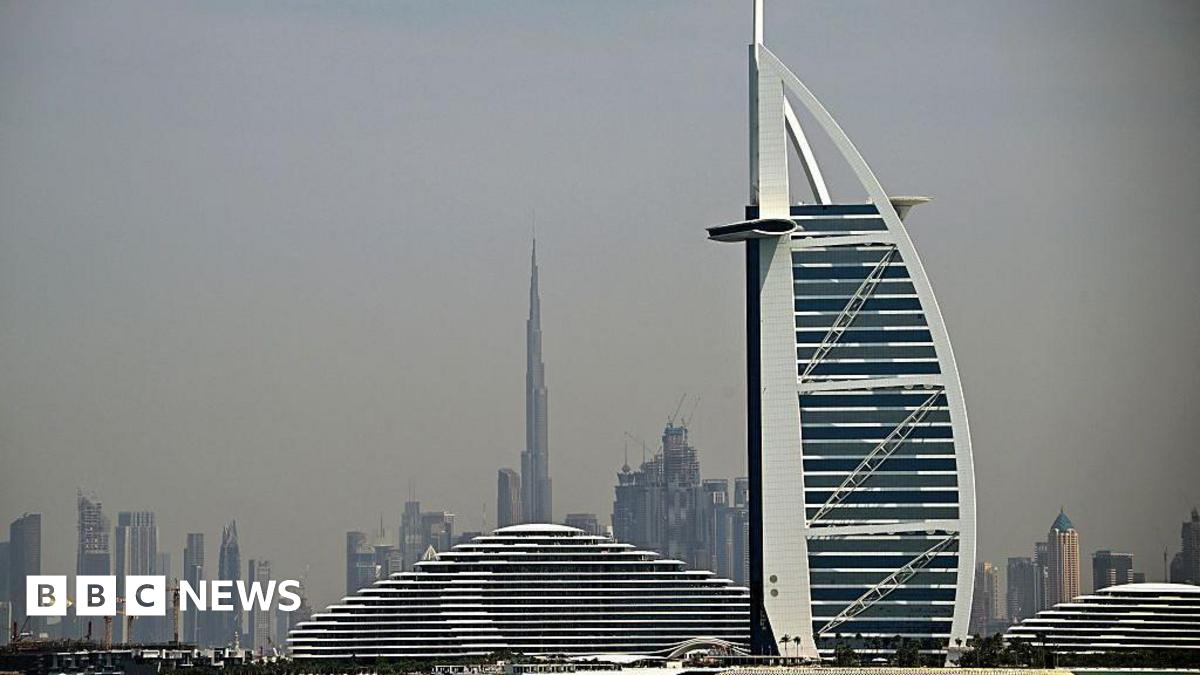
 www.bbc.co.uk
British man charged in Dubai for alleged filming of Iranian missiles
Foreign Office officials are understood to be supporting his family.
www.bbc.co.uk
A British man has been charged under cyber-crime laws in Dubai after allegedly filming Iranian missiles over the city.
The tourist was detained under a law in the United Arab Emirates that prohibits publishing or sharing material that could disturb public security, according to Detained in Dubai, an organisation that provides legal assistance to individuals in the UAE.
Foreign Office officials are understood to be supporting his family.
Radha Stirling, Detained in Dubai CEO, said the man from London was charged along with 20 other people after police found a video of an Iranian missile strike in Dubai on his phone.
She told the BBC the formal charges were "very vague".
"I've reviewed the charge sheet and from reading it you wouldn't know what they've done wrong," she said.
"We're seeing more and more people being charged under the UAE's cyber-crime rules."
She added that the family of the British man had been able to speak to him following his detainment.
Criticism of the government is illegal in the UAE.
Stirling told the BBC that she believed the UAE had detained people for filming missiles as they "want to maintain the facade that it is safe for tourists".
For years, Dubai has cultivated a reputation as a glamorous and attractive destination for expats pursuing business opportunities and travel.
Conflict across the Middle East has entered a second week after the US and Israel launched wide-ranging strikes on Iran, killing the country's supreme leader on 28 February.
Iran has continued to respond by launching attacks on Israel and US-allied states in the Gulf, which have extended to non-military targets, including civilian sites and energy facilities.
Some of the UAE's most iconic buildings have been damaged - including Fairmont The Palm hotel, in the luxurious Palm Jumeirah area, and the Burj Al Arab hotel.
Flights across the Middle East have also been severely disrupted by the conflict.
So what would the side effects of these "low yield nuclear weapons" be?
It would presumably be underground as the weapon would have buried its self before exploding, like an underground nuclear test. If you get a collapse and make a crater, like Sedan in 1965, then you would get area contamination and a fallout plume, although the Sedan weapon was very large. Ground bursts with earth thrown up tend to localise the radiation as the earth and dust falls to ground level quickly. Air bursts tend to push more radioactivity upwards into the higher atmosphere to drift. You’d imagine these things can be modelled so the weapon would remain underground with earth on top. However it’s clearly a risk.
The major problem is the optics of using a nuclear weapon, even if this use would be quite different from an airburst over Tehran or similar. The Iranian regime, or another, could use it as justification for exploding a dirty bomb in Tel Aviv etc.
Class73Electro
Member
https://www.bbc.co.uk/news/live/c4gqjyk0vx3t at 14:01Trump says US makes 'a lot of money' when oil prices go up
Well I'd never have guessed...
So do we. We export millions of tons of the stuff each year.
So do we. We export millions of tons of the stuff each year.
Who is "we"?
Directors and shareholders of oil companies does not equal the British public who have to deal with higher energy prices.
Railwaycat
Member
It would presumably be underground as the weapon would have buried its self before exploding, like an underground nuclear test. If you get a collapse and make a crater, like Sedan in 1965, then you would get area contamination and a fallout plume, although the Sedan weapon was very large. Ground bursts with earth thrown up tend to localise the radiation as the earth and dust falls to ground level quickly. Air bursts tend to push more radioactivity upwards into the higher atmosphere to drift. You’d imagine these things can be modelled so the weapon would remain underground with earth on top. However it’s clearly a risk.
The major problem is the optics of using a nuclear weapon, even if this use would be quite different from an airburst over Tehran or similar. The Iranian regime, or another, could use it as justification for exploding a dirty bomb in Tel Aviv etc.
The weapon couldn't bury itself, an underground nuclear test involves actually burying the weapon/placing it in a chamber and sealing it. Radioactive dust from a ground burst will travel to wherever the wind blows it, could be many miles away - it's basically pollution, except it's deadly, at least in the short term. Air bursts - can you provide a source for the fallout effects? I seem to remember reading that an air burst is less deadly long term radiation wise than a ground burst. Dirty bombs are in a different league, and it's difficult to see how, if someone had the material and the will, they could be prevented - no technical knowledge required there to cause chaos.
I wonder what happened to the neutron bomb? It's a wonder that's not been revived by the Whitehouse Taliban.
The big question seems to be, is Mojtaba Kamikaze actually still alive...
The weapon couldn't bury itself, an underground nuclear test involves actually burying the weapon/placing it in a chamber and sealing it.
I mean the weapon would bury its self as in penetrating the earth or concrete before exploding. Basically a nuclear GBU-57. That way you could use a relatively small nuclear warhead.
You would need a warhead that can withstand the initial impact.I mean the weapon would bury its self as in penetrating the earth or concrete before exploding. Basically a nuclear GBU-57. That way you could use a relatively small nuclear warhead.
You would need a warhead that can withstand the initial impact.
A ground penetrating casing for the B61 device was created in the 1990s. Officially development stopped, but who knows what’s available now really. It’s interesting that nuclear weapons development continued even after the various arms proliferation treaties were signed.
the nuclear information project: the B61-11
The Nuclear Information Project provides declassified documents and analysis about nuclear weapons policy and operations.
www.nukestrat.com
The government had known about safety issues in the B53 "for twenty years," Sandia Director Paul Robinson stated in 1997. But the brute force of the weapon was considered the only means for holding a few high-priority Soviet underground targets at risk, so public safety was disregarded. Not until the late 1980s did the planners consider replacing the B53 with an earth-penetrating weapon: the Strategic Earth Penetrating Weapon (SEPW). The SEPW program, which examined a spectrum of penetrator designs with relatively large nuclear yields, advanced through Phase II before it was cancelled in 1990 (despite cancellation, some SEPW work continued as late as 1998).
Jeremy Bowen’s analysis is a fascinating read. He concludes:So the war that was over 'pretty much' is pretty much far from over as the marines are being called in.
This is going to be a long one I think.
Trump might learn that starting wars is much easier than ending them. It is hard to know when to stop if you don't know exactly where you're going.
It is even harder to do that when the US, the world's most powerful country seems to have gone to war without a coherent political strategy, under a president who the evidence suggests is making it up as he goes along.
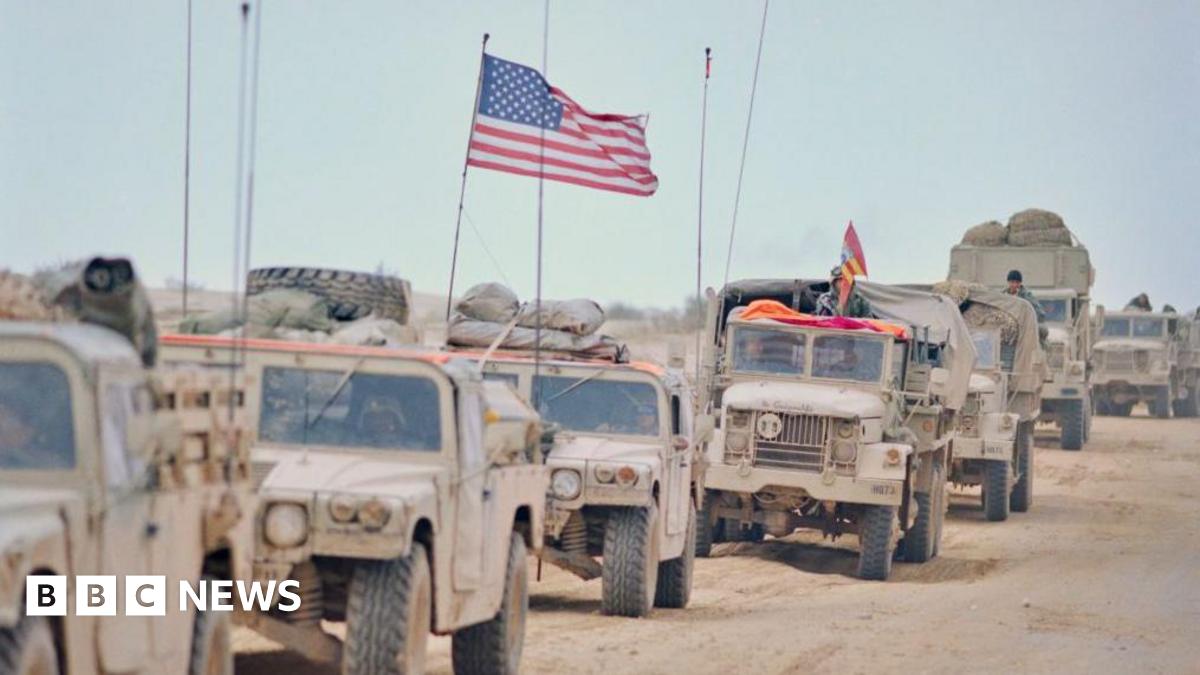
Jeremy Bowen: Trump has called for an Iran uprising but the lessons from Iraq in 1991 loom large
The US president might learn that starting wars is much easier than ending them, writes the BBC's international editor.
www.bbc.co.uk
martin butler
Member
- Joined
- 9 Oct 2018
- Messages
- 874
Even when you have people who know what they are doing, its never easy, or clean to extract yourself from a war zone, unless you have totally destroyed the apparatus of the country, and they have surrendered, winning the peace is far harder than fighting any war.
Trump acts on impulse, based on his own emotions, not on anything else, often swayed by people who have sweet talked him into doing their bidding, and he has surrounded himself with people chosen just because he thinks they will give him loyalty, not because they were the right person for the post,
What he has done is to make every American now a target, and ensure a new generation of Iranians grow up suitably conditioned to want revenge, on them, Iran was never really a threat to US influence, it was to the hardliners in Israel, who have always wanted to contain its help for Palestinian groups intend on the destruction, of the state, of Isael, a threat that could have been controlled using the carrot, rather than the club,
Trump acts on impulse, based on his own emotions, not on anything else, often swayed by people who have sweet talked him into doing their bidding, and he has surrounded himself with people chosen just because he thinks they will give him loyalty, not because they were the right person for the post,
What he has done is to make every American now a target, and ensure a new generation of Iranians grow up suitably conditioned to want revenge, on them, Iran was never really a threat to US influence, it was to the hardliners in Israel, who have always wanted to contain its help for Palestinian groups intend on the destruction, of the state, of Isael, a threat that could have been controlled using the carrot, rather than the club,
Netanyahu certainly seems to have found a useful idiot.Trump acts on impulse, based on his own emotions, not on anything else, often swayed by people who have sweet talked him into doing their bidding
Gloster
Veteran Member
Even when you have people who know what they are doing, its never easy, or clean to extract yourself from a war zone, unless you have totally destroyed the apparatus of the country, and they have surrendered, winning the peace is far harder than fighting any war.
Trump acts on impulse, based on his own emotions, not on anything else, often swayed by people who have sweet talked him into doing their bidding, and he has surrounded himself with people chosen just because he thinks they will give him loyalty, not because they were the right person for the post,
What he has done is to make every American now a target, and ensure a new generation of Iranians grow up suitably conditioned to want revenge, on them, Iran was never really a threat to US influence, it was to the hardliners in Israel, who have always wanted to contain its help for Palestinian groups intend on the destruction, of the state, of Isael, a threat that could have been controlled using the carrot, rather than the club,
And that is very useful to him and his handlers. Just one reasonably viable attack, preferably with casualties, in the US that can be blamed on the Iranians and he will be able to proclaim a state of national emergency, followed by the cancellation of the mid-term elections. No pesky worries about being able to get Project 2025 or even more extreme alternatives through.
Trump presumably feels he can do a deal that leaves others to clear up the mess in the Middle East while the US pulls out to go onwards and upwards to the next target. He may be wrong on this, but, “Cuba, beware”.
It would be interesting to see who was trading in oil shares and futures three weeks ago. That includes Russian ones: Putin is no doubt saying, “Good boy.”
Netanyahu certainly seems to have found a useful idiot.
And Putin.
Cloud Strife
Established Member
- Joined
- 25 Feb 2014
- Messages
- 2,964
Even when you have people who know what they are doing, its never easy, or clean to extract yourself from a war zone, unless you have totally destroyed the apparatus of the country, and they have surrendered, winning the peace is far harder than fighting any war.
If you think about the Kosovo War, NATO didn't achieve a quick victory despite Serbia being at a massive disadvantage. Trying to win a war with air power alone is always going to be very difficult, especially against an enemy that has spent years preparing for exactly this scenario.
What's remarkable about this is that no-one in the US administration seems to have realised that countries like Qatar and the UAE are not prepared or willing to endure a long war. They're the ones who are suffering from this, and I really wonder about the long term impact of this on their relations with the USA.
America are usefully (for them) a good distance away from the conflict so not.only are they less likely to be involved in a direct attack from Iran, you can show your population what you want them to see and distort the truth somewhat.
Countries that are being fired at by Iran are probably getting a bit tired of them and the fact that one of the aggressors isn't experiencing what they are.
Countries that are being fired at by Iran are probably getting a bit tired of them and the fact that one of the aggressors isn't experiencing what they are.
brad465
Veteran Member
Have Qatar asked for that $400m plane back yet?If you think about the Kosovo War, NATO didn't achieve a quick victory despite Serbia being at a massive disadvantage. Trying to win a war with air power alone is always going to be very difficult, especially against an enemy that has spent years preparing for exactly this scenario.
What's remarkable about this is that no-one in the US administration seems to have realised that countries like Qatar and the UAE are not prepared or willing to endure a long war. They're the ones who are suffering from this, and I really wonder about the long term impact of this on their relations with the USA.
This conflict has the look of being the US's Suez crisis: a so-called superpower trying to keep a critical waterway open and being shown it's not as powerful as it once was.
contrex
Established Member
July 6, 1962, wasn't it?If you get a collapse and make a crater, like Sedan in 1965

Saudi Arabia has US military protection in exchange for a reliable oil supply along with selling in petrodollars, the UAE and Qatar rely on foreign expats in their workforce, and Dubai's tourism sector is a huge part of the economy that is partially built on being a safe destination. Considering that US actions in the region have brought Iranian missiles down onto their soil (even if they were military bases) I can't imagine the Gulf nations will be in a favourable position.What's remarkable about this is that no-one in the US administration seems to have realised that countries like Qatar and the UAE are not prepared or willing to endure a long war. They're the ones who are suffering from this, and I really wonder about the long term impact of this on their relations with the USA.
On the one hand they're suffering the consequences of the war in part because of their promotion of American interests in the region, but on the other hand decoupling from the US would leave them vulnerable. I would hope that Trump may be more inclined to listen to them since he would dream of living like an Arab monarchy who rules a nation with no protest or opposition, but he's no longer of a rational mind so nobody can really be sure.
July 6, 1962, wasn't it?
You can take a bus tour from Vegas to see it

Last edited:
I think this is viewing things through a very US-centric lens. Most of these countries have been opposed to Iran since the revolution. Unsurprisingly monarchies aren’t entirely comfortable with a movement that wants them to be Islamic republics. Although it hasn’t come to direct war between them, they’ve been fighting proxy wars for decades, Yemen being the most notable current one.Saudi Arabia has US military protection in exchange for a reliable oil supply along with selling in petrodollars, the UAE and Qatar rely on foreign expats in their workforce, and Dubai's tourism sector is a huge part of the economy that is partially built on being a safe destination. Considering that US actions in the region have brought Iranian missiles down onto their soil (even if they were military bases) I can't imagine the Gulf nations will be in a favourable position.
On the one hand they're suffering the consequences of the war in part because of their promotion of American interests in the region, but on the other hand decoupling from the US would leave them vulnerable. I would hope that Trump may be more inclined to listen to them since he would dream of living like an Arab monarchy who rules a nation with no protest or opposition, but he's no longer of a rational mind so nobody can really be sure.
The US have been moving away from the Middle East for many years, they no longer import significant volumes of oil from the region and several administrations have seen China as the major threat. Hence the Saudis trying to form alliances that include everybody except Iran.
I suspect in private these nations are quite supportive of anything that reduces Iran’s influence.

Quite. One of the (many) factors involved in various Arab/Gulf states seeking more normalised relations with Israel.I suspect in private these nations are quite supportive of anything that reduces Iran’s influence.
Being part of the No Iran Club is much more important to them than No Israel Club.
Iran is a regional pariah disliked by all its close neighbours. Because it's mental and Shia Muslim, and seeking nuclear armament.

Saudi Arabia has US military protection in exchange for a reliable oil supply along with selling in petrodollars, the UAE and Qatar rely on foreign expats in their workforce, and Dubai's tourism sector is a huge part of the economy that is partially built on being a safe destination. Considering that US actions in the region have brought Iranian missiles down onto their soil (even if they were military bases) I can't imagine the Gulf nations will be in a favourable position.
On the one hand they're suffering the consequences of the war in part because of their promotion of American interests in the region, but on the other hand decoupling from the US would leave them vulnerable. I would hope that Trump may be more inclined to listen to them since he would dream of living like an Arab monarchy who rules a nation with no protest or opposition, but he's no longer of a rational mind so nobody can really be sure.
On the other hand, Saudi Arabia are currently under attack due to their ties with the US and aren't exporting much oil currently, so the US aren't really doing them any favours at the moment.
This is quite typical of the Trump Administration casting doubt over whether there is any actual value to being under the US security umbrella. I'm sure they'll welcome the decreased influence of Iran should the regime fall, but I can't see the Americans coming out of this war without an even more sullied reputation on the international stage. The Arab monarchies will almost certainly not want this war to continue if it keeps being brought to their doorstep.On the other hand, Saudi Arabia are currently under attack due to their ties with the US and aren't exporting much oil currently, so the US aren't really doing them any favours at the moment.
Imagine the outrage that will be caused by cancelling the elections though.And that is very useful to him and his handlers. Just one reasonably viable attack, preferably with casualties, in the US that can be blamed on the Iranians and he will be able to proclaim a state of national emergency, followed by the cancellation of the mid-term elections. No pesky worries about being able to get Project 2025 or even more extreme alternatives through.
A terrorist attack, bad though it may be, is not a reason to cancel elections. Especially as the person who cancelled the elections would be effectively indirectly responsible for the attack. I'm sure most would be able to see through the "state of emergency" BS.
The Republican Party could be out of power for a generation. Time for them to figuratively stab this evil man in the back before it's too late for them.
To be quite frank, it's time the West declares "war" on Trump. Not with bombs or violence, but by funding and aiding the opposition to get rid of him (by peaceful means) internally within the US. It's time that we cease seeing him as any kind of ally. He is coercive and manipulative and appears to be now trying to blackmail the West to help him fight the war he, and only he, started. Time to stop the positive prejudice we have towards him just because he's American and speaks English as his first language.
Last edited:
brad465
Veteran Member
Apparently Netanyahu hasn't been seen in public since this war started, and has been releasing videos of himself that look like AI. My guess is he won't record a real video or appear anywhere in public in case Iranian intelligence can pickup a trace to locate him for an assassination attempt.