• Our new ticketing site is now live! Using either this or the original site (both powered by TrainSplit) helps support the running of the forum with every ticket purchase! Find out more and ask any questions/give us feedback in this thread!

Station lamps

Status
Not open for further replies.

Andy873

Established Member
Joined
23 Mar 2017
Messages
1,411
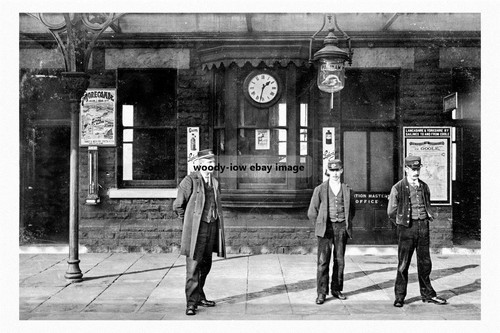
While wondering about a Gloiah crane (different post) I came upon two photos.

When I looked at them (two different stations) in minute detail I can see for both stations they each have some domed gas lamps suspended from the station awnings over the platforms.

Now on the glass domes they had the station names on them.

Why would each station have their name on these lamps?
So passengers on trains at night could read where they were?
So they didn't end up being used at different stations?

Was this a common practise elsewhere, or just on the L & Y railway system?
Do you have any other examples of this?

Thanks,
Andy.
 
Sponsor Post - registered members do not see these adverts; click here to register, or click here to log in
R

RailUK Forums

pdeaves

Established Member
Joined
14 Sep 2014
Messages
5,932
Location
Gateway to the South West
So passengers on trains at night could read where they were?
Primarily, yes. General lighting levels were lower so this provided some sort of certainty that the name could be read. Over the years there have been loads of different lamp types, gas and electric, with the station name on them.
 

WesternLancer

Veteran Member
Joined
12 Apr 2019
Messages
15,104
While wondering about a Gloiah crane (different post) I came upon two photos.

When I looked at them (two different stations) in minute detail I can see for both stations they each have some domed gas lamps suspended from the station awnings over the platforms.

Now on the glass domes they had the station names on them.

Why would each station have their name on these lamps?
So passengers on trains at night could read where they were?
So they didn't end up being used at different stations?

Was this a common practise elsewhere, or just on the L & Y railway system?
Do you have any other examples of this?

Thanks,
Andy.
Pretty sure I have seen other examples of names in stained glass on gas lamp 'shades' or covers. EG LBSCR (and possibly at Bluebell railway). eg one on this gallery

I assume this would have been so you could more easily see where you were at night.

If you have ever been to one of the few remaining places where gas street lighting is still used (part of Westminster, part of Nottingham, parts of Berlin too I think) you will find that the general ambient light level is very low - so station name boards might not have been clearly illuminated.

It must have added to production costs but perhaps the additional cost of adding a name to the production process at the time was not disproportionate compared with the production of a plain lamp shade/case.

I tend to think more commonly in a style like this, with an interesting text about it on the link - so the globe example you mention (can you link to the pic?) sounds interesting - I don't think I have ever seen one of those or paid attention to one in an old photo.

The Great Western Trust most fortunately recently acquired the very rare example of an oil lamp casing from Burnham Beeches station illustrated and which is the focus of our Blog today. This remarkable survivor can be fairly confidently dated back to the very opening of this station on 1st July 1899

A web search on railwayana station lamps throws up pics of a few survivors.
 
Last edited:

Andy873

Established Member
Joined
23 Mar 2017
Messages
1,411
Really interesting folks, thanks.

Especially as the gas lighting wasn't quite as bright as we are used to these days.

can you link to the pic?
The link seems long, so if you search "Padiham railway station" on eBay uk you'll see a photo of three men stood on the platform of Padiham station.

if you look for the guy in the middle and hover over his head you can read "Padiham" on the lamp.

Thanks,
Andy.
 

WesternLancer

Veteran Member
Joined
12 Apr 2019
Messages
15,104
Really interesting folks, thanks.

Especially as the gas lighting wasn't quite as bright as we are used to these days.


The link seems long, so if you search "Padiham railway station" on eBay uk you'll see a photo of three men stood on the platform of Padiham station.

if you look for the guy in the middle and hover over his head you can read "Padiham" on the lamp.

Thanks,
Andy.
Thanks Andy - yes - substantially lower light that does not project very far for gas.

Not sure this fully captures it but pics and text here give an idea - esp when contrasted with the elec lights in houses in the backdrops to the street gas lamps:

Got that Padiham pic with short link too - so this pic I guess. A fancy globe style lamp indeed.


Andy873

Established Member
Joined
23 Mar 2017
Messages
1,411
Glad you found it - yes that's the pic.

Thanks,
Andy.
 

Pinza-C55

Member
Joined
23 May 2015
Messages
1,035
Without seeing photos it is hard to know what you mean but many uk railway lamps were supplied by Sugg and pre 1900 on the NER these appear to have had glass names suspended in front of them. When the LNER took over in 1923 they used the Sugg lamp which looked like a bowler hat upside down and hung an enamel name commonly known to collectors as a "horseshoe lamp tablet" underneath them. Like this http://mail.gcrauctions.com/sale229/lot70.html
 

Ashley Hill

Established Member
Joined
8 Dec 2019
Messages
5,591
Location
The West Country
Here’s an LSWR example from Salisbury. Why a plain lamp plus the named ball I know not.
314A64B9-4F82-443B-A23C-67971820085F.jpeg
Photo from Mainline to the West.
 

WesternLancer

Veteran Member
Joined
12 Apr 2019
Messages
15,104
Here’s an LSWR example from Salisbury. Why a plain lamp plus the named ball I know not.
View attachment 112919
Photo from Mainline to the West.
Interesting. I don't think the plain lamp is in fact plain - it seems to have writing on the far face, facing away from the camera but just visible. The named balls seem plentiful on the other platform too.
 

Lloyds siding

Member
Joined
3 Feb 2020
Messages
623
Location
Merseyside
While wondering about a Gloiah crane (different post) I came upon two photos.

When I looked at them (two different stations) in minute detail I can see for both stations they each have some domed gas lamps suspended from the station awnings over the platforms.

Now on the glass domes they had the station names on them.

Why would each station have their name on these lamps?
So passengers on trains at night could read where they were?
So they didn't end up being used at different stations?

Was this a common practise elsewhere, or just on the L & Y railway system?
Do you have any other examples of this?

Thanks,
Andy.
It was a common practice, but far from universal. Yes, it was very helpful, especially in rainy weather that you could see the name of the station. Remember that this was before PIS boards on trains, guards would rarely be seen (it wasn't necessary to check tickets because there was usually a barrier check at the beginning and end of the journey. The carriage may well be a compartment coach, so probably no one to ask on the train. The windows on steam hauled trains with iron brakes would be mucky too, so what were effectively illuminated signs giving the name of the station was a good idea.
 

Gloster

Veteran Member
Joined
4 Sep 2020
Messages
12,975
Location
Up the creek
Here’s an LSWR example from Salisbury. Why a plain lamp plus the named ball I know not.
View attachment 112919
Photo from Mainline to the West.
Interesting. I don't think the plain lamp is in fact plain - it seems to have writing on the far face, facing away from the camera but just visible. The named balls seem plentiful on the other platform too.
I think the writing says (Surprise! Surprise!) Salisbury. As the lamp appears to be on one of the side platforms (the now dead one on the Up side, I think) it would only need to have the name on the side facing the trains, not that facing the camera.
 

Ashley Hill

Established Member
Joined
8 Dec 2019
Messages
5,591
Location
The West Country
Interesting. I don't think the plain lamp is in fact plain - it seems to have writing on the far face, facing away from the camera but just visible. The named balls seem plentiful on the other platform too.
Yes I didn’t spot that.
Occasionally lamp names come up at railway auctions. Some are glass with the name painted on whilst some are paper stuck to the glass. Often opaque glass is used to highlight the name.
Over time signage took over such as SR targets and GWR lamp tablets and later BR totems through to the modern nameplates we see today. Many less important stations held on the their early lamp’s until closure.
8B611CFE-2967-4DBC-8FB7-D2415E5B5CA6.jpegA5C94240-34E2-413C-A143-DA95B543FC01.jpeg
Didcot Museum. GWRA.
 

Andy873

Established Member
Joined
23 Mar 2017
Messages
1,411
Many less important stations held on the their early lamp’s until closure.
Yes very true.
The three stations on my old branch line kept their old gas lamps until the very end - 1964. From 1957 to the end of 1964 there were no regular passenger trains calling, only summer excursions so there was no reason to replace them.

Andy.
 

32475

Member
Joined
2 Nov 2019
Messages
815
Location
Sandwich
Here’s a replica SER example made by Barrie Clark. This demonstrates how the back light against the lettering illuminates the name of the station.
The lamp is wonderful whenever we get a power cut in the winter!
11703059-1734-4F06-979F-528B6B5D9F54.jpeg
 

32475

Member
Joined
2 Nov 2019
Messages
815
Location
Sandwich
Here’s an LSWR example from Salisbury. Why a plain lamp plus the named ball I know not.
View attachment 112919
Photo from Mainline to the West.
I’m intrigued by this globe lamp which appears to have a net around it in case the glass breaks. I imagine this photo is from LSWR days but I’ve never seen another example. Any ideas anyone?
 

Ashley Hill

Established Member
Joined
8 Dec 2019
Messages
5,591
Location
The West Country
I’ve not seen any other examples. I’ve had a quick look through some books but drawn a blank. They look too well made to be unique to just Salisbury though.
 

D6130

Established Member
Joined
12 Jan 2021
Messages
9,044
Location
West Yorkshire/Tuscany
Until 1973, when they were replaced by electric lamps on tall wooden poles, the wall-mounted copper-framed gas lamps at some or all of the West Highland line stations had paper name stickers - with white lettering on a black background - inside the lamp glass near the top. I particularly remember the ones at Helensburgh Upper - where, as an enthusiastic teenager, I used to unofficially light the gas lamps and change the silk elements - and at Garelochhead.
 

WesternLancer

Veteran Member
Joined
12 Apr 2019
Messages
15,104
Back-lit station lamps reminds me of a more modern version - the use of the station name in I think moulded lettering as opposed to 'stick on' (in regional colours certainly on the LMR examples I have seen) that date from, I would think, 1960s station rebuilds, on platform fluorescent strip lamp covers.

I noticed a few of these remain at Manchester Oxford Road last year when I was there. This may be because it is a listed building, but I suspect unless specifically mentioned in the listing (which I doubt) i suspect they have just survived by luck.

I think I have also seen them at Coventry, and possibly Stafford, from the same era, and I also have the idea I have seen blue lettered ones at a former ER station but can not recall where. Not sure if they were standard in other regions at the time but suspect they were. They have a very 60s look about them to me. The principle of illuminating the location name at night must be the same.

This isn't the best picture of the type, but one is seen about half way down this page attached to what I am thinking is possibly a lift shaft at Oxford Road:

https://modernmooch.com/2016/02/26/oxford-road-station-manchester/

I doubt if a lamp cover got damaged they would ever be replaced with the same style.

Do people know of other surviving examples of this style /type?

== Doublepost prevention - post automatically merged: ==

Until 1973, when they were replaced by electric lamps on tall wooden poles, the wall-mounted copper-framed gas lamps at some or all of the West Highland line stations had paper name stickers - with white lettering on a black background - inside the lamp glass near the top. I particularly remember the ones at Helensburgh Upper - where, as an enthusiastic teenager, I used to unofficially light the gas lamps and change the silk elements - and at Garelochhead.
Thanks for posting that great recollection!
 

32475

Member
Joined
2 Nov 2019
Messages
815
Location
Sandwich
I’ve not seen any other examples. I’ve had a quick look through some books but drawn a blank. They look too well made to be unique to just Salisbury though.
Thanks. Maybe they were an experimental type of early electric light globe since their design don’t look suited to lighting gas mantles.
 

Ashley Hill

Established Member
Joined
8 Dec 2019
Messages
5,591
Location
The West Country
This isn't the best picture of the type, but one is seen about half way down this page attached to what I am thinking is possibly a lift shaft at Oxford Road:
There was a thread about those lamps back along. Here it is.
 

D6130

Established Member
Joined
12 Jan 2021
Messages
9,044
Location
West Yorkshire/Tuscany
The long flourescent tube lamps - with LMR maroon lettering - were still in use at Skipton when I moved there in 1991, but were taken down when the station was modernised in 1994-95. I believe that some of the plastic covers may still be dumped in the gated-off section of the subway leading to the disused platforms 5 & 6. They were still there when I left in 2012, but most of them were broken by then.
 

WesternLancer

Veteran Member
Joined
12 Apr 2019
Messages
15,104
There was a thread about those lamps back along. Here it is.
Thanks for drawing my attention to that! I shall enjoy perusing the thread.
 

urbophile

Established Member
Joined
26 Nov 2015
Messages
2,481
Location
Liverpool
Many rural stations, even into the 1950s and 60s, were lit by oil lamps, not gas. A feeble flame which seemed to have little impact on the ambient darkness. Nevertheless they (at least the station of my childhood) had paper stickers inside the glass cabinet, although they could only really be read in daylight. Occasionally if we were alighting (unintentional pun) from the last train of the evening, the staff member in charge would leap on board to travel home to the next station, with a cheery wave and a request for us to blow out the lamps.
 

WesternLancer

Veteran Member
Joined
12 Apr 2019
Messages
15,104
Many rural stations, even into the 1950s and 60s, were lit by oil lamps, not gas. A feeble flame which seemed to have little impact on the ambient darkness. Nevertheless they (at least the station of my childhood) had paper stickers inside the glass cabinet, although they could only really be read in daylight. Occasionally if we were alighting (unintentional pun) from the last train of the evening, the staff member in charge would leap on board to travel home to the next station, with a cheery wave and a request for us to blow out the lamps.
Good point to distinguish between gas lit stations and oil lit ones. I guess few rural stations would in fact have been lit by gas?

I recall that Heathfield on the cuckoo line in Sussex was unusual in that a supply of natural gas was found (during construction?) which was used for the station lamps for many years.
 

Pinza-C55

Member
Joined
23 May 2015
Messages
1,035
Until 1973, when they were replaced by electric lamps on tall wooden poles, the wall-mounted copper-framed gas lamps at some or all of the West Highland line stations had paper name stickers - with white lettering on a black background - inside the lamp glass near the top. I particularly remember the ones at Helensburgh Upper - where, as an enthusiastic teenager, I used to unofficially light the gas lamps and change the silk elements - and at Garelochhead.

Normal practise on the North Eastern Railway was to use etched glass lamp glasses with a deep blue clear lettering etched on a milky white base. In LNER and BR days this was changed to glass panels with the letters sprayed through a stencil on the front and milk coloured paint sprayed on the the back. In my collecting days I was asked for advice on a "BURDALE" station lamp an auctioneer bought from a dealer for £200 and I pointed out that a} It was the wrong pattern of lamp for that station b) It had clearly been reglazed and painted inside and out c) The letters were on the inside and made out of Letraset style plastic letters painted over with oil paint. It's worth pointing out that BR had a large number of replacement glass names which were never used and could easily be inserted into a genuine lamp.
 

Taunton

Veteran Member
Joined
1 Aug 2013
Messages
12,261
I particularly remember the ones at Helensburgh Upper - where, as an enthusiastic teenager, I used to unofficially light the gas lamps and change the silk elements - and at Garelochhead.
One wonders how there was a gas supply at a station as rural as Garelochhead. Certainly in Somerset many stations were at places away from the gas, aided of course by them being sited well away from the place they were named after. Some were far from any public electricity supply as well (or main drainage for the toilets).

Oil lamps thus lasted, certainly to the Beeching closures. If no staff, at a Halt, the guard of the last train would douse them, often delegating this to a responsible regular passenger if there was one. Country folk in those days knew how to handle oil lamps. Of course, where there was a signalbox the signalman was well versed in oil lamps for the signals, and going up all the various ladders to change them, so would handle the station as well.

Both oil and gas were sufficiently dim that if you didn't write the station name actually on the glass itself, it would never be seen at night. Bear in mind all such signs have been restored post-WW2, as during then all signage and indication of where you were was taken down, railway and otherwise, streetnames, everything, to prevent any possible invasion knowing where they were.

Remember that this was before PIS boards on trains, guards would rarely be seen (it wasn't necessary to check tickets because there was usually a barrier check at the beginning and end of the journey. The carriage may well be a compartment coach, so probably no one to ask on the train.

The most common way was for the platform porter to shout out the station name on arrival. Old films often show this happening, as a form of establishing where we are. If this didn't happen then opening the droplight and shouting out to staff or passing passengers was the next option.
 

Cheshire Scot

Established Member
Joined
24 Jul 2020
Messages
1,676
Location
North East Cheshire
One wonders how there was a gas supply at a station as rural as Garelochhead.

I'm fairly certain that there was a gas supply at Garelochhead, but @Cheshire Scot will know for sure. Northwards from there it was all oil lamps.

I would not regard Garelochhead as particularly rural - and certainly not in the context of rural locations on the West Highland - being one of a series of coastal villages not far from a nearby larger town. I cannot however confirm whether Garelochhead station had a gas supply but cannot see any reason why it would not assuming the village had such supply.
Incidentally the Gas Works in Helensburgh which supplied the area had a rail connection which crossed Princes Street close to the station throat, although I don't recall ever seeing any rail traffic crossing the road.
 

D6130

Established Member
Joined
12 Jan 2021
Messages
9,044
Location
West Yorkshire/Tuscany
I'm fairly certain that there was a gas supply at Garelochhead,
According to the Selectra website, Garelochhead is currently connected to the gas distribution network....so I suspect that it would have been 'back in the day'. (Apologies for beginning to drift OT).
 
Status
Not open for further replies.

Top