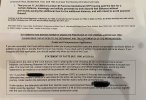
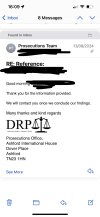
Southeastern says he admitted trying to avoid the correct fare.
So before he contacts the company at all, I advise that he either shows all the correspondence to and from him to a solicitor, or posts it with identfying details obscured on here.
While the right person at Southeastern may not have received what your son sent, it may be that they are treating his case more seriously if they think he is failing to admit what he admitted at the start.
If he is not going to consult a solicitor at this stage, please:
1) Post on here all the correspondence to and from him, redacted.
2) Say what he remembers telling staff at the time, especially anything of possible relevance to Southeastern's claim that he admitted trying to avoid the right fare.
3) Say what he proposes to reply if they point to that alleged confession, or anything he may want to say in light of their claim that he made that confession.
Also,
4) Does he now have a duty, because of his employment contract and/or a professional regulator, to disclose the charge?
It's a good idea to ask Southeastern (after doing the above and getting advice) whether they received the earlier correspondence.
Southeastern may be confused about more than one thing.
The wrong charge
The offence is: over distance avoidance.
He isn't guilty of that offence. He didn't travel
beyond a distance for which a ticket of his was valid - he didn't have a ticket to start with.
Southeastern seems to have accused him of the wrong crime.
However, they could ask the court to substitute an allegation of another offence.
The error might make a settlement more likely.
But given their claim about a confession, it needs careful handling.
The paperwork claims that he admitted trying to avoid a fare, and you are saying he didn't.
Forgot to buy a ticket going into StP from Canterbury going to apprenticeship job. Realised walking to barriers, quickly bought one from Stratford
Before he communicates next time, even to check they received the earlier correspondence, it's important to be clear what he did and said at the time.
You're saying he made one error, but your story indicates two - forgetting to buy a ticket, then buying the wrong one. You can't really blame them for suspicion of dishonesty, especially after he bought a ticket from the most obvious station fo someone to pick if they wanted to avoid the right fare.
And then there's the claim that he admitted dishonesty.
He would if purchased a full ticket there and then if asked to,
That wouldn't be a good line of defence against a charge (which they might ask the court to substitute) of travelling with intent to avoid a fare, or a lesser byelaw charge of entering a train in order to travel, without having first bought a valid ticket.
If at any point he intended only to pay from Stratford (even while walking to the barrier), then he's guilty of travelling with intent to avoid the right fare.
If the hearing goes ahead, he will be found guilty. That’s his job gone and future impacted.
It's important not to engage in catastrophic thinking - important not to think there would be severe consequences without good evidence of that.
At the same time it's important to recognise risks, and weigh those when deciding whether to hire a solicitor at any stage.
Over one stupid mistake of hitting Stratford and not Chartham on the app
his intention was not to avoid, it was an error, but appreciate they don’t care!
As above, you are describing two errors; and they are claiming he admitted the situation was not due to error.