mattb7tl
Member
Most urban authorities are progressive, but they are typically stuck with whatever bus company happens to operate in their area, and under deregulation there is no mechanism to remove an underperforming operator. It is a lottery, and most areas have lost it.In Brighton, the partnership certainly helped in having a progressive bus company...and a progressive local authority who were prepared to make some decisions. It helped that the local authority (and the local politics generally) are more progressive, greener and left leaning. That's what makes a good partnership.
As for Leicester.... sub-par? On who's measure? And of course, there is a lot of "stuff" at the start... You're criticising rapid improvements and initiatives - that is what is needed because investment in electrification and infrastructure has to come at the start. Yes, it gets rather boring as time goes on because you're embedding behavioural changes.
I have seen what they are actually delivering in Portsmouth. In fact, you might consider it amazing that despite the parlous level of frequencies that you seem to think exist, people have moved back on the bus faster than virtually anywhere in the country. Load factors are, of course, a key consideration. If there's a load factor of 65% and it increases to 70%, then why would the frequency increase. However, if it moves to 75%...then the commercial dynamics change and you might.
West Yorkshire - so the bus companies asked for everything, got everything they wanted from the local authorities, and you think that there were no issues on the LA side. I mean, if the operators request X and the authority acquiesces, and then the "results don't hold" (whatever that means) then you have to ask what assurances were in place from the authority to ensure that the results did hold? Or what would happen if they didn't hold? Is that not an indication that the partnership wasn't well constructed?
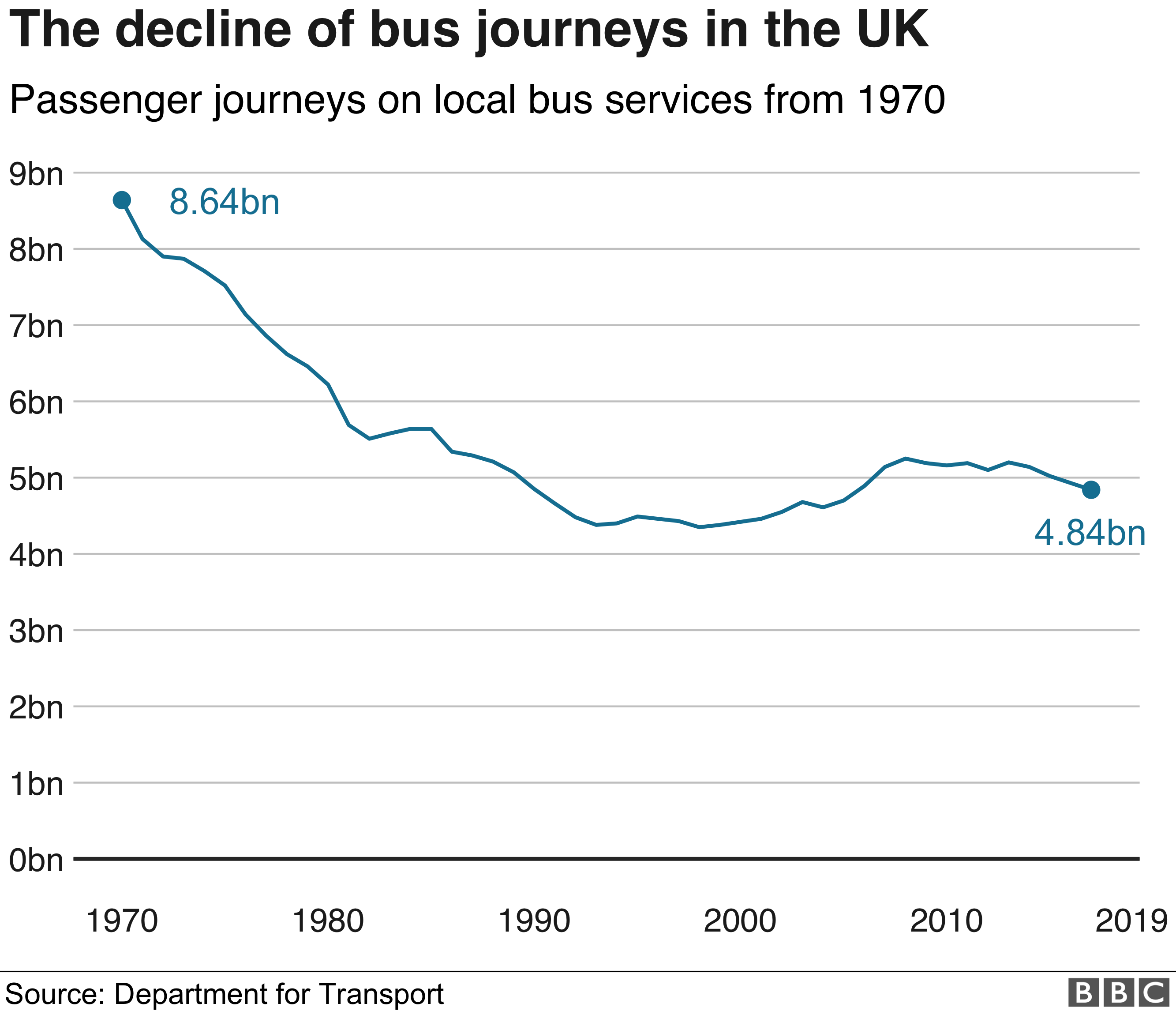
So did bus companies build our networks? Of course they bought them but networks and the design of them are only ever the product of demand. Bus services don't exist in a vacuum and nor should they be pickled in aspic. That was part of the issue in the 1950s and 1960s when they didn't react to societal changes. By the time we reached the 1970s and 1980s, bus patronage was collapsing - that is absolute historic fact. There was a total shock with deregulation but that stabilised and we saw a levelling out until 2010. You might argue that it was because we reached rock bottom but as we saw, austerity proved that wasn't the case. And, as I say, you can't look at bus patronage in isolation and just blame Arriva (tempting as that is). I was back in the North East late last year and in the flesh pot of Bishop Auckland - bus services are a shadow of what they were when OK and United (and others) operated depots there, and yes, there is culpability from Arriva. However, I looked at the Blade Runner-esque Newgate Street... the closed pubs, the closed shops, the desolation of a town whose heart has been ripped out from deindustrialisation and then the creation of a huge out of town development with plentiful shopping and perhaps it explains some of what has happened.
I actually think that Go Ahead and Stagecoach have broadly been reasonably good in developing their businesses (though it isn't uniform). Covid did turn some things on its head (and I have concerns about Stagecoach and it's path) but if you look at their provincial operations... some were basket cases when they bought them, and had been in freefall for years.
I am always keen to ensure that comparisons are accurate otherwise the high patronage growth was, I think, somewhere odd like Rutland.
However, even within an area, there are huge disparities. After all, Manchester (the city) is growing like topsy, and the financial health reflects that. Then you have Bolton, Bury and Rochdale - outwardly very similar and yet they are very different and nothing like Manchester. Manchester - happy, vibrant and affluent with busy nightlife and strong retail and employment (and with a strong western bias in terms of growth and affluence) compared with Rochdale - darkness, vape shops and nail bars.
I'm not certain anyone is comparing Manchester with Wiltshire so not sure where these inappropriate benchmarks are coming from.
Leicester the pace of improvement is not as impressive as it appears, give it a decade and little of it will last. The deeper problem is where investment is directed. Partnerships consistently focus on strengthening already viable corridors, making a turn up and go service slightly more frequent, while evening frequencies and extended hours of operation remain an afterthought. Under deregulation this is structurally inevitable operators will not sacrifice margins to run a decent evening network, even where it might eventually become commercially sustainable.
This also produces artificial modal shift. Improving daytime frequencies between 6am and 6pm attracts occasional car users onto buses, which flatters the headline numbers, but it does not build the kind of network that either prevents people from acquiring cars in the first place, or gives existing car owners a genuine reason to get rid of them. That requires high frequencies across extended and off-peak hours, Reading and London being the obvious models. Once turn up and go is achieved on core routes, the focus must shift to the off peaks. Deregulation cannot deliver this because no commercial operator will cross-subsidise those margins without being compelled to through franchising.
On West Yorkshire: the local authority implemented bus priority measures and real-time information at the specific locations operators requested. That is precisely the problem, operators ask, the authority delivers, and yet outcomes still disappointed. Leicester is largely replicating improvements West Yorkshire made decades ago, not blazing a new trail, and it attracts a remarkable amount of attention for achieving the bare minimum. I suspect bus operators push this via articles to try and deter people from franchising.
On Manchester, my point was precisely that benchmarking against the national average is misleading given Manchester is a major metropolitan county. Your most accurate reference points as used by professionals is other metropolitan counties.