
• Our new ticketing site is now live! Using either this or the original site (both powered by TrainSplit) helps support the running of the forum with every ticket purchase! Find out more and ask any questions/give us feedback in this thread!

Should London Gateway be electrified?

Status
Not open for further replies.

Class15

Established Member
Joined
30 Dec 2021
Messages
4,117
Location
North London or Mildmay line
Moderator note: split from


There is a report about this on BBC News see here:
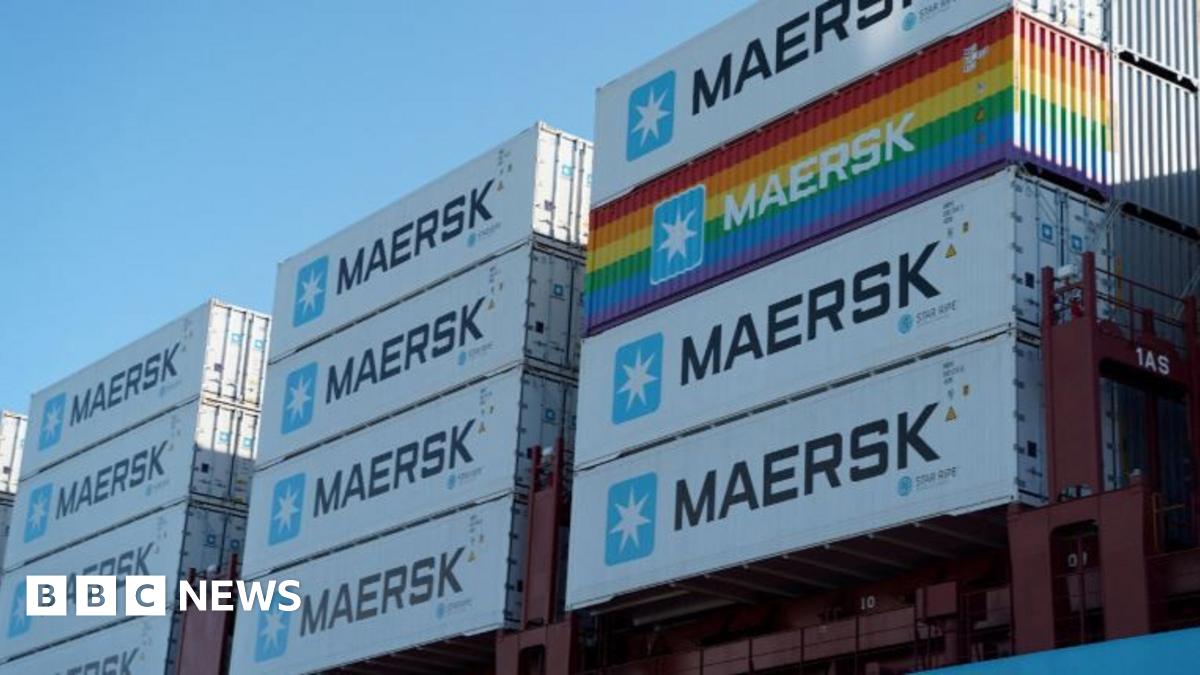

I doubt this will mean the end of freight traffic to Felixstowe, but surely London Gateway must be electrified now?
 
Last edited by a moderator:
Sponsor Post - registered members do not see these adverts; click here to register, or click here to log in
R

RailUK Forums

deltic08

On Moderation
Joined
26 Aug 2013
Messages
2,906
Location
North
Moderator note: split from


I doubt this will mean the end of freight traffic to Felixstowe, but surely London Gateway must be electrified now?
Does Network Rail still own the branch?
How long is it?
How many electric hauled container trains would use it in 24 hrs?
How much upgrade of the rest of the 25kv lines in the area would be needed?

With the first of the class 99 being constructed, is it a goer?
 

Trainman40083

Established Member
Joined
29 Jan 2024
Messages
4,560
Location
Derby
Is there sufficient capacity to get extra trains from London Gateway through to say, Wembley, what will all the London area commuter trains. At least, with Felixstowe about 3/4 are routed via Ely.
 

Class15

Established Member
Joined
30 Dec 2021
Messages
4,117
Location
North London or Mildmay line
Is there sufficient capacity to get extra trains from London Gateway through to say, Wembley, what will all the London area commuter trains. At least, with Felixstowe about 3/4 are routed via Ely.
They use the GOBLIN which is fine capacity wise. Struggle would be Kensal Green Jn but careful planning could avoid conflicts. There are lots of unused paths out of London Gateway too.
 

Nottingham59

Established Member
Joined
10 Dec 2019
Messages
3,330
Location
Nottingham
Performance on the freight-only Thames Haven branch is much less of an issue than at Felixstowe.

It rises just 6 metres from the port to the mainline, and it's double track. Compare this with Felixstowe, where the climb is 30 metres, and diesel-power freight has to interwork with passenger services on a single track line.

On the other hand, it would be helpful for the OHLE at Thames Haven junction to have a longinsh run-out onto the branch, so that bimodes could convert to AC on the move before joining the mainline where performance does become important.
 

sh24

Established Member
Joined
28 Sep 2023
Messages
1,482
Location
London
Moderator note: split from


I doubt this will mean the end of freight traffic to Felixstowe, but surely London Gateway must be electrified now?

There are many other lines who will keep using Felixstowe. In fact the Maersk/Hapag moves mean they are more likely to stay there as it will reduce congestion.
 

172007

Member
Joined
2 Jan 2021
Messages
1,143
Location
West Mids
Not sure OHLE would be a priority. GbRf class 99 wouldn't need it. Possibly a ROG 93 would be fine also.
 

HSTEd

Veteran Member
Joined
14 Jul 2011
Messages
20,295
There isn't really any case for electrification to the port.
The traffic will be hauled by Class 66s regardless, the freight operators are not going to give them up easily.

Maybe if GBR subsumed freight operations, but given that it won't, no point.
 

Meerkat

Established Member
Joined
14 Jul 2018
Messages
9,276
Gateway should definitely be electrified - as it can't use the Ely route I assume a greater proportion of its traffic could use all electric or electric+last mile diesel haulage; whereas lots of Felixstowe traffic uses the Ely route that isnt going to be electrified for a long time.
I am surprised and disappointed that the expansion of Gateway wasn't conditional on wiring the link - surely a trivial amount in a billion quid project?

The plan includes a second rail terminal and I see on some of the CGI there is a third, common user, terminal for the warehouse park - are there enough spare paths through East London for many more container trains?
 

JLH4AC

Member
Joined
15 Jul 2023
Messages
184
Location
Market Rasen
There isn't really any case for electrification to the port.
The traffic will be hauled by Class 66s regardless, the freight operators are not going to give them up easily.

Maybe if GBR subsumed freight operations, but given that it won't, no point.
GBR/DTL could easily establish a deadline after which locomotives that are non-compliant with the latest emission regulations are barred from operating on the UK rail network, or they could increase track changes for diesel only locomotives to take account of their higher emissions while offering discounts to electro-diesel and electric locomotives thus making electro-diesel locomotives even more competitive.
 
Last edited:

HSTEd

Veteran Member
Joined
14 Jul 2011
Messages
20,295
GBR/DTL could easily establish a deadline after which locomotives that are non-compliance with the latest emission regulations are barred from operating on the UK rail network, or they could increase track changes for diesel only locomotives to take account of their higher emissions while offering discounts to electro-diesel and electric locomotives thus making electro-diesel locomotives even more competitive.
Ultimately that would require the government to fight the railfreight lobby, and I have seen little indication that it has the stomach for that.

Short of nationalisation, I doubt anything will change.
 

JLH4AC

Member
Joined
15 Jul 2023
Messages
184
Location
Market Rasen
Why do you think it is easy?
Because it should just be a policy change that expands on the existing policy commitment to phase out diesel-only trains by 2040 which can be done via internal policy changes or statutory instrument. Freight operators would have no other choice but to order replacements in the form of new electro-diesel locomotives even if they limit it to baning locomotives that were not compliant with post-2015 new build standards as there are no locomotives that meet the Stage 3b emissions standards let alone the stricter later emission standards while fitting within the British loading gauge.
Ultimately that would require the government to fight the railfreight lobby, and I have seen little indication that it has the stomach for that.

Short of nationalisation, I doubt anything will change.
The rail freight lobby is not that powerful, during the last budget the labour government effectively ignored all their demands in favour of the road lobby or greater rail industry lobby. Criticism from the rail freight lobby could be defused by the government giving into their demands for extra rail freight investment being that funding efforts to replace the diesel locomotives, rail freight capacity improvements or increasing subsidies for the industry.
 

30907

Veteran Member
Joined
30 Sep 2012
Messages
21,941
Location
Airedale
GBR/DTL could easily establish a deadline after which locomotives that are non-compliant with the latest emission regulations are barred from operating on the UK rail network, or they could increase track changes for diesel only locomotives to take account of their higher emissions while offering discounts to electro-diesel and electric locomotives thus making electro-diesel locomotives even more competitive.
Perhaps more realistically, they (with the Mayor of London's pushing) could impose restrictions on the NLL and Goblin?
 

W-on-Sea

Established Member
Joined
18 Dec 2009
Messages
1,447
I would have thought that electrifying that short branch-line was a no-brainer: other linking routes further west (linking the Tilbury line with the GOBLIN, and various chords in various parts of North London) were electrified precisely for freight traffic coming off the LT&S. Granted there are now rather more passenger trains (on the GOBLIN in particular) than was the case when those works were done, but there are still numerous alternative electrified routes available that would, at the very least, allow traffic from the port to get across and beyond London under the wires.
 

Wolfie

Established Member
Joined
17 Aug 2010
Messages
7,399
Perhaps more realistically, they (with the Mayor of London's pushing) could impose restrictions on the NLL and Goblin?
That seems highly likely. I imagine that there will be a push to rid London of all diesel powered vehicles.
 

JLH4AC

Member
Joined
15 Jul 2023
Messages
184
Location
Market Rasen
Perhaps more realistically, they (with the Mayor of London's pushing) could impose restrictions on the NLL and Goblin?
Depending on the primary legislation changes to the regulations would rely on and if London centric national policy decisions continue being made that could be the case. Imposing such restrictions on a small number of lines in a single region will have limited benefits and may lead to perverse outcomes elsewhere on the network, a broader approach that is a mix of nationwide restrictions and financial support (Even if just in the form of interest-free loans, or tax breaks.) is likely the better way to promote phase out of diesel motion power.
 
Last edited:

Harpo

Established Member
Joined
21 Aug 2024
Messages
3,794
Location
Newport
Mayors do fine work but mustn’t be allowed to skew strategic network decisions with parochial demands.

Gateway definitely needs infill knitting but that shouldn’t be at the expense of far larger strategic issues such as the eight* unwired main routes from Birmingham.

A lesson from history is that you build expertise and economy with a rolling main line programme and keep the team momentum going with a list of small stuff for the pauses. It’s probably in the same corporate knowledge bin as Clapham.


* Shrewsbury Derby Leicester Leamington Straford Cheltenham Hereford Stourbridge
 

Wolfie

Established Member
Joined
17 Aug 2010
Messages
7,399
Depending on the primary legislation changes to the regulations would rely on and if London centric national policy decisions continue being made that could be the case. Imposing such restrictions on a small number of lines in a single region will have limited benefits and may lead to perverse outcomes elsewhere on the network, a broader approach that is a mix of nationwide restrictions and financial support (Even if just in the form of interest-free loans, or tax breaks.) is likely the better way to promote phase out of diesel motion power.
Many people in the rest of the country seem to despise London yet expect people there to suffer to benefit them. If HMG doesn't act over diesel powered locos in big cities, not just London, l confidently expect litigation.

Given the HMG has lost just about every single piece of pollution-related litigation in the last decade.....
 

Magdalia

Established Member
Joined
1 Jan 2022
Messages
7,369
Location
The Fens
surely London Gateway must be electrified now?


I am unconvinced either way on this.

On the one hand, there is an issue that nobody has addressed here, though I'm sure it will have been covered in other discussions. That is how containers are loaded and unloaded at the port terminals. This is usually with overhead cranes and this is incompatible with overhead lines, there has to be some diesel or battery traction to move the trains through the loading/unloading cranes.

Given this constraint, I'm open minded about whether the overhead lines need to go all the way to the terminal. I look at Felixstowe, where the overhead line is a few miles away at Ipswich, yet it is still not electrified, even though container trains have been coming out of Felixstowe for half a century, and the overhead line reached Ipswich nearly 40 years ago. What is to be gained by changing from overhead line in the London Gateway port rather than at Thames Haven Junction or somewhere else in the Tilbury area?

Gateway definitely needs infill knitting but that shouldn’t be at the expense of far larger strategic issues such as the eight* unwired main routes from Birmingham.

On the other hand, rail connections to major container ports are a very large national strategic issue. The UK imports lots of goods, mainly from China, through big container ports such as Southampton, Felixstowe and London Gateway. Lots of those containers make their next movement by rail. My assessment as an economist is that the rail routes to these big container ports are far more strategically significant nationally than the unelectrified commuter routes in the West Midlands. If there is a case for electrification to London Gateway (and Felixstowe), then it should get priority.
 

Railwaysceptic

Established Member
Joined
6 Nov 2017
Messages
1,736
They use the GOBLIN which is fine capacity wise. Struggle would be Kensal Green Jn but careful planning could avoid conflicts. There are lots of unused paths out of London Gateway too.
There's spare capacity between Barking and Gospel Oak in periods when no freight trains use it, i.e. when only the 4 trains an hour London Overground (LO) service has a monopoly. There's little spare capacity in those fifteen minute periods shared by both LO and a freight train. Kensal Green Junction is not the only site requiring careful timetabling. The entire section between there and Gospel Oak is already used close to capacity. Adding more trains might well be problematic and, I believe, is one of the reasons the Goblin service still terminates at Gospel Oak instead of continuing towards Clapham Junction or Richmond.
 

Class15

Established Member
Joined
30 Dec 2021
Messages
4,117
Location
North London or Mildmay line
There's spare capacity between Barking and Gospel Oak in periods when no freight trains use it, i.e. when only the 4 trains an hour London Overground (LO) service has a monopoly. There's little spare capacity in those fifteen minute periods shared by both LO and a freight train. Kensal Green Junction is not the only site requiring careful timetabling. The entire section between there and Gospel Oak is already used close to capacity. Adding more trains might well be problematic and, I believe, is one of the reasons the Goblin service still terminates at Gospel Oak instead of continuing towards Clapham Junction or Richmond.
The problem between Kensal Green and Gospel Oak are the slow junctions at both locations and the lack of intermediate signals (ie ones not at stations) between Finchley Road and Brondesbury. Add to that the fact that drivers are not allowed to pass a yellow at Hampstead Heath westbound due to the risk of stopping in the tunnel, basically rendering the signal in the tunnel useless.
 

Trainbike46

Established Member
Joined
18 Sep 2021
Messages
4,371
Location
belfast
I am unconvinced either way on this.

On the one hand, there is an issue that nobody has addressed here, though I'm sure it will have been covered in other discussions. That is how containers are loaded and unloaded at the port terminals. This is usually with overhead cranes and this is incompatible with overhead lines, there has to be some diesel or battery traction to move the trains through the loading/unloading cranes.

Given this constraint, I'm open minded about whether the overhead lines need to go all the way to the terminal. I look at Felixstowe, where the overhead line is a few miles away at Ipswich, yet it is still not electrified, even though container trains have been coming out of Felixstowe for half a century, and the overhead line reached Ipswich nearly 40 years ago. What is to be gained by changing from overhead line in the London Gateway port rather than at Thames Haven Junction or somewhere else in the Tilbury area?


On the other hand, rail connections to major container ports are a very large national strategic issue. The UK imports lots of goods, mainly from China, through big container ports such as Southampton, Felixstowe and London Gateway. Lots of those containers make their next movement by rail. My assessment as an economist is that the rail routes to these big container ports are far more strategically significant nationally than the unelectrified commuter routes in the West Midlands. If there is a case for electrification to London Gateway (and Felixstowe), then it should get priority.
I'd argue that there is two benefits to having a change-over not on the mainline:
- It allows trains to be up to speed before the junction, reducing the gap between other services needed to allow a train to enter the mainline
- It gives freight operators the option to use fully electric locos + a shunting locomotive at the port, if they were to choose so

For Felixstowe, there is the further benefit of enhancing performance on the branch line shared with passenger services, which also has capacity-constraining single-track sections.

Moveable OHLE solutions to allow OHLE to be moved aside to enable loading/unloading do also exist, but I'm not sure those are worth installing?
 

Class15

Established Member
Joined
30 Dec 2021
Messages
4,117
Location
North London or Mildmay line
Everyone talks about bi-modes, but the truth is that Freightliner are probably going to be operating the Class 90s for at least another 10 years - fully electric locos need a solution. They have one at Felixstowe (Ipswich Yard) - so a locoswitching point in the Gateway area would be useful - Ripple Lane perhaps?
 

JLH4AC

Member
Joined
15 Jul 2023
Messages
184
Location
Market Rasen
Many people in the rest of the country seem to despise London yet expect people there to suffer to benefit them. If HMG doesn't act over diesel powered locos in big cities, not just London, l confidently expect litigation.

Given the HMG has lost just about every single piece of pollution-related litigation in the last decade.....
Most people don't expect Londoners to suffer to benefit them, they expect national policy to benefit a broader portion of the country especially when it comes to people expecting action on this matter. London would benefit from a full phase out of railway dieselisation as much as any other city that currently has diesel trains run under wires whereas banning diesel from the NLL and Goblin would have next to no benefit outside of Greater London and could even have perverse outcomes elsewhere on the network.

Such litigation is one government is more likely to win as emissions from trains are expected to be regulated at the national level in line with EU norms if it was broader litigation to push for the government to fully phase out railway dieselisation it might be successful.
Mayors do fine work but mustn’t be allowed to skew strategic network decisions with parochial demands.
Yeah, when the metro mayors work on most local matters they do great work, it is when they attempt to skew national policy in line with their parochial demands or deal with matters that should be outside of their purview that major issues arise.
 
Last edited:

Class15

Established Member
Joined
30 Dec 2021
Messages
4,117
Location
North London or Mildmay line
Most people don't expect Londoners to suffer to benefit them, they expect national policy to benefit a broader portion of the country especially when it comes to people expecting action on this matter. London would benefit from a full phase out of railway dieselisation as much as any other city that currently has diesel trains run under wires whereas banning diesel from the NLL and Goblin would have next to benefit outside of Greater London and could even have perverse outcomes elsewhere on the network.
It could improve things - if a freight has to be electrically hauled over the NLL it will take too long changing it for a diesel the second you’re off the line, so electrics might be used on extra long-distance freights.
 

Wolfie

Established Member
Joined
17 Aug 2010
Messages
7,399
Most people don't expect Londoners to suffer to benefit them, they expect national policy to benefit a broader portion of the country especially when it comes to people expecting action on this matter. London would benefit from a full phase out of railway dieselisation as much as any other city that currently has diesel trains run under wires whereas banning diesel from the NLL and Goblin would have next to benefit outside of Greater London and could even have perverse outcomes elsewhere on the network.

Such litigation is one government is more likely to win as emissions from trains are expected to be regulated at the national level in line with EU norms if it was broader litigation to push for the government to fully phase out railway dieselisation it might be successful.

Yeah, when the metro mayors work on most local matters they do great work, it is when they attempt to skew national policy in line with their parochial demands or deal with matters that should be outside of their purview that major issues arise.
I'm not entirely sure that your comments about London compared to at least some other major UK cities (l haven't truthfully looked at them all) are accurate. You need to look at both population density and geography. Much of central London sits in a "bowl" for want of a better phrase where pollution accumulates in the absence of winds.

I absolutely agree though that all UK cities would benefit from a full phase out of railway diesel propulsion.

== Doublepost prevention - post automatically merged: ==

It could improve things - if a freight has to be electrically hauled over the NLL it will take too long changing it for a diesel the second you’re off the line, so electrics might be used on extra long-distance freights.
Indeed. A push factor to encourage change.
 

Meerkat

Established Member
Joined
14 Jul 2018
Messages
9,276
Given this constraint, I'm open minded about whether the overhead lines need to go all the way to the terminal. I look at Felixstowe, where the overhead line is a few miles away at Ipswich, yet it is still not electrified, even though container trains have been coming out of Felixstowe for half a century, and the overhead line reached Ipswich nearly 40 years ago. What is to be gained by changing from overhead line in the London Gateway port rather than at Thames Haven Junction or somewhere else in the Tilbury area?
Safer and more reliable to change over on the branch, with less impact if the changeover doesn’t work.
If you only need the secondary power to pull slowly through the loading area then presumably a ‘small’ battery could do it, eliminating diesel fumes and refuelling infrastructure and risks.
If needs be a shunter or another loco in the port can sort the train out if if it turns up as pure electric.

IIRC the annoying and costly issue is that no overrun was put in meaning the junction needs wiring, with consequent higher possession needs and expense??

Is there an ownership issue - ie DP own the branch? Not sure how the legal stuff for operation and risk works if that’s so??
 
Status
Not open for further replies.

Top