
• Our new ticketing site is now live! Using either this or the original site (both powered by TrainSplit) helps support the running of the forum with every ticket purchase! Find out more and ask any questions/give us feedback in this thread!

RMT strikes re: 4 day week

Watershed

Veteran Member
Associate Staff
Senior Fares Advisor
Joined
26 Sep 2020
Messages
16,569
Location
UK
As per:
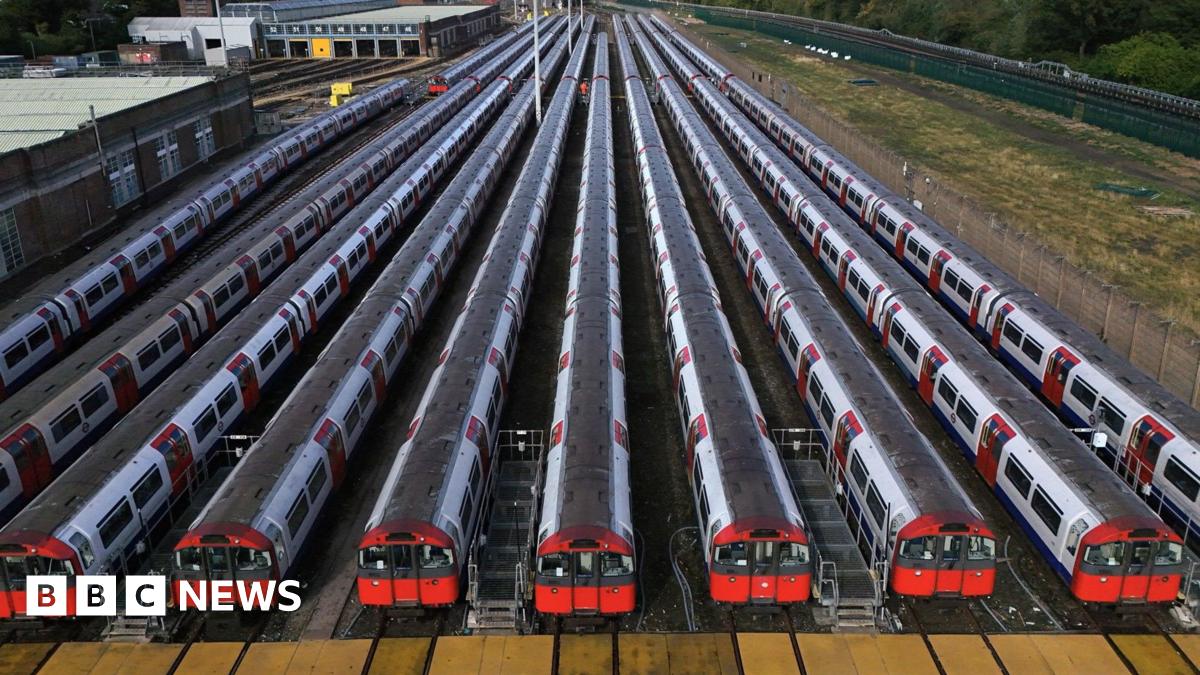
Tube drivers who are members of the RMT union will begin a series of 24-hour strikes later this month to oppose the introduction of a "condensed" four-day week.

The first is due to be on 24-25 March with several more in the weeks after.

Eddie Dempsey, RMT general secretary, said: "London Underground is trying to force through major changes to working patterns that have already been rejected by our members".

Transport for London (TfL) has previously said the change would be voluntary with no reduction in contractual hours and would improve reliability at no extra cost.

The strike dates are as follows:
  • 24–25 March (12:00 Tuesday - 11:59 Wednesday)
  • 26–27 March (12:00 Thursday - 11:59 Friday)
  • 21–22 April (12:00 Tuesday - 11:59 Wednesday)
  • 23–24 April (12:00 Thursday - 11:59 Friday)
  • 19–20 May (12:00 Tuesday - 11:59 Wednesday)
  • 21–22 May (12:00 Thursday - 11:59 Friday)

It's unclear whether the times stated refer to when train operators (drivers) book on, or whether members will walk out between those times even if already booked on. In the former case there might still be a reasonable morning/evening peak services on the morning before, and evening after, each 24 hour strike period.

From what I recall of previous RMT driver strikes, some lines are more disrupted than others due to the proportions of drivers on each line that belong to RMT vs ASLEF. Is it the Northern line that's usually the least worst affected?

I wonder what ASLEF's position is, and also why RMT are against these proposals when they support a 4 day week at the TOCs and elsewhere.
 
Sponsor Post - registered members do not see these adverts; click here to register, or click here to log in
R

RailUK Forums

xtmw

Member
Joined
22 Aug 2022
Messages
189
Location
England
There will likely be little to no service on the network; it all depends what drivers turn up to book on.

You will usually find shuttle services on the network, albeit severely limited and several stations closed. There will most likely be no service before 08:00 or after 17:00.
 
Last edited:

bluegoblin7

Established Member
Joined
10 May 2011
Messages
2,109
Location
JB
As per:


It's unclear whether the times stated refer to when train operators (drivers) book on, or whether members will walk out between those times even if already booked on. In the former case there might still be a reasonable morning/evening peak services on the morning before, and evening after, each 24 hour strike period.

From what I recall of previous RMT driver strikes, some lines are more disrupted than others due to the proportions of drivers on each line that belong to RMT vs ASLEF. Is it the Northern line that's usually the least worst affected?

I wonder what ASLEF's position is, and also why RMT are against these proposals when they support a 4 day week at the TOCs and elsewhere.
Walking out part way through a shift isn’t really the done thing on LU - it is allowed, but logistically quite complex for the individual. A T/Op couldn’t just leave a train on a running line, for instance.

In practice (and part of the reasoning for structuring the strike as it is) anyone who books on before the strike is called will work their full shift.

As this is RMT only - and no danger of Aslef joining, as they are in favour of this issue - I would expect at least a limited service to run on all lines, with the worst affected likely to be the Picc and the C&H - some of the most RMT-heavy lines for T/Ops.

An early finish and late start is also a possibility.

Station staff and service control are not impacted by the strike, so as many trains as there are drivers can be run.
 
Joined
2 Feb 2019
Messages
1,039
As per:

It's unclear whether the times stated refer to when train operators (drivers) book on, or whether members will walk out between those times even if already booked on. In the former case there might still be a reasonable morning/evening peak services on the morning before, and evening after, each 24 hour strike period.

From what I recall of previous RMT driver strikes, some lines are more disrupted than others due to the proportions of drivers on each line that belong to RMT vs ASLEF. Is it the Northern line that's usually the least worst affected?

I wonder what ASLEF's position is, and also why RMT are against these proposals when they support a 4 day week at the TOCs and elsewhere.

The following report in The Guardian quotes the following comment from Aslef saying this strike called by the RMT is 'bizarre'.
Finn Brennan, a district organiser in London for Aslef, said the strike was bizarre. He said the proposals remained voluntary, adding: “It will be the first time in the history of the trade union movement that a union has voted to strike against a shorter week and fewer days at work.”
 

Skimpot flyer

Established Member
Joined
16 Nov 2012
Messages
1,930
Would London Overground still operate on strike days? I’m thinking specifically about the lines shared with LU, such as Gunnersbury-Richmond
 

sleepinghobby

Member
Joined
3 Mar 2023
Messages
21
Location
UK
Good luck to the RMT LU driver grade. Parallels to the the TOC 'efficiency' plans the previous government tried to implement re. movement of shifts, booking on, earlier start and later finish times, availability of spares. ASLEF LU found lacking again...
 

RailExplorer

Member
Joined
14 Aug 2018
Messages
216
I'm not following this strike action at all. Didn't the drivers have a 4 day working week agreed in a recent pay deal? I thought that's what they wanted. As a driver on a 4 day week, I find it bizarre anyone would want a 5 day week!
 

bluegoblin7

Established Member
Joined
10 May 2011
Messages
2,109
Location
JB
No. There was an agreement to discuss a 4 day week, not to implement.

The key issues are less the four day week itself and more the fact that it is in reality compressed hours, and a tearing up of the majority of driver T&Cs that have been accrued over the last few decades.

It is a fundamental change to how LUL train operations work, disguised as purely a four day week.

There is quite a lot of inter-union politiking on this one - I’ve tried to remain neutral!
 

Howardh

Established Member
Joined
17 May 2011
Messages
9,770
If someone has an advance ticket for two train journeys which requires a tube connection in London, if they miss the second leg due to that strike as they have to use the bus, would the ticket be accepted?

However I'm expecting there will be some service however limited, or will lines (eg Victoria) be completely shut down?
 

xtmw

Member
Joined
22 Aug 2022
Messages
189
Location
England
As said before it all depends on what drivers turn up for work and how many trains are available. @bluegoblin7 mentions that it's only T/OPs striking, so line controllers, CSAs and other operational grades will expected to book on as usual.

There is the possibility of shuttle services running, but as explained above those lines which are heavily RMT will most likely have the worst of the disruption.
 

Mawkie

Established Member
Joined
17 Feb 2016
Messages
1,242
Which are the most and less RMT lines?
It hardly matters. Most ASLEF drivers won't cross any picket line anyway. LU will advise passengers not to travel, and those that can rearrange their lives will do so. There would be a risk of serious overcrowding if LU try to anticipate any services running at all and suggest people should travel as normal.

Shuttle services are used by LU as propaganda rather than providing a meaningful service to anywhere useful as they tend to be at the far extremities of lines.

The best result would be for everyone to get around the table again and sort out a deal that works for everyone.
 

Thirteen

Established Member
Joined
3 Oct 2021
Messages
1,888
Location
London
If the RMT strike ends on the Friday at 11:59, I assume evening services will be affected to a degree.

I find it weird that the strikes are in the middle of the week.
 

bramling

Veteran Member
Joined
5 Mar 2012
Messages
20,303
Location
Hertfordshire / Teesdale
The following report in The Guardian quotes the following comment from Aslef saying this strike called by the RMT is 'bizarre'.

This is rather misleading from ASLEF. Whilst it may be supposedly voluntary, there's a reasonable concern that those drivers who don't wish to do it will end up being affected in various ways, or at some point in the future it will become mandatory. It's also worth remembering that LU has brought in various change programmes over the last few years, and without exception they have all ended up being disastrous, not least the infamous "Fit for the future - stations" programme. So again, I don't blame RMT for being highly sceptical.

It's also worth pointing out that plenty of ASLEF members aren't overly happy about this. One of LU's arguments is that this aligns more with what TOCs do, however there's a key difference, namely the intensity of LU work. LU's work is more akin to the worst mainline suburban work, with the added issue that a high proportion of work is in tunnel (more so on some lines than others). There's plenty of posts on here from mainline drivers who have done intensive suburban work who say they find or found it highly draining. 8h 30mins at work is enough of that, quite frankly.

One final point, LU has enough of an issue with their staff generally not being overly healthy, and overall their levels of attendance aren't great, which may well be related to the point about health. Again, 8h 30mins at work is enough in my view. Given the point about health, LU would do better to look at ways of reducing hours, rather than trying to sweat already creaking assets.

== Doublepost prevention - post automatically merged: ==

If the RMT strike ends on the Friday at 11:59, I assume evening services will be affected to a degree.

Potentially, yes. If, as is likely, a special service is operated, then it would take some time for a normal service to be restored. In theory it's possible to bring a special service out once the late turns start booking on, however this isn't easy, and it may well be decided on some lines at least not to attempt it.

== Doublepost prevention - post automatically merged: ==

No. There was an agreement to discuss a 4 day week, not to implement.

The key issues are less the four day week itself and more the fact that it is in reality compressed hours, and a tearing up of the majority of driver T&Cs that have been accrued over the last few decades.

It is a fundamental change to how LUL train operations work, disguised as purely a four day week.

Agreed. 4-day week may be the "headline", but there's a lot more to it than that.

For those who *are* in favour of it, if one were to ask them about how they expect to feel once they actually come to working the changed shift patterns, the general answer is likely to be "I'll have to manage, it's worth it for the extra day off". IMO that isn't a very responsible attitude.
 
Last edited:

ainsworth74

Forum Staff
Staff Member
Global Moderator
Joined
16 Nov 2009
Messages
31,067
Location
Redcar
For those who *are* in favour of it, if one were to ask them about how they expect to feel once they actually come to working the changed shift patterns, the general answer is likely to be "I'll have to manage, it's worth it for the extra day off". IMO that isn't a very responsible attitude.
It is a tricky one isn't it? I can well see (sticking to the big railway) that if you're say an LNER driver where you spend hours bombing down the ECML with only a handful of station stops then doing that for 8.5 hours for four days will be, of course, mentally taxing but is a very different kettle of fish to say a Northern driver working out of Leeds on the electric services out to Skipton/Ilkley/Bradford where actually doing the hours over five days may well be the better bet from a managing your ability to focus and concentrate and be rested. On LU it is of course even more extreme. An LU driver probably does as many or more station stops in one day as an LNER driver does in a week!

But, even then I can see the appeal of your working week just being four days long. I've not worked on the railway or done shift work anywhere else but the best I ever felt at work was when I was working part-time Monday to Thursday. That three days off a week was really quite remarkable for how much more energy and mental capacity you had. But then I wasn't spending 8.5 hours doing dozens of station stops in tunnels having possibly started or finished my day at 3am...

That's of course quite apart from any other Ts & Cs that this might be attacking. I remember I was supportive of the set of strikes on the big railway a few years ago when they wanted to make it so that people wouldn't know one week to the next what their rest days or spare turns were going to look like meaning you couldn't actually plan anything unless it was booked as leave. Crackers. If LU are up to similar tricks here then I have to say hopefully the RMT can block any nonsense like that.
 

kw12

Member
Joined
12 Jan 2017
Messages
233
In 2022 RMT drivers held a series of strikes about Night Tube. The strikes were solely during Night Tube operating hours.

ASLEF drivers worked as normal during those strikes, with trains running on most Night Tube routes, at a lower frequency than normal, The frequency reductions varied from line to line, depending on the proportion of drivers who were in the RMT.

Will something similar apply during the upcoming strikes?
 

Dstock7080

Established Member
Joined
17 Feb 2010
Messages
3,508
Location
West London
ASLEF drivers worked as normal during those strikes,

Will something similar apply during the upcoming strikes?
ASLEF drivers will be asked to work normally, as they are not currently in dispute regarding this issue
 

Russel

Established Member
Joined
30 Jun 2022
Messages
5,376
Location
Lichfield
It hardly matters. Most ASLEF drivers won't cross any picket line anyway. LU will advise passengers not to travel, and those that can rearrange their lives will do so. There would be a risk of serious overcrowding if LU try to anticipate any services running at all and suggest people should travel as normal.

ASLEF Haven't called a strike, have they?

What is the legal position on staff in a union not in dispute refusing to cross another unions picket line?
 

Tube driver

Member
Joined
7 Jan 2018
Messages
133
They are protected just as if they were on strike and will lose a days pay just like those on strike. No disciplinary action will be taken and management don’t really know who’s a member of what anyway.

in reality most of ASLEF will turn up. i think the days of ’one out all out’ died some time ago.
 

ainsworth74

Forum Staff
Staff Member
Global Moderator
Joined
16 Nov 2009
Messages
31,067
Location
Redcar
They are protected just as if they were on strike and will lose a days pay just like those on strike. No disciplinary action will be taken and management don’t really know who’s a member of what anyway.
I agree with the broad thrust of this post as to the real world outcomes (loss of pay and nothing else really) but I'm not sure that the usual protections that would apply to a striker cover someone who refuses to cross a picket. It would normally be seen as secondary action and that is very much not protected, to my understanding, in employment law. Again, real world outcomes, likely be absolutely nothing other than a loss of a days pay however.
 

bluegoblin7

Established Member
Joined
10 May 2011
Messages
2,109
Location
JB
If a train operator, of any or no union, chooses to not cross a picket line they will be deemed to be on strike, and have the full legal protections of that. There is provision in LU policy for staff who don't want to cross a picket line but do want to attend work, although it is open to interpretation and I don't really want to muddy the waters here with that. Any LUL T/Op taking industrial action is by definition not taking secondary action.

If another grade, e.g. station staff or service control, chose to not cross a picket line they would not legally be able to take strike action, and would not have the protections. They could still lose the day's pay, but it may result in disciplinary action. Again, however, it is likely the above policy would be used to come to an agreement prior to disciplinary action. If I as someone in service control decided to not run a train service in solidarity with the strikers, that would be considered secondary action.
 

bramling

Veteran Member
Joined
5 Mar 2012
Messages
20,303
Location
Hertfordshire / Teesdale
It is a tricky one isn't it? I can well see (sticking to the big railway) that if you're say an LNER driver where you spend hours bombing down the ECML with only a handful of station stops then doing that for 8.5 hours for four days will be, of course, mentally taxing but is a very different kettle of fish to say a Northern driver working out of Leeds on the electric services out to Skipton/Ilkley/Bradford where actually doing the hours over five days may well be the better bet from a managing your ability to focus and concentrate and be rested. On LU it is of course even more extreme. An LU driver probably does as many or more station stops in one day as an LNER driver does in a week!

But, even then I can see the appeal of your working week just being four days long. I've not worked on the railway or done shift work anywhere else but the best I ever felt at work was when I was working part-time Monday to Thursday. That three days off a week was really quite remarkable for how much more energy and mental capacity you had. But then I wasn't spending 8.5 hours doing dozens of station stops in tunnels having possibly started or finished my day at 3am...

That's of course quite apart from any other Ts & Cs that this might be attacking. I remember I was supportive of the set of strikes on the big railway a few years ago when they wanted to make it so that people wouldn't know one week to the next what their rest days or spare turns were going to look like meaning you couldn't actually plan anything unless it was booked as leave. Crackers. If LU are up to similar tricks here then I have to say hopefully the RMT can block any nonsense like that.

I think the above is all a reasonably fair summary.

Essentially there’s the different positions:
(1) those drivers who would prefer 4-day week (tend to be newer drivers / those living further out)
(2) those drivers who don’t want it (tend to be more established ones / those living nearer in)
(3) TFL who I think it’s fair to say are using this as a means of bringing in other things, which results in some crossover with (2).

Note that (1) and (2) aren’t necessarily totally aligned with ASLEF / RMT, although the two unions have adopted opposing positions.

For what it’s worth, I’m with RMT on this one. TFL have done too many botched change programmes in recent years, so with that track record if I was a driver I simply wouldn’t trust them. It doesn’t help that one of the people who is a protagonist of this has a reputation for every single thing that he has ever touched turning out to be a disaster.

Logistically I can’t see how it would work splitting out the two groups who do and don’t want the change - is it reasonable for example to expect 5-day people to cover increased rates of sickness amongst 4-day people who find the change burns them out? Bear in mind TFL has never been great at performance management, so you can bet issues will be left to fester rather than competently dealt with.

Realistically, drivers moan today when they have an 8-hour duty (8.5 hours including the meal relief), so I can imagine how longer duties would be received!

As for some of the other things being floated around. Overtime/RDW is more of an opportunity to mask the fact that TFL have failed to keep on top of recruitment/training over recent years, and using Covid as an excuse is wearing a bit thin now we are 6 years on. Then there’s booking on by iPad, which to be honest is bordering on laughable - yeah TOCs do similar stuff, but they don’t generally have trains running every couple of minutes, if LU is trying to emulate TOCs then it points to a fundamental lack of understanding of how their operation actually works - there’s plenty of threads on here discussing meltdowns on TOC services during disruption, look at what happens on GTR for example!

It will certainly be interesting to see how all three camps are reconciled, if it’s possible.
 
Last edited:

boiledbeans2

Member
Joined
15 Oct 2020
Messages
958
Location
UK
It's also worth pointing out that plenty of ASLEF members aren't overly happy about this. One of LU's arguments is that this aligns more with what TOCs do, however there's a key difference, namely the intensity of LU work. LU's work is more akin to the worst mainline suburban work, with the added issue that a high proportion of work is in tunnel (more so on some lines than others). There's plenty of posts on here from mainline drivers who have done intensive suburban work who say they find or found it highly draining. 8h 30mins at work is enough of that, quite frankly.

On LU it is of course even more extreme. An LU driver probably does as many or more station stops in one day as an LNER driver does in a week!
But LU is mostly ATO.

One driver even managed to multi-task: drive ATO train, knit, watch TV, seemingly without incident until a member of public noticed.

That shows how "intense" driving is.
 

Moonshot

Established Member
Joined
10 Nov 2013
Messages
3,806
I think the above is all a reasonably fair summary.

Essentially there’s the different positions:
(1) those drivers who would prefer 4-day week (tend to be newer drivers / those living further out)
(2) those drivers who don’t want it (tend to be more established ones / those living nearer in)
(3) TFL who I think it’s fair to say are using this as a means of bringing in other things, which results in some crossover with (2).

Note that (1) and (2) aren’t necessarily totally aligned with ASLEF / RMT, although the two unions have adopted opposing positions.

For what it’s worth, I’m with RMT on this one. TFL have done too many botched change programmes in recent years, so with that track record if I was a driver I simply wouldn’t trust them. It doesn’t help that one of the people who is a protagonist of this has a reputation for every single thing that he has ever touched turning out to be a disaster.

Logistically I can’t see how it would work splitting out the two groups who do and don’t want the change - is it reasonable for example to expect 5-day people to cover increased rates of sickness amongst 4-day people who find the change burns them out? Bear in mind TFL has never been great at performance management, so you can bet issues will be left to fester rather than competently dealt with.

Realistically, drivers moan today when they have an 8-hour duty (8.5 hours including the meal relief), so I can imagine how longer duties would be received!

As for some of the other things being floated around. Overtime/RDW is more of an opportunity to mask the fact that TFL have failed to keep on top of recruitment/training over recent years, and using Covid as an excuse is wearing a bit thin now we are 6 years on. Then there’s booking on by iPad, which to be honest is bordering on laughable - yeah TOCs do similar stuff, but they don’t generally have trains running every couple of minutes, if LU is trying to emulate TOCs then it points to a fundamental lack of understanding of how their operation actually works - there’s plenty of threads on here discussing meltdowns on TOC services during disruption, look at what happens on GTR for example!

It will certainly be interesting to see how all three camps are reconciled, if it’s possible.
I'm an ASLEF member who enjoys the 4 day week....35 hours equates to an average turn of 8 hours 45 minutes, the max being 10 and the minimum being 6. It works brilliantly for my depot all round.
 

Skimpot flyer

Established Member
Joined
16 Nov 2012
Messages
1,930
In Royal Mail, regional Distribution Centres and Mail Centre have some autonomy in devising local shift patterns.
A mix of 3, 4 and 5 day attendance patterns are common, although the overwhelming majority of shifts are of the 5-day variety.
What tickles me is some of those on 4-day weeks then come in on overtime on 2 of their three rest days, bumping up their wages whilst staying within the EU rules regarding two days off in a rolling fortnight!!
 

Mawkie

Established Member
Joined
17 Feb 2016
Messages
1,242
I'm an ASLEF member who enjoys the 4 day week....35 hours equates to an average turn of 8 hours 45 minutes, the max being 10 and the minimum being 6. It works brilliantly for my depot all round.
Are we comparing like with like? Presumably this is at a national TOC?

My friend works for the ambulance service where he does 3x12 hour days - I always laugh with him and say "I wouldn't want to be the patient that gets you at hour 34...". There's no question that there are many ways to slice up a working week, but we need to compare like for like.

Regardless, LU can ask for whatever they want, but they can't expect a wholesale change to terms and conditions to be accepted without challenge. These terms have been fought for over decades and often as a result of previous strike action to improve the working lives of all LU operational staff. I don't want to drive trains until 0245hrs. I don't want to start at 0315. I don't want to lose one week's block leave. I don't want to log onto my ipad at home to find out my start time has been altered by 2 hours either way. I don't want to stuck on a line for 5 years before I can move lines again. I don't want to book on alone on a platform with an ipad. I don't want changes to walking times, changes in the way unplanned overtime is calculated, and many of the other changes LU want to bring in.

I don't want any of that, but I would accept it if LU negotiated in good faith, but they never do. If I was able, I would share the "Take it or Leave it" offer the company made regarding the 4DW. It was a one time deal. The majority chose to leave it, and yet LU management are forcing their proposal through anyway - the first ipads are already in circulation.

It's voluntary I hear them cry, but how is it possible to run depots/lines with drivers who are on 2 different sets of parameters. If I can drive for 4hrs 15m and the driver next to me does 4hrs 45m? If their working day is longer than mine? How can I cover those duties with my more restrictive driving hours? Although having the benefit of 160 years of scheduling experience, LU haven't been able to answer that question. So what is their thinking behind the scenes? Get a few drivers on board the 4DW and the simply force it through for everyone else?

You would hope that such fundamental changes would mean I actually get to see what my working week would look like, perhaps a sample roster to see how much extra driving I would be doing... Nope, apparently it's too time consuming for them to produce an example roster for each line, so they did one for the Bakerloo Line. I have no experience of that line, I've only ridden on it once. It bears no relation to my own line, so it's entirely useless to me. LU are asking me to take them on good faith, but they proved to me over and over again that I can't trust them. I'm still waiting for my Priv how many years down the line...

The RMT are always demonised in the press and seen to be unreasonable, but most people don't realise that LU management can be duplicitous and untrustworthy. It's hard to negotiate with such a bad faith actor.
 

Moonshot

Established Member
Joined
10 Nov 2013
Messages
3,806
Are we comparing like with like? Presumably this is at a national TOC?

My friend works for the ambulance service where he does 3x12 hour days - I always laugh with him and say "I wouldn't want to be the patient that gets you at hour 34...". There's no question that there are many ways to slice up a working week, but we need to compare like for like.

Regardless, LU can ask for whatever they want, but they can't expect a wholesale change to terms and conditions to be accepted without challenge. These terms have been fought for over decades and often as a result of previous strike action to improve the working lives of all LU operational staff. I don't want to drive trains until 0245hrs. I don't want to start at 0315. I don't want to lose one week's block leave. I don't want to log onto my ipad at home to find out my start time has been altered by 2 hours either way. I don't want to stuck on a line for 5 years before I can move lines again. I don't want to book on alone on a platform with an ipad. I don't want changes to walking times, changes in the way unplanned overtime is calculated, and many of the other changes LU want to bring in.

I don't want any of that, but I would accept it if LU negotiated in good faith, but they never do. If I was able, I would share the "Take it or Leave it" offer the company made regarding the 4DW. It was a one time deal. The majority chose to leave it, and yet LU management are forcing their proposal through anyway - the first ipads are already in circulation.

It's voluntary I hear them cry, but how is it possible to run depots/lines with drivers who are on 2 different sets of parameters. If I can drive for 4hrs 15m and the driver next to me does 4hrs 45m? If their working day is longer than mine? How can I cover those duties with my more restrictive driving hours? Although having the benefit of 160 years of scheduling experience, LU haven't been able to answer that question. So what is their thinking behind the scenes? Get a few drivers on board the 4DW and the simply force it through for everyone else?

You would hope that such fundamental changes would mean I actually get to see what my working week would look like, perhaps a sample roster to see how much extra driving I would be doing... Nope, apparently it's too time consuming for them to produce an example roster for each line, so they did one for the Bakerloo Line. I have no experience of that line, I've only ridden on it once. It bears no relation to my own line, so it's entirely useless to me. LU are asking me to take them on good faith, but they proved to me over and over again that I can't trust them. I'm still waiting for my Priv how many years down the line...

The RMT are always demonised in the press and seen to be unreasonable, but most people don't realise that LU management can be duplicitous and untrustworthy. It's hard to negotiate with such a bad faith actor.
Yes it's a national toc....and the 4 day week is pretty widespread nowadays. I would never go back to a 5 day week. As far as your other issues go, I would willingly take an I pad rather than carry files of route maps and traction manuals. We already have remote log on for some depots. You would definitely appreciate the extra day off during the working week...an extra 52 days in the year. Interestingly, RMT are currently mulling over a deal for conductors which would bring Sundays inside the working week and a guarantee of 156 rest days a year with the same rest day pattern as now.
 

Snow1964

Established Member
Joined
7 Oct 2019
Messages
11,014
Location
West Wiltshire
If a train operator, of any or no union, chooses to not cross a picket line they will be deemed to be on strike, and have the full legal protections of that. There is provision in LU policy for staff who don't want to cross a picket line but do want to attend work, although it is open to interpretation and I don't really want to muddy the waters here with that. Any LUL T/Op taking industrial action is by definition not taking secondary action.
Daft question perhaps, but if shift starts at small locations, or there is facility for remote login. How on earth would you be able to have a picket line.
Traditionally it was a row of people standing outside entrance gates (often around a brazier), but how does it work in an electronic or remote sign in regime ?

Or are picket lines simply an obsolete concept ?
 

Top