• Our new ticketing site is now live! Using either this or the original site (both powered by TrainSplit) helps support the running of the forum with every ticket purchase! Find out more and ask any questions/give us feedback in this thread!

Private Siding Questions

Status
Not open for further replies.

Andy873

Established Member
Joined
23 Mar 2017
Messages
1,424
I've wondered for some time now about private sidings. This subject (for me at least) covers several periods of time and locations, but I'm quite sure they were repeated all over the country at some point.

The locations are Padiham gas works, the power station there, Huncoat power station sidings, and (yes groan) Great Harwood gas works...

Padiham gas works was built (as many were) next to the railway goods yard. By 1929 it had a narrow gauge tramway running out from it, into the goods yard and it ran parallel with the end siding. Here is the OS map from surveyed that year:
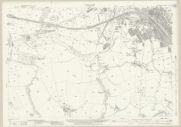

And to your left (across the river) you will see the private power station sidings.

Next up is Great Harwood's gas works. It had its own internal rail sidings and a connection across Heys Lane straight into the goods yard there. In the goods yard, you will see two sidings right next to the yard wall (along side Heys Lane). These sidings and the track they connect to were known as the gas sidings and installed in 1896/7, the gas works internal track layout was expended in 1922.
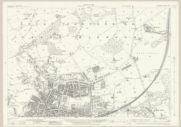

My questions:

Which company would lay the private sidings, that is, the gas works company or the respective railway company? I would have thought a railway company is best placed as it's part of their business?

Why would you lay a narrow gauge tramway along side a standard gauge coal siding? it seems to be self defeating as you would have to manually transfer the coal from a standard gauge wagon to a narrow gauge one, only to have to unload it again once inside the close by gas works? as was the case at Padiham.

At Great Harwood, the agreement was that "company engines were not allowed to cross Heys Lane and enter the gas works". In English, what does that really mean? did an L&Y loco simply push the loaded wagons across the lane but stop just inside the goods yard gates? The gas works had its own loco, I presume this private loco would then drag the wagon's in.

Who (which company) would make the track alterations that took place over the coming years? Padiham's power station's private sidings changed significantly over the years especially when a second power station was built along side the original. I would have thought the railway company would have to be sure the private sidings were up to the expected standard (or at least be safe to operate on).

The same questions apply to Huncoat's power station sidings, which again changed over the years according to need.

If you have your own questions regarding private sidings then please feel free to ask away.

Thanks,
Andy.
 
Sponsor Post - registered members do not see these adverts; click here to register, or click here to log in
R

RailUK Forums

Big Jumby 74

Established Member
Joined
12 Feb 2022
Messages
2,256
Location
UK
Purely supposition on my part in the general sense;

Which company would lay the private sidings, that is, the gas works company or the respective railway company? I would have thought a railway company is best placed as it's part of their business?
I would have thought the gas works would have undertaken any such work on their own property, but leave any connecting up to the bigger railway?
Why would you lay a narrow gauge tramway along side a standard gauge coal siding?
May have been due to space restrictions within the private premises, meaning only a narrow gauge would work? But it would also (presumably) be simpler to manage if the two systems were kept completely separate, no shared maintenance contracts etc?
At Great Harwood, the agreement was that "company engines were not allowed to cross Heys Lane and enter the gas works".
As it says on the tin, so to speak, just that. There may also have been a weight limit imposed along Heys Lane, the upkeep of which would fall to the local authority, such that only loaded wagons were allowed to cross, but no locomotives?
Who (which company) would make the track alterations that took place over the coming years? Padiham's power station's private sidings changed significantly over the years especially when a second power station was built along side the original. I would have thought the railway company would have to be sure the private sidings were up to the expected standard (or at least be safe to operate on).
Again, I would have thought any work within the private site would have been undertaken by their employees/contractors, the main line company only becoming involved where their land and connections were concerned?

My comments are only off the top of my head, so may be wide of the mark?

I am reminded of my days visiting various industrial sites, large and small (in BR days), and it was almost always apparent (condition of track) that BR's responsibility ended with the gate (or assumed point of ownership change) between the BR exchange sidings and the track leading in to the private site. Exceptions to this were a number of places, some NCB pits, where BR loco's were permitted to operate in to the colliery yard, and in these instances I suspect BR would have insisted on certain standards of maintenance?
 

Magdalia

Established Member
Joined
1 Jan 2022
Messages
7,447
Location
The Fens
I suggest that you take a step back, and start by thinking about who owns the land, and what is the legislative process for building tracks on it.

Building a railway required an Act of Parliament, which was necessary for acquiring the land. In some circumstances the legislative process was made easier by the Light Railways Act of 1896. Near here, the standard gauge line into the Barrington Cement Works was constructed as a Light Railway. It had exchange sidings where the "Heavy Railway" and Light Railway locos could only enter or exit at their own end of the exchange sidings. Barrington was still operating in this way up to about 30 years ago.

A line on a public road (not just crossing it) was covered by the Tramways Act of 1870. The tramway operator had some responsibilities for road maintenance. One of the most extensive tramways was here in the Fens, between Wisbech and Upwell.

On private land the landowner could do what they liked. This would apply on the land owned and occupied by the power stations and gas works.

Any legislative process under the Tramways Act or the Light Railways Act ought to be traceable, but you need to start with the names of the companies involved.

Regarding construction and operation, narrow gauge has two huge advantages over standard gauge: it is much cheaper to construct, and it can have much tighter curvature, which can be critical on private sites with space constraints. I suspect that construction was likely to have been carried out by contractors, who would have had plenty of business with lots of power stations and gas works being built.
 

Big Jumby 74

Established Member
Joined
12 Feb 2022
Messages
2,256
Location
UK
Near here, the standard gauge line into the Barrington Cement Works was constructed as a Light Railway
The quintessential industrial branch running across the fields, and a beautiful stroll from Foxton station many years ago :smile:
 

Attachments

  • BJ-S10040 & S10035 returning to Barrington cement works 7th October 1986.jpg
    BJ-S10040 & S10035 returning to Barrington cement works 7th October 1986.jpg
    276.8 KB · Views: 128

Andy873

Established Member
Joined
23 Mar 2017
Messages
1,424
I suggest that you take a step back, and start by thinking about who owns the land, and what is the legislative process for building tracks on it.
That's a very good point.

The General rules (laws) are in attached
Railway Clauses Consolidation Act 1845
You are spot on with this act, the London Gazette from 22/11/1895 reports the proposed bill submitted by the Accrington gas and water board (who owned Great Harwood gas works) for the construction of the rail connection across Heys Lane.

There are several mentions of the 1845 act, not only that, but they propose powers to maintain Heys Lane, modify it, dig up where necessary, roads, pavements, right of way etc and to build there own internal railway on site. The London Gazette also reports on 21/7/1896 that the bill had been past and I don't think the gas works would have hung around to get this connection done.

There may also have been a weight limit imposed along Heys Lane, the upkeep of which would fall to the local authority, such that only loaded wagons were allowed to cross, but no locomotives?
A very good point, and one I had not thought about. Yes it could be that it was only the loaded wagons that ran across the lane, once the gas works loco was able to "grab hold of them" they could be pulled across.

Not sure what capacity these wagons could carry. but a private owned wagon which was built by the Wigan Wagon company was registered in 1904 with the L&Y and able to carry 10 tons of coke, something all gas works needed.

Regarding construction and operation, narrow gauge has two huge advantages over standard gauge: it is much cheaper to construct, and it can have much tighter curvature, which can be critical on private sites with space constraints. I suspect that construction was likely to have been carried out by contractors, who would have had plenty of business with lots of power stations and gas works being built.
Yes, it's certainly cheaper to build narrow gauge and looking at the geography around Padiham space would have been a concern. Still can't help wondering though why you would go to all that effort transferring coal / coke from one gauge to another just to move it a few feet?

The quintessential industrial branch running across the fields, and a beautiful stroll from Foxton station many years ago :smile:
A beautiful photo in my opinion!

Going back to the boundary between the railway\s tracks and the private sidings, there are plenty of photos which show the difference in condition / maintenance of these. The private sidings at Padiham power station are rusty and overgrown, BR's tracks are clean and weed free.


Another question please:
Padiham power station had metal mesh fencing all around it, I'm presuming the rail entrance off the main lines would have been protected by some sort of locked gate?
 

MotCO

Established Member
Joined
25 Aug 2014
Messages
6,152
Is there also an advantage in having different gauges so that there is no chance of a runaway train leaving the private depot and ending up on national rails? We have seen some recent examples of this, although thankfully stopped by catch points (?) .
 

Grumpy

Established Member
Joined
8 Nov 2010
Messages
1,324
There were many locations where BR staff would maintain the trackwork inside the customer's land for an agreed fee.
 

DelW

Established Member
Joined
15 Jan 2015
Messages
6,054
Not sure what capacity these wagons could carry. but a private owned wagon which was built by the Wigan Wagon company was registered in 1904 with the L&Y and able to carry 10 tons of coke, something all gas works needed.
I think you have that the wrong way round. As I understand it, town gas production works required coal as their input, and gas, coke and tar were their outputs. Obviously gas was their main business, but coke and coal-tar were by-products that were also saleable.

Yes, it's certainly cheaper to build narrow gauge and looking at the geography around Padiham space would have been a concern. Still can't help wondering though why you would go to all that effort transferring coal / coke from one gauge to another just to move it a few feet?
Before the development of petrol road transport, around the time of (and driven by) the first world war, the only alternative would have been horse drawn carts or men with wheelbarrows. Many industries used narrow gauge tramways and railways, even for quite short term operations, with portable track (like a big version of model railway track) which could be quickly laid, modified, and re-laid.

As recently as the mid 1970s I worked on a civil engineering site which included construction of a tunnel around 200m long. To move equipment etc. through this tunnel there was a 2-foot gauge railway using portable "jubilee" track panels and worked by battery electric locos. It's possible that something similar is still used now, but I wasn't ever involved in tunnelling again.
 

Snow1964

Established Member
Joined
7 Oct 2019
Messages
11,305
Location
West Wiltshire
As recently as the mid 1970s I worked on a civil engineering site which included construction of a tunnel around 200m long. To move equipment etc. through this tunnel there was a 2-foot gauge railway using portable "jubilee" track panels and worked by battery electric locos. It's possible that something similar is still used now, but I wasn't ever involved in tunnelling again.
When Southampton tunnel was being worked on in mid 1980s, a narrow gauge railway was used one side, then later swapped to other track to complete the work, for a while I think one track was slewed in the middle (tracks are fully reversible signalled over 2 tracks from 4 tracks at Northam Junction to 4 tracks from station westwards). Some pictures on the link


Rescars

Established Member
Joined
25 May 2021
Messages
2,610
Location
Surrey
A couple of thoughts.

  1. Not all private sidings would necessarily have had locomotives of their own. A shunting horse could have been a more cost effective way to move single wagons around a site.
  2. The issue of transfer from standard to narrow gauge may have depended on how quickly the siding owner expected to use the material delivered. As we are going back long before the concept of "just-in-time" logistics had been invented (familiar to all present-day supermarket customers as "just--run--out"!), it seems probable that coal and other materials would have been stored/stockpiled before use. In this situation it makes perfect sense to off-load the load from the standard gauge wagons quickly so that they can be returned promptly, avoiding any costs incurred in retaining them. The narrow gauge could then be used to move the coal etc from the stockpile to the point of use as demand required.
 

DelW

Established Member
Joined
15 Jan 2015
Messages
6,054
When Southampton tunnel was being worked on in mid 1980s, a narrow gauge railway was used one side, then later swapped to other track to complete the work, for a while I think one track was slewed in the middle (tracks are fully reversible signalled over 2 tracks from 4 tracks at Northam Junction to 4 tracks from station westwards). Some pictures on the link

The third photo on that link looks similar to the locos I remember. If so, the big white box is the battery - they could be lifted off with a hoist, to enable them to be swapped for charging while the loco continued in use with a newly charged battery.

Something similar *might* have been used in gas works (presumably with appropriate sparkproofing), though that's only guesswork.
 

Magdalia

Established Member
Joined
1 Jan 2022
Messages
7,447
Location
The Fens
Before the development of petrol road transport, around the time of (and driven by) the first world war, the only alternative would have been horse drawn carts or men with wheelbarrows.
That's not quite correct. Steam lorries existed before the turn of the 19th/20th century. In Cambridge the gas works was by the river, on the site now occupied by Newmarket Road Tesco, because it was originally supplied by water transport from Kings Lynn Docks. The gas works railway sidings were on what is now Asda, and steam lorries were used to move the coal from the railway sidings to the gas works. The down loop between Coldham Lane and Mill Road bridges is still referred to locally as the Gas.


The issue of transfer from standard to narrow gauge may have depended on how quickly the siding owner expected to use the material delivered. As we are going back long before the concept of "just-in-time" logistics had been invented (familiar to all present-day supermarket customers as "just--run--out"!), it seems probable that coal and other materials would have been stored/stockpiled before use. In this situation it makes perfect sense to off-load the load from the standard gauge wagons quickly so that they can be returned promptly, avoiding any costs incurred in retaining them.
Actually, one of the problems for the railway was customers keeping their stockpiles in the wagons, only unloading the coal when they needed it, thereby inflating the number of wagons required. Remember that the only way of keeping track of where wagons were was pencil and paper.
 

Gloster

Veteran Member
Joined
4 Sep 2020
Messages
13,062
Location
Up the creek
Actually, one of the problems for the railway was customers keeping their stockpiles in the wagons, only unloading the coal when they needed it, thereby inflating the number of wagons required. Remember that the only way of keeping track of where wagons were was pencil and paper.

There was also the problem that it damaged the springs and increased the risk of a wagon causing a derailment. It also added to the maintenance costs, although if the wagon belonged to the business where it was being used to stockpile, that was their problem.
 

Merle Haggard

Established Member
Joined
20 Oct 2019
Messages
3,991
Location
Northampton
There used to be (internal railway) books with maps showing private sidings, showing the boundary between railway and private company's land, with standard colourings for the different categories. It's a long time ago since I was involved, but from memory they weren't the combinations i) B.R. track on B.R. land maintained at trader's expense ii) B.R. track on trader's land maintained at trader's expense; and iii) trader's track on trader's land. Usually the boundary of land ownership was marked by a gate across the tracks. Associated with this was the (written) agreement usually for a specified number of years (but that could be very long).
The L.N.W.R. books for a district are very sought after by collectors (presumably because of the attractive colouring, like R.C.H. maps) and change hands for over £100.
The 'Handbook of Stations' listed every P.S. as part of the information about stations. I also have a thick book 'Places, Works, Firms and Sidings connected with the L.N.W., Midland & L&Y' which also gives labelling, routing and invoicing details which came in a box of 'stuff' that no-one else wanted at a railwayana 'alpha-lots' auction.
Even in B.R. days, there were a lot of private sidings. There were also arrangements for coal merchants occupying land in goods yards. Anyone remember the 'measuring of excess space' routine?
I might add that B.R. always took theft by staff as an instantly dismissible offence so a lot of this interesting stuff had to go in the waste sack, sadly.

== Doublepost prevention - post automatically merged: ==

There was also the problem that it damaged the springs and increased the risk of a wagon causing a derailment. It also added to the maintenance costs, although if the wagon belonged to the business where it was being used to stockpile, that was their problem.
Coal merchants were not the worst offenders - there were standage or demurrage charges to dissuade. The worst was the N.C.B. who loaded our wagons in the summer and there they stayed until the winter; clearly visible from trains, against the stops obviously blocked in by the colliery's own internal user wagons. That was a disadvantage for rail - a road haulier would obviously not accept one of his tippers being held for 6 months. And it's the reason 16t mins rusted away just above the floor, wet acidic coal for months. That problem being acute during the N.U.M. 1980s strike, when a lot of them rusted away.

P.S. the method bt which wagons were positioned (including references to amplify the 'B.R. locos. must npot pass the board' are set out, by P.S. location, in the sectional appendices
 
Last edited:

Andy873

Established Member
Joined
23 Mar 2017
Messages
1,424
Here's a video for you all to look at, it's really two videos in one. The second video covers the last workings at Clitheroe gas works in 1968. You can of course watch it all but I would jump to around 13:40 as that's where the real interesting part begins.

Not sure if the standard gauge shunter is the gas work's or a BR one, and watch for the overhead narrow gauge engine!

Clitheroe gas works

In the video you can see a sign marking the gas work's private siding boundary, a 16 ton mineral wagon and how they empty it.

I think you have that the wrong way round. As I understand it, town gas production works required coal as their input, and gas, coke and tar were their outputs. Obviously gas was their main business, but coke and coal-tar were by-products that were also saleable.
Yes, my fault, I didn't word it quite right. There were, as well as coke and coal-tar other chemicals produced in the process which were also sold. At the end of the process all the ash / lumps etc was called breeze, this was compounded into blocks for the building trade, and that's where we get the term breeze block from.

Many industries used narrow gauge tramways and railways, even for quite short term operations, with portable track (like a big version of model railway track) which could be quickly laid, modified, and re-laid.
It seems the one at Padiham's gas works had a relatively short life, it was there in 1931, but by 1956 it had gone.

When Southampton tunnel was being worked on in mid 1980s, a narrow gauge railway was used one side, then later swapped to other track to complete the work, for a while I think one track was slewed in the middle (tracks are fully reversible signalled over 2 tracks from 4 tracks at Northam Junction to 4 tracks from station westwards). Some pictures on the link
Some great photos there, seems narrow gauge is / was used more commonly than I first thought.

it seems probable that coal and other materials would have been stored/stockpiled before use.
Yes that's right, you can see the stockpile of coal in the Clitheroe gas works video. It was common practice for coal fired power stations to stockpile no less than three months worth, ideally 6 months worth.

Have a look at this which was a newspaper article

https://www.bcthic.org/Archive/Search?SearchText=power power station&mid=8881

If I may just go back to that gas works video, it looks like the standard gauge shunting engine is diesel? but what about the overhead engine, looks like steam to me? was this one of those fireless steam locos? or is it the smoking coke?

Is there also an advantage in having different gauges so that there is no chance of a runaway train leaving the private depot and ending up on national rails? We have seen some recent examples of this, although thankfully stopped by catch points (?) .
That would be one advantage of a narrow gauge track not connected to the live network and one thing I hadn't thought about - good point.

Actually, one of the problems for the railway was customers keeping their stockpiles in the wagons, only unloading the coal when they needed it, thereby inflating the number of wagons required. Remember that the only way of keeping track of where wagons were was pencil and paper.

There was also the problem that it damaged the springs and increased the risk of a wagon causing a derailment. It also added to the maintenance costs, although if the wagon belonged to the business where it was being used to stockpile, that was their problem.

The worst was the N.C.B. who loaded our wagons in the summer and there they stayed until the winter
Beeching in his report seems to be very irritated by this practice from the N.C.B. and states that this practice must stop together with his desire to reduce the wagon stock and introduce the merry go round trains that will run directly from coal mines to power stations.
 
Last edited:

Big Jumby 74

Established Member
Joined
12 Feb 2022
Messages
2,256
Location
UK
If I may just go back to that gas works video, it looks like the standard gauge shunting engine is diesel? but what about the overhead engine, looks like steam to me? was this one of those fireless steam locos? or is it the smoking coke?
The first I thought was a product of Frank Hibberd (FH) , but seeing the side on view towards the end of the video it is too small for (even) one of those, more likely a Motor Rail (Simplex of Bedford) product or similar, just enough guts to move one or two mineral wagons. The high line 'loco' seems to be only employed for a set short run (a matter of yards). In larger coke works, such locos were of O/Head electric, but the one in the video appears 'wireless' (no pun intended!), suspect it may have been petrol driven perhaps. Seems to be just a cab structure with the bucket attached on front. Very quirky.

PS: at one point as the high line 'loco' starts back (left direction as viewed after emptying load) there seems to be a cable swinging about just above it (attached to it?), and couldn't see if the thing was manned or not (suspect not?) so may be it was remotely controlled somehow?
 
Last edited:

Rescars

Established Member
Joined
25 May 2021
Messages
2,610
Location
Surrey
An associated issue over wagons was the use of private owner wagons on the main line. Others will know what was done to ensure they were fit for traffic and what happened if one failed (hot box, broken coupling, failed brake etc).

Wagons being loaded and then left was a problem that had been around for a very long time - and not always the consignee's fault either. IIRC Stokers and Pokers (published 1848 ot thereabouts) tells the tale of a wagon consignment which the railway (presumably LNWR) swore blind had not been delayed until a robin's nest was found perched in the load. The robins had built their nest, laid eggs, and hatched and fledged chicks all whilst the wagon sat stationary on a siding.
 
Joined
15 May 2023
Messages
83
Location
Minster
I read somewhere that the railway companies would lay the sidings for use of various industries, farms etc.

I used to work at a steel works that had their own private sidings and short railway to the pier for loading and unloading steel.

I think originally it was layed by the railway company of the time in the late 1800s although at the time of working there it was owned by and maintained by the mill. Very poorly maintained I must add and so bad that we had to position any wagons for collection, so the collecting loco could remain on the small section of siding that was maintained by network rail.

This sometimes posed a big problem as there was a shunt/exit signal that the wagons had to be positioned up against. Pass this signal which sometimes happened and the local railway network was put into some sort of emergency lockdown state.

After the threat of massive fines, the mill would only allow experienced drivers on this siding.
Although I imagine us inexperienced drivers or not drivers should never have been allowed that close to the branch line in the first place.

I should add that the wagons collected to go on the mainline didn't belong to the mill either.

The wagons the mill owned were unfit for use in the mill let alone a mainline!
 

6Gman

Established Member
Joined
1 May 2012
Messages
9,241
If anyone has access to the Industrial Railway Society Handbook for Lancashire (unfortunately I haven't) that would probably shed light on the locos but my observations would be:

The high-level loco looks like a home made effort to me. Probably diesel-powered, doesn't look like a fireless but could conceivably be third-rail electric of some sort? (A place near here used to have transfer cars that were conduit electric!)

The standard gauge loco reminds me of the Ruston Hornsby 48DS which was widely used in industry. The same place with the conduit-electric transfer cars also had two 48DSs!
 

Andy873

Established Member
Joined
23 Mar 2017
Messages
1,424
I briefly mentioned Huncoat power station in my opening post. Well here's a video showing some of the steam engines there in 1968.

Huncoat power station in 1968

This video was taken in February 1968 to mark the closure of the close by Huncoat colliery which up until then supplied the power station with most of its coal requirements.

The fireless steam shunter was nicknamed "Thermos Flask"!

When we look around at industry we can see the various types of motive power used on private sidings over the years. Martholme colliery near Great Harwood had a connection with my old branch line, a single horse pulled empties from the branch line sidings to the pit, and pulled loaded ones back again to those sidings. It closed in 1921.

Padiham power station was actually for a while two power stations next to each other. The original one from the 1930's had an electric shunter and a connector on the top to draw electric from its overhead wires. The second power station (B) from the early 1960's had two diesel shunters and one of those fireless locos.

Fireless steam locos and electric engines are easy to understand at a power station, they have both steam and electricity in abundance, as for why Padiham B ended up with diesel shunters is anyone's guess - maybe it was a cheaper option at the time.

These various types / ways of moving wagons along private sidings would have been very common all over the country, in short, you might be surprised with what they used.

I read somewhere that the railway companies would lay the sidings for use of various industries, farms etc.

I used to work at a steel works that had their own private sidings and short railway to the pier for loading and unloading steel.

I think originally it was layed by the railway company of the time in the late 1800s although at the time of working there it was owned by and maintained by the mill. Very poorly maintained I must add and so bad that we had to position any wagons for collection, so the collecting loco could remain on the small section of siding that was maintained by network rail.
When you look at later photos of private sidings, many seem to show the neglect and poor state of the tracks. It's no wonder you might want to tip toe as a driver down those tracks.

IIRC Stokers and Pokers (published 1848 ot thereabouts) tells the tale of a wagon consignment which the railway (presumably LNWR) swore blind had not been delayed until a robin's nest was found perched in the load. The robins had built their nest, laid eggs, and hatched and fledged chicks all whilst the wagon sat stationary on a siding.
I can well believe that, was that the reason (birds) withdrawn steam locos usually had a sack over the smoke box funnel?

Regarding the overhead loco at Clitheroe gas works...

The high line 'loco' seems to be only employed for a set short run (a matter of yards). In larger coke works, such locos were of O/Head electric, but the one in the video appears 'wireless' (no pun intended!), suspect it may have been petrol driven perhaps. Seems to be just a cab structure with the bucket attached on front. Very quirky.

PS: at one point as the high line 'loco' starts back (left direction as viewed after emptying load) there seems to be a cable swinging about just above it (attached to it?), and couldn't see if the thing was manned or not (suspect not?) so may be it was remotely controlled somehow?
I'm sure I can see someone in the first view of the engine, but it looks empty in the second view, and there seems to be some sort of cable attached to it - the purpose is any ones guess.

If anyone has access to the Industrial Railway Society Handbook for Lancashire (unfortunately I haven't) that would probably shed light on the locos
This would be invaluable in revealing what this Clitheroe was, together with what others were used and where. If you have a copy please let us know!
 
Last edited:

6Gman

Established Member
Joined
1 May 2012
Messages
9,241
This would be invaluable in revealing what this Clitheroe was, together with what others were used and where. If you have a copy please let us know!

Unfortunately I don't have a copy nor is it currently in print. A reprint of the 1952 pocketbook for Lancashire is available (£10).

== Doublepost prevention - post automatically merged: ==

When we look around at industry we can see the various types of motive power used on private sidings over the years. Martholme colliery near Great Harwood had a connection with my old branch line, a single horse pulled empties from the branch line sidings to the pit, and pulled loaded ones back again to those sidings. It closed in 1921.

Padiham power station was actually for a while two power stations next to each other. The original one from the 1930's had an electric shunter and a connector on the top to draw electric from its overhead wires. The second power station (B) from the early 1960's had two diesel shunters and one of those fireless locos.

Fireless steam locos and electric engines are easy to understand at a power station, they have both steam and electricity in abundance, as for why Padiham B ended up with diesel shunters is anyone's guess - maybe it was a cheaper option at the time.

These various types / ways of moving wagons along private sidings would have been very common all over the country, in short, you might be surprised with what they used.
There was indeed a tremendous variety!

From farm tractors mounted on a basic wagon frame (David Brown in the Huddesrfield area?) to big locos that wouldn't be out of place on the main line (Port Talbot steelworks springs to mind).

There were also those weird Aveling Porter creations that looked like a mash up of a traction engine, a flywheel and a dinosaur!

Fireless locos were a popular choice where fire/sparks could pose a risk (Glaxo at Ulverston and Croda at Four Ashes were examples). But they had drawbacks of limited power and I think recharging was a relatively slow business. In my (limited!) experience they tended to be used where duties were predictable and light!
 
Last edited:

Rescars

Established Member
Joined
25 May 2021
Messages
2,610
Location
Surrey
Unfortunately I don't have a copy nor is it currently in print. A reprint of the 1952 pocketbook for Lancashire is available (£10).

== Doublepost prevention - post automatically merged: ==


There was indeed a tremendous variety!

From farm tractors mounted on a basic wagon frame (David Brown in the Huddesrfield area?) to big locos that wouldn't be out of place on the main line (Port Talbot steelworks springs to mind).

There were also those weird Aveling Porter creations that looked like a mash up of a traction engine, a flywheel and a dinosaur!

Fireless locos were a popular choice where fire/sparks could pose a risk (Glaxo at Ulverston and Croda at Four Ashes were examples). But they had drawbacks of limited power and I think recharging was a relatively slow business. In my (limited!) experience they tended to be used where duties were predictable and light!
Even weirder than the purpose built A&P locos using traction engine technology and the rather more sophisticated Sentinel shunters were some unique conversions. For example there were some overtype steam lorries converted for rail use and fitted with flanged wheels. I think they may have worked at a brickworks in Wales and possibly other locations. Somebody somewhere may be able to find some pictures.

Re temporary covers for chimneys on stored locos, I had always assumed this was to keep rain from finding its way into the cylinders and valves via the blast pipe, leaving a trail of damage in its wake. Not sure about withdrawn locos though. There may well have been numerous broods of (seagull) chicks raised amidst the scrap sidings at Barry!
 
Last edited:

Clarence Yard

Established Member
Joined
18 Dec 2014
Messages
3,278
If anyone has access to the Industrial Railway Society Handbook for Lancashire (unfortunately I haven't) that would probably shed light on the locos but my observations would be:

The high-level loco looks like a home made effort to me. Probably diesel-powered, doesn't look like a fireless but could conceivably be third-rail electric of some sort? (A place near here used to have transfer cars that were conduit electric!)

The standard gauge loco reminds me of the Ruston Hornsby 48DS which was widely used in industry. The same place with the conduit-electric transfer cars also had two 48DSs!

The standard gauge loco is indeed a 48DS and that had me looking at my records. Clitheroe was shunted on the standard gauge, right up to nearly the end, by a 1928 4W Overhead Electric loco, built by EE. But in 1967 Clitheroe got RH 305304/52, acquired from Rawtenstall Gas Works when it closed down. The 48DS was only there for a short time because when the works closed in 1968, it was sold to a Darwen based dealer who had it in his yard for about a decade before it was scrapped.

The NWGB were good customers of Ruston and Hornsby.

The narrow gauge contraption, being a self powered (by battery?) wagon, wouldn’t be recorded in Handbook No 7. The IRS list only locos. Handbook No 7 is now 70 years old so any changes after 1952 are not listed.
 

Big Jumby 74

Established Member
Joined
12 Feb 2022
Messages
2,256
Location
UK
But in 1967 Clitheroe got RH 305304/52, acquired from Rawtenstall Gas Works when it closed down
That makes sense. Early on in that clip, there is a yellow loco (rear of cab view) with two rectangular spectacles. That struck me as a RH, but it didn't appear again, only the (48DS) loco in more of an orange livery. The deep sole bar/frame being a 48DS trademark.
 

Andy873

Established Member
Joined
23 Mar 2017
Messages
1,424
some unique conversions. For example there were some overtype steam lorries converted for rail use and fitted with flanged wheels. I think they may have worked at a brickworks in Wales and possibly other locations.
How interesting, some really strange and wonderful ways to move those wagons.

There may well have been numerous broods of (seagull) chicks raised amidst the scrap sidings at Barry!
Yes, I could image lots of them in a place like that.

Clitheroe was shunted on the standard gauge, right up to nearly the end, by a 1928 4W Overhead Electric loco, built by EE. But in 1967 Clitheroe got RH 305304/52, acquired from Rawtenstall Gas Works when it closed down.
That's some detective work! I had another glance at the 1960 sectional appendix and in it under the heading INSTRUCTIONS RESPECTING ELECTRIFIED LINES, point 9 Width of electric stock, it lists several sidings "where there are overhead (traction) high tension wires". One of the locations is the gas works at Clitheroe, and that would tie in with the electric loco you mention.

Clitheroe got RH 305304/52, acquired from Rawtenstall Gas Works when it closed down. The 48DS was only there for a short time because when the works closed in 1968, it was sold to a Darwen based dealer who had it in his yard for about a decade before it was scrapped.
It's incredible where some of the engines ended up, imagine having a diesel shunter for around 10 years.

That makes sense. Early on in that clip, there is a yellow loco (rear of cab view) with two rectangular spectacles. That struck me as a RH, but it didn't appear again, only the (48DS) loco in more of an orange livery. The deep sole bar/frame being a 48DS trademark.
I have to confess, I'd never heard of Ruston and Hornsby, but a quick search tells me they made all sorts of things not just railway stock. What would one of these engines weigh? and I can only guess this type of shunter was a popular choice around the country?

Regarding the over head loco at Clitheroe, I've never seen one of those before, no idea how it propelled itself but it's certainly a strange one, but as its already been pointed out, if it's just about able to do the job then it's good enough.

Fireless locos were a popular choice where fire/sparks could pose a risk (Glaxo at Ulverston and Croda at Four Ashes were examples). But they had drawbacks of limited power and I think recharging was a relatively slow business. In my (limited!) experience they tended to be used where duties were predictable and light!
I wonder just how long it took to recharge these engines with steam?
 

Big Jumby 74

Established Member
Joined
12 Feb 2022
Messages
2,256
Location
UK
I have to confess, I'd never heard of Ruston and Hornsby, but a quick search tells me they made all sorts of things not just railway stock. What would one of these engines weigh? and I can only guess this type of shunter was a popular choice around the country?
The most commonly known Ruston's in the old BR environment I would guess, were the BR class 07s (Southampton Docks) and the PWM's (Perm. Way Machines), all five of the latter based on the WR. See the Heritage Shunters Trust site for more recent events re a preserved PWM (yes, that is an unashamed plug for the guys & girls at Rowsley. Please support them if you can - MODS: hope I can say that?).
The BR 07's weighed in at 42 tons, but the PWM's, which were of a basic design represented in far greater numbers in private industry, were in the region of 30 tons. The one attached (RH418790) I photographed at Cynheidre in South Wales, during a DMU tour, 'The Robeston Rumbler', run by the then 'Monmouthshire Railway Society'. I have used an image of this loco as it shows the rear cab in yellow, which I hope shows my thinking in relation to the loco I briefly glimpsed in the video clip of Clitheroe.

== Doublepost prevention - post automatically merged: ==

Regarding the over head loco at Clitheroe, I've never seen one of those before
Just as an example of the OH loco's used at some places, albeit not Clitheroe, but in this case Avenue Coking Plant at Chesterfield in 1989 and one of the pics I took of one of their OH line operated coke oven locos. This was a product of Greenwood and Batley of Leeds, as were many such locos at various locations back then, but as you can see, somewhat larger than that which was required at Clitheroe. This example was quite rare in having a BR style yellow warning panel, most such locos being almost invisible to a novice eye when positioned up against the ovens, everything just blended in together as a mass of black grime etc, but to stand and watch the mass of red hot coke descending from the ovens in to the cauldron wagons to be pushed by these locos under the quenching towers was something to behold - albeit all just in a days job to the guys who worked there of course.
 

Attachments

  • BJ-RH418790 at Cynheidre. 14th October 1989.jpg
    BJ-RH418790 at Cynheidre. 14th October 1989.jpg
    298.1 KB · Views: 32
  • BJ-GB2508 Avenue carbonisation plant, Chesterfield..jpg
    BJ-GB2508 Avenue carbonisation plant, Chesterfield..jpg
    305.8 KB · Views: 33
Last edited:

6Gman

Established Member
Joined
1 May 2012
Messages
9,241
It's incredible where some of the engines ended up, imagine having a diesel shunter for around 10 years.
Some locos survived in scrapyards for decades! (The Bug on the Romney Hythe & Dymchurch, for example, spent 22 years in a scrapyard before being rescued and restored.)

Sometimes because they were buried under scrap or because there was always something easier to hand to break up (which was pretty much what happened at Barry).
 

Rescars

Established Member
Joined
25 May 2021
Messages
2,610
Location
Surrey
I wonder just how long it took to recharge these engines with steam?
The folk at Doon Valley in Ayrshire should know. They have an Andrew Barclay fireless in working order - the only one in the UK I think.
 

Merle Haggard

Established Member
Joined
20 Oct 2019
Messages
3,991
Location
Northampton
Possibly the fireless was chosen to use the excess of steam - I think that, at the end of the gas-producing cycle, water was sprayed onto the hot (by then) coke - at least, that's what the noise that our gasworks made sounded like anyway. Perhaps that was harnessed? - although it might have been used to produce water-gas or producer-gas, those probably long-forgotten-now chemistry lesson stalwarts'.
 
Status
Not open for further replies.

Top