The methodology used by Northern Rail involved analysis and consideration of a range of criteria from a variety of sources:
Top 5% most crowded services demand analysis,
Worst performing services performance team analysis,
Customer satisfaction by line of route NCES analysis,
Stakeholder aspirations (Rail User Groups (RUGs), CRPs, PTEs) and
Customer complaints.
In addition when developing the DMU deployment plans Northern have accounted for constraints such as:
Platform lengths,
Track and station platform capacity,
Route clearance,
Available stabling and
Maintenance cycles (including originating depots).
The results of the analysis and deployment plan are as follows:
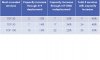
Top 5% crowded services were identified via load factor; this is equivalent to 121 services.
Of the 121 services, approx. 1/3 of the top 20 and top 50 will see DMU driven capacity improvements.
Including the capacity increases achieved by the 319 deployment, almost 50% of the top 50 most crowded services will see capacity improvements.
Due to the dis-proportionate number of overcrowded services in the Manchester - Liverpool region the December 2015 redeployment plans have been developed to address this imbalance. As a result, of the 58 overcrowded services in the Manchester - Liverpool region; 19 have been strengthened by the DMU deployment and a further 9 services have been strengthened by the 319 / Loco deployment.
The heavily overcrowded Bolton Corridor has also received further additional capacity. Post Farnworth works, during peak times, there will be approximately 340,000 extra seats a year with 571 additional seats in the AM peak and 732 in the PM peak.



 ).
).