However, BR was not averse to using electric traction for short sectors then and changing engines for through trains . . . . e.g. at Birmingham New Street and Crewe, rather than running diesel-hauled trains under the wires as now.
Certainly, for quite a time BR had an overt policy of always using electric traction whenever possible 'under the wires'.
It led to seemingly odd situations like the overnight York - Shrewsbury/Aberystwyth Postal changing from diesel to electric for the run between Stockport and Crewe, then back to diesel at Crewe (same in the reverse direction).
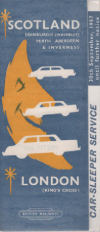
This period probably more-or-less coincided with the heyday of Motorail, so it's plausible that the Newton-le-Willows - St Austell Motorail might well have been electrically hauled between NLW and Crewe - if the service had survived long enough for the Electric Scot electrification to be completed.
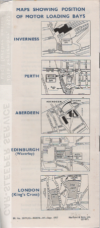
. . . . . we left the car with railway staff outside the station at the southern end, and we entered the station like ordinary passengers. They loaded the cars onto carflats . . .
I recall this as being much more civilised than the process later experienced arriving at Crewe off another Motorail service. There we were were marched out of the station, past the Crewe arms, and down to what may have been an old cattle dock. It was dark, approx 11pm, and all the passengers had to stand around for quite a while till the carflats were leisurely tripped over. Then the owners had to get onto the carflats and drive their own cars over some form of bridging boards. Quite scary in the pitch black.
I remember reading somewhere (can't point to precisely where) that the loading procedure was changed to punters driving their own cars on and off trains following a large number of complaints and claims for damage to vehicles when BR staff did it.
At the time, I had this mental image of Old Sid the porter, who had worked on The Railways for donkey's years, man and boy, and for the last year or so before retirement was given a cushy job at the Motorail terminal loading and unloaded passengers' cars. Except Old Sid had never held a driving licence in his life!
Travelling in Mark 1 FKs with open carflats at the rear an an excellent dining car serving real meals. . . .
I suppose the Motorail network was a very convenient way for BR to get some good (albeit seasonal) use out of dozens and dozens of reasonably new (at the time) Mk.1 FK coaches which had been made redundant from regular, long-distance main-line services by the introduction of Mk.2 stock.
By the golden age of Motorail, secondary routes and relief trains which still relied on Mk.1 rolling stock probably had relatively little (legitimate) demand for first class accommodation, which could be easily met by one CK, BFK or even the ever-versatile BCK - leaving lots of fully First Class coaches with nothing to do.