
Mordac
Established Member
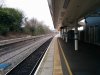
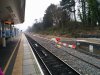
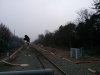
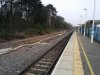
I was in Corby today, and was able to take some pictures of the dualling works on the station area.
Attachments

Last edited:

Correct - in my experience usually near Kettering, rather than on the cross over just north of Wellingborough station.
I believe the four tracks were in place right up to the Leicester area resignalling in the 80s.
Rob
Yes. Leicester re-signalling removed two tracks between Wellingborough and Kettering
I was in Corby today, and was able to take some pictures of the dualling works on the station area.
The third track between Harrowden Jn and Kettering South Jn was put back just a few years ago -- under the Leicester MAS scheme the third and fourth tracks between those two locations had come out.Eh? Are you saying there were 5 tracks between Wellingborough and Kettering?
There are still 3 tracks in place from Wellingborough to just south of Kettering....
Thanks for the pictures, sorry if it's already been covered but is a second platform on the cards?
Thanks for the pictures, sorry if it's already been covered but is a second platform on the cards?

No its not... There will be the ability for a down train to pass another train whilst it's in the platform on the up line, or a down train to be held there whilst another passes via the up line through the platform... The platform on the down is whats left of the former platform when Corby trains last ran in the late 80's/early 90's...


Heading north out of Leicester, between Leicester and Syston on the right hand side, I have just seen five or six (demo?) OHLE pilings?
Next year, Thameslink, the services south of Bedford to Brighton which embrace London suburbs and its commuter belt, will see the completion a £7 billion modernisation programme including new stations, extended platforms, new and longer trains and more frequent services.
Thameslink plans to step up the frequency of trains running out of London to Bedford, Luton and St Albans using the Midland Mainline to 16 trains an hour.
These are the same lines used by East Midlands Trains, the operator on the Midland Mainline.
Rail industry experts are trying to work out a timetable which fits the 16 Thameslink trains and EMT's existing services onto the same tracks while maintaining timetables.
The problem is that new electric Class 700 trains ordered for Thameslink 115 are on order do not go as fast as those used by East Midlands Trains, the 15 year old Meridian fleet and ageing High Speed Trains (Intercity 125), now nearly 40 years old. EMT trains run at 125mph and Thameslink's Siemens Class 700 at 100mph.
In crude terms, Thameslinks can only run 16 trains an hour if EMT trains run more slowly so they don't crash.
The complexity does not stop there. First, the trains are timetabled together to Bedford but going north to Leicester, Nottingham and beyond, EMT's trains will have to weave round other trains and freight, possibly missing their timetable path.
I'd be interested to hear views on whether the claims in this story are true.
I thought extra capacity was to be added at London St Pancras together with additional track between Bedford and Kettering?
http://www.nottinghampost.com/anoth...o-get-longer/story-30310958-detail/story.html

"In crude terms, Thameslinks can only run 16 trains an hour if EMT trains run more slowly so they don't crash."
My bold from quote. I think 'clash' was the word the reporter should have used.
It does appear the article was written by a 7 year old...
It does appear the article was written by a 7 year old...
From the first sentence of the Modern Railways item I mentioned:Everyone knows this and has known this since Thameslink trains began using the fasts - it's common sense.
Network Rail Director Chris Gibb is leading an Industry Readiness Board belatedly trying to resolve the problem that Thameslink forgot.
Which, in passing, raises the question, how can a multi-billion project, which was once known as Thameslink 2000, be a year away from service entry with a timetable that doesn't work in network terms?
From the first sentence of the Modern Railways item I mentioned:
And a bit further in:

From the first sentence of the Modern Railways item I mentioned:
And a bit further in:
Who could forget to include in the new Southwestern franchise documents that 707s must be used, but some faceless civil servant at the DfT did. Mega blunder that we the public will have to pay for. He will probably be promoted and given a knighthood.
To be fair its more in depth to what the Evening Standard would provide.
Anyway, the jist of it on a whole doesn't seem to be incorrect. High frequency TL trains at 100mph vs InterCity trains at 125mph will provide clashes. Everyone knows this and has known this since Thameslink trains began using the fasts - it's common sense.
Crazy idea (actually not that crazy), if you upgraded the freight line from West Hampstead to Hendon, installing high speed points from the freight to fasts at Hendon, InterCity services could overtake a Thameslink fast stopping at West Hampstead or the future Brent Cross. Would that be cost effective or practical?

From the first sentence of the Modern Railways item I mentioned:
And a bit further in:
But to alter the pairing of the lines has significant cost implications for resignalling - and difficult to implement south of Bedford due to the turn-back arrangements at Luton and St Albans City, I would have thought?The other way to look at it is re-visit how the lines are paired - in this scenario the approach used on the GN lines of pairing by direction rather than by Slow / Fast makes it easier to allow trains to 'leapfrog' because you don't have block an oncoming line e.g.
The GN lines have <up slow><up fast><down fast><down slow>, whereas the Midland approach is <up slow><down slow><up fast><down fast>.


