Royston Vasey
Established Member
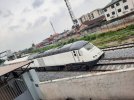
What's leaking from the power car?

What's leaking from the power car?
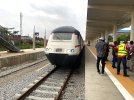
And they're walking on the track, of course...
It is a battle to stop people from walking on the tracks, there used to be a full market on the tracks. This is a major improvement.And they're walking on the track, of course...
The governor of Lagos had earlier this year gone to China to negotiate for additional trains for the blueline and new trains for the Redline. The HST's and the Talgo's and just to fill the gap because of the time it may take to get the Chinese trains not necessarily money. There is a lot of political pressure to complete this linesUsing these HSTs and MK3 coaches for a metro style suburban service is absolutely bonkers. These trains are designed for long distance intercity services. What has probably happened is that they have run out of money (in other words money went missing) and so they just had to buy whatever cheap low cost old trains they could find for the red line. I hope the eventually find money to buy proper metro trains and hopefully electricity the line too.
The blue line (which is another similar line that Lagos has built) has received proper metro trains (trains with four wide doors on each side of the carriage) built in China so this is what the red line really should have received too. Although the blue line metro trains are being hauled by diesel locomotives (just like the Abuja Metro is too) despite being EMUs as they ran out of money for electrification. The issue with Nigeria is that it is a very corrupt country. Money never goes where it is supposed to go.
The use of these HSTs and MK3 coaches (and the use of the Talgo trains for that matter) is going to be a disaster. These are suburban metro style services intended to be used by 500,000 passengers a day and quite possibly even more. Dwell times will be so long with all passengers boarding and alighting through narrow single leaf doors at the very ends of each of the carriages. Also ridiculously huge gaps that are easy to fall through as they have built it for a very wide loading gauge but are using stock with the very narrow British loading gauge.
 x.com
x.com
Most likely water from ACWhat's leaking from the power car?
 www.railforums.co.uk

Before or after visiting Mexico?Anyone on this thread tempted to visit Nigeria for these?

Got a Mexican HST trip planned. Still in two minds over these HSTs though.Before or after visiting Mexico?
I'm planning Mexico in October, and would like to do Nigeria early next year (Jan, March or May). I would like a local contact for Nigeria though as would like to do some of other rail trips they have on offer too. I've done a fair bit in Africa by rail but this would be the first in West Africa.Got a Mexican HST trip planned. Still in two minds over these HSTs though.
Yep, much the same here - feel OK going to Mexico as I speak enough Spanish to get around, but I don't speak a word of Hausa or Yoruba and the culture is very different to what I'm used to, so I'd rather have a contact there. Perhaps there's a market for enthusiast tours around those countries!I'm planning Mexico in October, and would like to do Nigeria early next year (Jan, March or May). I would like a local contact for Nigeria though as would like to do some of other rail trips they have on offer too. I've done a fair bit in Africa by rail but this would be the first in West Africa.
Still not confirmed Mexico though as I want the Tren Maya and Interoceanic networks to meet (don't think they have yet). If they have opened the FA line, I will in most likelihood postpone the trip until December.
Nigeria is a far easier country to visit for English speakers than Mexico is. Almost everyone in Nigeria speaks English and in fact English is the official language. All the signage everywhere is in English as well. Nigeria does have other languages like Hausa and Yoruba but everyone speaks English too. I have visited both Mexico and Nigeria many years ago and Nigeria is far easier for an English speaker. I found in Mexico it could be quite hard to find English speakers. So i would not worry about having language issues in Nigeria as English is their main language.Yep, much the same here - feel OK going to Mexico as I speak enough Spanish to get around, but I don't speak a word of Hausa or Yoruba and the culture is very different to what I'm used to, so I'd rather have a contact there. Perhaps there's a market for enthusiast tours around those countries!
Thank you. This comment is hugely reassuring.Nigeria is a far easier country to visit for English speakers than Mexico is. Almost everyone in Nigeria speaks English and in fact English is the official language. All the signage everywhere is in English as well. Nigeria does have other languages like Hausa and Yoruba but everyone speaks English too. I have visited both Mexico and Nigeria many years ago and Nigeria is far easier for an English speaker. I found in Mexico it could be quite hard to find English speakers. So i would not worry about having language issues in Nigeria as English is their main language.
Getting a visa for Nigeria can be a monumental pain in the proverbial though. I once went to Port Harcourt for a work trip a few years ago and the visa agency essentially gave up and told me I'd have to apply for a temporary work permit. Someone at the company I was working for then intervened and I suspect a brown envelope changed hands somewhere, so I was able to go. I have also been told that getting a tourist visa is virtually impossible.Nigeria is a far easier country to visit for English speakers than Mexico is. Almost everyone in Nigeria speaks English and in fact English is the official language. All the signage everywhere is in English as well. Nigeria does have other languages like Hausa and Yoruba but everyone speaks English too. I have visited both Mexico and Nigeria many years ago and Nigeria is far easier for an English speaker. I found in Mexico it could be quite hard to find English speakers. So i would not worry about having language issues in Nigeria as English is their main language.
Nigeria might actually be the easiest option for me to start exploring West Africa's railways.
No worries. Yes i would say Nigeria and Ghana and probably the best two to start with if you want to explore the West African railways.Thank you. This comment is hugely reassuring.
I've covered railways in Kenya, Tanzania, Uganda, Zambia, Zimbabwe, South Africa, Namibia, Ethiopia, (failed in Djibouti), Egypt, Mauritania, Morocco and Tunisia - but something about West Africa seemed more complex. And I think that was to do with the language as most are french speaking. So you raise a very valid point that Nigerians speak English and therefore Nigeria might actually be the easiest option for me to start exploring West Africa's railways.
Thank you again.
Maybe it has changed and it is more difficult these days but i found that Nigeria was certainly not the most difficult African country to get a visa for. It was a fairly simple process when i got a tourist visa. Compared to other African countries i did not need that many documents and i was approved the first time. I had far more trouble with other countries such as Eritrea and Equatorial Guinea than i did here.Getting a visa for Nigeria can be a monumental pain in the proverbial though. I once went to Port Harcourt for a work trip a few years ago and the visa agency essentially gave up and told me I'd have to apply for a temporary work permit. Someone at the company I was working for then intervened and I suspect a brown envelope changed hands somewhere, so I was able to go. I have also been told that getting a tourist visa is virtually impossible.
There seems to be a huge amount of railway projects in West African countries but progress seems to be very slow. I know Benin and Togo and Niger have been building new lines for at least ten years but progress seems to be extremely slow and they are still not completed. As with most thing in Africa everything ends up taking far longer than it should. I believe this Red Line in Lagos that the HSTs are used on was also extremely delayed in opening.This is getting off-topic, but Ghana is also building new standard gauge lines, one in the west of the country and one in the east. The Tema-Mpakadan line in the east is supposed to open this year. However one of the two new PESA DMUs crashed into a pick-up that was sitting on the line (not at a level crossing).
There's a pretty large Nigerian community in London who might be able to help with advice.Nigeria is a far easier country to visit for English speakers than Mexico is. Almost everyone in Nigeria speaks English and in fact English is the official language. All the signage everywhere is in English as well. Nigeria does have other languages like Hausa and Yoruba but everyone speaks English too. I have visited both Mexico and Nigeria many years ago and Nigeria is far easier for an English speaker. I found in Mexico it could be quite hard to find English speakers. So i would not worry about having language issues in Nigeria as English is their main language.

Took this picture today. They look ready to go.
x.com
x.com
YesAre all of the power cars in Nigeria now wearing the red and white livery does anybody know?
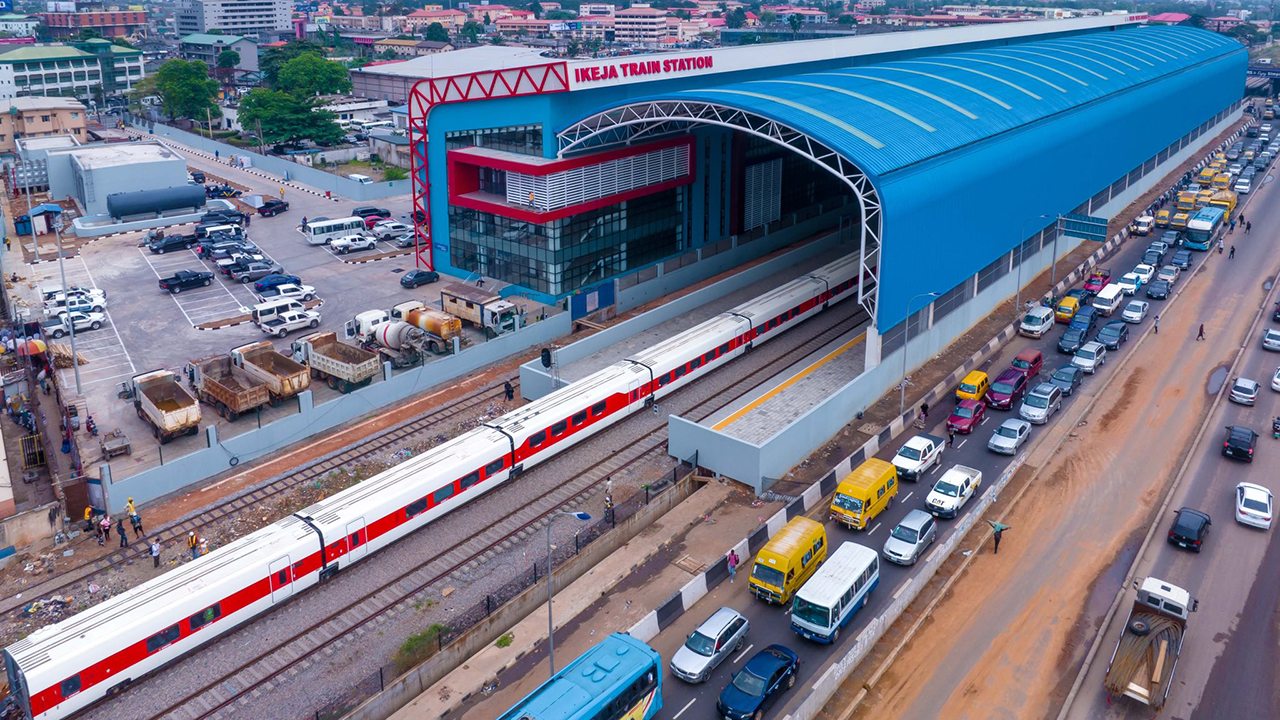
The Lagos State Metropolitan Area Transport Authority (LAMATA) has said the Lagos Rail Mass Transit (LRMT) Red Line will begin operations in September. The Managing Director of LAMATA, Mrs Abimbola Akinajo, disclosed this at a news conference on Tuesday. Akinajo added that the Redline rail was 99 per cent ready and would begin operations in last quarter of the year.
Akinajo represented by the Director for Rail, Mr Olasukanmi Okusaga, said the technical test run for the Redline system had commenced, ahead of September.
“The train will be having four trips per day from Oyingbo to Agbado 8.30a.m. in the morning, 12.30p. m. in the afternoon and this will run for four weeks,” she said.
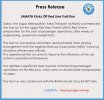
LAMATA Welcomes Transport Family for debut Red Line scheduled passenger Test Run Today, the Lagos Metropolitan Area Transport Authority (LAMATA) commenced the controlled test run of the Lagos Rail Mass Transit (LRMT) Red Line with passengers for members of the Lagos State transport family, led by the Honorable Commissioner for Transportation, Hon. Oluwaseun Osiyemi.
This event marked an important milestone in the lead-up to the commencement of commercial operations on the Red Line by inviting key transport officials from the Ministry and sister agencies, including Lagos State Traffic Management Agency (LASTMA), Lagos State Drivers Institute (LASDRI), Motor Vehicle Administration Agency (MVAA), Vehicle Inspection Service (VIO), LAGFERRY, Lagos State Waterways Authority (LASWA), and Lagos state Parking Authority (LASPA).
LAMATA demonstrated its commitment to collaborative efforts to ensure the successful implementation of the rail project. As part of the initial passenger testing phase, the test run allowed participants to experience firsthand the comfort, convenience, and efficiency of the Red Line. Their feedback will be invaluable in fine-tuning the system to meet the needs and expectations of Lagos residents. The test ride continues tomorrow.