Our new ticketing site is now live! Using either this or the original site (both powered by TrainSplit) helps support the running of the forum with every ticket purchase! Find out more and ask any questions/give us feedback in this thread!
It is essential to any multi year long public infrastructure programme.
The reason we are in this mess is because HS2 made no credible plan for the project failing to get beyond Phase 1.
Indeed Phase 2a (as a separate phase) was invented many years after the conception of the scheme once it became clear that things were going far too badly for Phase 2 to happen in full.
HS2 was planned in the apparent belief that there was no way the programme could be curtailed, no matter how badly it was going. This was a delusional position.
I would expect HS2 was planned in the way the project sponsors (eventually the government) instructed.
If the benefits and business case require a railway to at least the Crewe area (and the legislation that enables the work is on that basis) then that's what the project would endeavour to deliver.
The risk of a government change of mind (in the event of rising costs or change of leadership) is a government risk and the sponsor has the responsibility for the consequential reduction in benefits.
Unfortunately, there was no business case for a high speed railway to the Crewe area. (The BCR was less than 1.5, which is "poor value for money"). And that was before the massive cost inflation that appeared after the decision to proceed.
I would expect HS2 was planned in the way the project sponsors (eventually the government) instructed.
If the benefits and business case require a railway to at least the Crewe area (and the legislation that enables the work is on that basis) then that's what the project would endeavour to deliver.
If the benefits required that, why was that not delivered under Phase 1?
Why does Phase 1 stop at Handsacre if it is such a self evidently bad place to stop?
If the benefits required that, why was that not delivered under Phase 1?
Why does Phase 1 stop at Handsacre if it is such a self evidently bad place to stop?
Phase 1 was (rather obviously) only intended to be the first phase - I presume the idea was that you can live with a "phase-1 only" solution for a few years until the other phases came online. Maybe the HS2 planners were naive to think that the project would be cut short to just phase 1, but I imagine it would have been very hard to design for that contingency and also have a line that could fully support phase 2.
If the benefits required that, why was that not delivered under Phase 1?
Why does Phase 1 stop at Handsacre if it is such a self evidently bad place to stop?
Primarily because it was judged impossible for the Hybrid Bill to cover more than what was in Phase one. Years ago, maybe 2010, it was obvious there was a fault line-- the economics as it was back then required the entire Y network, but the politics and planning practicalities required the split into the phases. That was the trap, without a brave political decision to cancel a signature project entirely, when the cost side went bad, we were caught.
Just out of interest, if the scheme now is OOC to Curzon St for the first few years, how many paths on the WCML does that free up? Is it zero or is it a positive number?
Primarily because it was judged impossible for the Hybrid Bill to cover more than what was in Phase one. Years ago, maybe 2010, it was obvious there was a fault line-- the economics as it was back then required the entire Y network, but the politics and planning practicalities required the split into the phases. That was the trap, without a brave political decision to cancel a signature project entirely, when the cost side went bad, we were caught.
Just out of interest, if the scheme now is OOC to Curzon St for the first few years, how many paths on the WCML does that free up? Is it zero or is it a positive number?
Depends on the politics surrounding Coventry. I can imagine them fighting to keep the 1tph Scotland path that is fast to/from Euston, then there is the "stopper" which is providing the intermediate connectivity which is 5 or 9 minutes behind each other which means a 51/55 minute gap. There may be the appetite for a bit of a re-write again to spread the load.
Typically, that's not how public-private partnerships end up working. Usually the private sector will take the easy routine part, and leave the risky bits to the government.
Typically, that's not how public-private partnerships end up working. Usually the private sector will take the easy routine part, and leave the risky bits to the government.
Rather the private sector will price the risk of asked to take the risk. That’s what happened on Phase 1 target cost tenders but Treasury didn’t like the numbers so Cabinet instructed DfT / HS2 to go ahead with cost-plus and kept the real forecasts hidden (proceeding with construction supported the levelling-up agenda) until it suited Rishi to wreck the project for political means.
The recently releaed Steer Report on HS1,commissioned for the Govt, concludes HS1 as "poor value for money" the report concludes the economic growth and regeneration of communities served by HS1 to be very modest and below predictions, passenger numbers too are far below the predictions, the hypothesis of high-speed travel as a catalyst for prosperity is unsound.
The Steers Report was finalised over two years ago, yet not published until recently,some have made unkind remarks as to reasons for the late release.
HS1 can only be poor value for money because someone decided it should not an addition of the existing network (at that time) but made an attempt to make it stand alone with higher HS1 fares and people didn't / still don't want to pay it.
But in my limited experience of HS1 use the services are usually fairly busy including in the wrong direction for the time of day I use it so not entirely sure where the accusation of poor value for money comes from.
HS1 services I use are very busy.
There was a recent interview with the management of Southeastern; in which they discussed activating the (until now disused) seat reservation system in order to "manage" demand
So the administrators may kindly euthanaise a terminally ill patient
== Doublepost prevention - post automatically merged: ==
The recently releaed Steer Report on HS1,commissioned for the Govt, concludes HS1 as "poor value for money" the report concludes the economic growth and regeneration of communities served by HS1 to be very modest and below predictions, passenger numbers too are far below the predictions, the hypothesis of high-speed travel as a catalyst for prosperity is unsound.
The Steers Report was finalised over two years ago, yet not published until recently,some have made unkind remarks as to reasons for the late release.
Unkind remarks centred upon the sensitivity of HS2 to scrutiny of the hypothesis of its benefits
There are some caveats to that report, it bizarrely only focussed on benefits to Kent, so not all benefits were calculated. Worth watching this 27mins in
Also have a look at Michael Dnes' twitter threads on planning issues with Ebbsfleet. Nowhere near its potential.
== Doublepost prevention - post automatically merged: ==
If the benefits required that, why was that not delivered under Phase 1?
Why does Phase 1 stop at Handsacre if it is such a self evidently bad place to stop?
Unfortunately, there was no business case for a high speed railway to the Crewe area. (The BCR was less than 1.5, which is "poor value for money"). And that was before the massive cost inflation that appeared after the decision to proceed.
Less that 1.0 is poor value for money. 1.0-1.5 is regarded as low. https://assets.publishing.service.g...72710b2e338/dft-value-for-money-framework.pdf. This doesnt change anything anyway, what you've described is not the business case. The business case has 5 reports of which the economic case, containing the BCR, is one. The most important document is the strategic case.
BCR is a measurement used to assess alternative solutions to achieve the strategic case. It does not contain all benefits (see Lord Hendy at the TSC in July 2025). In the case of hs2 phase 2a, released capacity benefits are not sufficiently assessed, level 3 land use changes are not included and the counterfactual of do nothing with phase 1 only operational issues is not assessed.
The BCR was also considered conservative as it was assessed as if phase 2b was not going to be built. At the time of cancellation, phase 2b was not cancelled and the hybrid bill remains retained for Liverpool - Manchester. Therefore, the BCR of phase2a would be higher. The effect of the cancellation was to put a 45-50mile gap in the line and consdierably devalue the benefits of both the current investment in hs2 and any further npr investment. Nice one, Rishi lad.
== Doublepost prevention - post automatically merged: ==
Indeed Phase 2a (as a separate phase) was invented many years after the conception of the scheme once it became clear that things were going far too badly for Phase 2 to happen in full
No no no. Incorrect. Phase 2b west is retained and has not been cancelled. phase 2a was not dependent on hs2 hs2 east anyway, even if it was considered at the time (and it wasnt).
== Doublepost prevention - post automatically merged: ==
Post Phase 1 opening, there is likely to be only a 1tph Avanti service, stopping at more stations than currently so that nowhere loses their fast services. That will prompt a lot of people to change to HS2 services, but going from ~1h15m (plus inevitable delays) to 35 minutes (with delays much less likely) should drive a pretty big increase in itself. There's also the issue that Euston is a pretty horrible station to travel from, which puts a lot of people off - brand new trains from a very quiet station is likely to be much more appealing!
Nothing to stop cheap advances to fill up the seats while leaving prices high for the business users booking with short notice! As others have said, as they already have the trains then the marginal cost of running more services is low, so they might as well fill them up!
Exactly, would make no sense to price people off the railway. The return on the investment was never to come from fares alone, infrastructure has an economic return anyway.
HS2 strengthens its leadership team to drive the project reset Learnings from the Crossrail recovery project are being applied The revised cost and schedule ranges that will be published next year will be final
There are some caveats to that report, it bizarrely only focussed on benefits to Kent, so not all benefits were calculated. Worth watching this 27mins in
Also have a look at Michael Dnes' twitter threads on planning issues with Ebbsfleet. Nowhere near its potential.
== Doublepost prevention - post automatically merged: ==
== Doublepost prevention - post automatically merged: ==
Less that 1.0 is poor value for money. 1.0-1.5 is regarded as low. https://assets.publishing.service.g...72710b2e338/dft-value-for-money-framework.pdf. This doesnt change anything anyway, what you've described is not the business case. The business case has 5 reports of which the economic case, containing the BCR, is one. The most important document is the strategic case.
BCR is a measurement used to assess alternative solutions to achieve the strategic case. It does not contain all benefits (see Lord Hendy at the TSC in July 2025). In the case of hs2 phase 2a, released capacity benefits are not sufficiently assessed, level 3 land use changes are not included and the counterfactual of do nothing with phase 1 only operational issues is not assessed.
The BCR was also considered conservative as it was assessed as if phase 2b was not going to be built. At the time of cancellation, phase 2b was not cancelled and the hybrid bill remains retained for Liverpool - Manchester. Therefore, the BCR of phase2a would be higher. The effect of the cancellation was to put a 45-50mile gap in the line and consdierably devalue the benefits of both the current investment in hs2 and any further npr investment. Nice one, Rishi lad.
== Doublepost prevention - post automatically merged: ==
No no no. Incorrect. Phase 2b west is retained and has not been cancelled. phase 2a was not dependent on hs2 hs2 east anyway, even if it was considered at the time (and it wasnt).
== Doublepost prevention - post automatically merged: ==
Exactly, would make no sense to price people off the railway. The return on the investment was never to come from fares alone, infrastructure has an economic return anyway.
It is correct that the BCR does not always include all benefits. But where the case for a project depends on benefits that are not included, a strong case is needed that the scale of those benefits is sufficiently large and cannot be delivered, at least substantially, by alternative, less costly means. Much of the scepticism about HS2 arises from the suspicion that this case was not adequately or impartially tested, as the scheme was driven by political factors and by lobby groups with skin in the game.
I see that "In his first three months in post, Mark conducted an initial assessment to establish the status of the project – what had been completed, what was left to do, what had been spent and, importantly, why costs and timescales had escalated to such an extent. With this detail in hand, the reset could begin."
HS2 strengthens its leadership team to drive the project reset Learnings from the Crossrail recovery project are being applied The revised cost and schedule ranges that will be published next year will be final
Where are the learnings from continental Europe and east Asia?
Like sure learning from other large British projects is good but what are we doing to learn from overseas? Especially when overseas have done a much better job.
== Doublepost prevention - post automatically merged: ==
I see that "In his first three months in post, Mark conducted an initial assessment to establish the status of the project – what had been completed, what was left to do, what had been spent and, importantly, why costs and timescales had escalated to such an extent. With this detail in hand, the reset could begin."
The report cited is specifically about the benefits to Kent of HS1, that was its commissioned scope, so leaves out other benefits that would be included in a BCR. As such, its worthless for commentary about high speed and benefits.
There's a significant misunderstanding about BCRs - the most important part of a business case is the strategic case which often has significant calculated returns, but requires additional policy to achieve its aims. A minister will be trying to achieve the strategic and the BCR helps with checking against alternatives. This is why the BCR for EWR is unimportant as to whether the line gets built or not, but the BCR was used to appraise different routes. HS2 passed the non existent test that so many people thinks exists anyway. The green book is being updated to account for these non monetised aspects such as level 3 land use as well, but it still will not include transformation aspects around housing, for example.
Much of the scepticism about HS2 arises from the suspicion that this case was not adequately or impartially tested, as the scheme was driven by political factors and by lobby groups with skin in the game.
I'm sorry, I'm going to be blunt, but this is utter nonsense. Much of the scepticism about HS2 arises from bad actors claiming its just for 20 minutes to Birmingham and many more misunderstandings driven by those who do not want it built.
The line itself was driven by the need to increase capacity of transport routes between north and south. That is the principle reason for its existence. Other benefits derive from the conclusion that a new line is required. You're welcome to your opinion, but you presented it as fact and its not.
The report cited is specifically about the benefits to Kent of HS1, that was its commissioned scope, so leaves out other benefits that would be included in a BCR. As such, its worthless for commentary about high speed and benefits.
There's a significant misunderstanding about BCRs - the most important part of a business case is the strategic case which often has significant calculated returns, but requires additional policy to achieve its aims. A minister will be trying to achieve the strategic and the BCR helps with checking against alternatives. This is why the BCR for EWR is unimportant as to whether the line gets built or not, but the BCR was used to appraise different routes. HS2 passed the non existent test that so many people thinks exists anyway. The green book is being updated to account for these non monetised aspects such as level 3 land use as well, but it still will not include transformation aspects around housing, for example.
I'm sorry, I'm going to be blunt, but this is utter nonsense. Much of the scepticism about HS2 arises from bad actors claiming its just for 20 minutes to Birmingham and many more misunderstandings driven by those who do not want it built.
The line itself was driven by the need to increase capacity of transport routes between north and south. That is the principle reason for its existence. Other benefits derive from the conclusion that a new line is required. You're welcome to your opinion, but you presented it as fact and its not.
I hate this narrative that ‘high speed’ 2 is purely about capacity and nothing else. Yes it’s capacity, but a large part of it is also its high speed nature and the shortening of travelling time between major cities.
It didn’t have to be engineered to run faster trains than any in continental Europe but that decision was taken, with all the associated added cost. High speed is a major part of the project and not a misunderstanding.
I was holing for some early reset decisions, or priorities, to be visible in this update, but it seems we will have to wait for that.
We still don't know which elements of the project are on the critical path to completion, or most overspent.
No hint on when the rail systems will start to be delivered, or what is happening on the rolling stock project or integration with the WCML.
The report cited is specifically about the benefits to Kent of HS1, that was its commissioned scope, so leaves out other benefits that would be included in a BCR. As such, its worthless for commentary about high speed and benefits.
There's a significant misunderstanding about BCRs - the most important part of a business case is the strategic case which often has significant calculated returns, but requires additional policy to achieve its aims. A minister will be trying to achieve the strategic and the BCR helps with checking against alternatives. This is why the BCR for EWR is unimportant as to whether the line gets built or not, but the BCR was used to appraise different routes. HS2 passed the non existent test that so many people thinks exists anyway. The green book is being updated to account for these non monetised aspects such as level 3 land use as well, but it still will not include transformation aspects around housing, for example.
I'm sorry, I'm going to be blunt, but this is utter nonsense. Much of the scepticism about HS2 arises from bad actors claiming its just for 20 minutes to Birmingham and many more misunderstandings driven by those who do not want it built.
The line itself was driven by the need to increase capacity of transport routes between north and south. That is the principle reason for its existence. Other benefits derive from the conclusion that a new line is required. You're welcome to your opinion, but you presented it as fact and its not.
But you are also stating as a fact that the driver was the need to improve capacity, when this was not the way it was presented by its (compromised) proponents. If it had been, alternatives would have been appraised more impartially. That is one reason why the project has failed to convince a range of informed observers, including those generally sympathetic to railways. You are, of course, also welcome to your opinion.
I was holing for some early reset decisions, or priorities, to be visible in this update, but it seems we will have to wait for that.
We still don't know which elements of the project are on the critical path to completion, or most overspent.
No hint on when the rail systems will start to be delivered, or what is happening on the rolling stock project or integration with the WCML.
It does seem certain sections of route are virtually ready for rail systems to be installed, but other parts are long way behind.
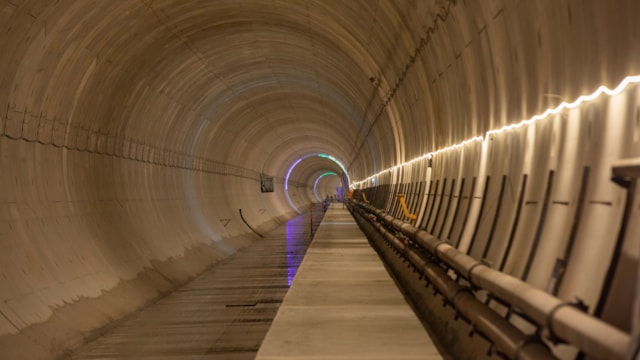
Looking at various newsletters recently it seems all TBMs on Old Oak to Birmingham section are finished, most cross passages are dug, and headhouses for ventilation and emergency exit are all partially complete.
The green tunnels are running behind, but they seem to be progressing quickly now changes to construction method have taken place. A road diversion has now been done that was blocking Greatwork tunnel work.
Some major viaducts are done, a few are part built, but generally nearly all piers are built and it is mainly remaining deck sections and parapets.
It appears nearly all the culverts are built and streams diverted through them.
A number of bridges seem to have come into use recently, and a few more are close to being opened (although utility diversions seems to be slow at many). This then allows the existing roads to be removed.
Recent you tube videos are showing sections where earthworks for trackbed are finished, and landscaping has been done (usually completed on other side to haul roads at moment), so some parts are almost complete.
Looking like trackbed, and structures around south side of delta junction towards Birmingham are progressing well, although lots need to be done to Curzon approach viaducts.
Not much sign of Birmingham Interchange station yet, but I guess it is fairly easy to construct. Appears the nearby A45 bridges are not likely to be ready until 2027, so I am thinking this area might be furthest behind.
There does seem to be a disconnect between those parts that are now ready for railway systems, but other bits are not, thus not yet being able to install them in a sequence from a maintenance compound.
No idea when first section will be ready for testing, or trains delivered to actually start testing. Could be anywhere from 2028 to about 2034 (although there are hints towards latter as bits are delayed years).
But you are also stating as a fact that the driver was the need to improve capacity, when this was not the way it was presented by its (compromised) proponents. If it had been, alternatives would have been appraised more impartially. That is one reason why the project has failed to convince a range of informed observers, including those generally sympathetic to railways. You are, of course, also welcome to your opinion.
One of the clear economic justifications for looking hard at future capacity on our rail network and the requirement to build new lines is the increasing use of that capacity on lines such as the west coast main line. Despite the difficulties that we have faced, and while I well understand the impact on travellers in recent weeks and sympathise with them, an £8.8 billion investment is producing better, more frequent services for passengers up and down that line. There will, however, come a point when we need new capacity, particularly if rail usage continues to increase as it has in recent years. That is why we are proposing specifically a new high-speed line to the west midlands and beyond.
The Government has evaluated these proposals in respect of their costs and benefits for enhancing capacity and connectivity in a sustainable way, which is its key strategic objective for inter-city transport. As part of its analysis, it has also considered other realistic options for meeting the UK’s inter-urban capacity needs over the next 30 years, including carrying out a detailed analysis of the potential costs and benefits of major improvements to existing rail and road networks. ... On the basis of this evidence, the Government’s assessment is: 1. That over the next 20 to 30 years the UK will require a step-change in transport capacity between its largest and most productive conurbations, both facilitating and responding to long-term economic growth; 2. That alongside such additional capacity, there are real benefits for the economy and for passengers from improving journey times and hence the connectivity of the UK; 3. That new capacity and improved connectivity must be delivered sustainably: without unacceptable environmental impacts, and in line with the Government’s strategy to promote a low carbon economy, including its statutory targets for reducing emissions of greenhouse gases; 4. That high speed rail is the most effective way to achieve these goals, offering a balance of capacity, connectivity and sustainability benefits unmatched by any other option;
We believe that the Government’s HS2 proposal could form part of this network and provide substantial improvements in capacity and connectivity for inter-urban travel between our major cities. Furthermore, the released capacity on the classic rail network would also enable widespread improvements on local and regional rail services. Alternative proposals to upgrade the existing West Coast Main Line would provide additional capacity but, given the substantial recent growth in rail passenger numbers, it seems that the alternatives might prove inadequate. They do not offer the step-change or the wider benefits to passenger and freight that HS2 would do. Whether these alternative proposals would be adequate turns on the accuracy of demand forecasts, which are a substantial part of the case for HS2.
I could go on. HS2 has always been about capacity and the idea that this was somehow a justification tacked on after the fact is simply wrong.
If the public perception has been that's just about speed, that's a failure of "marketing" (for want of a better term), but not the fundamentals of the project as a whole.
I'm sorry, I'm going to be blunt, but this is utter nonsense. Much of the scepticism about HS2 arises from bad actors claiming its just for 20 minutes to Birmingham and many more misunderstandings driven by those who do not want it built.
The line itself was driven by the need to increase capacity of transport routes between north and south. That is the principle reason for its existence. Other benefits derive from the conclusion that a new line is required. You're welcome to your opinion, but you presented it as fact and its not.
I could go on. HS2 has always been about capacity and the idea that this was somehow a justification tacked on after the fact is simply wrong.
If the public perception has been that's just about speed, that's a failure of "marketing" (for want of a better term), but not the fundamentals of the project as a whole.
Sure, speed is important too. Especially for the full "Y" network as originally envisaged. It would have shaved journey times massively from Scotland and the North, competing very favourably with air travel. We could have eliminated a big chunk of internal flights in the UK.
There are some caveats to that report, it bizarrely only focussed on benefits to Kent, so not all benefits were calculated. Worth watching this 27mins in
Also have a look at Michael Dnes' twitter threads on planning issues with Ebbsfleet. Nowhere near its potential.
== Doublepost prevention - post automatically merged: ==
== Doublepost prevention - post automatically merged: ==
Less that 1.0 is poor value for money. 1.0-1.5 is regarded as low. https://assets.publishing.service.g...72710b2e338/dft-value-for-money-framework.pdf. This doesnt change anything anyway, what you've described is not the business case. The business case has 5 reports of which the economic case, containing the BCR, is one. The most important document is the strategic case.
BCR is a measurement used to assess alternative solutions to achieve the strategic case. It does not contain all benefits (see Lord Hendy at the TSC in July 2025). In the case of hs2 phase 2a, released capacity benefits are not sufficiently assessed, level 3 land use changes are not included and the counterfactual of do nothing with phase 1 only operational issues is not assessed.
The BCR was also considered conservative as it was assessed as if phase 2b was not going to be built. At the time of cancellation, phase 2b was not cancelled and the hybrid bill remains retained for Liverpool - Manchester. Therefore, the BCR of phase2a would be higher. The effect of the cancellation was to put a 45-50mile gap in the line and consdierably devalue the benefits of both the current investment in hs2 and any further npr investment. Nice one, Rishi lad.
== Doublepost prevention - post automatically merged: ==
No no no. Incorrect. Phase 2b west is retained and has not been cancelled. phase 2a was not dependent on hs2 hs2 east anyway, even if it was considered at the time (and it wasnt).
== Doublepost prevention - post automatically merged: ==
Exactly, would make no sense to price people off the railway. The return on the investment was never to come from fares alone, infrastructure has an economic return anyway.
Questioning this, we have seen in recent railway projects that the actual value and impact it has had on the areas has been massive, much more than predicted (i.e Elizabeth Line). Are we in the UK generally more pessimistic when it comes to estimating the value output of a project? Like people were calling the Elizabeth Line a failure at one point and you would be hard pressed to see that now given the effects it has had on London and beyond. Same with Northumberland Line vastly surpassing the estimated value / passenger numbers / etc. And now, London wants another Crossrail in the same time period as HS2 being cut to bits.
I hate this narrative that ‘high speed’ 2 is purely about capacity and nothing else. Yes it’s capacity, but a large part of it is also its high speed nature and the shortening of travelling time between major cities.
It didn’t have to be engineered to run faster trains than any in continental Europe but that decision was taken, with all the associated added cost. High speed is a major part of the project and not a misunderstanding.
Hate is rather a strong word and you've misinterpreted what I wrote. "That is the principle reason for its existence. Other benefits derive from the conclusion that a new line is required." ie, once a new line had been decided, make it fast to extract more value. Capacity is the original need and remains the principle reason.
The alignment speed is no different to continental alignment speeds. France builds 350-400kmh, Italy was building a 400kmh alignment at the time. Spain is 350+, China is 400+, The US, Indonesia and Russia were all planning systems at 360-400 alignment speeds. Spain is now upgrading its lines to 350kmh operation. We live in a country where a 100mph non electrified new alignment is 3 times the cost per mile (which is a poor way to compare but anyway) than the French build LGVs for. Half the cost of Hs2 phase 1 is for stuff outside of the 400kmh alignment sections and even then the speed is not a big part of the cost. A slower line would face the same contractual issues, same opposition, very similar land costs.
But you are also stating as a fact that the driver was the need to improve capacity, when this was not the way it was presented by its (compromised) proponents. If it had been, alternatives would have been appraised more impartially. That is one reason why the project has failed to convince a range of informed observers, including those generally sympathetic to railways. You are, of course, also welcome to your opinion.
Please back that opinion up with some facts. Who are the "(compromised) proponents" who presented it in this other way? "alternatives would have been appraised more impartially" explain further. Who are these "informed observers" you talk about who were failed to be convinced? Would love to hear. For the facts on capacity being the primary reason, please see @jfawkes post.
I could go on. HS2 has always been about capacity and the idea that this was somehow a justification tacked on after the fact is simply wrong.
If the public perception has been that's just about speed, that's a failure of "marketing" (for want of a better term), but not the fundamentals of the project as a whole.
Questioning this, we have seen in recent railway projects that the actual value and impact it has had on the areas has been massive, much more than predicted (i.e Elizabeth Line). Are we in the UK generally more pessimistic when it comes to estimating the value output of a project? Like people were calling the Elizabeth Line a failure at one point and you would be hard pressed to see that now given the effects it has had on London and beyond. Same with Northumberland Line vastly surpassing the estimated value / passenger numbers / etc. And now, London wants another Crossrail in the same time period as HS2 being cut to bits.
Media tends to be pessimistic and drive a particular view. Remember how the 2012 olympics were going to be a failure? Any large project gets a lot of attention and perhaps rightly, but they tend to be on the negative side. All Govt reports on large projects tend to be conservative as well.
The problem is how we appraise. The BCR give only transport benefits and any economic benefits that can be directly attributed to the project itself. Even then it doesnt include everything. But the real benefits of a transport system like this is the housing and business it generates and this isnt reflected within the BCR. That's because they can't be attributed to the transport project alone, even though they are encouraged by it. What you'll see in the strategic case is often the economic impact of the project, how many homes are likely to be built as a result and job opportunities. The LMR report does a really good job of that because on BCR it doesnt look worth it (it absolutely is worth it).
Ultimately, there is no good economic reason not to build Crossrail 2, given the success of the first, but politically it will look bad that London gets further funding. There is also an issue with a skills shortage when we are also building new nuclear power stations and many other things. Its shame though that the true value of these projects is not understood well, and HS2 is the most misunderstood of them all.
But the real benefits of a transport system like this is the housing and business it generates and this isnt reflected within the BCR. That's because they can't be attributed to the transport project alone, even though they are encouraged by it. What you'll see in the strategic case is often the economic impact of the project, how many homes are likely to be built as a result and job opportunities. The LMR report does a really good job of that because on BCR it doesnt look worth it (it absolutely is worth it).
I'm saying:
- use of BCRs is misunderstood. They're useful for assessing options and marginal interventions, but are less use where the intervention has transformational effects
- WEIs in the BCR are not the full story, they capture many productivity effects, but leave out many land use, housing and other long term structural impacts
- strategic case is key and usually has the overall expected economic return, but likely delivered alongside other complimentary projects/policy
- we dont nearly invest enough to unlock housing and economic opportunities in this country to our detriment.
I'm saying:
- use of BCRs is misunderstood. They're useful for assessing options and marginal interventions, but are less use where the intervention has transformational effects
- WEIs in the BCR are not the full story, they capture many productivity effects, but leave out many land use, housing and other long term structural impacts
- strategic case is key and usually has the overall expected economic return, but likely delivered alongside other complimentary projects/policy
- we dont nearly invest enough to unlock housing and economic opportunities in this country to our detriment.
These are all fair points, that will apply to all projects, including those in competition for limited transport funds. The challenge for HS2 is that very high speed rail has a weak strategic case in a geographically small country, particularly where there are other options for capacity enhancements.
We are aware of an issue with emails from the Forum to Microsoft-based email accounts (hotmail/outlook/live.com email addresses). This is being looked into currently, thanks for your patience meanwhile.