Isn't a pair of 90s in multi restricted to about 7500hp to reduce load on the power supply? Originally by isolating one traction motor on each, then electronically after Freightliner started routinely operating them in pairs.
The quoted 6.17MW is 8270hp; even if that's at the pantograph rather than at rail it ought to equal a restricted pair of 90s.
(you sound informed, perhaps I'm missing something)
0. Electrical engineers have not used horsepower for longer than I've been alive. Don't use hp and then you can't get confused by them!
1. Trains are restricted to 300A current draw, at 25kV this equates to 7,500kW (however the 22.5kV has the to used as conservative assumption)
2. People on rail forums often focus on the continuous values - relying on wikipedia???
3. The Class 90 continuous value is 3730kW (in weak field above ~85mph - hardly relevant for freight!) at the rail which is still a problem for a pair overall if not capped given losses in the locomotive.
4. The peak rating is 5860kW at circa 50mph and reducing as speed either increases or decreases either side of 50mph.
5. The power for a pair is always capped the question is just how much.
6. As others have said a single 90 is adhesion not power limited till ~43mph but with the power limit and reduced power per locomotive the adhesion limit reduces to low 30s mph for pair but you have 8 wheels and lots more weight than a 99.
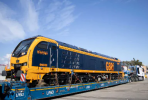
If we didn't have the 300A limit the Class 99 might be based on something a bit sportier like the Stadler 9000 rather than the Stadler 6000 it is based on (which is effectively the latest version of the electrical equipment ABB developed for the Class 92 with 2+ generations of upgrades).