• Our new ticketing site is now live! Using either this or the original site (both powered by TrainSplit) helps support the running of the forum with every ticket purchase! Find out more and ask any questions/give us feedback in this thread!

First Greater Glasgow

PaulMc7

Established Member
Joined
9 Jul 2019
Messages
4,029
I'm sure that First have factored in that most of the passengers from the X1 will choose the train rather than the longer bus journey. So lose 100% of the X1 cost but lose 90% - still more financially advantageous to First.

Yeah it's a weird situation to be in. I think the problem people have in Hamilton is that now all routes upwards from the town centre are now all ones that only go there or other parts of Hamilton except the 205. 226,227 etc and the new 225. It would be a nightmare trying to time a second bus and the travel time would be pushed over 2 hours for most from leaving the house to getting to their destination

I'm also surprised they've never considered merging the 227 and 229 given the route is so short and the Whitehill 227s are only hourly
 
Sponsor Post - registered members do not see these adverts; click here to register, or click here to log in
R

RailUK Forums

lastbus

Member
Joined
9 Sep 2018
Messages
1,025
Yeah it's a weird situation to be in. I think the problem people have in Hamilton is that now all routes upwards from the town centre are now all ones that only go there or other parts of Hamilton except the 205. 226,227 etc and the new 225. It would be a nightmare trying to time a second bus and the travel time would be pushed over 2 hours for most from leaving the house to getting to their destination

I'm also surprised they've never considered merging the 227 and 229 given the route is so short and the Whitehill 227s are only hourly
The 227 interworks with the 229
 

NorthClyde320

Member
Joined
30 Jun 2019
Messages
299
Location
North of Glasgow
I had a bit of a rumage through some old stuff to get a bit of background on the X1 (everyone must be fed up reading about this service lol) and found this, hope it's useful:

A timetable from Aug 93 shows a service numbered X63 and marketed as City Sprinter Express, in January 1994 it was relaunched as Gold Line X1 every hour Mon-Sat (30 mins Mon-Fri peaks) & every 2 hours Sun (I remember travelling on a Leyland Tiger/Plaxton Paramount on the service sometime in 94), in January 1995 it was increased to every 30 mins Mon-Sat & every 10 mins Mon-Fri peaks, but the Sun service was gone, with brand new Volvo Olympian/Alexander Royale branded deckers introduced, in March 1998 a new X2 service between Stonehouse and Glasgow was introduced to replace the 254 and combine with the X1 to provide a joint 15 min Mon-Sat Hamilton to Glasgow (5/10 min Mon-Fri peak) service (I remember travelling on the X2 from Hamilton to Glasgow once and was the only passenger on it for the whole route, it was a Volvo/Alexander PS), this was to try and combat any new Stagecoach service to Hamilton by the new Glasgow operation set up in 1997, this never happened and the X2, along with the 250 were withdrawn in Sept 1998 leaving the Stonehouse & Birkenshaw areas to Whitelaw's, at the same time the X1 gained an evening service but it ended in May 2000, in May 2005 the Hillhouse to High Earnock section was axed between peak hours but was reintroduced in May 2008, it was axed again in Sept 2012 when the route was also changed in Hamilton to incorporate some of the 225 and by this time the peak service was now every 15/20 mins. It has more or less stayed this way up until now.
 

PaulMc7

Established Member
Joined
9 Jul 2019
Messages
4,029
The 227 interworks with the 229

Thank you. Makes the most sense tbh given the starting points for both. Just feels weird to have 2 extremely short routes not just as one service. Would love to know the reasoning behind it
 

PaulMc7

Established Member
Joined
9 Jul 2019
Messages
4,029
I had a bit of a rumage through some old stuff to get a bit of background on the X1 (everyone must be fed up reading about this service lol) and found this, hope it's useful:

A timetable from Aug 93 shows a service numbered X63 and marketed as City Sprinter Express, in January 1994 it was relaunched as Gold Line X1 every hour Mon-Sat (30 mins Mon-Fri peaks) & every 2 hours Sun (I remember travelling on a Leyland Tiger/Plaxton Paramount on the service sometime in 94), in January 1995 it was increased to every 30 mins Mon-Sat & every 10 mins Mon-Fri peaks, but the Sun service was gone, with brand new Volvo Olympian/Alexander Royale branded deckers introduced, in March 1998 a new X2 service between Stonehouse and Glasgow was introduced to replace the 254 and combine with the X1 to provide a joint 15 min Mon-Sat Hamilton to Glasgow (5/10 min Mon-Fri peak) service (I remember travelling on the X2 from Hamilton to Glasgow once and was the only passenger on it for the whole route, it was a Volvo/Alexander PS), this was to try and combat any new Stagecoach service to Hamilton by the new Glasgow operation set up in 1997, this never happened and the X2, along with the 250 were withdrawn in Sept 1998 leaving the Stonehouse & Birkenshaw areas to Whitelaw's, at the same time the X1 gained an evening service but it ended in May 2000, in May 2005 the Hillhouse to High Earnock section was axed between peak hours but was reintroduced in May 2008, it was axed again in Sept 2012 when the route was also changed in Hamilton to incorporate some of the 225 and by this time the peak service was now every 15/20 mins. It has more or less stayed this way up until now.

Thank you for the info. The Hamilton end of the route is certainly long winded even still. Hamilton North/Stonehouse etc are definitely areas where public transport is definitely limited. Everything beyond 7pm except the last X1 and last 226 is SPT tendered except the main routes through the town centre and none of the Whitelaws services run particularly late either. Can understand why it's became a car area
 

Gingerbus1991

Member
Joined
30 Jul 2018
Messages
992
The question shouldn't be how do we get passengers back.

The question asked should be, How do you retain the passengers you have left?
 

Whiteway215

Established Member
Joined
15 Sep 2015
Messages
2,138
Location
Bath
Update
This week we have seen some more movements but these should have been posted elsewhere for viewing.

As I posted previously saying I did think it was paint shop movements rather than permanent movements this has been confirmed by what you see on the roads with express E400MMCs and E200MMCs :o Branded vehicles will not have the front touched.

Express services will all be getting the gold branding removed from what I have been advised. As posted above the 1st 201 vehicle has finally been branded and already been put onto the road. I do believe another has at least been done or is in the process.

Sorry for the lack of information but my info will be watered down in future so an certain someone else can get the credit :rolleyes:
Hope you can continue with your fleet changes/updates-always appreciated.
 

PaulMc7

Established Member
Joined
9 Jul 2019
Messages
4,029
The question shouldn't be how do we get passengers back.

The question asked should be, How do you retain the passengers you have left?

I think it's a bit of both of these questions. Being proactive and trying new things might be the step forward for them but I just don't see it happening. They're capable of great innovative ideas like the 1s, 77 and the new branding etc so we know that they can do it it's just whether the top people involved will finance such ideas. Cleanliness needs to be maintained more alongside a good refresh for seating etc
 
Joined
16 Oct 2011
Messages
289
Found this site interesting

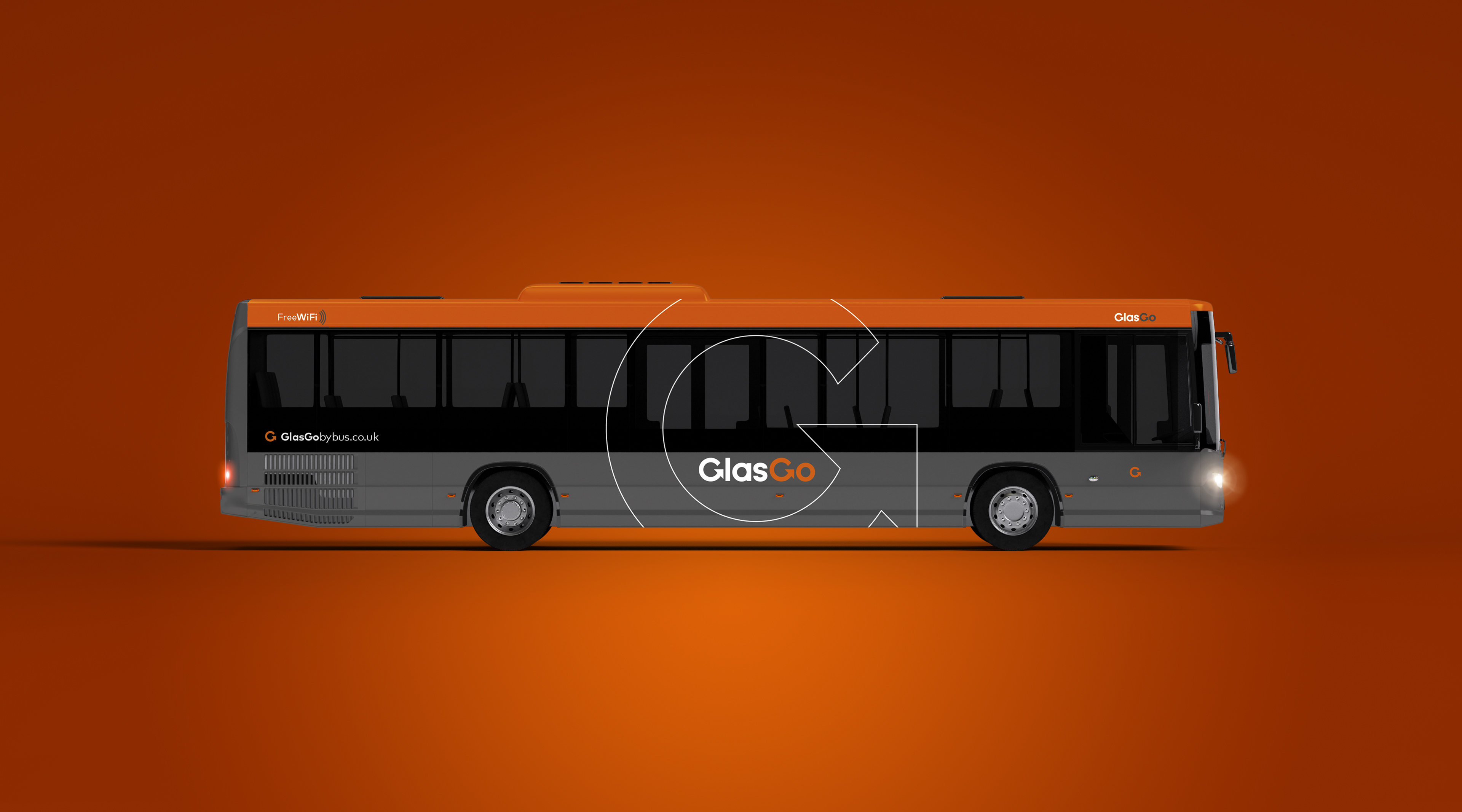
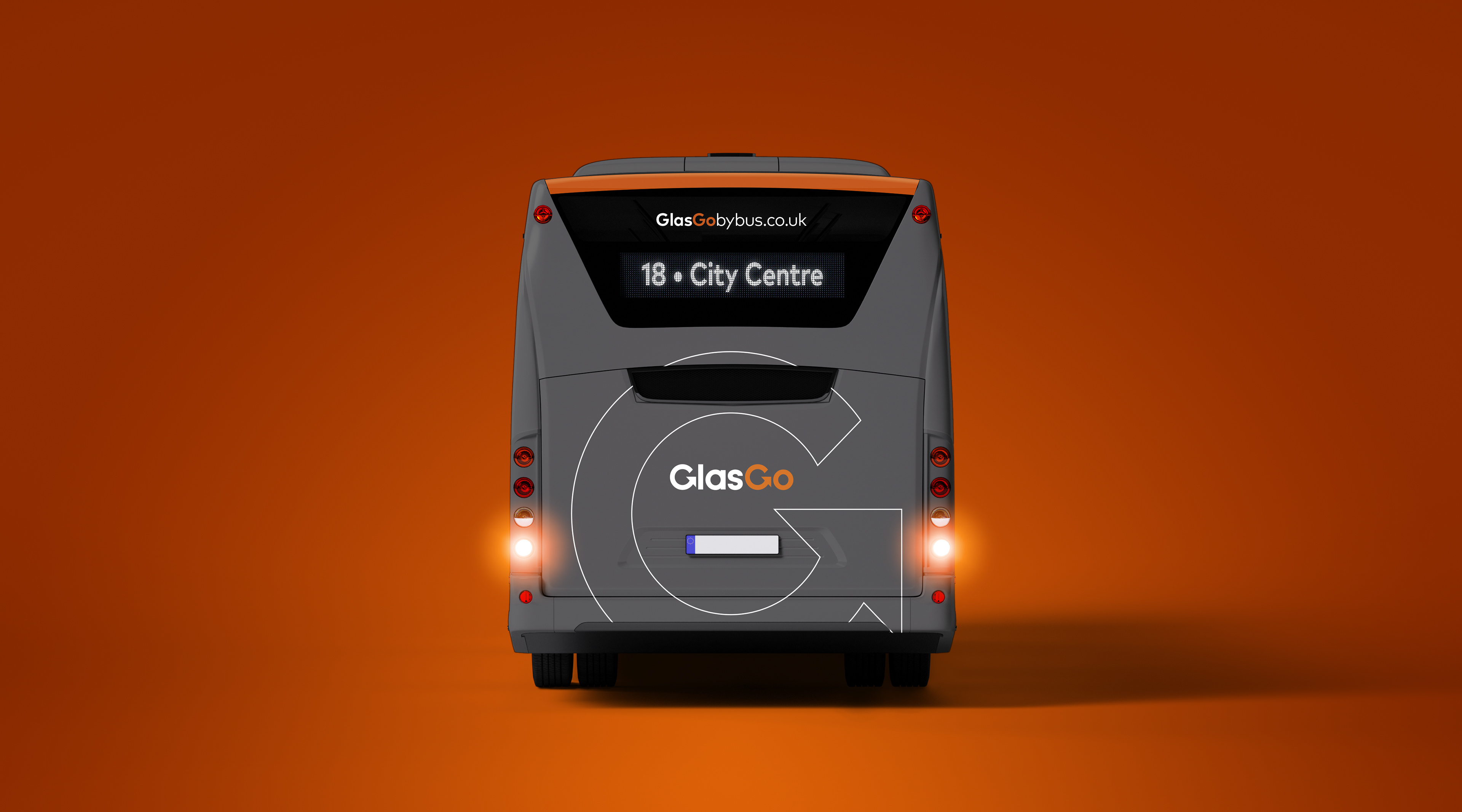
https://portfolio.mhdpartnership.co.uk/glasgo-buses-livery-and-branding

GlasGo buses livery and branding
Branding, Graphic Design, Illustration
We turn to a familiar colour for this imagined relaunch of the main bus company serving the streets of Scotland’s largest city, Glasgow.

d5ba6e4e1fb08d253014aa228962d0aecb87f3314e8ff5c3bc292cb32acb06b5559b2f54cdb18883_rw_1920.jpg

512bbc86ac98b98c4bc924d620c5e3592c4e8e9935900636a0cead8d8e995a5a5d9e4f8ad83899e3_rw_1920.jpg

6ddb273dd232235ea87aaab57fe55660c2d1da35dd2def823625f27806d0a2c30daa26b4e139b663_rw_3840.jpg

a1db5e9301b90b4a7b127d03bf2650754ccdfe26b9af47f92c8aa41843db06ccbf8fe598a5dd2233_rw_3840.jpg

0dfa6efd36ed529dd7f90660ffb55c65f361abd12e46123e7c683850f51d53b34fbea2ce5f5bef46_rw_3840.jpg

From a branding perspective, Strathclyde’s Buses was the easyJet of its day — it would transport you around the city of Glasgow in any colour, as long as it was orange. And if there is one thing that easyJet is known for, it is its distinctive and memorable branding.
Did we dare say orange? In a city where orange is not just a colour but can also be a statement of tribal allegiance to one side of a sectarian divide, the official name of the colour applied to Glasgow’s buses was ‘Strathclyde red’. This was red as in the colour of ginger hair or the sandstone from which many of its buildings were made, but yes it really was orange, if not in name.
Orange and black had become the livery of Strathclyde PTE in 1983, replacing green and yellow colour combinations that also were tribally significant, and it remained largely unaltered with the creation of the arms length Strathclyde’s Buses three years later. It survived the company’s sale to a management/employee buyout in which Stagecoach took a minority shareholding, but was phased out after FirstGroup took over in 1996 and adopted a dark shade of red. Real red. Not orange pretending to be red.
Red did not last long, as First’s introduction of a corporate livery — ‘Barbie’ magenta, dark blue and off-white — began towards the end of 1997 and its Glasgow buses were coloured much like those elsewhere.
So when it came time for us to imagine a reinvented local livery for Glasgow, we had little hesitation in returning to 1983 and a shade of orange.
Our approach was to pay lip service to the original orange by retaining it as a secondary colour but contrasting it with a refreshingly dominant, yet modern deep grey.
While many see grey as an isolated dull colour, its neutrality allows other, more vibrant colours to really come into their own. When used in tandem with a grey cousin, the likes of orange, yellow, green, pink and turquoise all come into their own and really stand out on a livery or piece of advertising.
The identity itself is a straightforward sans serif font containing a bespoke letter G — stylised to denote this a company that is going places. Sitting smack bang in the middle of the wheelarches and timetable cover, it’s hard to miss and easy to recognise.
As seems commonplace with these rebranding projects, the original name was a mouthful and not ideally suited to communicating with the modern day consumer. The streamlining process led us from Strathclyde’s Buses on to Glasgow Bus before ending up at a much simpler GlasGo. Add the words ‘by bus’ and you create a URL that rolls off the tongue at pace.
So, remember, if you’re in Glasgow and need to travel by bus, just look for the big G. Easy as that.
you may also like
NORTH WEST BUS CO. branding & livery
Branding, Graphic Design, Print Design

Bristol Airport Flyer bus branding, livery & launch
Branding, Graphic Design, Advertising

↑Back to Top

 

156478

Member
Joined
3 Aug 2013
Messages
186
The question shouldn't be how do we get passengers back.

The question asked should be, How do you retain the passengers you have left?

That is indeed a good question. Customers rightly will be very very annoyed about the X1 and it’s been constant service cuts in the Hamilton area for years, decades even!

They have the market, no one else wants to come in to Hamilton as it’s not as promising as the Motherwell network where there is quality competition and the numbers there can just about justify competition.
 

PaulMc7

Established Member
Joined
9 Jul 2019
Messages
4,029
Found this site interesting

https://portfolio.mhdpartnership.co.uk/glasgo-buses-livery-and-branding

GlasGo buses livery and branding
Branding, Graphic Design, Illustration
We turn to a familiar colour for this imagined relaunch of the main bus company serving the streets of Scotland’s largest city, Glasgow.

d5ba6e4e1fb08d253014aa228962d0aecb87f3314e8ff5c3bc292cb32acb06b5559b2f54cdb18883_rw_1920.jpg

512bbc86ac98b98c4bc924d620c5e3592c4e8e9935900636a0cead8d8e995a5a5d9e4f8ad83899e3_rw_1920.jpg

6ddb273dd232235ea87aaab57fe55660c2d1da35dd2def823625f27806d0a2c30daa26b4e139b663_rw_3840.jpg

a1db5e9301b90b4a7b127d03bf2650754ccdfe26b9af47f92c8aa41843db06ccbf8fe598a5dd2233_rw_3840.jpg

0dfa6efd36ed529dd7f90660ffb55c65f361abd12e46123e7c683850f51d53b34fbea2ce5f5bef46_rw_3840.jpg

From a branding perspective, Strathclyde’s Buses was the easyJet of its day — it would transport you around the city of Glasgow in any colour, as long as it was orange. And if there is one thing that easyJet is known for, it is its distinctive and memorable branding.
Did we dare say orange? In a city where orange is not just a colour but can also be a statement of tribal allegiance to one side of a sectarian divide, the official name of the colour applied to Glasgow’s buses was ‘Strathclyde red’. This was red as in the colour of ginger hair or the sandstone from which many of its buildings were made, but yes it really was orange, if not in name.
Orange and black had become the livery of Strathclyde PTE in 1983, replacing green and yellow colour combinations that also were tribally significant, and it remained largely unaltered with the creation of the arms length Strathclyde’s Buses three years later. It survived the company’s sale to a management/employee buyout in which Stagecoach took a minority shareholding, but was phased out after FirstGroup took over in 1996 and adopted a dark shade of red. Real red. Not orange pretending to be red.
Red did not last long, as First’s introduction of a corporate livery — ‘Barbie’ magenta, dark blue and off-white — began towards the end of 1997 and its Glasgow buses were coloured much like those elsewhere.
So when it came time for us to imagine a reinvented local livery for Glasgow, we had little hesitation in returning to 1983 and a shade of orange.
Our approach was to pay lip service to the original orange by retaining it as a secondary colour but contrasting it with a refreshingly dominant, yet modern deep grey.
While many see grey as an isolated dull colour, its neutrality allows other, more vibrant colours to really come into their own. When used in tandem with a grey cousin, the likes of orange, yellow, green, pink and turquoise all come into their own and really stand out on a livery or piece of advertising.
The identity itself is a straightforward sans serif font containing a bespoke letter G — stylised to denote this a company that is going places. Sitting smack bang in the middle of the wheelarches and timetable cover, it’s hard to miss and easy to recognise.
As seems commonplace with these rebranding projects, the original name was a mouthful and not ideally suited to communicating with the modern day consumer. The streamlining process led us from Strathclyde’s Buses on to Glasgow Bus before ending up at a much simpler GlasGo. Add the words ‘by bus’ and you create a URL that rolls off the tongue at pace.
So, remember, if you’re in Glasgow and need to travel by bus, just look for the big G. Easy as that.
you may also like

NORTH WEST BUS CO. branding & livery
Branding, Graphic Design, Print Design


Bristol Airport Flyer bus branding, livery & launch
Branding, Graphic Design, Advertising

↑Back to Top


Thanks for sharing these. They're all far nicer and easier on the eye than what we have currently. First's current stuff is rather basic and could do with a refresh
 

156478

Member
Joined
3 Aug 2013
Messages
186
Found this site interesting

https://portfolio.mhdpartnership.co.uk/glasgo-buses-livery-and-branding

GlasGo buses livery and branding
Branding, Graphic Design, Illustration
We turn to a familiar colour for this imagined relaunch of the main bus company serving the streets of Scotland’s largest city, Glasgow.

d5ba6e4e1fb08d253014aa228962d0aecb87f3314e8ff5c3bc292cb32acb06b5559b2f54cdb18883_rw_1920.jpg

512bbc86ac98b98c4bc924d620c5e3592c4e8e9935900636a0cead8d8e995a5a5d9e4f8ad83899e3_rw_1920.jpg

6ddb273dd232235ea87aaab57fe55660c2d1da35dd2def823625f27806d0a2c30daa26b4e139b663_rw_3840.jpg

a1db5e9301b90b4a7b127d03bf2650754ccdfe26b9af47f92c8aa41843db06ccbf8fe598a5dd2233_rw_3840.jpg

0dfa6efd36ed529dd7f90660ffb55c65f361abd12e46123e7c683850f51d53b34fbea2ce5f5bef46_rw_3840.jpg

From a branding perspective, Strathclyde’s Buses was the easyJet of its day — it would transport you around the city of Glasgow in any colour, as long as it was orange. And if there is one thing that easyJet is known for, it is its distinctive and memorable branding.
Did we dare say orange? In a city where orange is not just a colour but can also be a statement of tribal allegiance to one side of a sectarian divide, the official name of the colour applied to Glasgow’s buses was ‘Strathclyde red’. This was red as in the colour of ginger hair or the sandstone from which many of its buildings were made, but yes it really was orange, if not in name.
Orange and black had become the livery of Strathclyde PTE in 1983, replacing green and yellow colour combinations that also were tribally significant, and it remained largely unaltered with the creation of the arms length Strathclyde’s Buses three years later. It survived the company’s sale to a management/employee buyout in which Stagecoach took a minority shareholding, but was phased out after FirstGroup took over in 1996 and adopted a dark shade of red. Real red. Not orange pretending to be red.
Red did not last long, as First’s introduction of a corporate livery — ‘Barbie’ magenta, dark blue and off-white — began towards the end of 1997 and its Glasgow buses were coloured much like those elsewhere.
So when it came time for us to imagine a reinvented local livery for Glasgow, we had little hesitation in returning to 1983 and a shade of orange.
Our approach was to pay lip service to the original orange by retaining it as a secondary colour but contrasting it with a refreshingly dominant, yet modern deep grey.
While many see grey as an isolated dull colour, its neutrality allows other, more vibrant colours to really come into their own. When used in tandem with a grey cousin, the likes of orange, yellow, green, pink and turquoise all come into their own and really stand out on a livery or piece of advertising.
The identity itself is a straightforward sans serif font containing a bespoke letter G — stylised to denote this a company that is going places. Sitting smack bang in the middle of the wheelarches and timetable cover, it’s hard to miss and easy to recognise.
As seems commonplace with these rebranding projects, the original name was a mouthful and not ideally suited to communicating with the modern day consumer. The streamlining process led us from Strathclyde’s Buses on to Glasgow Bus before ending up at a much simpler GlasGo. Add the words ‘by bus’ and you create a URL that rolls off the tongue at pace.
So, remember, if you’re in Glasgow and need to travel by bus, just look for the big G. Easy as that.
you may also like

NORTH WEST BUS CO. branding & livery
Branding, Graphic Design, Print Design


Bristol Airport Flyer bus branding, livery & launch
Branding, Graphic Design, Advertising

↑Back to Top

the Kelvin one that they also did was quite nice too, very retro but with a modern twist
 

tbtc

Veteran Member
Joined
16 Dec 2008
Messages
18,051
Location
Reston City Centre
I had a bit of a rumage through some old stuff to get a bit of background on the X1 (everyone must be fed up reading about this service lol) and found this, hope it's useful:

A timetable from Aug 93 shows a service numbered X63 and marketed as City Sprinter Express, in January 1994 it was relaunched as Gold Line X1 every hour Mon-Sat (30 mins Mon-Fri peaks) & every 2 hours Sun (I remember travelling on a Leyland Tiger/Plaxton Paramount on the service sometime in 94), in January 1995 it was increased to every 30 mins Mon-Sat & every 10 mins Mon-Fri peaks, but the Sun service was gone, with brand new Volvo Olympian/Alexander Royale branded deckers introduced, in March 1998 a new X2 service between Stonehouse and Glasgow was introduced to replace the 254 and combine with the X1 to provide a joint 15 min Mon-Sat Hamilton to Glasgow (5/10 min Mon-Fri peak) service (I remember travelling on the X2 from Hamilton to Glasgow once and was the only passenger on it for the whole route, it was a Volvo/Alexander PS), this was to try and combat any new Stagecoach service to Hamilton by the new Glasgow operation set up in 1997, this never happened and the X2, along with the 250 were withdrawn in Sept 1998 leaving the Stonehouse & Birkenshaw areas to Whitelaw's, at the same time the X1 gained an evening service but it ended in May 2000, in May 2005 the Hillhouse to High Earnock section was axed between peak hours but was reintroduced in May 2008, it was axed again in Sept 2012 when the route was also changed in Hamilton to incorporate some of the 225 and by this time the peak service was now every 15/20 mins. It has more or less stayed this way up until now.

Very interesting; thanks for taking the time to research and post it. Presumably X63 was chosen to tie into the "slow" 263.

I guess back then the train was only half hourly from Hamilton to Glasgow (pre-Larkhall branch), so the bus was more competitive. But with the train taking a big chunk out of any Larkhall (and therefore entire Stonehouse corridor) demand, it became harder to keep buses busy. Whilst a Glasgow - Motherwell has a few reasonably sized places to extend to (Wishaw, Overtown, Newmains), I suppose Hamilton has a lot of empty space beyond it (before you get to Strathaven), other than Larkhall (which has the train).

I love these kind of "history of a route" posts - seeing how a corridor was downgraded and then invested in and then part-chopped and then reinstated (etc) over the years - fascinating.
 

PaulMc7

Established Member
Joined
9 Jul 2019
Messages
4,029
Very interesting; thanks for taking the time to research and post it. Presumably X63 was chosen to tie into the "slow" 263.

I guess back then the train was only half hourly from Hamilton to Glasgow (pre-Larkhall branch), so the bus was more competitive. But with the train taking a big chunk out of any Larkhall (and therefore entire Stonehouse corridor) demand, it became harder to keep buses busy. Whilst a Glasgow - Motherwell has a few reasonably sized places to extend to (Wishaw, Overtown, Newmains), I suppose Hamilton has a lot of empty space beyond it (before you get to Strathaven), other than Larkhall (which has the train).

I love these kind of "history of a route" posts - seeing how a corridor was downgraded and then invested in and then part-chopped and then reinstated (etc) over the years - fascinating.

Speaking of the 263, it used to be every 12 mins up to 2005 going from what I've read. People once complained about it dropping to 15mins same with the 255. Hamilton definitely is more of a train and car town
 

PaulMc7

Established Member
Joined
9 Jul 2019
Messages
4,029
I think the other difference to consider between Hamilton and Motherwell is the wealth difference of the people in areas of Hamilton.

Think of High Earnock, Little Earnock, some of Hillhouse etc. Having been in the areas a few times the difference in housing etc is massive compared to that of Motherwell and the nearby areas. There's no real need for buses for a lot of people because they can more than afford a car plus there's plenty of business owners up that way too.

Apart from Giffnock, Eastwood Toll and Newton Mearns with the 38 do First really have a good track record in the more affluent areas? Can't think of many successes apart from the ones I've mentioned
 

overthewater

Established Member
Joined
16 Apr 2012
Messages
9,102
Which is the context of this website and its rebrand?

Found this site interesting

https://portfolio.mhdpartnership.co.uk/glasgo-buses-livery-and-branding

GlasGo buses livery and branding
Branding, Graphic Design, Illustration
We turn to a familiar colour for this imagined relaunch of the main bus company serving the streets of Scotland’s largest city, Glasgow.

d5ba6e4e1fb08d253014aa228962d0aecb87f3314e8ff5c3bc292cb32acb06b5559b2f54cdb18883_rw_1920.jpg

512bbc86ac98b98c4bc924d620c5e3592c4e8e9935900636a0cead8d8e995a5a5d9e4f8ad83899e3_rw_1920.jpg

6ddb273dd232235ea87aaab57fe55660c2d1da35dd2def823625f27806d0a2c30daa26b4e139b663_rw_3840.jpg

a1db5e9301b90b4a7b127d03bf2650754ccdfe26b9af47f92c8aa41843db06ccbf8fe598a5dd2233_rw_3840.jpg

0dfa6efd36ed529dd7f90660ffb55c65f361abd12e46123e7c683850f51d53b34fbea2ce5f5bef46_rw_3840.jpg

From a branding perspective, Strathclyde’s Buses was the easyJet of its day — it would transport you around the city of Glasgow in any colour, as long as it was orange. And if there is one thing that easyJet is known for, it is its distinctive and memorable branding.
Did we dare say orange? In a city where orange is not just a colour but can also be a statement of tribal allegiance to one side of a sectarian divide, the official name of the colour applied to Glasgow’s buses was ‘Strathclyde red’. This was red as in the colour of ginger hair or the sandstone from which many of its buildings were made, but yes it really was orange, if not in name.
Orange and black had become the livery of Strathclyde PTE in 1983, replacing green and yellow colour combinations that also were tribally significant, and it remained largely unaltered with the creation of the arms length Strathclyde’s Buses three years later. It survived the company’s sale to a management/employee buyout in which Stagecoach took a minority shareholding, but was phased out after FirstGroup took over in 1996 and adopted a dark shade of red. Real red. Not orange pretending to be red.
Red did not last long, as First’s introduction of a corporate livery — ‘Barbie’ magenta, dark blue and off-white — began towards the end of 1997 and its Glasgow buses were coloured much like those elsewhere.
So when it came time for us to imagine a reinvented local livery for Glasgow, we had little hesitation in returning to 1983 and a shade of orange.
Our approach was to pay lip service to the original orange by retaining it as a secondary colour but contrasting it with a refreshingly dominant, yet modern deep grey.
While many see grey as an isolated dull colour, its neutrality allows other, more vibrant colours to really come into their own. When used in tandem with a grey cousin, the likes of orange, yellow, green, pink and turquoise all come into their own and really stand out on a livery or piece of advertising.
The identity itself is a straightforward sans serif font containing a bespoke letter G — stylised to denote this a company that is going places. Sitting smack bang in the middle of the wheelarches and timetable cover, it’s hard to miss and easy to recognise.
As seems commonplace with these rebranding projects, the original name was a mouthful and not ideally suited to communicating with the modern day consumer. The streamlining process led us from Strathclyde’s Buses on to Glasgow Bus before ending up at a much simpler GlasGo. Add the words ‘by bus’ and you create a URL that rolls off the tongue at pace.
So, remember, if you’re in Glasgow and need to travel by bus, just look for the big G. Easy as that.
you may also like

NORTH WEST BUS CO. branding & livery
Branding, Graphic Design, Print Design


Bristol Airport Flyer bus branding, livery & launch
Branding, Graphic Design, Advertising

↑Back to Top


I had a bit of a rumage through some old stuff to get a bit of background on the X1 (everyone must be fed up reading about this service lol) and found this, hope it's useful:

A timetable from Aug 93 shows a service numbered X63 and marketed as City Sprinter Express, in January 1994 it was relaunched as Gold Line X1 every hour Mon-Sat (30 mins Mon-Fri peaks) & every 2 hours Sun (I remember travelling on a Leyland Tiger/Plaxton Paramount on the service sometime in 94), in January 1995 it was increased to every 30 mins Mon-Sat & every 10 mins Mon-Fri peaks, but the Sun service was gone, with brand new Volvo Olympian/Alexander Royale branded deckers introduced, in March 1998 a new X2 service between Stonehouse and Glasgow was introduced to replace the 254 and combine with the X1 to provide a joint 15 min Mon-Sat Hamilton to Glasgow (5/10 min Mon-Fri peak) service (I remember travelling on the X2 from Hamilton to Glasgow once and was the only passenger on it for the whole route, it was a Volvo/Alexander PS), this was to try and combat any new Stagecoach service to Hamilton by the new Glasgow operation set up in 1997, this never happened and the X2, along with the 250 were withdrawn in Sept 1998 leaving the Stonehouse & Birkenshaw areas to Whitelaw's, at the same time the X1 gained an evening service but it ended in May 2000, in May 2005 the Hillhouse to High Earnock section was axed between peak hours but was reintroduced in May 2008, it was axed again in Sept 2012 when the route was also changed in Hamilton to incorporate some of the 225 and by this time the peak service was now every 15/20 mins. It has more or less stayed this way up until now.

Very useful, cheers.
 

PaulMc7

Established Member
Joined
9 Jul 2019
Messages
4,029
MSPs getting involved over the 19A cut too now. Don't think it'll change anything but who on earth thought the X2 was a good idea with no Sunday service? The First 8A on a Sunday from Robroyston to Riddrie is 11:30ish and closer to 12 towards Maryhill

Also highly doubt the X2 will make them more money than the 19A did. The full route will only have around 10 stops in total
 
Last edited:

PaulMc7

Established Member
Joined
9 Jul 2019
Messages
4,029
What routes are First Glasgow cutting, many of them seem to be busy routes throughout the day.

19A and X1/X1A fully gone
38 being cut between Easterhouse and Glasgow Fort
225 replacing the X1 in Hamilton but not doing the exact route
X2 replacing the 19A but hourly with no Sunday service

I can understand the X1 as it's quiet during the day but ridiculously busy at peaks but the 19A is a weird one given the fact a lot of people use it for Robroyston Asda from Royston/Provanmill
 

PaulMc7

Established Member
Joined
9 Jul 2019
Messages
4,029
Seen mentions of Mcgills maybe not having some of their SPT services for much longer. These were mentioned. 72, 166, 172, 247, 310 & 329. I personally don't see First wanting any of them tbh unless they're paid very handsomely for them all
 

Gingerbus1991

Member
Joined
30 Jul 2018
Messages
992
The 38 could've kept its easterhouse section, with a reduction in frequency, the likes of the 38B, 38C etc, do they all go south of the city centre.
 

PaulMc7

Established Member
Joined
9 Jul 2019
Messages
4,029
The 38 could've kept its easterhouse section, with a reduction in frequency, the likes of the 38B, 38C etc, do they all go south of the city centre.

I can understand why they've done it but at the same time, I'd love to see how much recovery time they'll have at the fort because it's a cramped bus area so not much room to sit.

Yeah, the 38 runs to Eastwood Toll/Newton Mearns and the 38B/C/E are all to Rouken Glen which is just along from Eastwood Toll.

At night though the 38B and 38C only run to the city centre from Barlanark and Chryston
 

PaulMc7

Established Member
Joined
9 Jul 2019
Messages
4,029
The 19 is being increased in frequency and would cover much of those links provided by the 38.

Still works out as an overall decrease in frequency for buses between Glasgow and Provanmill with the 19A loss from 15mins to 20mins. I'm surprised that they didn't cut the 60/60A and extend the 38 to their terminus considering the 60/60A routes are even longer. Granted the 41/60/60A interlink with each other at the Easterhouse Terminus but would still probably have been the better change. Also, wonder how it'll work between the 19 and 46 as they'll now have different frequencies and also change into each other at Easterhouse unless the 43 and 46 will now do it instead
 

Jordan Adam

Established Member
Joined
12 Sep 2017
Messages
5,654
Location
Aberdeen
Still works out as an overall decrease in frequency for buses between Glasgow and Provanmill with the 19A loss from 15mins to 20mins. I'm surprised that they didn't cut the 60/60A and extend the 38 to their terminus considering the 60/60A routes are even longer. Granted the 41/60/60A interlink with each other at the Easterhouse Terminus but would still probably have been the better change. Also, wonder how it'll work between the 19 and 46 as they'll now have different frequencies and also change into each other at Easterhouse unless the 43 and 46 will now do it instead

Yes but that's totally besides the point i was making. The 19 covers the section of the 38 that's being axed and covers much of the same links, so no links are lost. It may be less buses per hour, but then this is where you have to consider if there is demand for the volume of buses there are at present. First are simply adapting to demand.

Cutting the 60/60A instead "because they're longer" is not logical at all, length has nothing to do with deciding what routes get cut. Further to that the new timetables are not out, so it's entirely possible they could get rid of the interworking between the 19 and 46, we don't know yet.
 

Gingerbus1991

Member
Joined
30 Jul 2018
Messages
992
EDIT:
In glasgow I always wondered who actually uses the extended routes beyond there boarding to city centre journey, would it not be more prudent to have the 60/60A going from Sandyhills to Clydebank/Milngavie and the 61 from Summerston to Easterhouse?

What I mean, would more people not travel from summerston to the fort/easterhouse on a 61 than from say milngavie to easterhouse on a 60?

What else in the way of removing the 38B from barlanark to rouken glen and replacing the barlanark side with a rerouting the 41 to cover that, surely the 38E could be rerouted to then cover warriston st?, the 41 could be connected with the 10 to maintain the barlanark link to the bottom of the city centre.

Is there honestly some travelling from barlanark to rouken glen?

The 41, 60, 2 and not sure what else all seem to bunch at Shettleston, The Forge and Parkhead.
 

PaulMc7

Established Member
Joined
9 Jul 2019
Messages
4,029
Yes but that's totally besides the point i was making. The 19 covers the section of the 38 that's being axed and covers much of the same links, so no links are lost. It may be less buses per hour, but then this is where you have to consider if there is demand for the volume of buses there are at present. First are simply adapting to demand.

Cutting the 60/60A instead "because they're longer" is not logical at all, length has nothing to do with deciding what routes get cut. Further to that the new timetables are not out, so it's entirely possible they could get rid of the interworking between the 19 and 46, we don't know yet.

That's what I was getting it but as for cutting over route length and reliability combined First do have a history of it yet seemed to have stopped with it lately. I definitely don't think Easterhouse needs anywhere near as many buses as it has going by being there quite a few times. They could easily have cut more than they have and the 60/60A would be the logical one given route length and unreliability. The 19 being extended on top of the frequency increase with the 60/60A being cut back too could have been a good option too. Would have been a bigger saving too. As for the interworking what I said was only speculation and it wouldn't work as it is currently because of the frequency difference
 

Top