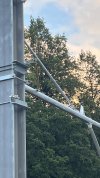
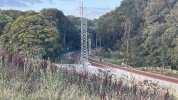
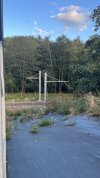
I do take your point, and I apologise, that's my mistake. I had you mixed up with another forum member who has been very vocal on the subject of East Kilbride, however their point being that the line shouldn't have been wired unless there are extant trains to be able to run an electric service, and that the money should have been spent elsewhere. I am sorry for 'calling you out' and I didn't mean to accuse you of being anti-electrification, when you have clearly been supportive.
I'll come back to this.
The estimated cost for the Happy Trains exercise is buried deep in the TS accounts for the years in question, and although I cannot find the exact number, it's several tens of millions of pounds, for an immediate lease, staff training and route clearance, and the cost of compensation paid out when other services were cancelled as stock was shuffled around.
Not exactly, but not far off. They want to get the money for electrification as quickly as possible from a separate budget, into the enhancements budget. Currently, the money for electrification is spent as a one off, capital expenditure, however once costs come down enough and there's enough of a pipeline, then suddenly it counts as operational expenditure.
If costs come down far enough, then the cost of wiring is offset by the savings from running electric Vs diesel trains, and suddenly it counts as an investment that can be written off, and the whole thing becomes an academic exercise; you can just increase the enhancements budget by X amount, and let SPL just get on with it.
I'll get back to this as well
And this.
This is true, but not necessarily helpful. Most electrification schemes do include some new electric stock, either from a factory or from one of the Home Counties TOCs that's just ordered a batch of new trains.
The difficulty in Scotland is that the electrification money was already spent before COVID, but no money was spent on new trains. The conversation about the design teams, and the feeder stations, is particularly relevant here.
Detailed design for electrification takes years, from modelling demand and supply, to creating a detailed model of the route to see if any new masts block line of sight of signals, to seeing which bridges need a rebuild, to talking to councils and utilities providers and asking where their pipes and wires are, and where they can pile and which bridges are going to be complicated and expensive. The lead time on the feeder stations before COVID was about 6 years, and the lead time on grid connections, depending where in the country they're going, can be up to a decade.
Some of these issues are things you just have to deal with; insulating the signalling is just something you do whenever there's a renewal job, or you send a team out for six months insulating the whole thing. Others are symptomatic of wider economic issues; the issues with National Grid and getting grid connections is widely documented, and is just a side effect of a private company running a national asset, and the massive, rapid shift towards electric everything.
The design teams were set up way way back before EGIP got underway, in 2008!!! They've been working through the list of priorities set out way back then, first Cumbernauld, then E&G, then the Stirling Triangle, the Shotts line, and so on. The reason East Kilbride and Barrhead were shovel ready was because someone close to fifteen years ago decided that it made sense to wire those two up next in line after Stirling and Shotts.
After that, they worked and designed the Borders line wiring, which is done, and there is a feeder station sitting in Cadder Yard waiting to be shipped to Tweedbank, and the teams will begin putting masts up at some point in the next year or so.
Then they did the design of the line up to Perth, when they stopped, and moved to the whole ECML, up as far as Aberdeen. The whole design for the whole line to Aberdeen is done, which is why there are sporadic bridge closures or rebuilding a between Dundee and Aberdeen, as the bridge rebuilding team moves from one bridge to the next around the country.
The reason they stopped at Perth, is that this was before COVID, and there was an expectation that Perth station would be remodeled at some point in CP7. Design work couldn't start, and indeed electrification cannot begin, until Perth is razed and rebuilt. The signalling, the layout, and the station are woefully inadequate, and the design team just moved on to somewhere else. Obviously COVID happened, and now there's less money and things are more expensive, so they haven't rebuilt Perth, so the design team haven't come back to finish the job.
Nobody ever told them to go and model the wiring down to Kilmarnock, because nobody saw it as a priority.* It's a not particularly busy line, either in terms of number of passengers or number of trains, and therefore you don't really unlock much capacity. Wiring Fife cascades a lot of more modern diesel units, so you don't need to buy new diesel trains to serve it when the 156s go to the scrapheap. I'm sure the design team has probably begun on the Kilmarnock design already, but that's a multi-year job, and, here is the important bit, it makes sense to wire the bits that are already designed, than stop wiring and wait until something else is designed.
So here we come to the crux of the issue. These designs, the order of priorities, and the decision to wire, was made years ago, before COVID, and years before that. The grid feeders sat in the SPL compound were ordered in 2017!
It made a lot of sense to order them, because back then everyone had hot and cold running money; you could pay for pretty much anything in an era of zero interest rates and minimal inflation. Nobody could have predicted (yes they absolutely could have) that there would be a shock to the global economy, and the new trains to run the new electric services would become unaffordable. Basically, the wires were ordered a decade ago, the trains should have been ordered five years ago, but weren't.
They've paid for all the design and kit already, they just haven't put the bits in the ground yet. It makes sense therefore, unless I'm being particularly stupid, to just keep building the wiring that you've in effect already bought, and take the hit on an unused asset for a couple of years until the trains arrive late?
*Priority in this case is a bit of a nebulous term. The order of the list was determined by demand modelling, cost efficiency, practicality, and no small bit of politicking. Who gets new trains in what order is important to some people, and a great number of those people will be in charge of telling NRScot how soon certain areas get electric trains, and in which order they do so.
It's not particularly surprising that Dumfries and Galloway, being a vast rural area, not particularly supportive of the current Scottish Government, and low demand for the trains in general, is currently sat quite far down the list. It's also not surprising that Fife, a much more populous area, with far more services and no small number of marginal constituencies, is near the top.