Out of interest, why are STCs a no-no?Precisely. NWR has to use portals or TTCs above platforms (some places have used headspans, like Glasgow Queen St), and single track cantilevers are a no-no.

-
Our new ticketing site is now live! Using either this or the original site (both powered by TrainSplit) helps support the running of the forum with every ticket purchase! Find out more and ask any questions/give us feedback in this thread!
You are using an out of date browser. It may not display this or other websites correctly.
You should upgrade or use an alternative browser.
You should upgrade or use an alternative browser.
Fife Rail Electrification/Decarbonisation
- Thread starter TrainViation
- Start date
Sponsor Post - registered members do not see these adverts; click here to register, or click here to log in
R
RailUK Forums

Elecman
Established Member
To avoid any potential of live equipment over the platform. The Lancashire Trisngle scheme made that mistake before energisation with the post on the platform with the insulators on the post so potential live metal over the platform itself iircOut of interest, why are STCs a no-no?
Thank you. But still a bit puzzled, as above it was stated that TTC are allowed. Surely there's the same problem?To avoid any potential of live equipment over the platform. The Lancashire Trisngle scheme made that mistake before energisation with the post on the platform with the insulators on the post so potential live metal over the platform itself iirc

59CosG95
Established Member
Nope - the live parts can be moved along the boom of the structure on their 'stovepipe' such that they are all over the tracks, not the platform.Thank you. But still a bit puzzled, as above it was stated that TTC are allowed. Surely there's the same problem?

Makes sense.Nope - the live parts can be moved along the boom of the structure on their 'stovepipe' such that they are all over the tracks, not the platform.
Genuine question - how many serious incidents have been caused by live parts of OHL equipment being over a platform over the last 75 years?
Thanks. Always good to learn something!Nope - the live parts can be moved along the boom of the structure on their 'stovepipe' such that they are all over the tracks, not the platform.


GraphitProjekt
Member
None of the live parts are above the platform footprint so wouldn't that be fine (?)
==

I think it's this kind of design that is the problem (or would be, if there were a platform beneath it) - because all the cantilever components are live since the insulator is on the post.
==
I think it's this kind of design that is the problem (or would be, if there were a platform beneath it) - because all the cantilever components are live since the insulator is on the post.
59CosG95
Established Member
I mean, it's still "allowed", but only if replacing like-for-like, or if the cross-section of the mast is much beefier. The increased forces on the main steelwork when the catenary & contact are much further along mean that the mast is more likely to fail more quickly.

TrainViation
Member
Spotted further road works underway around the Bankhead industrial estate between Bankhead Roundabout and Coaltown of Balgonie. This is obviously for the electricity cabling for the new feeder station.

GRALISTAIR
Established Member
I do like the Scottish Grid Feeder Strategy - or at least it looks like a definite strategy to Me.
One of the features of MKIIIa, to my layman's eye, is the lightness and elegance of the stc masts. Has this been a problem then? The Series 2 masts (not to mention Series 1) are much heavier. I watched an overhead line repair some time ago (from a distance) where a tree had brought down MKIII wires and cantilevers on the WCML. It looked to me as if one of the masts had slightly twisted, barley-sugar style, and one of the crew untwisted it using the cantilever tubes as a lever as he hoisted them back into position. Then again it may have been a trick of the light/the distance/me havering, etc. Would such a manoeuver be possible?I mean, it's still "allowed", but only if replacing like-for-like, or if the cross-section of the mast is much beefier. The increased forces on the main steelwork when the catenary & contact are much further along mean that the mast is more likely to fail more quickly.
ps. Sorry to go off topic a bit. Mods - strike me down with an insulator. All hail Fife.
TrainViation
Member
Another bridge to be modified!
The bridge on Randolph Road (A915) near Standing Stane Road is to be raised over a 30 working day period between 31/01/26 and 29/04/26.
The bridge on Randolph Road (A915) near Standing Stane Road is to be raised over a 30 working day period between 31/01/26 and 29/04/26.
To be clear it says parapets not the bridge.Another bridge to be modified!
The bridge on Randolph Road (A915) near Standing Stane Road is to be raised over a 30 working day period between 31/01/26 and 29/04/26.
 There's also two foot bridges near Dysart that haven't been mentioned but I think they will ok for clearance, maybe just parapet work.
59CosG95
Established Member
The normal "open-route" MkIII STCs are fine, but the issue is with the slimmer cross-sections on masts which have larger radial loads (e.g. platform cantilevers, such as those used at Welwyn North). The larger the radial load, the more likely the "twist" can't be recovered.One of the features of MKIIIa, to my layman's eye, is the lightness and elegance of the stc masts. Has this been a problem then? The Series 2 masts (not to mention Series 1) are much heavier. I watched an overhead line repair some time ago (from a distance) where a tree had brought down MKIII wires and cantilevers on the WCML. It looked to me as if one of the masts had slightly twisted, barley-sugar style, and one of the crew untwisted it using the cantilever tubes as a lever as he hoisted them back into position. Then again it may have been a trick of the light/the distance/me havering, etc. Would such a manoeuver be possible?
ps. Sorry to go off topic a bit. Mods - strike me down with an insulator. All hail Fife.
Another reason why the Welwyn North-style cantilevers tend not to be used on new installs is the public; the less of a mast that someone can use as a de-facto climbing frame, the better!
Many thanks for that.The normal "open-route" MkIII STCs are fine, but the issue is with the slimmer cross-sections on masts which have larger radial loads (e.g. platform cantilevers, such as those used at Welwyn North). The larger the radial load, the more likely the "twist" can't be recovered.
Another reason why the Welwyn North-style cantilevers tend not to be used on new installs is the public; the less of a mast that someone can use as a de-facto climbing frame, the better!
TrainViation
Member
Apologies for the lack of knowledge. What does parapet work actually mean then? Is it for the return wires? And from cab rides in the past that I have seen, there is quite a few old bridges which look far too low for OHLE to pass under.To be clear it says parapets not the bridge.
The parapet is the bit on the side of the bridge that stops people or vehicles from falling off it. Raising it for electrification work means making it higher, to stop people dangling things over it which might come into contact with the wires. It unfortunately means that any view from the bridge is almost inevitably lost.
TrainViation
Member
Ah, thanks for the info. I really should've known that beforehand...The parapet is the bit on the side of the bridge that stops people or vehicles from falling off it. Raising it for electrification work means making it higher, to stop people dangling things over it which might come into contact with the wires. It unfortunately means that any view from the bridge is almost inevitably lost.
I'm unfortunately not convinced that there will be truly full electrification even in the sections which are set to be electrified, since the clearance is definitely not enough for wires to pass through. An example being Markinch train station.
Well if it just mentions extending the height of bridge parapets then they must think that the clearance for that bridge is enough, otherwise they'd have to replace/raise the entire bridge. Here's an example from the Edinburgh to Glasgow electrification.
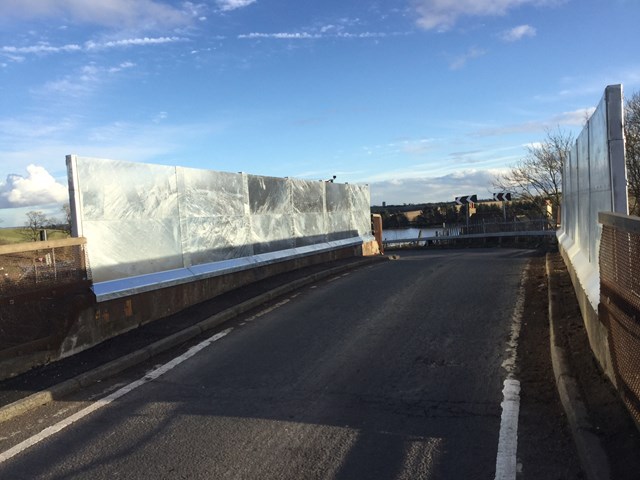
 www.networkrailmediacentre.co.uk
"The bridge parapet walls needed to be 1.8m tall to ensure the public is a safe distance from the 25k volt electric cables which will be installed under the structure as part of the ongoing Edinburgh Glasgow Improvement Programme (EGIP)."
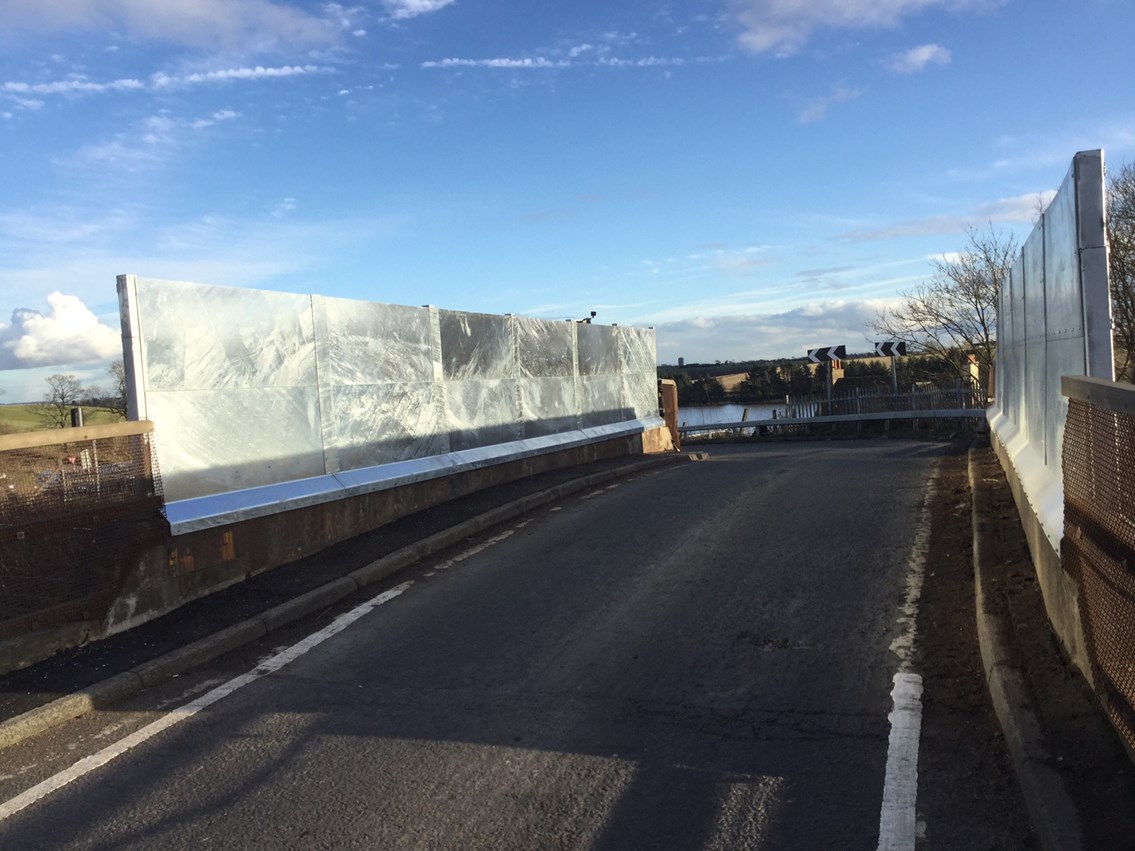
Crosshill Road bridgeworks completed
Network Rail has completed work on Crosshill Road in Lenzie to raise the bridge parapet heights in preparation for electrification of the Edinburgh-Glasgow railway line.
www.networkrailmediacentre.co.uk
"The bridge parapet walls needed to be 1.8m tall to ensure the public is a safe distance from the 25k volt electric cables which will be installed under the structure as part of the ongoing Edinburgh Glasgow Improvement Programme (EGIP)."
Markinch isn't a problem, what is a problem is Kinghorn tunnel - low height and a very wiggly shape, as it has an S bend at the west end with another curve at the east, and it's not that long!An example being Markinch train station
TrainViation
Member
I agree with the Kinghorn tunnel as that will be an engineering nightmare, especially with its infamous kink in the middle.Markinch isn't a problem, what is a problem is Kinghorn tunnel - low height and a very wiggly shape, as it has an S bend at the west end with another curve at the east, and it's not that long!
I’m still skeptical whether this bridge along with others the exact same height will have great enough clearance… (e.g the one in this screenshot.)
Attachments
I know this question drifts a little off topic, but is there any reason why Kinghorn tunnel wasn't bored out to a better alignment? I appreciate cost is always a factor, but is there an engineering issue?I agree with the Kinghorn tunnel as that will be an engineering nightmare, especially with its infamous kink in the middle.
I’m still skeptical whether this bridge along with others the exact same height will have great enough clearance… (e.g the one in this screenshot.)

BorderCollie
Member
October issue of Modern Railways now reporting that the electrification of the Borders railway (the same programme as Fife electrification) is in its entirety from Newcraighall to Tweedbank. ANyone know more?
TrainViation
Member
Could be complete bollocks, but LNER has a video with a fact about it at the timestamp 3:36I know this question drifts a little off topic, but is there any reason why Kinghorn tunnel wasn't bored out to a better alignment? I appreciate cost is always a factor, but is there an engineering issue?
Having reread it, I suspect this is just a rather imprecise wording, rather than a change in scope.October issue of Modern Railways now reporting that the electrification of the Borders railway (the same programme as Fife electrification) is in its entirety from Newcraighall to Tweedbank. ANyone know more?
BorderCollie
Member
I did wonder that myself John. That whole article is poorly written, which is disappointing to see in MR.
jamieintercity
Member
- Joined
- 20 Mar 2012
- Messages
- 765
I noticed on Scot-Rail.groups.io that OHL installation between Thornton and Seafield, Kirkcaldy was due to begin at the weekend and last until end of next year
TrainViation
Member
When was this discussed? And do you know if there is any work that has happened so far?I noticed on Scot-Rail.groups.io that OHL installation between Thornton and Seafield, Kirkcaldy was due to begin at the weekend and last until end of next year
MadMac
Established Member
Someone posted on there that they had received an official notification as a “railway neighbour”.When was this discussed? And do you know if there is any work that has happened so far?