GRALISTAIR
Established Member
As E2,3,4 seem to be one project now I don't think it really matters but I have edited the post.Should TP North 5 read, Church Fenton to Garforth?
Last edited:

As E2,3,4 seem to be one project now I don't think it really matters but I have edited the post.Should TP North 5 read, Church Fenton to Garforth?
To flesh out the current detail on HS2, perhaps worth recording here that the current state of play is that contracts were awarded in Nov 2024State of Play summary July 2025
HS2 (yes new build but it will be electrified from the start)
Noted. Edited and updated. Thank youTo flesh out the current detail on HS2, perhaps worth recording here that the current state of play is that contracts were awarded in Nov 2024
Colas for the OHL / catenary systems
Siemens Mobility Costain JV for the HV power systems
I will take a look in January 2026 update when there should be more detail anyway- hopefully!Is it worth dropping in a line in the next update, that EWR have consulted about electrification strategy?
Is colton jcn to church fenton not in use yet?State of Play summary July 2025
Midland Main Line Kettering to Wigston via Market Harborough - complete.
North of Wigston - many reports of ground surveys and similar preparatory work in progress.
Transpennine North Upgrade
Glasgow to East Kilbride electrification
- Stalybridge to Guide Bridge - complete and in use
- Stalybridge to Huddersfield W2BC- planning and design in progress
- Huddersfield - Dewsbury ---Major work in progress and multiple boots on the ground and compounds constructed
- Project W4 : Dewsbury to Leeds - some work in progress.
- Church Fenton - Colton Jct - finished
- East of Leeds (Leeds - Church Fenton) - piling in progress and other work. Schemes E2,3 and 4 seem to have been rolled into one project.
Wigan to Bolton electrification - Complete
- Glasgow to East Kilbride - bridge work and civils and piling, masting and wiring progress. Due for completion before the end of 2025.
Haymarket to Dalmeny electrification- work has started. Piling and masting has started
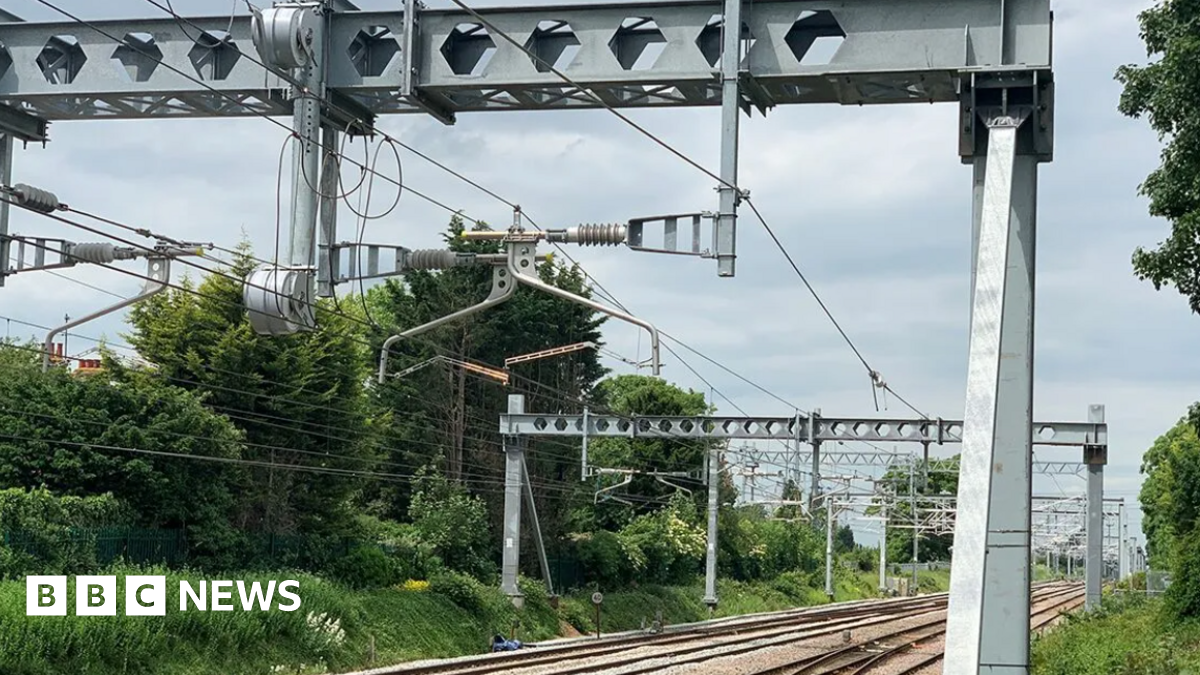
Acton Main Line to Acton Wells Jct - in progress and masting and wiring in progress.
South Wales Metro - much electrification but discontinuous
- TAM Lines (Treherbert/Aberdare/Merthyr to Cathays) complete and energised.
- Rhymney/Coryton/Cardiff Bay under construction.
HS2 (yes new build but it will be electrified from the start)
- Contracts were awarded in Nov 2024
- Colas for the OHL / catenary systems
- Siemens Mobility Costain JV for the HV power systems
 www.railforums.co.uk
www.railforums.co.uk
www.railforums.co.uk
www.railforums.co.uk
www.railforums.co.uk
www.railforums.co.uk
www.railforums.co.uk
www.railforums.co.uk
www.railforums.co.uk
www.railforums.co.uk
www.railforums.co.uk
 www.bbc.co.uk

Done. ThanksThe summary could be updated now to note that installation of masts is now under way on the Levenmouth branch (as noted by the photos and video on the relevant thread).
Thanks. Sorry, I've also just noticed that under the South Wales scheme, Coryton and Caerphilly are now energised and in use. Only the section north of Caerphilly remains to be completed north of Cardiff, along with the Cardiff Bay branch.Done. Thanks
I’ve been campaigning for a rolling programme of electrification for more than 40 years now. The out-of-the-blue ‘pausing’ of Phase 3 of the Midland Main Line (MML) electrification, announced by Transport Secretary Heidi Alexander on 8 July, could be seen as further confirmation that I’m not much cop at this self-appointed task.
[...]
I say “out of the blue”, but, earlier this year, the word in Whitehall was that approval for the completion of the MML electrification would be delayed by two years. However, I gather that the first Network Rail’s MML electrification team knew about the pause was the DfT press release.
Upgrading existing electrification to meet customer needs
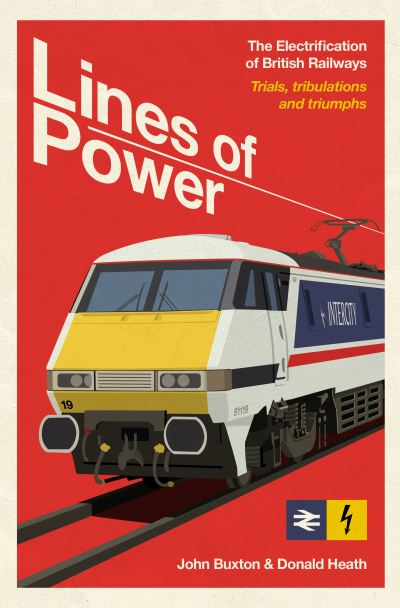
Written by John Buxton and Don Heath, two experienced rail professionals, Lines of Power delivers a comprehensive record of the stuttering progress of electrification and modernisation of Britain’s railway network, exposing the furtive manoeuvring by competing factions within the railway industry during the 1950s. The book is highly critical of the excessive scepticism of the Department of Transport (DoT later DfT) and the frequent disproportionate, and often imprudent, interventions by politicians that have collectively thwarted the opportunity to progress a more comprehensive and cost effective ‘rolling programme’ of electrification.


| Nation | Time period | Route open for traffic (kilometres) | Electrified route open for traffic (kilometres) | Track length (kilometres) | Electrified track length (kilometres) | New electrification projects track length (kilometres) |
| Great Britain | As of 31 March 2025 |
120km track length of projects.
Latest electrification statistics with an excel spreadsheet with raw data - sorry about the formatting - I will try and improve.
Table 6320 - Infrastructure on the mainline
15,747 6200 31236 14663 120
Nation Time period Route open for traffic
(kilometres)Electrified route open for traffic
(kilometres)Track length (kilometres) Electrified track length
(kilometres)New electrification projects track length
(kilometres)
Great Britain As of 31 March 2025
Latest electrification statistics with an excel spreadsheet with raw data - sorry about the formatting - I will try and improve.
Table 6320 - Infrastructure on the mainline
15,747 6200 31236 14663 120
Nation Time period Route open for traffic
(kilometres)Electrified route open for traffic
(kilometres)Track length (kilometres) Electrified track length
(kilometres)New electrification projects track length
(kilometres)
Great Britain As of 31 March 2025
I seem to recall it was a one-off adjustment to the way they do the calculations and present data.Any ideas what's caused these odd decreases, I'm struggling to think of any significant closure of electrified routes or transfer from National Rail to some other authority (eg Transport for London).
www.railforums.co.uk
www.railforums.co.uk
www.railforums.co.uk
www.railforums.co.uk
www.railforums.co.uk
www.railforums.co.uk

Agree with this, am seeing very similar themes from projects I'm taking care of. Also a shift to alternative chemistries without problematic elements like nickel and cobalt. If people insist on continuing to use Cl66, the argument for rail freight will basically be because our road network is terrible.One huge gaping inaccuracy is about batteries. Long Haul HGVs are now working trouble free all over the world, able to do the same routes as diesel trucks. In Europe they have huge advantages on hilly routes such as the Alps. The next error is that he is wholly wrong on material supplies for batteries. The only issue is supply chains and not availability. This is ramping up to meet demand.
Very Spursy!I was also very intrigued by the anecdote about Tottenham Supergrid blowing up some point in the mid 1980s...