• Our new ticketing site is now live! Using either this or the original site (both powered by TrainSplit) helps support the running of the forum with every ticket purchase! Find out more and ask any questions/give us feedback in this thread!

Double-Decker Trains

Joined
21 Feb 2018
Messages
914
It was announced on 22nd October 2025 that the lines through the Channel Tunnel would see double-decker trains by 2031. An order was placed for their construction and delivery in October 2025.

This article takes a look at the history of double-deck trains and carriages.
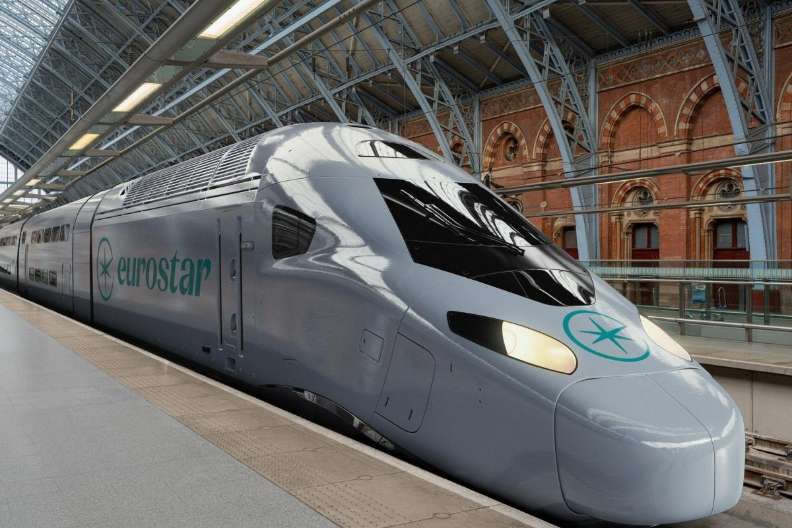
The featured image for this article shows what one of these trains would look like in Eurostar’s grey livery. The fully electric fleet of trains will be named Eurostar Celestia, which comes from the Latin word caelestis, meaning ‘heavenly’. The colour of the train has not yet been decided, but the current colour of Eurostar trains is grey, dark blue and yellow. Each train would be 200m long. Currently two are run together making an entire service 400m long. Double-decker trains don’t have twice as many seats as a single-deckers though, just because there needs to be room for interior steps, but there would be a fifth more seats. This means an increase from just under 900 seats on the current service to just over a thousand.

 
Sponsor Post - registered members do not see these adverts; click here to register, or click here to log in
R

RailUK Forums

AlterEgo

Verified Rep - Wingin' It! Paul Lucas
Joined
30 Dec 2008
Messages
29,301
Location
LBK
Bottlenecking at doors and longer dwelling times which eats into capacity. Poor accessibility for people with luggage if the stock requires steps to access every seat. Low ceilings.
 
Joined
21 Feb 2018
Messages
914
Disabled access can be an issue. Space for luggage can too be difficult. The increase in capacity is not particularly high. Loading gauge across the UK is tight, less of a problem on HS1 and the Tunnel (I believe).
 

Rescars

Established Member
Joined
25 May 2021
Messages
2,529
Location
Surrey
By definition, any double-decker requires access to both decks, which normally involves steps or stairs, typically accessed from each vestibule. Steps or stairs take up a significant amount of space which could otherwise be devoted to seating. There have been some instances where staircases have been placed on separate vehicles (e.g. Listowel and Ballybunion), but surely not for access to an upper deck.
 

swt_passenger

Veteran Member
Joined
7 Apr 2010
Messages
34,256
This sounds like a good idea. What are the downsides of double decker trains? The ones I can think of is fitting on track and higher roll over risk
Double decker trains are to all intents and purposes impossible within the normal loading gauge seen on the main British rail network. (Network Rail infrastructure.) The largest gauge is W12, and it’s designed for the corners of ‘hi-cube’ containers on normal wagons. It does absolutely nothing to improve the possibility of double deck passenger carriages.
 

zwk500

Veteran Member
Joined
20 Jan 2020
Messages
18,472
Location
Northampton
Disabled access can be an issue. Space for luggage can too be difficult. The increase in capacity is not particularly high. Loading gauge across the UK is tight, less of a problem on HS1 and the Tunnel (I believe).
No problem at all on HS1 and the Tunnel, they're built to UIC GB gauge or bigger.

(Technical Pedanty: HS1 is UIC GC from the Eurotunnel boundary to St Pancras via the 'main line', the route via Ashford is cleared for UIC GB+, Ashford International platforms 3/4 are UIC GB only. The Channel Tunnel is a special gauge larger than any UIC gauge for the double-decker car wagons).

== Doublepost prevention - post automatically merged: ==

Double decker trains are to all intents and purposes impossible within the normal loading gauge seen on the main British rail network. (Network Rail infrastructure.) The largest gauge is W12, and it’s designed for the corners of ‘hi-cube’ containers on normal wagons. It does absolutely nothing to improve the possibility of double deck passenger carriages.
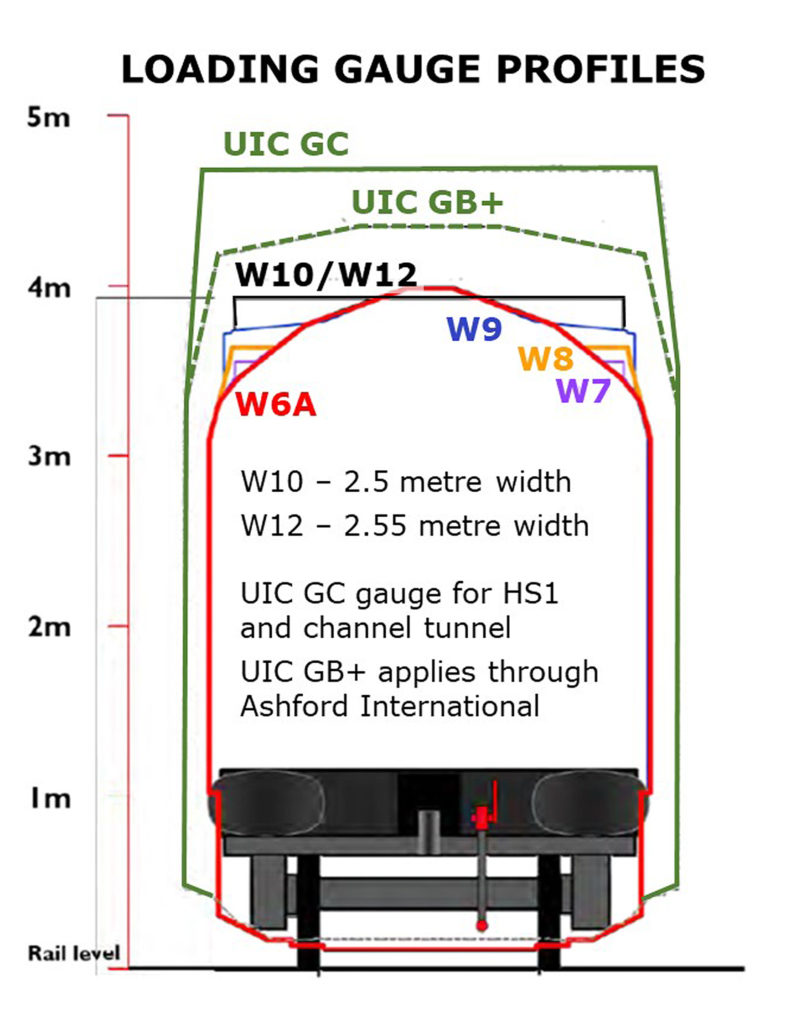
There is a good comparison of the loading gauges on this Rail Engineer article: https://www.railengineer.co.uk/the-future-role-of-rail-a-strategic-freight-network/
05-3-786x1024.jpg

[Image comparison of UIC GB+/GC gauges against normal UK Network Rail loading gauges]
 
Last edited:

Taunton

Veteran Member
Joined
1 Aug 2013
Messages
12,242
By definition, any double-decker requires access to both decks, which normally involves steps or stairs, typically accessed from each vestibule. Steps or stairs take up a significant amount of space which could otherwise be devoted to seating. There have been some instances where staircases have been placed on separate vehicles (e.g. Listowel and Ballybunion), but surely not for access to an upper deck.
The USA Amtrak Superliners, or more their 1950s Santa Fe 'Hi-Level' predecessors which originally set the style, are pretty ingenious in this, with just a single low level central entrance and vestibule, and one set of stairs up to the main upper deck, which is fully seated or sleeping berths end to end, and with the gangway connections at that upper level. On the lower level there are smaller seating saloons or roomettes either side, between the bogies, which handles the accessible requirements, along with the washrooms, and over the bogies in the limited headroom space is the air-con plant, baggage store, etc. In the diner the kitchen is at the lower level and the full length dining saloon above is served by dumbwaiters.

You wouldn't get away with this in the UK mainly because of the platform height which prevents entrance at a low level - it's as much a reason as a limited structure gauge why they cannot be used in the NE corridor, which has such platforms. The upper level gangways are also interesting to negotiate (or not) on uneven tracks!
 

JamieL

Member
Joined
6 Aug 2022
Messages
910
Location
UK
Double decker trains are to all intents and purposes impossible within the normal loading gauge seen on the main British rail network. (Network Rail infrastructure.) The largest gauge is W12, and it’s designed for the corners of ‘hi-cube’ containers on normal wagons. It does absolutely nothing to improve the possibility of double deck passenger carriages.
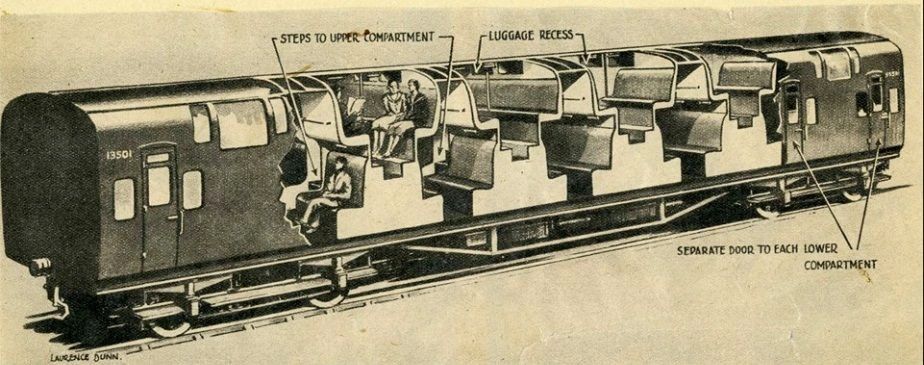
Didn't the UK used to have some double decker trains?

9780853617860_1200x1200.jpg
 

Peter Mugridge

Veteran Member
Joined
8 Apr 2010
Messages
17,808
Location
Epsom
Pretty much a failure in any case. Weren’t boarding times extremely slow.
There's a story that Bulleid knew it wouldn't work but higher powers were insistent on having a double decker built, so he went ahead anyway and made absolutely certain that when it was in use it would be clear to everyone why it wouldn't work.

It's a nice story, but I don't know how much truth there is in it.
 

biglads

Member
Joined
20 Jun 2026
Messages
5
Location
S Devon
Pretty much a failure in any case. Weren’t boarding times extremely slow.
Yes, station dwell times were a problem for this stock, however they did run Charing Cross - Dartford services for many years. It was really a bodge job to see if they could avoid the expense of lengthening platforms from 8 to 10 cars to deal with higher usage and they quickly figured that the platform lengthening was needed. I have memories of a unit slowly rotting away at Hoo Junction from the early 80's. I'm not sure if that provided the motor car(?) that is still in existence.
 

norbitonflyer

Established Member
Joined
24 Mar 2020
Messages
5,681
Location
SW London
Yes, station dwell times were a problem for this stock, however they did run Charing Cross - Dartford services for many years.
No point in scrapping them before their time, even if they were non-standard and sub-optimal. They were however outlasted by most of the post-war SUBs

== Doublepost prevention - post automatically merged: ==

The USA Amtrak Superliners, or more their 1950s Santa Fe 'Hi-Level' predecessors which originally set the style, are pretty ingenious in this, with just a single low level central entrance and vestibule, and one set of stairs up to the main upper deck, ............., and with the gangway connections at that upper level. On the lower level there are smaller seating saloons or roomettes either side, between the bogies, which handles the accessible requirements. In the diner the kitchen is at the lower level and the full length dining saloon above is served by dumbwaiters.
How was the diner made accessible, or was room/at seat service provided as an alternative?

== Doublepost prevention - post automatically merged: ==

No problem at all on HS1 and the Tunnel, they're built to UIC GB gauge or bigger.

(Technical Pedanty: HS1 is UIC GC from the Eurotunnel boundary to St Pancras via the 'main line', the route via Ashford is cleared for UIC GB+, Ashford International platforms 3/4 are UIC GB only. The Channel Tunnel is a special gauge larger than any UIC gauge for the double-decker car wagons).

== Doublepost prevention - post automatically merged: ==


[Image comparison of UIC GB+/GC gauges against normal UK Network Rail loading gauges]
A common muisconception/source of confusion is that "GB" and "GC" gauges are nothing to do with the typical UK loading gauge and the (rather more generous) loading guage used by the Great Central Railway The G stands for "Gabarit" (french for "gauge") and the letters are just letters (there is also a GA)
 
Last edited:

Taunton

Veteran Member
Joined
1 Aug 2013
Messages
12,242
How was the diner made accessible, or was room/at seat service provided as an alternative?
Indeed, there was/is specific waiter service to the lower level seats/roomettes in the adjacent vehicles when occupied by accessible passengers. Broadly, such passengers were booked into the immediately adjacent vehicles, the diner commonly being positioned mid-train between the coaches and the sleepers.
 

zwk500

Veteran Member
Joined
20 Jan 2020
Messages
18,472
Location
Northampton
A common muisconception/source of confusion is that "GB" and "GC" gauges are nothing to do with the typical UK loading gauge and the (rather more generous) loading guage used by the Great Central Railway The G stands for "Gabarit" (french for "gauge") and the letters are just letters (there is also a GA)
Yes, hence why I have made a habit of including UIC in front of them
 

DelW

Established Member
Joined
15 Jan 2015
Messages
5,961
The USA Amtrak Superliners, or more their 1950s Santa Fe 'Hi-Level' predecessors which originally set the style, are pretty ingenious in this, with just a single low level central entrance and vestibule, and one set of stairs up to the main upper deck, which is fully seated or sleeping berths end to end, and with the gangway connections at that upper level. On the lower level there are smaller seating saloons or roomettes either side, between the bogies, which handles the accessible requirements, along with the washrooms, and over the bogies in the limited headroom space is the air-con plant, baggage store, etc. In the diner the kitchen is at the lower level and the full length dining saloon above is served by dumbwaiters.

You wouldn't get away with this in the UK mainly because of the platform height which prevents entrance at a low level - it's as much a reason as a limited structure gauge why they cannot be used in the NE corridor, which has such platforms. The upper level gangways are also interesting to negotiate (or not) on uneven tracks!
Amtrak decided earlier this year that the Superliners will be replaced by new single-level coaches. Reasons include:
  • Difficulty providing disabled access in accordance with ADA requirements
  • Preference for standardisation of equipment between eastern and western routes (most north-eastern routes cannot accommodate bi-levels)
  • Failure of a 2015 procurement for new bi-levels when prototypes failed compression-load tests
(Source: Trains magazine, May 2026, p5)
 

U-Bahnfreund

Member
Joined
6 Feb 2015
Messages
556
Location
Germany
It's funny to see UK people discuss potential downsides of double-decker trains, when double-decker buses are used everywhere. Basically the opposite of mainland Europe where almost noone uses double-decker buses in favour of longer (bendy) ones, whereas double-decker trains are used fairly often in almost every country
 

TheWierdOne

Member
Joined
30 Oct 2020
Messages
392
Location
Yorkshire
It's funny to see UK people discuss potential downsides of double-decker trains, when double-decker buses are used everywhere. Basically the opposite of mainland Europe where almost noone uses double-decker buses in favour of longer (bendy) ones, whereas double-decker trains are used fairly often in almost every country
That is actually in part also due to the same issue of confined infrastructure that railways in the UK have.

Double deckers can be shorter and have smaller turning circles than some high capacity single deckers, notably bendy buses. Given that enough British cities have a street layout that is restrictive enough to make this relevant, articulated buses became quite niche over here and double deckers or very high frequency, or both, became the default for increasing capacity on British bus routes. Even “regular” full-length single decks can be blocked from areas a double-deckers, with their shorter wheelbase and turning circle, are permitted.
 

Rescars

Established Member
Joined
25 May 2021
Messages
2,529
Location
Surrey
That is actually in part also due to the same issue of confined infrastructure that railways in the UK have.

Double deckers can be shorter and have smaller turning circles than some high capacity single deckers, notably bendy buses. Given that enough British cities have a street layout that is restrictive enough to make this relevant, articulated buses became quite niche over here and double deckers or very high frequency, or both, became the default for increasing capacity on British bus routes. Even “regular” full-length single decks can be blocked from areas a double-deckers, with their shorter wheelbase and turning circle, are permitted.
Until there is a low bridge in the way! Many years ago the road under Wallington station was hollowed out to accommodate double deckers. Even in recent times this dip can fill spectacularly fast during a downpour and catch out unsuspecting motorists who find themselves suddenly out of their depth.
 

TRAX

Established Member
Joined
2 Dec 2015
Messages
1,812
Location
France
Double deckers can be shorter and have smaller turning circles than some high capacity single deckers, notably bendy buses.
Articulated buses can negotiate much tighter turns than rigid buses (10, 12, 13 m, etc.), because you only have to put the fairly short front section through and the trailer will follow (unlike semi-trucks).
 

zwk500

Veteran Member
Joined
20 Jan 2020
Messages
18,472
Location
Northampton
It's funny to see UK people discuss potential downsides of double-decker trains, when double-decker buses are used everywhere. Basically the opposite of mainland Europe where almost noone uses double-decker buses in favour of longer (bendy) ones, whereas double-decker trains are used fairly often in almost every country
If our infrastructure supported true double decker trains i am fairly confident the UK would have adopted them.

Their downsides are small enough that if you only need minor modifications it can be quite cost effective, but big enough that it's not worth rebuilding every bridge, tunnel and platform for them.
 

Transilien

Member
Joined
10 Mar 2024
Messages
732
Location
Ayrshire
Another reason less discussed about double decker trains in the UK is, before the 80s (in France) and even the 2010’s (in Germany) double decker trains were usually carriages hauled by locomotives. I think this was because older traction equipment took up too much space in a double decker train for a multiple unit to make sense, capacity wise (this is just speculation on my part). However, the UK has had a policy since at least the 60s that all new suburban stock should be multiple units. BR wouldn’t have wanted non-standard traction, with a lower acceleration hauling commuter trains in south London.
 

yorksrob

Veteran Member
Joined
6 Aug 2009
Messages
44,312
Location
Yorks
A door to every seating bay worked much better at shifting people quickly.
 

52290

Member
Joined
23 Oct 2015
Messages
728
Another reason less discussed about double decker trains in the UK is, before the 80s (in France) and even the 2010’s (in Germany) double decker trains were usually carriages hauled by locomotives. I think this was because older traction equipment took up too much space in a double decker train for a multiple unit to make sense, capacity wise (this is just speculation on my part). However, the UK has had a policy since at least the 60s that all new suburban stock should be multiple units. BR wouldn’t have wanted non-standard traction, with a lower acceleration hauling commuter trains in south London.
Indeed, my first journey on double decker stock was in 1973 from Magdeburg to Rostock hauled by a DR 01.5 Pacific.
 

Rescars

Established Member
Joined
25 May 2021
Messages
2,529
Location
Surrey
Seen near Basle today, a double decker set in traffic being propelled by a loco with an addition double deck driving trailer attached at the rear - with the cab facing the loco. The Swiss have a style all of their own!
 

Beebman

Member
Joined
17 Feb 2011
Messages
965
Location
Twyford
The Austrians their own style too - on the Friday before last I travelled from St. Pölten to Wien Westbahnhof on a coaching set (propelled by a Vectron loco) which had a double decker at either end bookending several single deck vehicles!
 

Top